A fast-growing tree that was never built to last a century
Water oak was a popular choice for subdivision streets and yards because it grows quickly, tolerates wet ground and puts up a big shade canopy within a couple of decades. That fast growth comes with a trade-off. Compared with white oak, which can stand for centuries, water oak is relatively short-lived, and the wood it lays down is softer and quicker to decay once it's wounded.
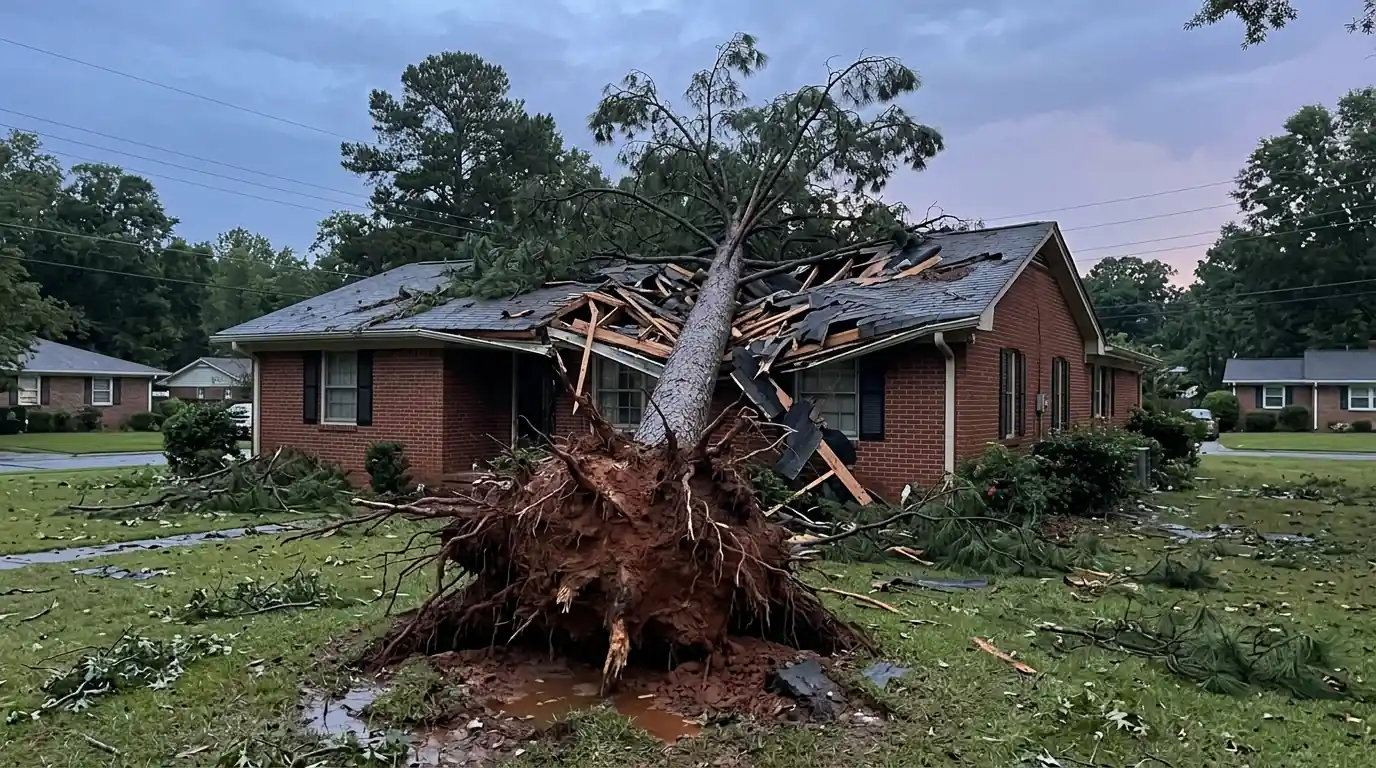
Put those two facts together with the age of Atlanta's postwar neighborhoods and the pattern makes sense. A water oak that was a sapling when a Tucker or Chamblee street was paved is now around 60 to 70 years old. Many of them look full and green from the road, but the inside of the trunk tells a different story. When they fail, they tend to fail big, because a mature water oak can easily reach 70 feet and spread its limbs over two yards.
What is going wrong inside the tree
Most water oak failures we see come from a few causes working together over many years. Very few come down from one storm alone.
Heart rot and hollow trunks
Heart rot fungi enter through old pruning wounds, broken limbs and bark damage, then slowly consume the center of the trunk. A tree can carry a full crown for years with a hollow core, because the living layer is just under the bark. The trouble comes when the shell of sound wood gets too thin for the weight above it. A hollow oak usually breaks low, often at a cavity you can see once you know to look.
Dead tops and dieback
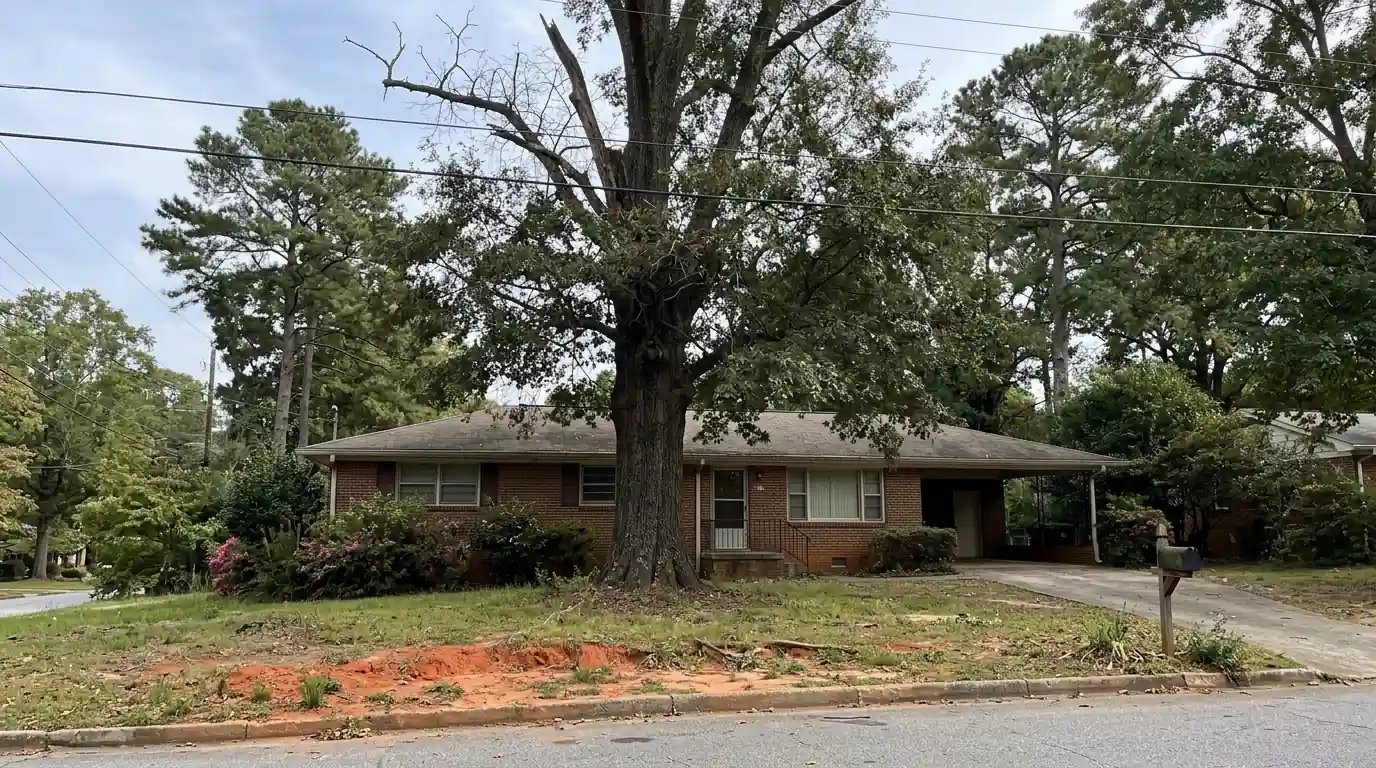
Water oaks often die from the top down. Upper limbs leaf out thin, then not at all, and bare gray branches stick up above the green. Dead upper limbs are the classic sign of an aging water oak, and they are the parts most likely to drop in a summer thunderstorm. Hypoxylon canker, which attacks stressed oaks, often shows up on these limbs as the bark sloughs off to reveal a crusty tan or black layer.
Root rot in compacted clay
Georgia red clay compacts under decades of foot traffic, cars and lawn mowers, and it holds water after long rains. Roots in that soil stay shallow and get little oxygen. Armillaria root rot takes advantage of weakened hardwoods like this, and it shows up as honey-colored mushrooms at the base in the fall or white fungal sheets under loose bark near the root flare. A tree with rotted roots can tip over with its crown still green.
Construction damage from years ago
A sewer line replacement, a new driveway, a garage addition or a regraded backyard can cut or bury a large share of an oak's roots. The decline often doesn't show for several years, so homeowners rarely connect the dying crown to the work that caused it. If your yard had major work in the last decade and a nearby oak is thinning now, that work is a likely suspect.
Signs to look for from the ground
You can learn a lot about a water oak without climbing it. Walk all the way around the tree, look up through the crown with binoculars if you have them, and check the base closely. These are the signs we look for first.
- Bare, gray branches in the top third of the crown while the lower limbs are still leafed out.
- Mushrooms, shelf fungi or crusty patches on the trunk or at the root flare.
- Cavities, open seams or a trunk that sounds hollow when tapped with a rubber mallet.
- Bark sloughing off large limbs to reveal a tan or black crust underneath.
- Sawdust-like debris or carpenter ants at the base, which often follow existing decay.
- Soil cracking or heaving on one side of the tree after a heavy rain.
- Limbs dropping on calm days, which suggests internal decay rather than wind.
When cabling or a reduction buys time
Not every old water oak needs to come down. If the trunk and root flare are sound and the trouble is limited to the crown, pruning and support can extend a tree's useful life by years. The right fix depends on where the weakness is and what the tree would hit if it failed.
Reducing the crown shortens the longest, heaviest limbs back to healthy side branches. That lowers the bending load on the trunk and on any weak unions, which matters a lot on a tree with a modest cavity or a lean. Combined with cutting out the dead wood, a reduction can turn a tree that was dropping limbs on the drive into one that is reasonable to keep watching.
Cabling and bracing helps when the problem is a split or weak fork between two big leaders. A steel cable installed high in the crown limits how far the leaders can spread in wind, and a threaded rod through a cracked union can hold it together. Cables support a tree that is structurally sound at the base. They do not make a hollow trunk strong again, and they need inspection every year or two.
When removal is the honest answer
Some water oaks are past the point where pruning helps. If the trunk is hollow through a large share of its width, if there is decay in the root flare, or if more than half the crown is dead, cabling and reductions mostly delay a failure without preventing it. In that case we tell you so plainly.
Targets matter as much as condition. An oak with moderate decay standing at the back of a wooded lot might be fine to leave as wildlife habitat for a while. The same tree leaning over a bedroom in East Lake or a driveway in Tucker is a very different decision. When the answer is removal, taking down a big oak near a house usually means climbing and lowering it in sections, or bringing in a crane if the decay makes climbing unsafe.
If you live inside Atlanta city limits, a water oak that the city confirms is dead, dying or hazardous still needs a permit, but there's no application fee and no replacement charge. Our permit rules guide covers how that works in the city and in the surrounding counties.
Getting an older oak checked before it decides for you
The right time to look at an aging water oak is before a storm forces the question. A tree risk check covers the root flare, the trunk, the major unions and the crown, and it ends with a plain answer: keep it and watch it, prune or support it, or plan the removal. We note what the tree would hit, how fast the decay seems to be moving and what you'd want to see change before acting.
Late fall and winter are good times for this. Without leaves in the way, dead limbs, cavities and fungal growth are easier to see, and any pruning or removal can be scheduled before spring storms. If you've noticed dieback this summer, though, don't wait for the leaves to drop. A tree that is shedding limbs now is telling you something. For a broader look at warning signs on other species, see our guide to the signs a tree is dying.
Key takeaways
- Water oaks grow fast but are relatively short-lived, and many planted with mid-century subdivisions are now at the end of their run.
- Heart rot, dead tops, root rot in compacted clay and old construction damage are the main reasons they fail.
- Crown reduction, deadwood removal and cabling can buy years when the trunk and roots are sound.
- A hollow trunk, decay in the root flare or a mostly dead crown usually means removal is the safer call.
- Winter is the easiest time to inspect an oak, but active dieback should be checked right away.