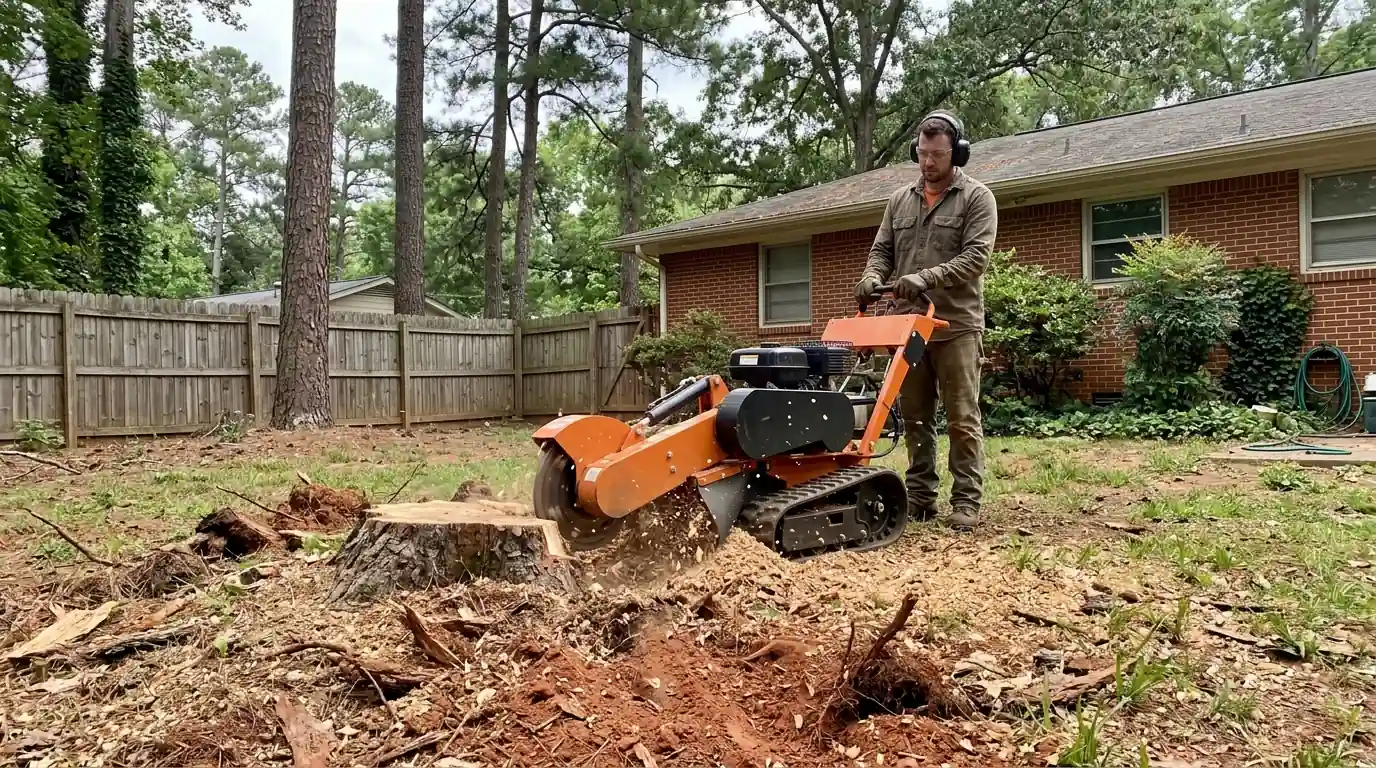
Stump grinding uses a toothed cutting wheel to chip a stump into mulch, down to several inches below the soil line, so you can mow, seed or plant over the spot. You need it when a stump catches the mower, sprouts new shoots or sits where a bed should go. In Atlanta we file a Georgia 811 locate first, because gas, water and cable lines often run close to old trees.
What stump grinding leaves behind, and what it doesn't
Grinding doesn't pull the stump out. The cutting wheel swings side to side across the top of the stump and chews it into chips one pass at a time, working down until the wood is several inches below grade. Below that depth the roots stay in the ground, cut off from the trunk, and rot away slowly over the next several years without bothering the lawn above them.
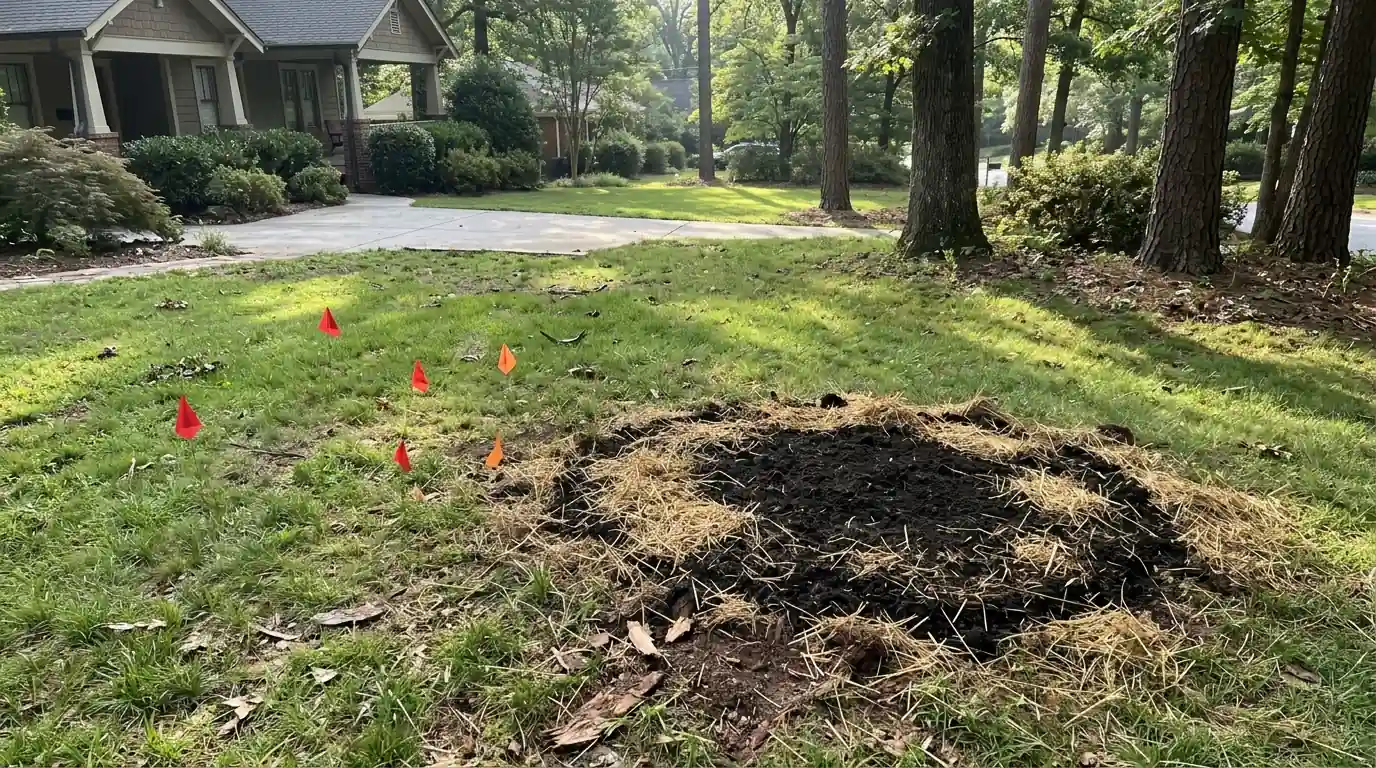
A stump makes a surprising pile of chips, often far more than it looked like it held, because the wood is mixed with soil and fluffed up as it's cut. You decide what happens to them. Most people have us rake the chips back into the hole and mound them a little high, since they settle. Others want them hauled so the spot can take topsoil straight away.
Chips left in the hole are fine under a mulched bed, but grass struggles in them for a season or two because fresh wood ties up nitrogen while it breaks down. If the spot is going back to lawn, we pull most of the chips, fill with screened topsoil, firm it lightly and leave it ready for seed or a square of sod.
Why grinding stops most stump sprouts
Some trees don't take being cut down quietly. Sweetgum, Callery pear, black cherry and red maple keep dormant buds alive in the root collar and along shallow roots, and a fresh stump can push up a ring of shoots within weeks. Cut those shoots and they come back thicker, because the whole root system is still feeding them.
Grinding removes the root collar, which is where most of those buds sit, so most of the sprouting simply stops. Sweetgum is the stubborn one. Its roots can still send up suckers several feet from where the trunk stood, usually in the first growing season, and mowing over them every week wears them out before long.
Pines are the opposite case. A cut loblolly pine doesn't sprout from its stump, so grinding a pine stump is about the mower, the lawn and the look of the yard rather than regrowth. Left alone, a pine stump can take many years to rot because the resin protects it, and a slowly decaying stump close to the house is an open invitation to termites.
The stumps we grind most around Atlanta
Some stumps are just in the way. Others cause problems that get worse the longer they sit.
Sprouting sweetgum and pear
Sweetgum and Callery pear stumps throw up thickets of shoots from the root collar. Grinding that collar out stops most of it.
Resin-soaked pine stumps
Pine stumps are full of pitch that resists rot, so a cut pine can sit almost unchanged for years. They grind cleanly and fairly quickly.
Wide oak stumps
Oaks flare hard at the base, so an oak stump is often far wider at the soil than the trunk was at chest height. That flare sets the time.
Hollow water oak stumps
Old water oaks often leave a punky, hollow stump full of rot, carpenter ants or termites. We grind past the soft wood into sound root.
Stumps in the mowing line
A stump left a few inches high in the lawn is the one that bends mower blades and eats trimmer line every week.
Leftovers from past removals
Plenty of homes come with a scatter of old stumps from a previous owner or a storm cleanup. Grinding several in one visit lowers the cost of each.
How a stump grinding visit runs
Most stumps are a short job once the lines are marked and the machine is in place.
- 1
Georgia 811 locate
We file a locate request ahead of the visit, and the utility owners mark their buried lines with paint and small flags.
- 2
Find the private lines
Georgia 811 doesn't mark what you own, like irrigation, landscape lighting, pet fence wire or a gas line to the grill, so we walk those with you.
- 3
Get the grinder in
A compact grinder rolls through most backyard gates on tracks or wheels, with plywood laid over soft lawn and wet clay.
- 4
Grind below grade
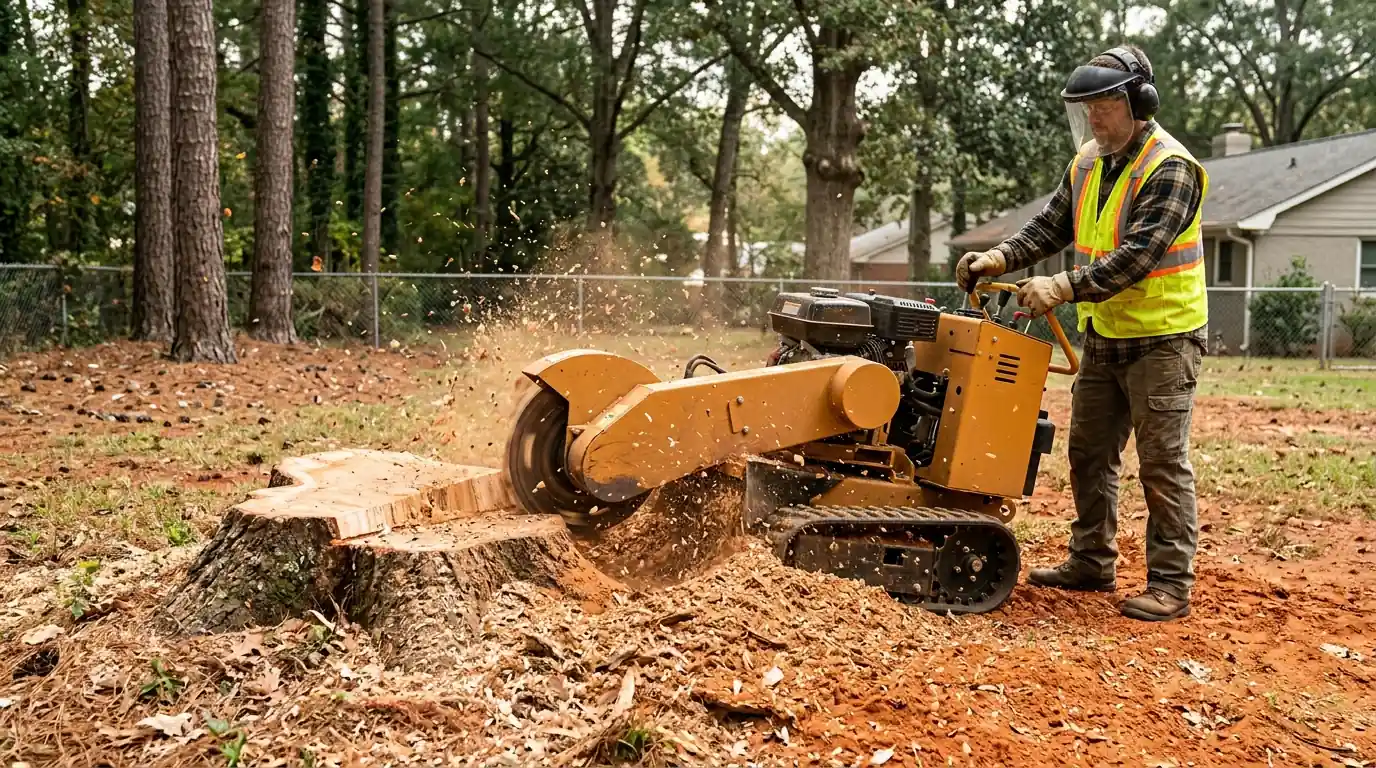
The wheel works the stump down to several inches below the soil, then follows the big surface roots out across the lawn.
- 5
Chips back or hauled
Chips are raked back into the hole and mounded for settling, spread in nearby beds, or loaded and hauled if you'd rather fill with soil.
- 6
Topsoil and seed
When the spot is going back to grass, we fill with topsoil, firm it and seed it or leave it ready for sod.
How to get ready for stump grinding day
A few minutes of prep keeps the visit short and keeps your buried lines in one piece.
- Tell us about irrigation lines, sprinkler heads and landscape lighting cable near the stump.
- Mark any pet fence wire, septic lines or drain pipes you know about.
- Leave the side gate open, and measure its width if you aren't sure the machine will fit.
- Keep pets and kids inside while the grinder runs, since chips and small stones fly.
- Move cars, planters and patio furniture well back from the stump.
- Decide whether the chips stay in the hole, go in your beds or get hauled.
- Leave the locate flags where they are until we're finished.
What moves the price of stump grinding
| Job | Typical range | Priced |
|---|---|---|
| First stump | $135 to $485 | per stump |
| Each added stump, same visit | $65 to $195 | per stump |
Diameter at the ground is the main driver, measured across the widest part of the flare rather than the trunk above it. After that come the surface roots you want chased out, the wood itself (a dense oak takes longer than a pine of the same size), rocks or old fence wire buried in the stump, and how far the machine travels from the street.
The first stump on a visit carries the setup, so each added stump on that visit is priced lower. Hauling chips and bringing in topsoil and seed are separate items, since many people keep the chips. Our price guide lists typical ranges, and grinding after a tree takedown is usually quoted together with it.
Stump grinding in Atlanta clay, pines and old oaks
Georgia red clay changes how a grind goes. Wet clay packs into the cutting teeth and turns to slick paste around the hole, so after a long rain we may move the visit a day or two to keep the lawn from rutting. Dry summer clay is hard enough that a stump on a slope holds a lot of soil and stone in its flare, which dulls teeth and slows the work.
In older intown neighborhoods like Kirkwood and East Lake, the usual job is a water oak or pine stump in a narrow backyard behind a bungalow, reached through a side gate. In Duluth and Snellville subdivisions built among the pines, it's often a row of old pine stumps along a fence line. If you plan to build or pave over the spot, our grinding versus removal guide explains when grinding isn't enough.
Where we do stump grinding around Atlanta
Crews work from our Atlanta office near the 30340 ZIP and our Duluth office. These are the places we cover most, with their main ZIP codes. See all 56 areas.
- Buckhead 30305
- Virginia-Highland 30306
- Druid Hills 30307
- Morningside 30324
- Grant Park 30312
- Kirkwood 30317
- Cascade Heights 30311
- Sandy Springs 30328
- Dunwoody 30338
- Brookhaven 30319
- Decatur 30030
- Duluth 30096
- Lawrenceville 30046
- Marietta 30060
- Smyrna 30080
- Roswell 30075
- Alpharetta 30009
- Johns Creek 30097