We trim, prune and remove hazard trees across West End, from the streets near Ralph David Abernathy Boulevard to the blocks around Howell Park and the BeltLine Westside Trail. Water oaks, sweetgums, hackberries and pecans grow close to old Victorian and craftsman roofs. West End is inside Atlanta city limits, so removals at 6 inches or more at 4.5 feet (pines 12) need a permit, while trimming does not. Our line is answered 24/7.
Old roofs under trees that nobody trimmed
Plenty of West End houses sat empty or neglected for years before their current owners took them on, and the trees did as they pleased. A sweetgum planted near the porch now rests limbs on a steep Victorian roof. A hackberry that seeded itself along the fence is thirty feet tall and leaning over the back addition. Branches rub the gutters, block the chimney and drop leaves straight into the valleys.
Old roofs take that badly. Tin and slate on a Victorian, or original shingles on a craftsman bungalow, crack and dent under a falling limb more easily than modern roofing. We clear limbs back from the roof line, take out dead branches over the house and lift low growth off the porch. Regular overhanging limb removal is far cheaper than patching a historic roof after a storm.
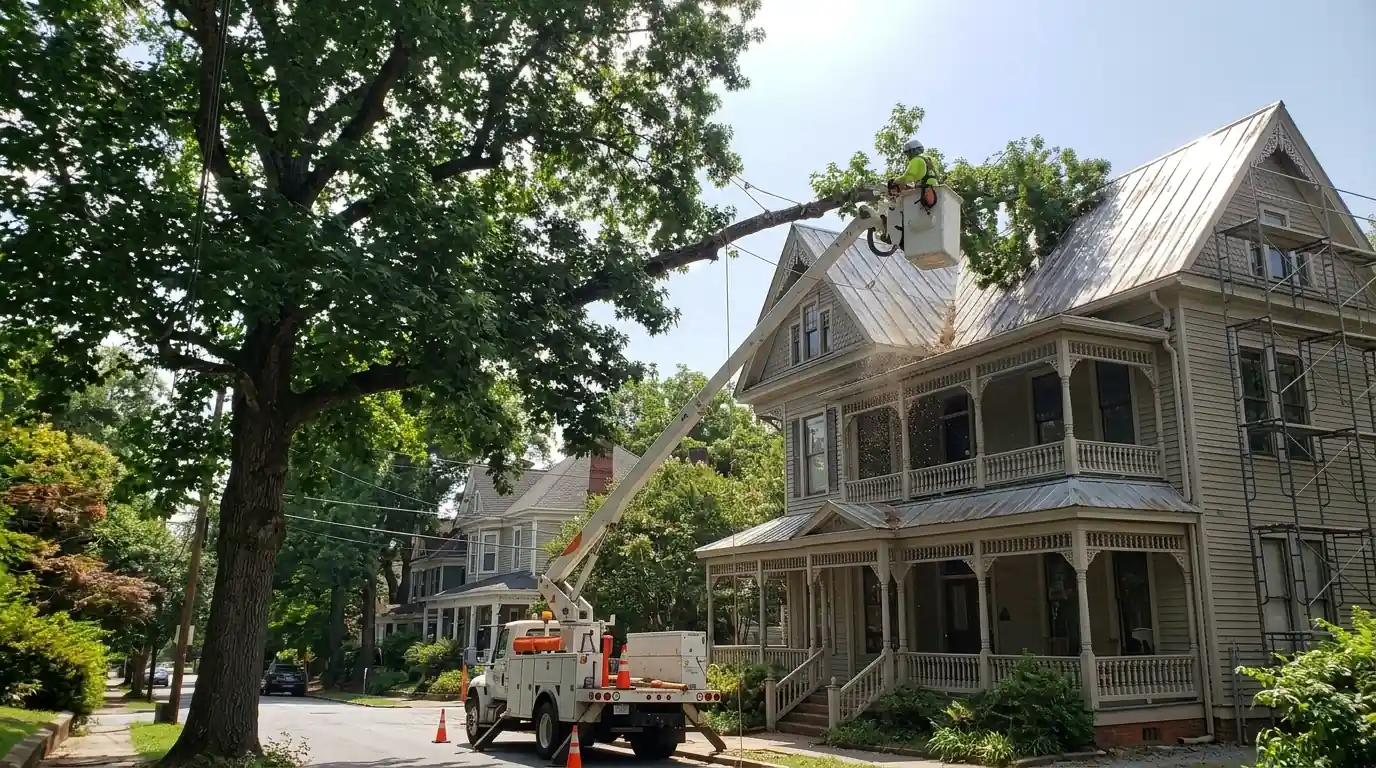
Clearing hazard trees before the renovation starts
A bad tree is easiest to deal with before the scaffolding goes up. Once a renovation begins, there's a new roof, fresh paint and rebuilt porches under every limb, and taking a tree out afterward means working over all of it. We walk the lot with the owner or builder at the start, mark which trees are hazards, which need pruning and which should be protected through construction.
Hazard trees here are often volunteers: hackberries, sweetgums and box elders that grew up in fence lines and against foundations while the houses sat empty. Their roots crack old brick piers and push against basement walls. We remove them in sections, cut close to the foundation by hand and grind the stumps so the masons can work. We handle this hazard tree removal early on most rebuilds, often in the same week as demolition.
Trees near the BeltLine and Howell Park
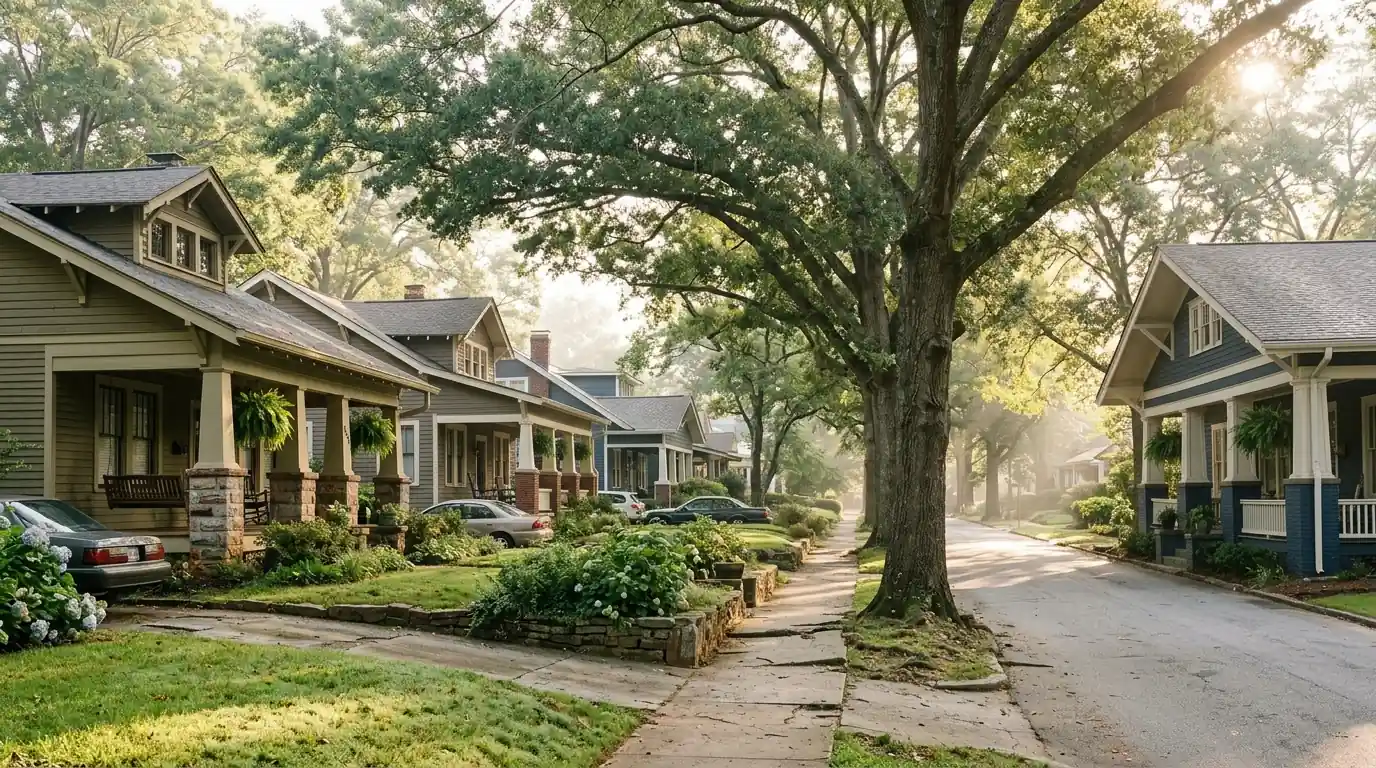
The Westside Trail on the Atlanta BeltLine runs along the edge of the neighborhood, and the blocks nearest it have seen a wave of new building. Infill homes go up on lots that held one old tree or a whole thicket, and our work there ranges from clearing brush and saplings to removing large trees that stand where a foundation is planned. The streets near Howell Park still carry older oaks and pecans worth saving.
Pecans are common on older West End lots, and they need their own care. They drop heavy limbs, especially in late summer, and they're prone to split along weak crotches. A light reduction and a deadwood cleanup usually keep them safe. Healthy pecans and oaks are also worth keeping for cost reasons, which the next section explains.
Permits, recompense and the higher 2026 fees
West End lies within Atlanta city limits in Fulton County. Removing a private tree 6 inches or more at 4.5 feet needs a permit, pines at 12 inches. Healthy trees removed under a construction or landscape permit owe recompense, and City Council raised those fees in 2025 with the new rules in effect from January 2026. Dead or hazardous trees pay no application fee and no recompense once the Arborist Division confirms them. Our permit guide explains the process, which is the same in Sylvan Hills and Adams Park.