Start with the address, not the tree
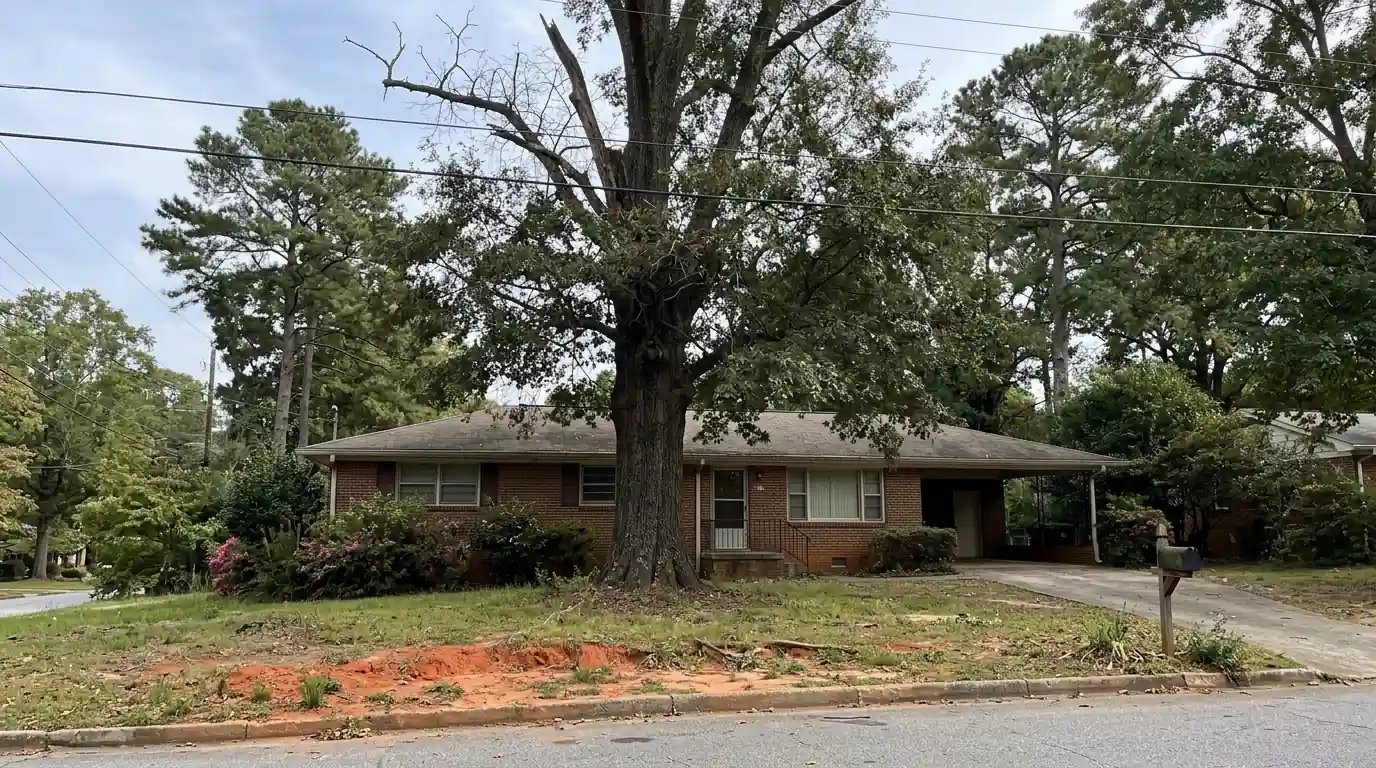
Tree rules in metro Atlanta are set by whoever governs the land under the tree. That might be the City of Atlanta, another city such as Brookhaven or Decatur, or the county when the lot sits outside any city limits. A mailing address can fool you here, because plenty of homes with an Atlanta or Decatur address actually sit in unincorporated DeKalb or Fulton. Your property tax bill names the city or county that taxes the parcel, and that is usually the quickest way to settle it.
Once you know who governs the lot, two things decide whether a permit applies: the size of the trunk and the condition of the tree. Most ordinances measure size as diameter at breast height, taken 4.5 feet above the ground. Dead, dying and hazardous trees are often handled differently from healthy ones, but different does not always mean easier.
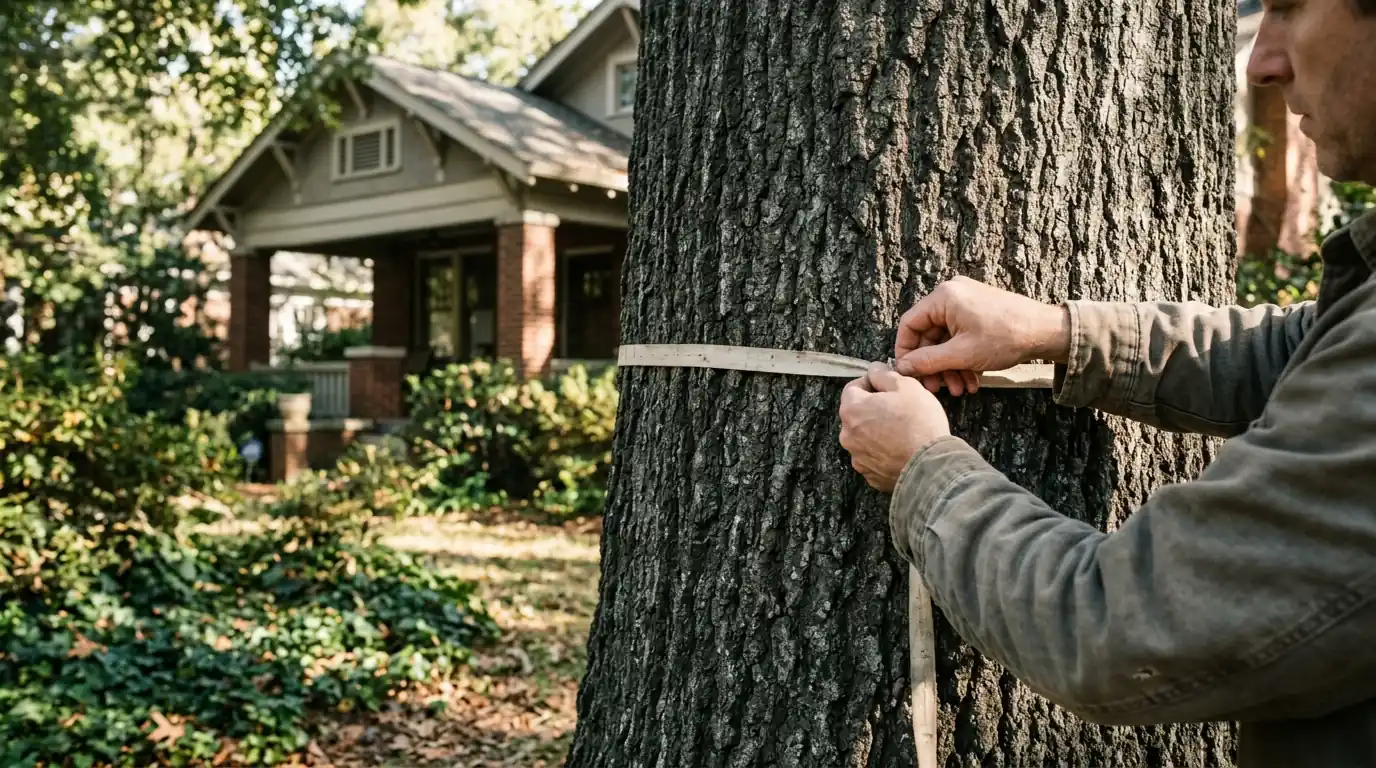
How to measure trunk diameter at 4.5 feet
You don't need forestry tools for this. Take a cloth tape measure or a length of string, find the point 4.5 feet up the trunk from the ground, and wrap it once around the bark, keeping it level. That number is the circumference. Divide it by 3.14 and you have the diameter.
A few reference points make the math easier. A wrap of about 13 inches means a 4 inch tree, which is the Brookhaven threshold. About 19 inches means a 6 inch tree, the City of Atlanta threshold for most species. About 38 inches is a 12 inch pine, where the Atlanta pine rule starts. Specimen oaks in unincorporated DeKalb begin at 30 inches across, which works out to a wrap of roughly 94 inches.
Measuring gets fussier when a trunk forks below 4.5 feet or grows on a steep bank. In those cases we measure on the site visit and photograph the tape, since that photo usually goes into the application anyway.
Inside Atlanta city limits: what needs a permit and what doesn't
Inside Atlanta city limits, removing a tree on private property needs a permit from the city's Arborist Division once the trunk reaches 6 inches in diameter at 4.5 feet. Pines get a higher bar and start at 12 inches. The rule applies to ordinary homeowner removals, not just builders clearing a lot, and it covers the backyard as much as the front.
- Healthy tree at or above the size threshold: permit required, and healthy trees removed under construction or landscape permits owe recompense.
- Dead, dying or hazardous tree: permit still required, with no application fee. The city inspects to verify the condition, and no recompense applies to a tree that qualifies.
- Pruning on private property: no permit needed, but the pruning standards in the tree ordinance still apply to the cuts.
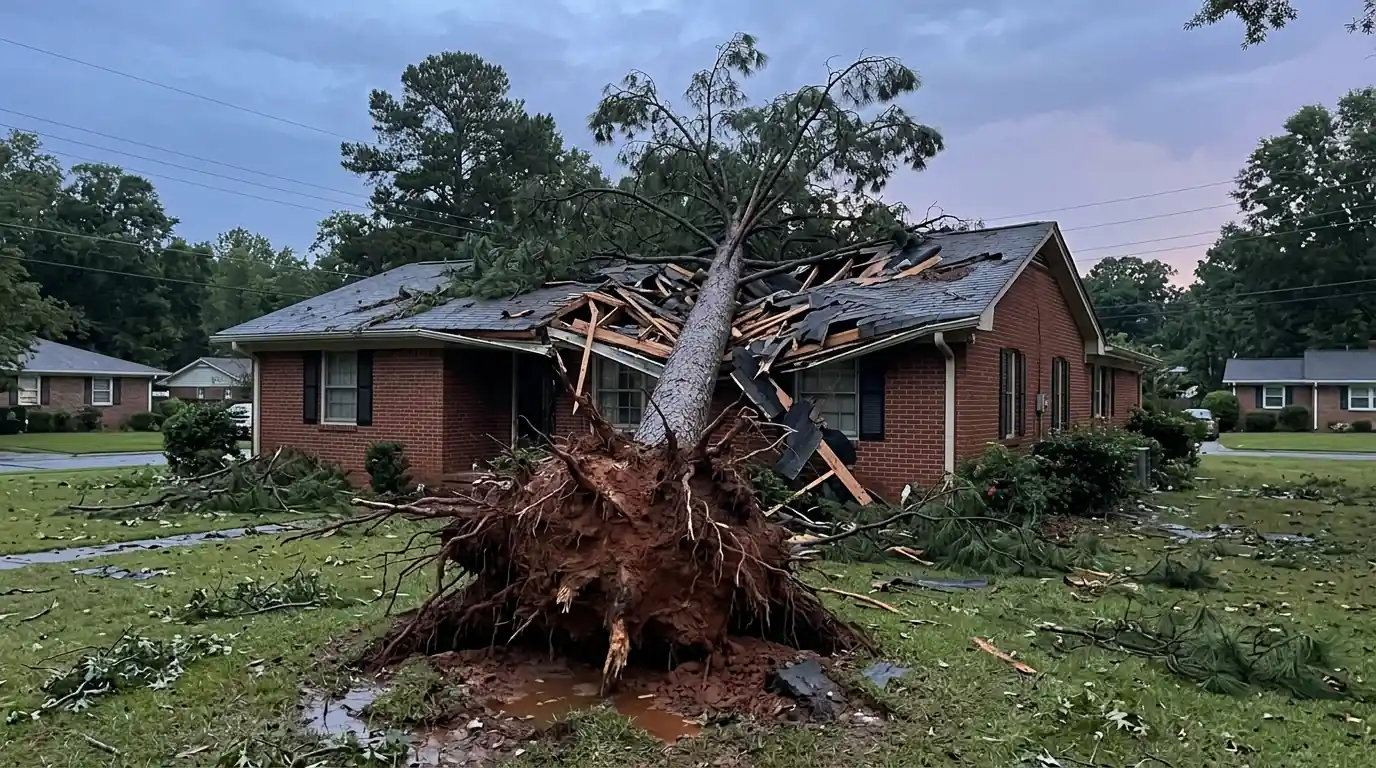
- A tree that has already fallen and is held up by the ground, another tree or a structure: no permit. Photograph it where it lies and notify the Arborist Division.
- Trees below 6 inches, or pines below 12 inches: no removal permit.
The 2025 fee and fine increases
City Council raised tree removal fees and fines in 2025, and the new rules took effect in January 2026. We won't quote amounts here, because the city sets them and can adjust them. The practical point is simple: cutting first and asking later costs more than it used to, so the permit step is worth doing right the first time.
Why the city cares about backyard trees
A Georgia Tech study commissioned by City Council put Atlanta's canopy at 45.7 percent in 2023, down from 46.5 percent in 2018, and found about 72 percent of the remaining trees on land zoned for single-family homes. Most of the city's canopy is in yards like yours.
Brookhaven, Decatur and the counties, one by one
Outside Atlanta the rules split in different directions. Here is how the places we work most often handle a homeowner removal.
Brookhaven
Brookhaven sets a low bar. A permit is required to remove any tree 4 inches DBH or larger, and that includes dead, dying and hazardous trees, subject to approval by the city arborist. Applications go through the city's online Project Portal with photos and a site plan, so expect to sketch where the tree stands relative to the house and the property lines.
Decatur
In Decatur, a permit is required for trees that are untreatably diseased or infested, and for hazard trees assessed at moderate or higher risk by a certified arborist, whose report goes in with the application. Dead trees take a different path: residents email a dead tree affirmation statement with photos. The 2022 Tree Canopy Conservation Ordinance tightened the rules on removing healthy trees, so plan on more steps for a sound tree you simply don't want.
Unincorporated DeKalb County
On a single-family lot in unincorporated DeKalb, you can remove up to five healthy, non-specimen trees per calendar year with no notice. More than five, or any specimen tree, needs a Notice of Tree Removal reviewed by the County Arborist, and that can take up to five working days. Specimen trees are overstory species such as oak, poplar and pine at 30 inches DBH or more, and understory species such as dogwood and redbud at 10 inches or more. Dead, diseased or hazardous trees can come out at any time when a certified professional documents the risk. Keep the county's 75 foot stream buffers in mind if a creek runs near the tree.
Unincorporated Gwinnett County
Homeowners on a developed single-family lot in unincorporated Gwinnett generally need no permit. The exceptions are trees in a required zoning buffer, a stream buffer, conservation or open space, a designated Tree Save Area or the Chattahoochee River Corridor, and street trees. At least two live trees must remain on the lot. The river corridor covers land within 2,000 feet of the Chattahoochee under the Metropolitan River Protection Act, and a dead tree there may be removed by hand with the stump left in place.
Every other city
Sandy Springs, Dunwoody, Roswell, Alpharetta, Duluth, Marietta and the other cities around Atlanta each set their own tree rules. We check the current rule for the specific address before we quote, because a city line can run down the middle of a street.
Dead, dying and hazardous trees still need paperwork
The most common surprise we run into is a homeowner who assumes a dead tree is exempt everywhere. In Atlanta, a dead pine still needs a permit, though there's no fee and no replacement charge once the city confirms its condition. In Brookhaven it needs a permit at 4 inches. In Decatur it needs the affirmation statement and photos. Unincorporated DeKalb lets it come out at any time, but only when a certified professional documents the risk.
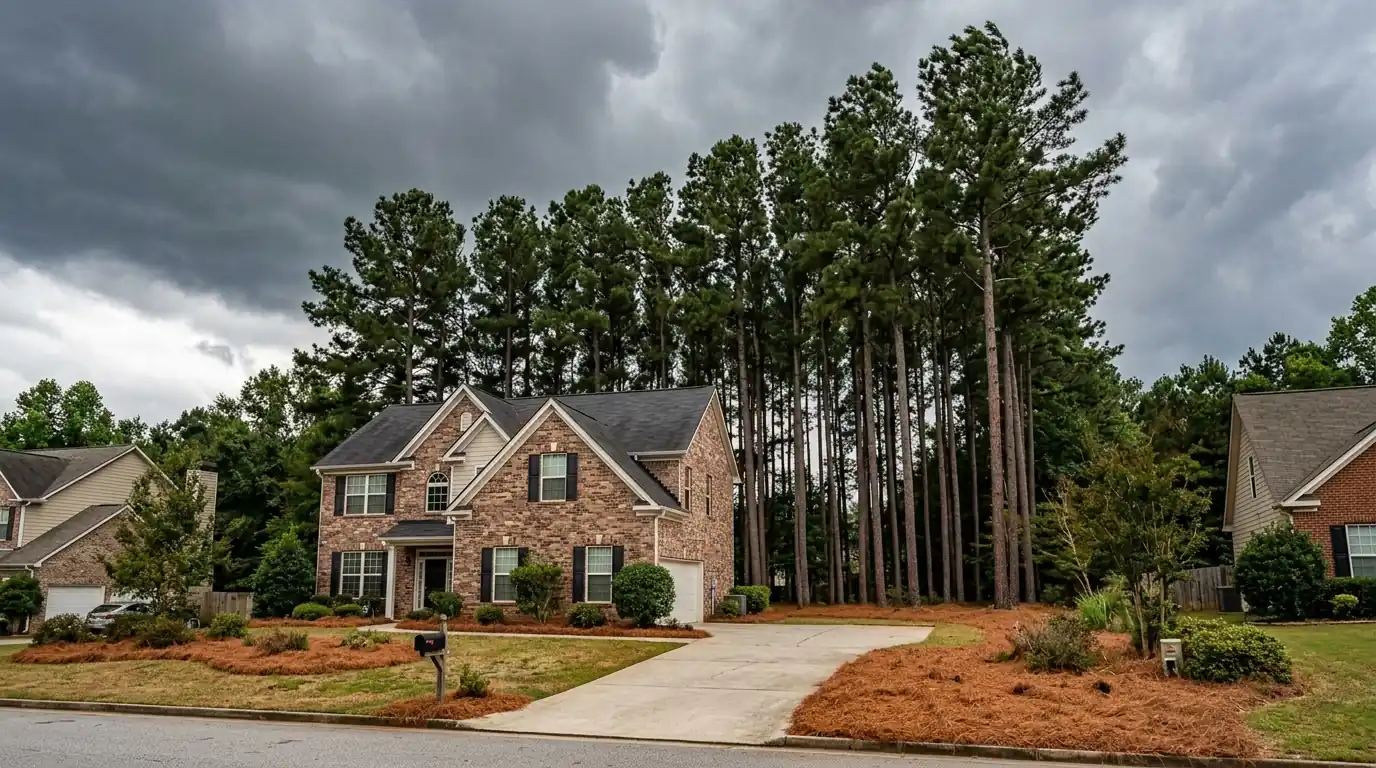
The paperwork is rarely the slow part. A dead tree gets more brittle every month it stands, and a dead pine can drop its top in a summer storm. Taking a dead tree down while the wood is still sound is safer for the climber and simpler than working a tree that has started breaking apart.
For a tree that is cracked, leaning harder or lifting its roots, the clock runs faster. When we handle a hazard removal, we document the defect with photos and measurements, which is exactly the evidence a city or county wants to see.
What we take care of before the first cut
Permit work is part of every removal quote we write inside a city with a tree ordinance. The first visit covers the steps below.
- Confirm whether the lot sits inside a city or on unincorporated county land.
- Measure the diameter at 4.5 feet and photograph the tape on the trunk.
- Note buffers, creeks, open space and street frontage that can change the rule.
- Document dead wood, cracks, decay and lean with clear photos.
- Prepare the application and keep the permit card posted on site during the work.
- Schedule the removal once the approval is in hand.
Pruning, fallen trees and where to go next
If the tree only needs trimming rather than removal, none of the Atlanta permit steps apply, though the cuts still have to meet the city's pruning standards. If a storm has already put a tree on the ground or against the house, the fallen tree rule applies instead, and our first-hour checklist walks through what to do. For everything else, our permit help covers the measuring, photos and filing so the removal date doesn't slip.
Key takeaways
- Tree rules follow whoever governs your lot, which is not always the city on your mailing address.
- Measure the trunk 4.5 feet up and divide the circumference by 3.14 to get the diameter.
- Atlanta requires a permit at 6 inches for most trees and 12 inches for pines, and dead or hazardous trees still need one, with no application fee.
- Brookhaven starts at 4 inches, while unincorporated DeKalb and Gwinnett give homeowners more room with specific exceptions.
- Atlanta raised its tree fees and fines in 2025, with the new rules in effect from January 2026.