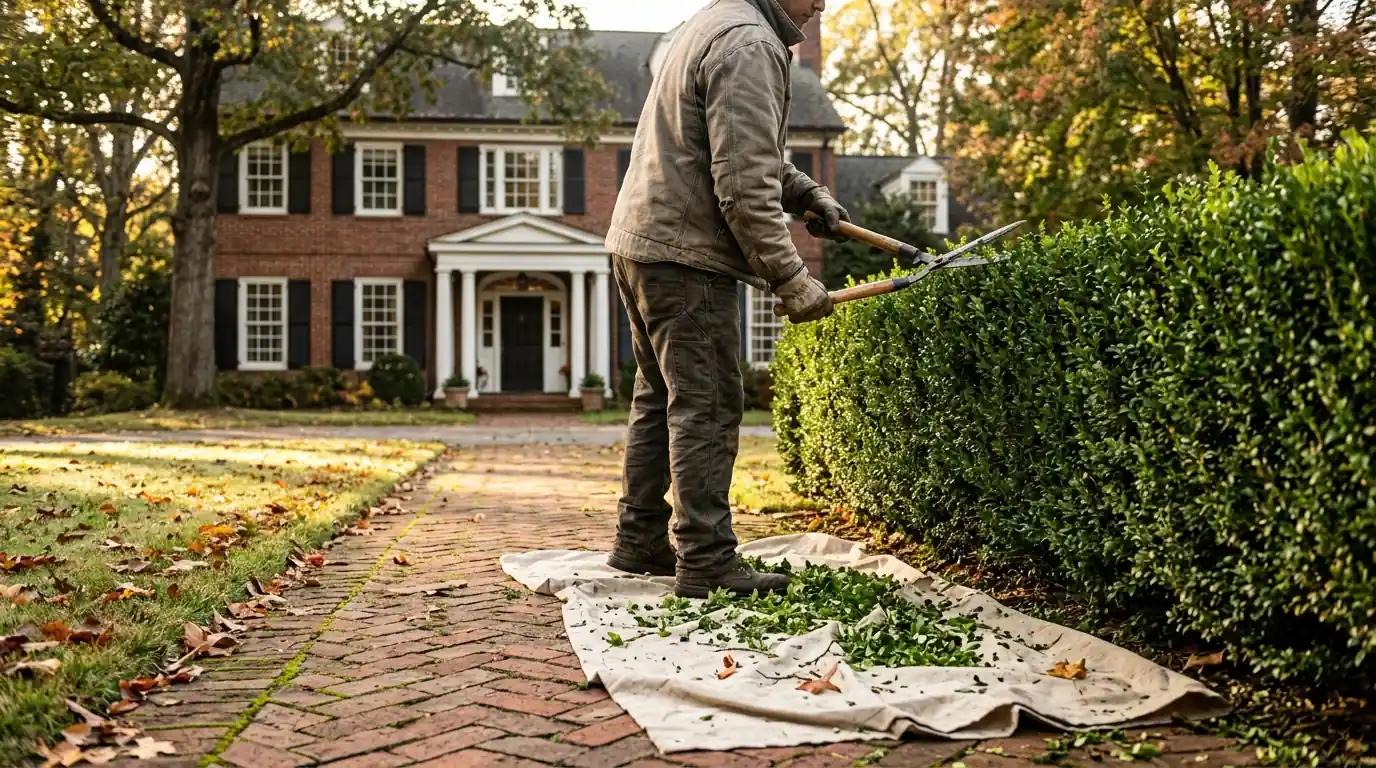
Hedge and shrub trimming covers privacy screens, foundation plantings and overgrown hedges: shearing for a formal edge, selective cuts to thin and reduce, and hard rejuvenation for shrubs that have gotten away from you. In Atlanta yards, the usual work is Leyland cypress screens, hollies, ligustrum, Chinese privet and boxwood. Leylands bring their own warnings, since canker and sudden collapse are common here, so we check the screen for dead sections while we trim.
What hedge and shrub trimming covers on an Atlanta lot
Most yards have more shrub than tree. A privacy screen along the back fence, a row of hollies under the front windows, boxwoods lining the walk and a tangle of privet along the property line all need regular attention. Left alone for a few years, they swallow windows, push into walkways and turn into dense thickets that are hard to bring back.
Our hedge and shrub work ranges from a light shearing that sharpens the edges of a formal boxwood row to a hard cutback on privet that's grown fifteen feet tall. We decide the approach based on the plant, how long it's been since it was cut and what you want it to look like.
Many customers schedule this alongside a tree trimming visit. The setup, ladders, chipper and cleanup are already in place, so pairing the two saves time and keeps the whole yard looking finished at once. It also lets us look at the whole planting together: a hedge that's thin at the bottom is often shaded out by a tree limb above it, and one visit can fix both.
Leyland cypress screens: canker and collapse warnings
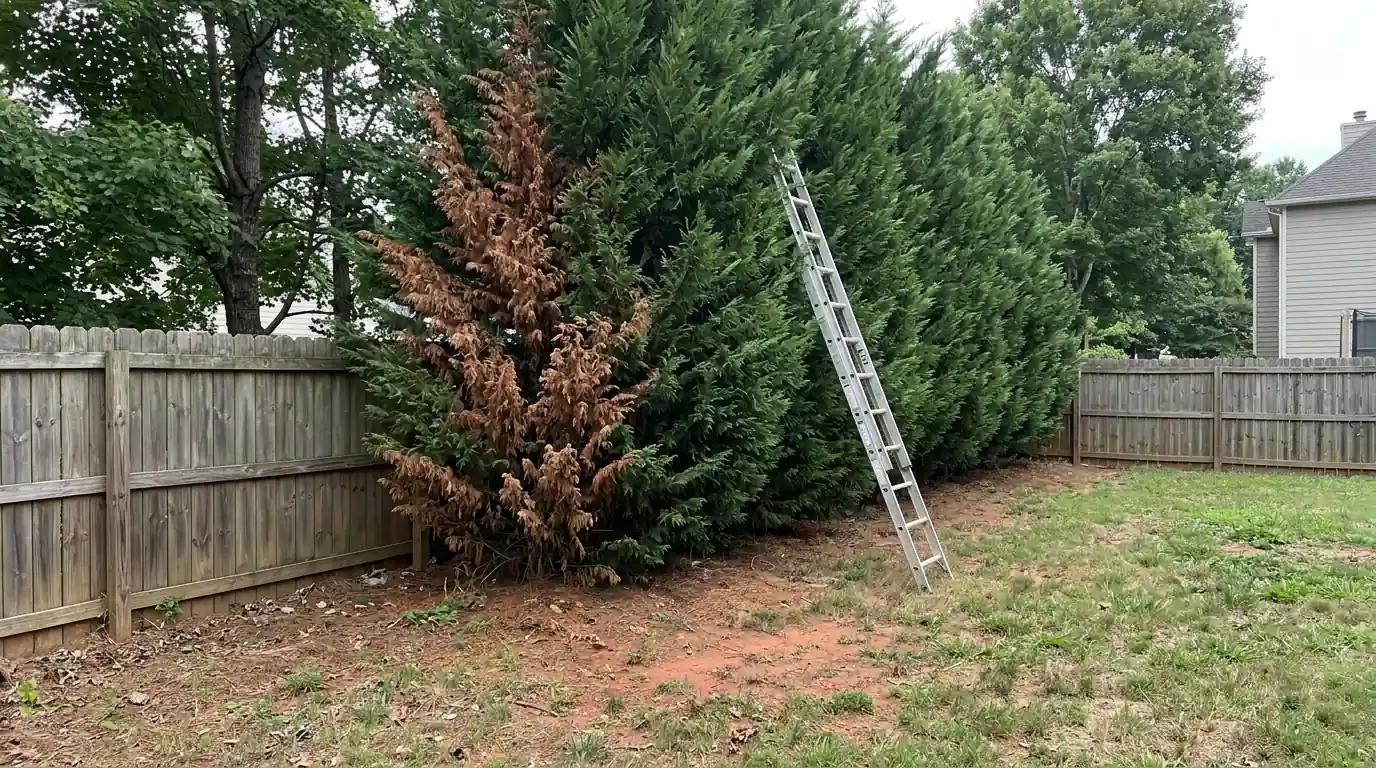
Leyland cypress was planted by the thousands across metro Atlanta for fast privacy screens. It grows quickly, but it struggles in Georgia's heat, humidity and clay. Fungal cankers are common and show up as brown or dead sections, often with resin oozing from the bark. Once canker takes hold, it tends to spread through the screen.
Leylands also don't regrow from old, bare wood, so a hard cutback leaves permanent brown gaps. And because they grow tall with shallow roots, large Leylands can fall over in storms, especially on wet clay. We trim Leylands lightly and often, remove dead sections, and tell you honestly if a screen is too far gone to save. Sometimes the right move is to replace it with a mix of sturdier plants.
Hedges and shrubs we trim most often
These plants dominate Atlanta landscapes, and each one has its own needs.
Leyland cypress
Fast-growing screens that need regular light trimming. They don't regrow from bare wood, so heavy cutbacks leave permanent brown gaps.
Holly
American, Chinese and yaupon hollies respond to selective cuts and moderate shaping, and many can be cut back hard if needed.
Ligustrum
Tough and fast. Ligustrum takes shearing well and can be rejuvenated, but it seeds aggressively if left to flower.
Chinese privet
An invasive that forms dense thickets. It tolerates hard cutbacks and often needs removal from property lines and woodland edges.
Boxwood
Classic formal shrubs that need careful shearing. We watch for blight and leaf miners and avoid cutting into bare wood.
Foundation shrubs
Azaleas, loropetalum, camellias and others under windows and along walls get trimmed to clear siding, vents and sight lines.
Signs a hedge or shrub needs more than a trim
A routine trim fixes most hedges, but these signs point to a bigger job.
Bare at the bottom
Hedges sheared wider at the top than the base shade out their own lower branches, leaving bare stems near the ground.
Brown sections in a screen
Dead patches in Leyland cypress or arborvitae usually mean canker or root stress, not a missed trim.
Taller than the house gutters
A hedge that has outgrown ladder reach needs a reduction plan, not another round of clipping at the old height.
Shrubs touching siding
Foundation shrubs pressed against the walls trap moisture and give insects a bridge into the house.
Privet seedlings everywhere
Young privet popping up in beds and along the fence means the parent hedge is fruiting and spreading.
Vines running through the hedge
English ivy, wisteria and smilax climbing through a hedge choke it from inside and need to be pulled at the roots.
How a hedge and shrub visit ends
Cleanup is built into every hedge visit, and this is what you should see when we leave.
- Clippings raked out of beds, lawns, gravel and mulch.
- Walkways, driveways and patios swept or blown clear.
- Gutters and window sills checked for clippings from tall hedges.
- Brush chipped or hauled, never left in a pile behind the shed.
- Hedge tops level, sides tapered slightly so the base gets light.
- Foundation shrubs cleared from siding, vents and windows.
- Any dead or diseased sections pointed out to you before we go.
How we rejuvenate an overgrown privet or ligustrum hedge
Privet and ligustrum can be brought back from almost any state, but it takes a plan.
- 1
Decide how far to go
We agree on whether to cut back by a third, by half or all the way down to a short stump, depending on how overgrown it is.
- 2
Cut back in late winter
Late winter, before new growth starts, gives the hedge the full season to regrow.
- 3
Remove the oldest stems
On a gradual rejuvenation, a third of the oldest, thickest stems are cut to the base each year for three years.
- 4
Hard cut if needed
For very overgrown privet, the whole hedge can be cut to a foot or two tall. It regrows from the stumps in one season.
- 5
Shape the regrowth
As new shoots come in, we shear or pinch them to encourage branching low on the plant for a fuller hedge.
- 6
Haul everything away
Privet and ligustrum produce a lot of brush, and we chip or haul all of it so nothing reseeds in your yard.
Hedges, screens and privet along Atlanta property lines
Leyland cypress screens are everywhere in the suburbs. In Lawrenceville and across Gwinnett County, many were planted along back fences when the subdivisions were new, and now they tower over the fence, thin at the bottom and show canker. We trim what can be saved and tell you plainly when a screen has reached the end.
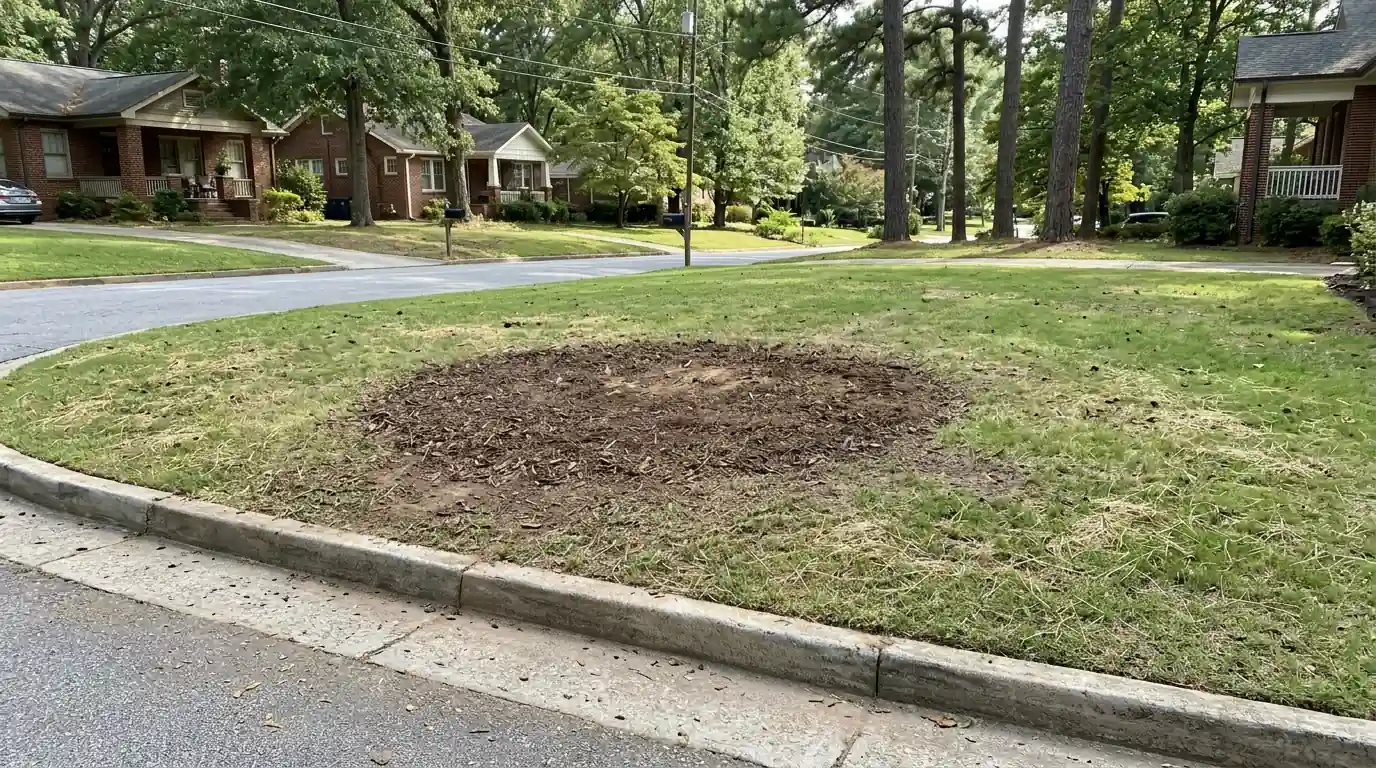
Chinese privet is the other big issue. It's an invasive that spreads from fence lines into woodland edges and creek banks across metro Atlanta. In Tucker and Lilburn, it's common to find property lines choked with it. Cutting it back hard and hauling it away is often the first step, and for larger stands, our brush removal service handles the bigger cleanup.
Hand shearing versus selective cutting
Different shrubs need different approaches, and many hedges benefit from both over time.
| Hand shearing | Selective cutting | |
|---|---|---|
| What it does | Clips the outer surface to a clean, even edge | Removes whole stems back to a branch or the base |
| Suits | Boxwood, privet, ligustrum and formal hedges | Hollies, overgrown shrubs and natural screens |
| How it looks | Tidy, crisp and formal | Natural, open and less clipped |
| Effect on the inside | Outer growth thickens and the interior can thin out over time | Light reaches the interior and keeps it leafy |
| How often | Once or twice a year to hold the edge | Every year or two, or as needed |
What hedge and shrub trimming costs
| Job | Typical range | Priced |
|---|---|---|
| Hedge or shrub row | $145 to $590 | per visit |
Hedge and shrub trimming is priced by the visit, based on the length and height of the hedges, how many shrubs there are and how overgrown they've become. A short boxwood row takes much less time than a hundred feet of overgrown Leyland cypress that needs a ladder and a lot of hauling.
Cleanup and hauling are included. Rejuvenation cutbacks on privet or ligustrum produce a lot of brush, which affects the price, and tall screens that need ladders on uneven ground take longer than a waist-high row. Pairing hedge work with a tree trimming visit usually costs less than scheduling them separately. Our price guide has the typical per-visit range.
Where we do hedge and shrub trimming around Atlanta
Crews work from our Atlanta office near the 30340 ZIP and our Duluth office. These are the places we cover most, with their main ZIP codes. See all 56 areas.
- Buckhead 30305
- Virginia-Highland 30306
- Druid Hills 30307
- Morningside 30324
- Grant Park 30312
- Kirkwood 30317
- Cascade Heights 30311
- Sandy Springs 30328
- Dunwoody 30338
- Brookhaven 30319
- Decatur 30030
- Duluth 30096
- Lawrenceville 30046
- Marietta 30060
- Smyrna 30080
- Roswell 30075
- Alpharetta 30009
- Johns Creek 30097