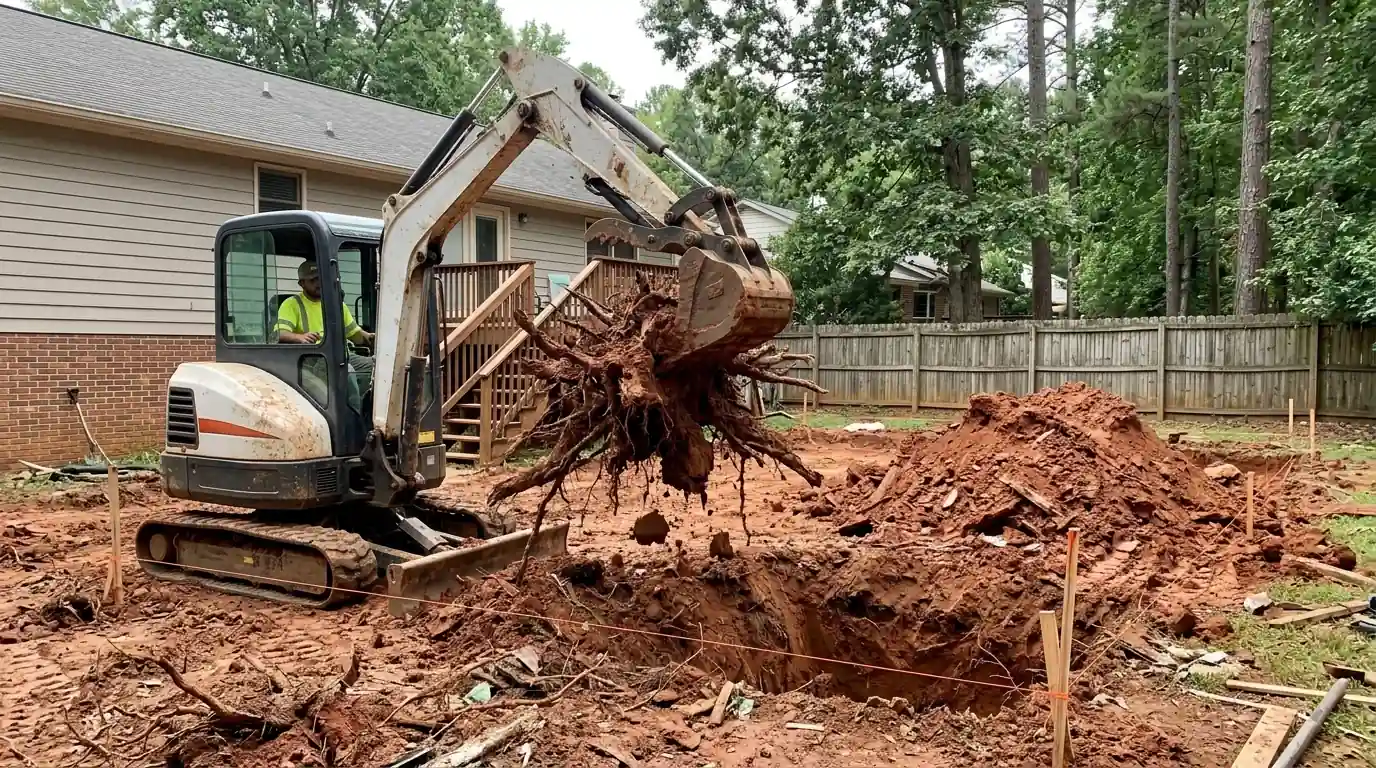
Stump removal means excavating the entire stump and the root ball beneath it, instead of grinding the top few inches away. You need it when the spot will carry a patio, driveway, addition, fence post or replacement tree. In Atlanta the dense red clay holds a root ball tightly and settles badly if backfilled loose, so we fill in compacted layers and file a Georgia 811 locate before any digging.
When a ground stump isn't enough
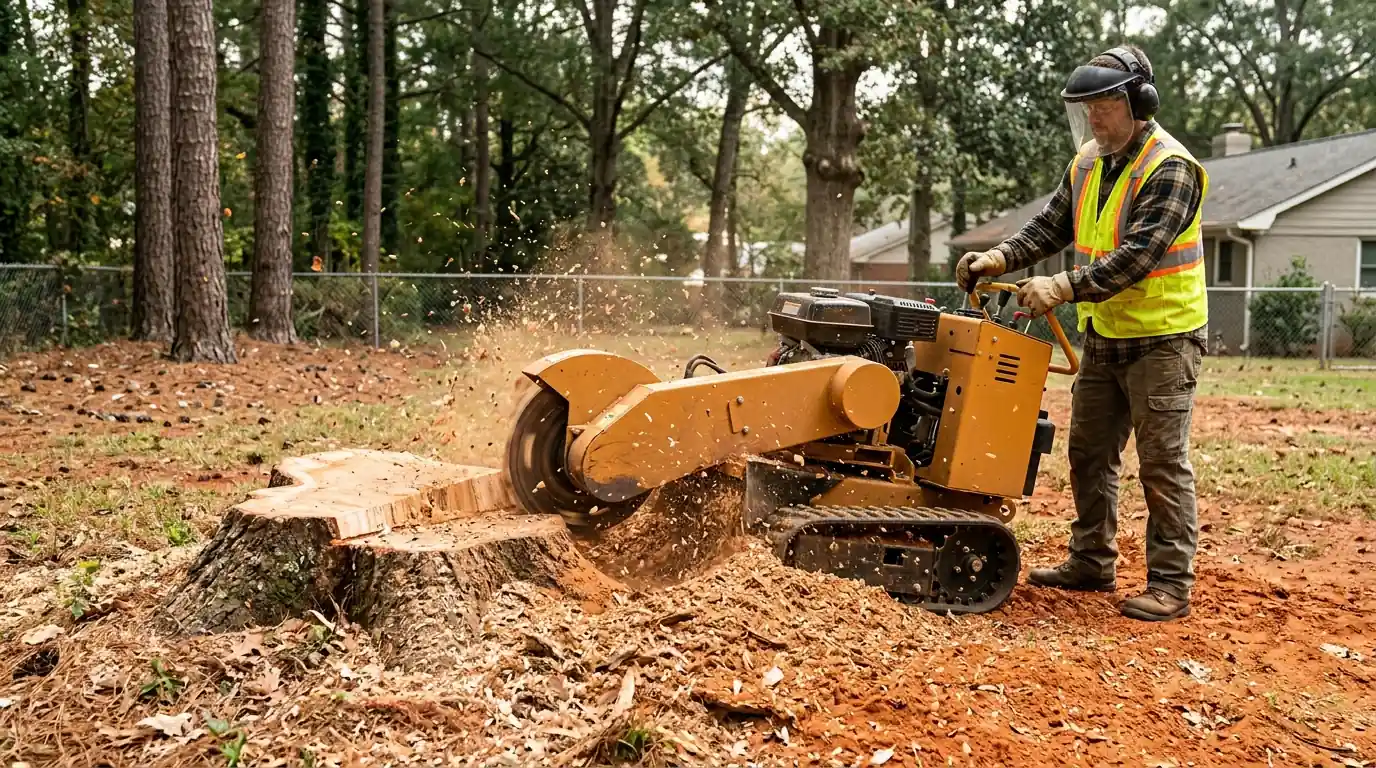
Grinding leaves the root ball in place, and over the next several years it rots. Under a lawn that hardly matters, because a little settling is easy to top off with soil. Under a concrete patio, a paver walk, a driveway apron or the corner of an addition, that slow rot turns into a low spot, a cracked slab or a footing the inspector won't pass.
Full removal is also the right call when you want to plant a new tree exactly where the old one stood. A young tree set into a ground stump sits in rotting chips over a mass of dead roots, and it rarely establishes well. Removing the root ball and refilling with good soil gives the new tree a fair start.
Fence builders run into the same problem. A post hole that lands on an old stump can't be dug with an auger, and shifting the whole fence line to dodge it rarely looks right. Pulling the stump lets the posts go back on their true spacing, set in concrete on solid soil instead of wedged against a slowly rotting root.
Protecting nearby trees and buried lines
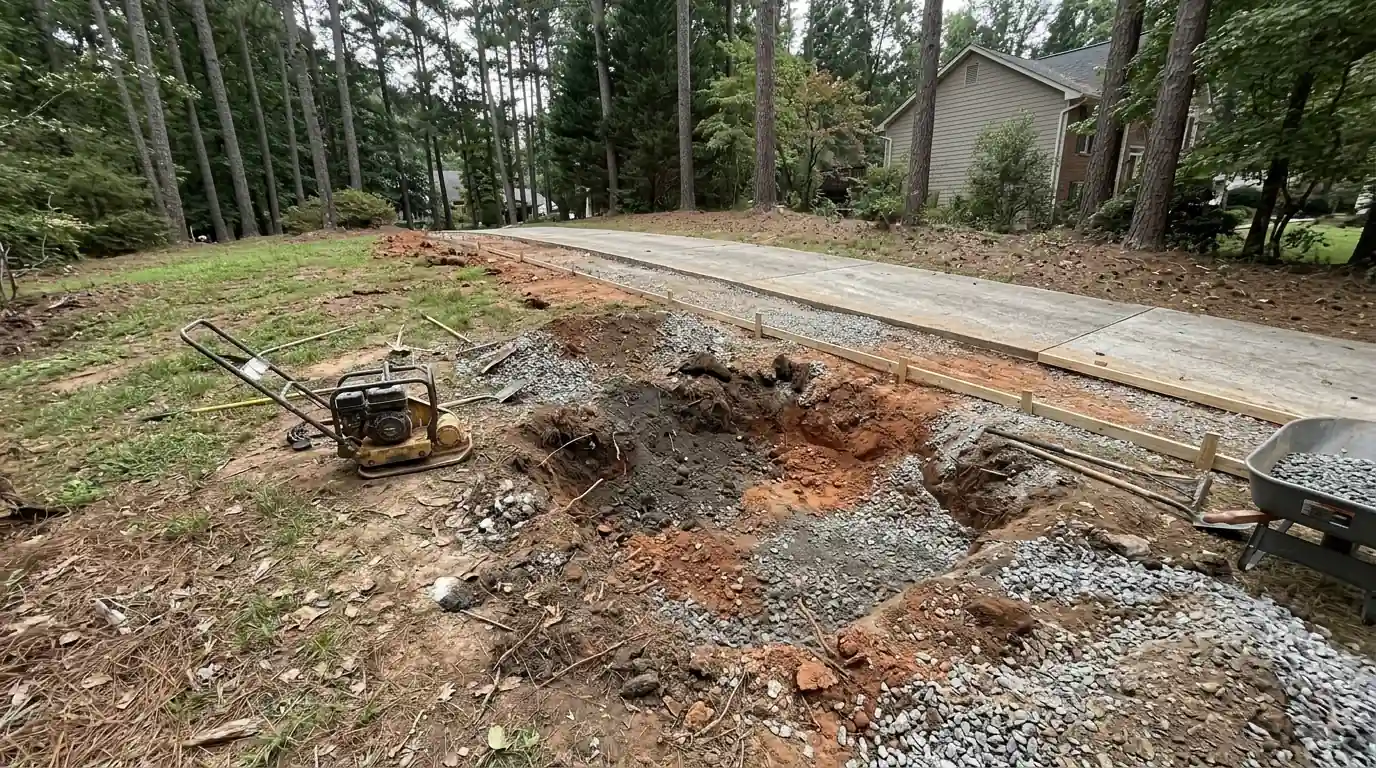
A root ball doesn't come out alone. Roots from the old tree tangle with roots from its neighbors, so a careless pull can tear into a healthy oak a few feet away. We cut the old roots cleanly at the edge of the hole before lifting, which keeps the damage to the tree you're keeping as small as the job allows.
Buried lines are the other concern. Older lots often have a water service, a gas line or a sewer lateral running within a few feet of a big tree, and roots wrap right around them. Within the marked tolerance zone around a located line we dig by hand, and if a line is wrapped in roots we cut it free piece by piece rather than pulling.
Projects that usually need the stump pulled
If any of these are planned for the spot, tell us before the tree comes down so the stump can be left tall enough to work.
Patios and paver walks
A paver base needs firm, even ground. A rotting root ball under it shows up as a dip within a few seasons.
Driveway widening
Concrete and asphalt crack over soft spots, so the old stump has to come out before the subgrade is cut.
Additions and sheds
Footings and slab-on-grade sheds can't bear on decaying wood. An inspector may want the hole backfilled and compacted.
Fence lines
Posts set on even spacing often land right on an old stump, and grinding doesn't leave a hole you can set concrete in.
Replanting in the same spot
A new tree planted into old roots and chips struggles. Pulling the root ball and adding fresh soil gives it a real start.
Pools and regrading
Any project that digs below the surface will hit the root ball anyway, so removing it first keeps the excavator crew on schedule.
How we dig out a stump and root ball
The machine does most of the lifting, but the order of the work is what keeps nearby lines and roots intact.
- 1
Locate and plan
We file a Georgia 811 locate, mark private lines with you and decide where the machine will travel and where the spoil pile sits.
- 2
Expose the roots
We dig around the stump and cut the main lateral roots with a saw, so they sever cleanly instead of tearing toward a line or another tree.
- 3
Lift the root ball
An excavator or mini excavator rocks and pries the stump free, with hand digging close to anything the bucket shouldn't touch.
- 4
Clean the hole
Loose root pieces and rotten wood are pulled so nothing soft is buried under the fill.
- 5
Backfill in lifts
Soil, or crushed stone under hardscape, goes back in thin layers, each one compacted before the next goes in.
- 6
Haul and grade
The stump and roots are hauled, the surface is graded to match, and the spot is ready for your contractor or for planting.
What to settle before stump removal day
A stump extraction disturbs more ground than grinding, so a little planning keeps the yard and the project on track.
- Tell us what the spot is for, since a patio base, a footing and a planting hole each get different backfill.
- Share any site plan or contractor layout so we know the finished grade we're working toward.
- Point out irrigation, landscape lighting, septic lines and pet fence wire, which Georgia 811 does not mark.
- Pick a spot for the spoil pile and the machine path, ideally across a driveway rather than wet lawn.
- Let neighbors know if the machine needs to travel close to the shared fence line.
- If the tree is still standing, ask us to leave a few feet of trunk so the excavator has something to grip.
What stump removal costs and why it varies
| Job | Typical range | Priced |
|---|---|---|
| Full stump and root-ball extraction | $385 to $1,240 | per stump |
Stump removal costs more than grinding because it moves far more material. The width of the root flare, the species (oak and hickory hold on harder than pine), how wet and heavy the clay is, and how close the stump sits to lines, foundations or other trees all change the time on site. Machine access counts too: a mini excavator through a side gate is slower than a larger machine from the driveway.
Our price includes digging, backfilling with site soil and hauling the stump. Imported fill, crushed stone under hardscape and topsoil with seed are separate when a project calls for them. Typical ranges are on our cost page, and pairing removal with the tree takedown keeps the stump tall enough for the machine to grip.
Stump grinding or full stump removal
Both get rid of the stump you see. The difference is what stays underground.
| Stump grinding | Full stump removal | |
|---|---|---|
| What stays in the ground | Root ball and roots, left to rot | Little beyond fine and outer roots |
| Fits | Lawns, beds, mowing areas | Slabs, pavers, footings, fence posts, replanting |
| Equipment | Compact grinder | Excavator or mini excavator, plus hand digging |
| Disturbance | Small area, light chips | Larger hole, spoil pile, machine tracks |
| Later settling | Some, as roots rot | Minimal when backfill is compacted |
Stump removal on Atlanta lots and red clay
Georgia red clay grips a root ball tightly, and when it's wet it gets heavy and sticky enough to double the effort of a lift. It also settles badly if it goes back loose, which is why we compact the backfill in layers instead of just shoving the spoil into the hole. In dry weather the same clay sets up hard, and we sometimes pre-wet the ground around a big stump.
Most removals we do sit in the way of a planned project. In Smyrna and Marietta it's often a stump in the path of a new patio or driveway extension. Intown, in neighborhoods like Grant Park, it's usually a fence line or a small addition behind an older house. If the tree is still standing inside city limits, a removal permit may come first, and our permit help covers that step.
Where we do stump removal around Atlanta
Crews work from our Atlanta office near the 30340 ZIP and our Duluth office. These are the places we cover most, with their main ZIP codes. See all 56 areas.
- Buckhead 30305
- Virginia-Highland 30306
- Druid Hills 30307
- Morningside 30324
- Grant Park 30312
- Kirkwood 30317
- Cascade Heights 30311
- Sandy Springs 30328
- Dunwoody 30338
- Brookhaven 30319
- Decatur 30030
- Duluth 30096
- Lawrenceville 30046
- Marietta 30060
- Smyrna 30080
- Roswell 30075
- Alpharetta 30009
- Johns Creek 30097