In Ormewood Park we remove deadwood from mature oaks, trim limbs off cottage roofs and take down failing trees in small backyards. Big willow and water oaks tower over most backyards, with crape myrtles and dogwoods out front. Removal permits come from the City of Atlanta for any trunk 6 inches or wider at 4.5 feet, or 12 inches for pines. We pick up the phone 24/7.
Deadwood high in the big oaks
Deadwood is the most common reason people here call us. Walk down Ormewood Avenue on a summer evening and look up: many of the willow and water oaks carry gray, leafless limbs high in the crown, some as thick as a thigh. Those limbs don't need a storm to fall. They let go on calm days once the wood dries and the bark slips, and they land on whatever sits below, whether a deck, a car or a garden bench.
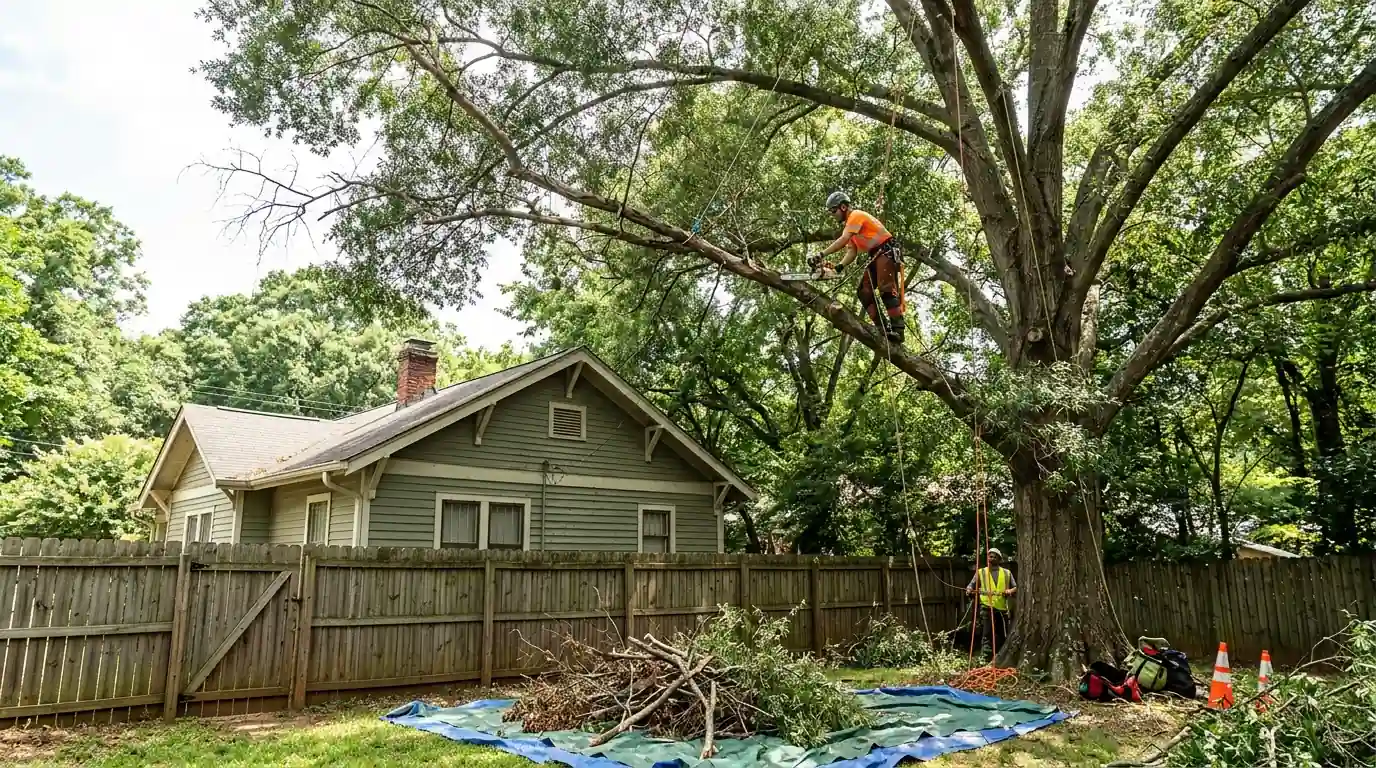
Taking out deadwood means climbing, not trimming from a ladder. Our climber ties in high, works out along each limb and either drops the dead piece into a clear spot or lowers it on a rope when the yard below is full. We remove the dead and broken wood, check the attachment points for decay and note any limb that looks ready to die back next. Our deadwood service page explains what each visit covers.
Side gates, small backyards and carrying everything out
Most cottages here sit close to their neighbors, and the backyard is reached by a single gate between the house and the fence. Some of those gates are barely wide enough for a wheelbarrow. That limits what equipment can reach the tree, so we plan the job around it: a compact grinder that fits through narrow openings, brush carried out in armloads and logs cut into rounds small enough to roll.
When a large oak in a small backyard has to come out, the lowering line does the heavy work. Each piece is cut light, lowered onto mats and carried to the chipper at the street. We protect the lawn, the fence and the gate posts, and if the neighbor's yard offers the only clear path, we ask before anyone steps through it. Our removal service page covers the full process.
Smaller trees out front, and how to prune them right
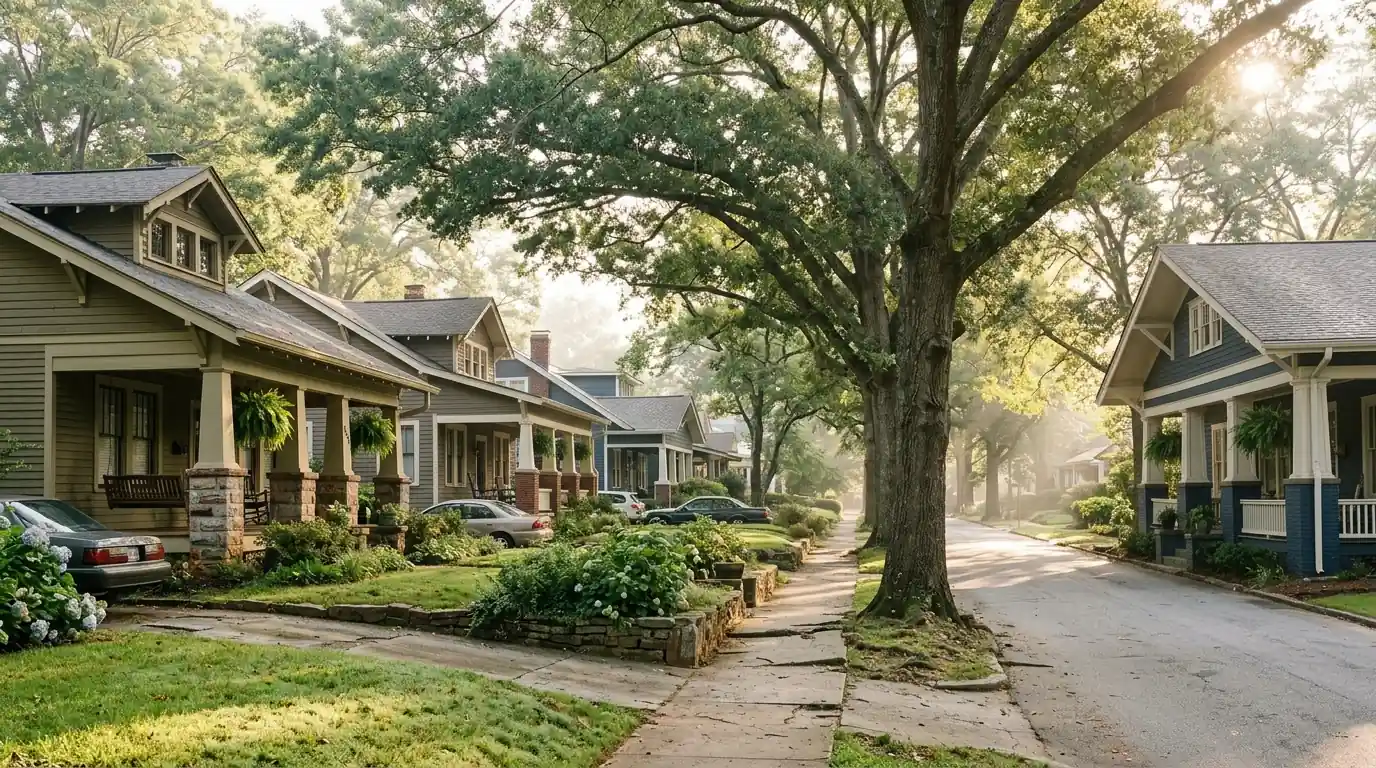
Ormewood Park front yards lean toward crape myrtles, dogwoods and ornamental trees, often planted close to the porch. Crape myrtles here are sometimes topped every winter, a habit known as crape murder, which leaves knuckled stubs and weak sprouts. We prune them back to their natural shape instead, removing crossing stems and suckers so the trunks show.
Dogwoods in shady front yards are prone to anthracnose, which spots the leaves and kills small twigs. Thinning the crown for air movement and removing infected wood helps. Our guide to pruning crape myrtles without topping walks through the cuts we make and the ones we won't.
City rules and the neighborhoods around this one
Pruning deadwood needs no permit, which is one reason so much of our work here skips the paperwork. Taking a tree down is another matter. Ormewood Park falls inside Atlanta city limits on the Fulton side, and the city wants a permit for any private trunk 6 inches across at 4.5 feet, or 12 inches for a pine. A dead or hazardous oak still goes through the Arborist Division, but the filing is free, an inspector checks the tree and no recompense follows.
Glenwood Avenue ties this neighborhood to the ones around it. Owners in Grant Park to the west and East Atlanta to the east face the same aging oaks and tight access, and we work the whole stretch.