Why we work from the top down
Atlanta is a city of big trees on small lots. A water oak planted when a Brookhaven ranch house went up in the 1950s is now taller than the house and wider than the yard, and it leans over a roof that cannot take a hit. Felling that tree whole is not an option, so our crews climb it, rig it and lower it in pieces.
That approach takes more people and more rope than dropping a tree into an open field. It is also the reason customers call us back for the next tree. The fence is still standing, the gutters are still on and the lawn has no ruts.
How a job is handled
The person who answers the crew line takes the address, asks what is under the tree and sets up a time to look. At the visit we check the tree, measure the trunk for permit rules and walk you through how it will come down. The quote lists the method, the cleanup and what happens to the wood.
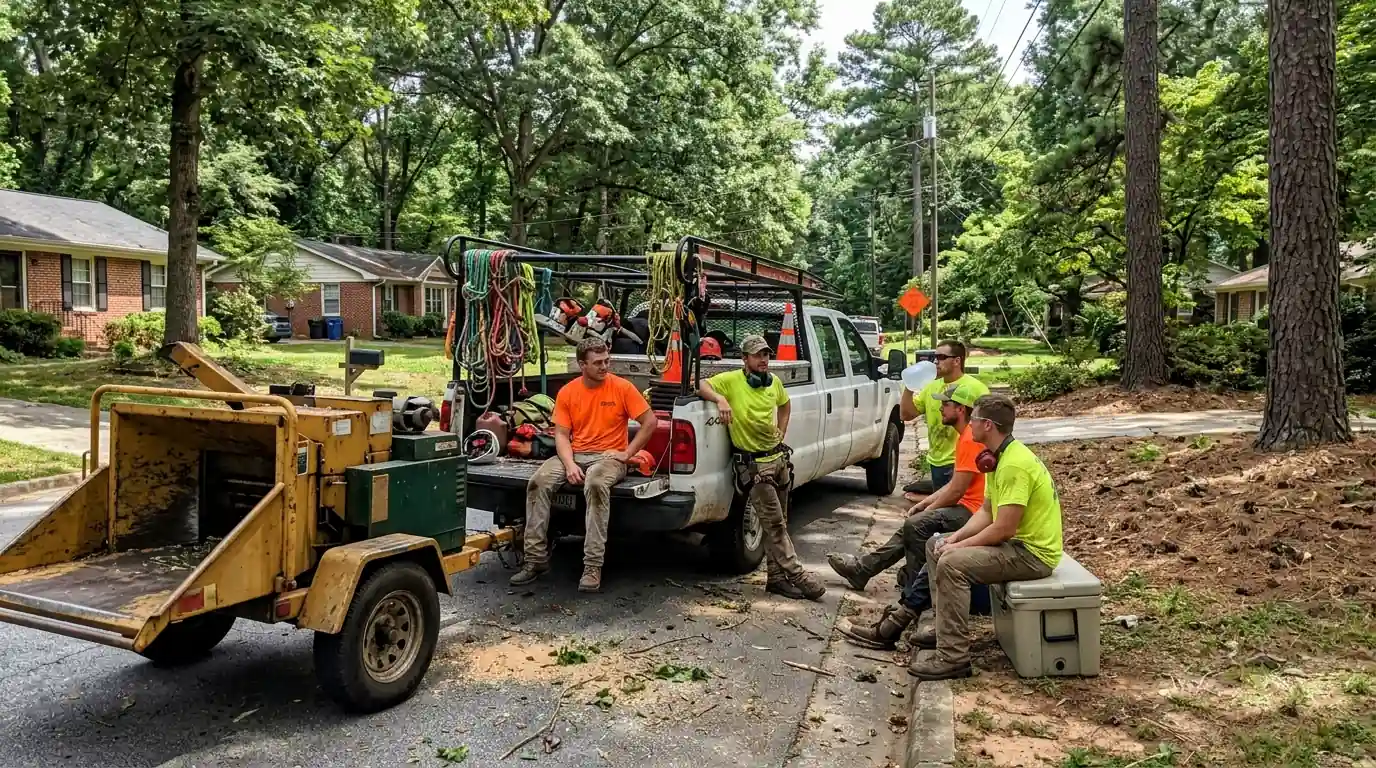
On the day, mats go down first and the climber goes up second. Wood is lowered, chipped, hauled or stacked, and the yard is raked and blown before the trucks pull out. If anything changes once a climber is in the tree, such as decay we could not see from the ground, you hear about it before the plan changes.
Two offices, one phone line
The Atlanta office on Chestnut Drive puts crews close to Buckhead, Brookhaven, Dunwoody and the intown neighborhoods. The Duluth office covers Gwinnett and the river cities to the north. Both share one crew line, answered 24/7, so a storm call at midnight reaches someone who can help.
Who writes the Tree Blog
Ira Yarbrough, Tree Blog Editor
Ira Yarbrough edits the Tree Blog. The articles answer the questions our crews hear most, from Atlanta's permit rules to how a water oak fails, and every one is checked against what we see on real jobs. Read the Tree Blog.