We remove, trim and protect trees across Garden Hills, Peachtree Heights and the streets that drain toward Peachtree Creek. Willow oaks, white oaks and tulip poplars tower over houses built from the 1920s through the 1950s, often right beside a new rebuild. Buckhead sits inside Atlanta city limits, so removing a tree 6 inches or more at 4.5 feet (pines 12 inches) needs an Arborist Division permit. Call the 24/7 line and we'll come measure.
Old hardwoods over Garden Hills and Peachtree Heights houses
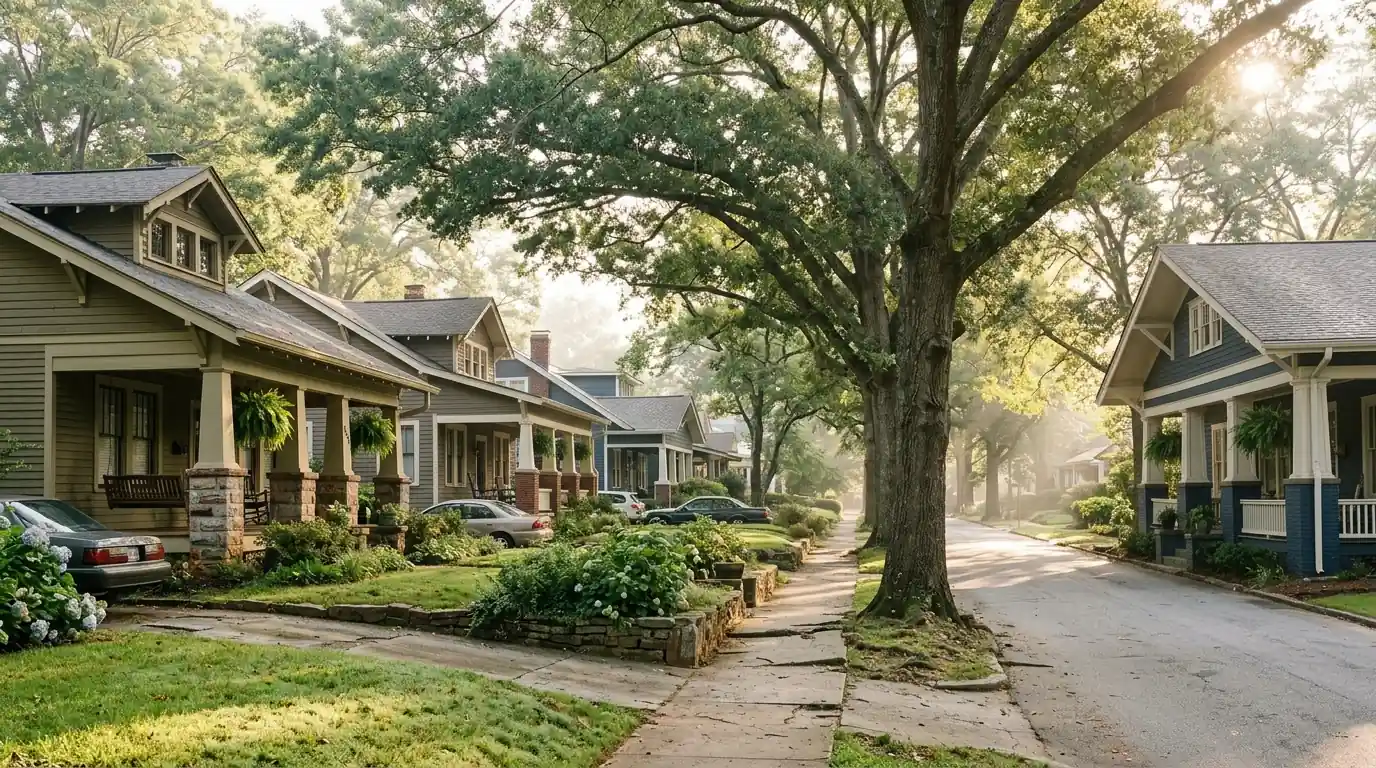
Garden Hills and Peachtree Heights were laid out for families who wanted shade, and they got it. Many of the willow oaks and white oaks on these streets now spread wider than the houses beneath them, with limbs reaching across two or three yards. Brick colonials and Tudors from the 1920s through the 1950s sit right under them, gutters packed with leaves by every November.
Most of our calls here are about one heavy limb rather than a whole tree. A willow oak that has carried a long horizontal limb over the roof for decades starts to droop, or a white oak drops a dead branch onto the driveway in a summer storm. Careful reduction cuts and deadwood pruning fix a lot of that without taking the tree.
Water oaks are the exception. Planted heavily in the middle of the last century, many are near the end of a short life, with hollow trunks and dead tops that look fine from the sidewalk. When a mallet test and a look at the root flare show the trunk is going, we say so plainly and price the removal instead of selling a trim that only buys a season.
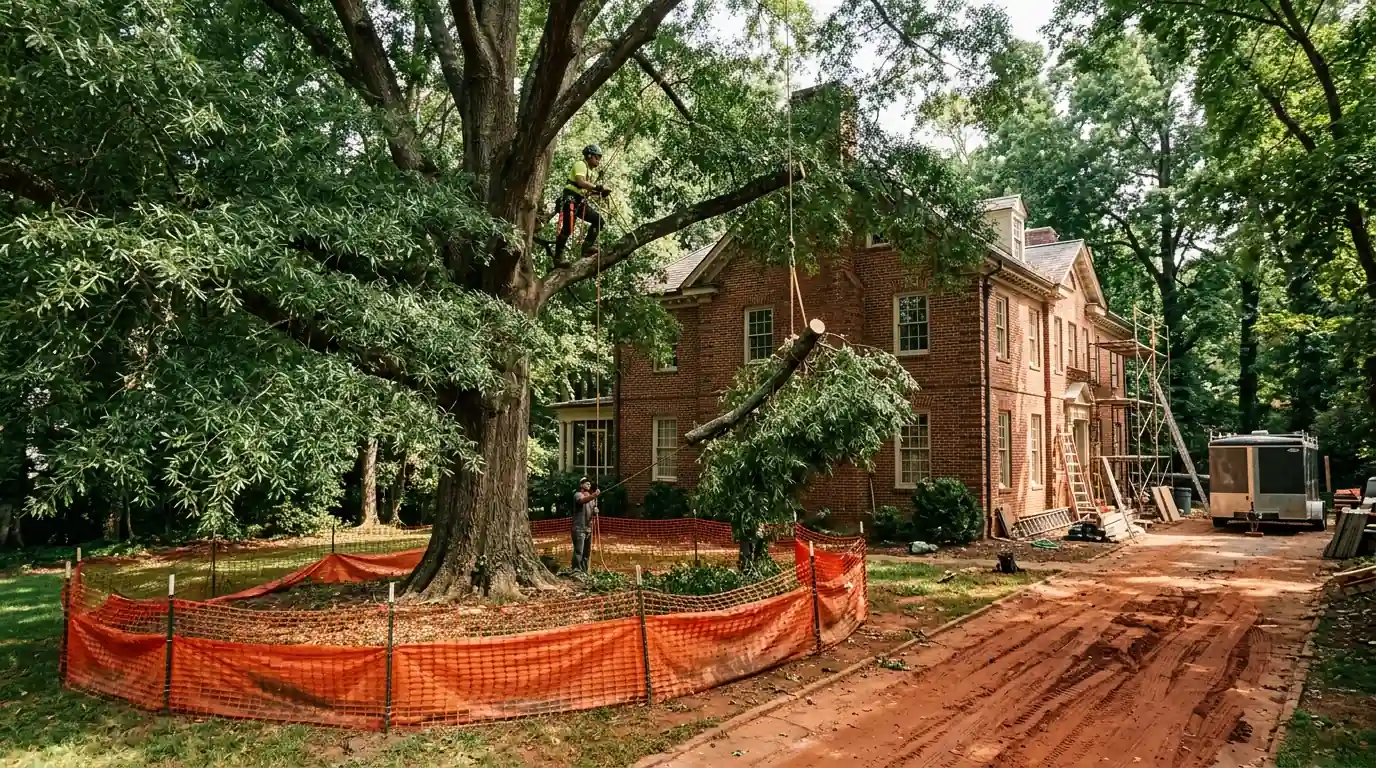
Protecting the trees you keep through a teardown and rebuild
Teardowns are steady in Buckhead, and construction is the quiet killer of big trees here. Excavators compact the red clay over the root zone, trenches for new sewer and power lines cut through roots, and a few years later a healthy-looking oak thins out at the top. Stressed oaks are also where Hypoxylon canker appears, the bark sloughing away to show a dark crust underneath.
We set up construction tree protection before the machines arrive: fencing at the drip line, mulch and mats where trucks must cross, and clean cuts where roots have to be severed. It helps to call us early, while the site plan can still shift a driveway or a footing a few feet away from a trunk.
Healthy trees removed under a construction or landscape permit owe recompense to the city. City Council raised those fees and fines in 2025, and the new rules took effect in January 2026. That makes a good oak worth more standing on a rebuild than it used to be, and it puts the permit math into every builder conversation we have, here and up the road around Chastain Park.
How the Atlanta permit applies on a Buckhead lot
Every Buckhead address we work on falls inside Atlanta city limits and in Fulton County. Removing a private tree 6 inches or more in diameter at 4.5 feet above grade needs a permit from the city Arborist Division, and pines start at 12 inches. We measure the trunk on the first visit, so you know before the quote whether a permit applies, and our permit rules guide covers the rest.
Dead, dying and hazardous trees still need the permit, but there's no application fee, the city inspects to confirm the condition, and no recompense applies once it qualifies. Pruning needs no permit, though the city's pruning standards still govern the cuts. Along Peachtree Creek, low ground and saturated clay make any lean worth watching after a long rain, and a risk check costs far less than a tree on the roof.