We remove and prune large trees on Milton's horse farms, estates and wooded lots, from Crabapple out along Birmingham Highway. Most jobs involve big white oaks, southern red oaks, tulip poplars and pines over pasture fences, barns, long driveways and riding rings. Milton sets its own tree rules, and we check what applies to the property before we quote. Larger lots also mean longer haul distances and soft ground, which we plan around. The phone is answered 24/7.
Old oaks along fence lines and around the barns
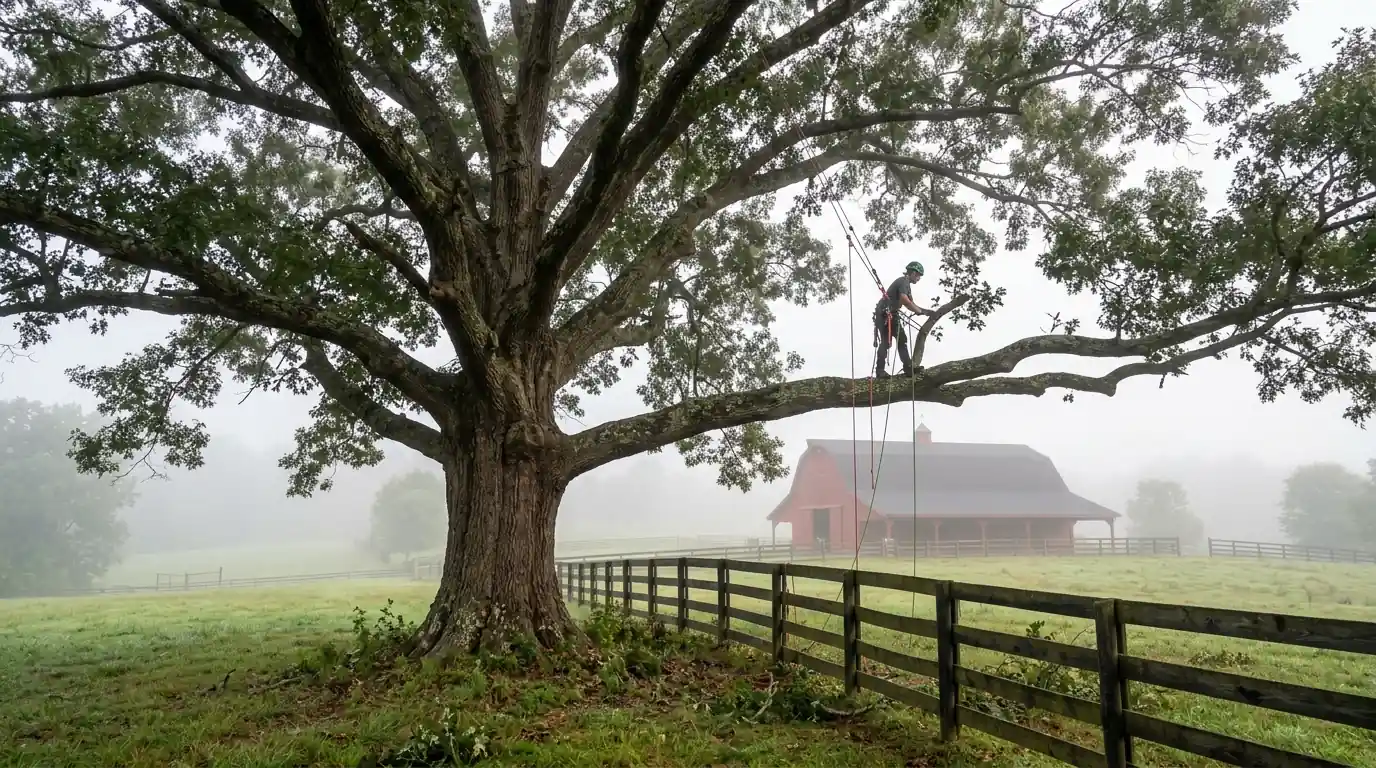
Many of Milton's biggest trees grew up along old field edges, so they stand right on the fence lines between pastures. Open-grown white oaks and southern red oaks there spread wide, with long horizontal limbs reaching over the boards and into the paddocks. When one of those limbs fails in a storm, it can flatten a run of fence and leave horses loose on the road. Around barns, the risk is a heavy limb over a roof, a run-in shed or the hay storage.
Most of this work is careful pruning, shortening the longest limbs over fences and roofs, taking out deadwood and cutting back to proper unions so the tree seals the wounds. A cracked fork in a big oak may be worth a cable. We also keep an eye out for wild black cherry along the fence rows, since its wilted leaves after a storm are toxic to horses, and owners often want broken cherry limbs out of the pasture the same visit.
Big trees, long drives and soft pasture ground
Large lots change how a removal runs. The tree may stand several hundred feet from the nearest pavement, across a pasture that ruts the moment a loaded truck rolls over it after rain. We wait for firm ground where we can, lay mats across soft spots and carry or skid wood to a chipper parked on the drive. Owners usually want horses moved out of the paddock for the day, and gates closed behind us.
Where a dead oak or a hollow poplar stands in open pasture with nothing in reach, it can often be felled whole into a clear lane, which is the quickest and least costly way down. A big tree beside a barn or house is different, and a crane or sectional rigging is the safer route. Our hazard tree work starts with that question: what is within reach of the fall.
Crabapple, the newer streets and Milton's tree rules
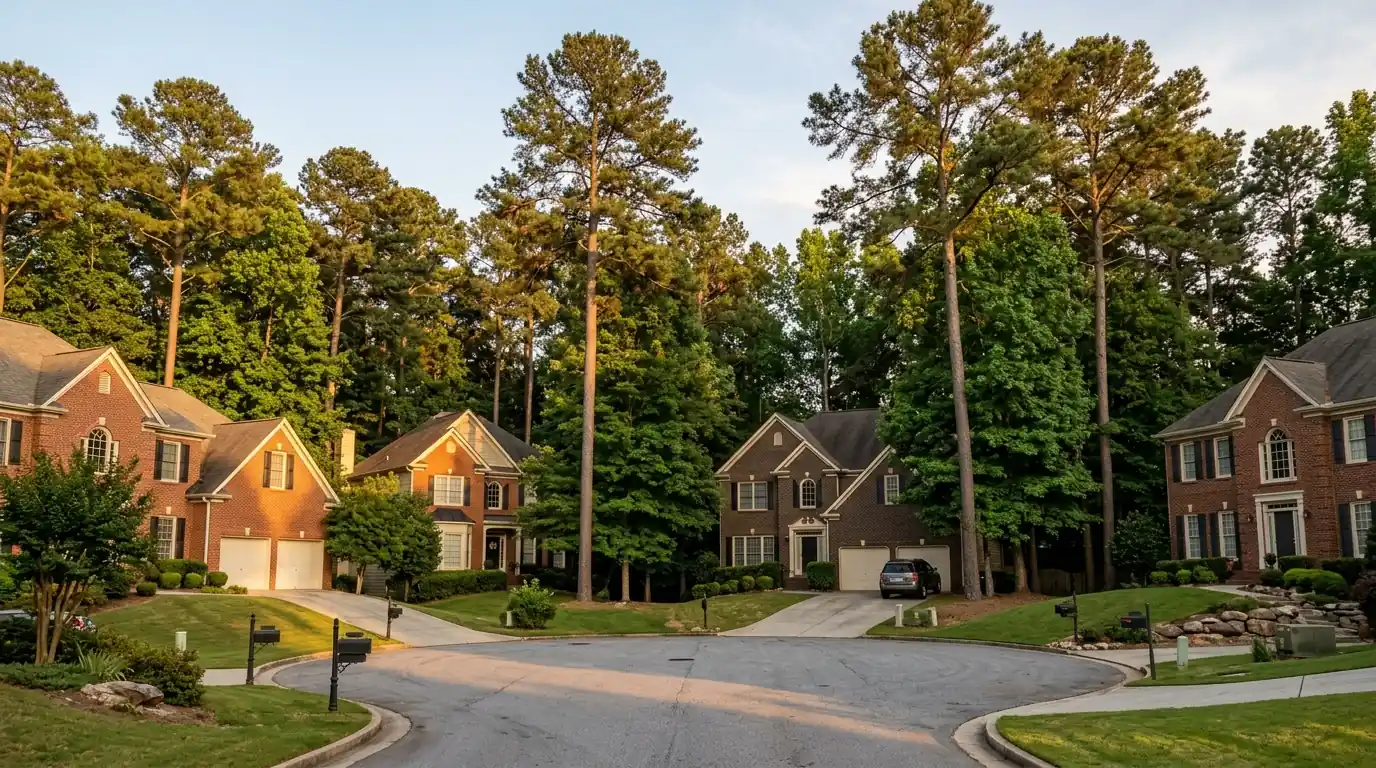
Around Crabapple and the newer subdivisions, the lots are smaller and the job list looks more like the rest of north Fulton: pines too close to new houses, Bradford pears splitting at their forks and hardwoods over decks. Out along Birmingham Highway and Freemanville Road, the work turns rural again, with fence-line oaks, cedar rows and clearing for a new ring or pasture.
The City of Milton sets its own tree rules, and they can differ for a single tree on a home lot and for clearing tied to building or new pasture. We check what the city requires for the property before quoting and gather the measurements and photos any application needs. The same big-lot work carries across into Alpharetta and north into Cumming, and our Fulton County page covers the rest of the county.