Storm cleanup, removals and pruning on big wooded lots are the core of our Tucker work, where 1960s and 1970s homes sit among tall white oaks, southern red oaks, loblolly pines and tulip poplars. After a storm we clear roofs, driveways and fences, then take down damaged trees in sections. Tucker became a city in 2016 and sets its own tree rules, which we check for your address before we quote. Our line is answered 24/7.
Big wooded lots and the storms that test them
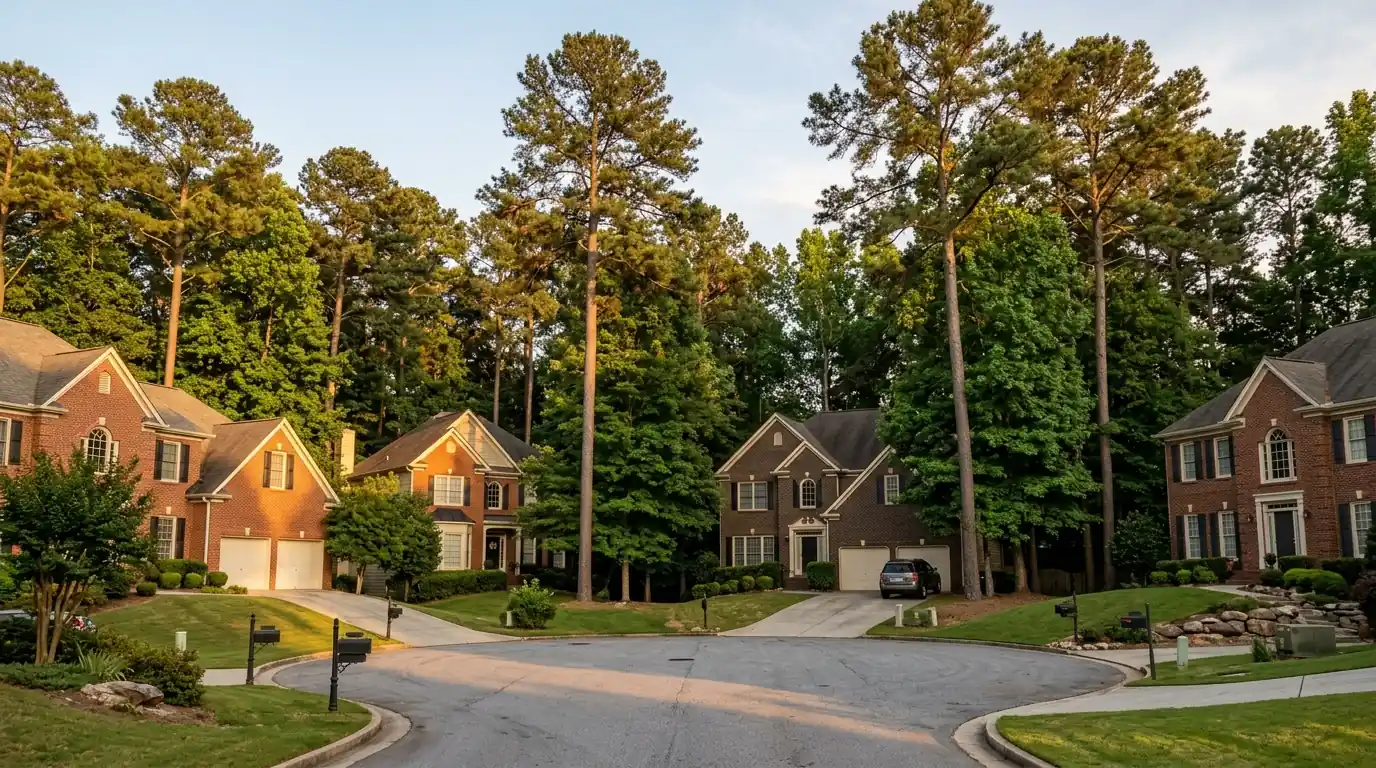
A lot of Tucker still feels like the woods it was cut from. Houses from the 1960s and 1970s sit well back from the road, and the back half of many lots was never cleared at all. That means more trees per house than in most of DeKalb, and more of them tall enough to reach the roof if they fall.
Summer thunderstorms are the usual trigger. Gusts hit the tallest pines and poplars first, and after a week of rain on Georgia red clay the shallow roots can let go. Tropical Storm Helene showed how quickly that happens: on September 27, 2024, soaked ground let trees go over onto homes across metro Atlanta, and wooded lots like Tucker's are exactly where that risk sits.
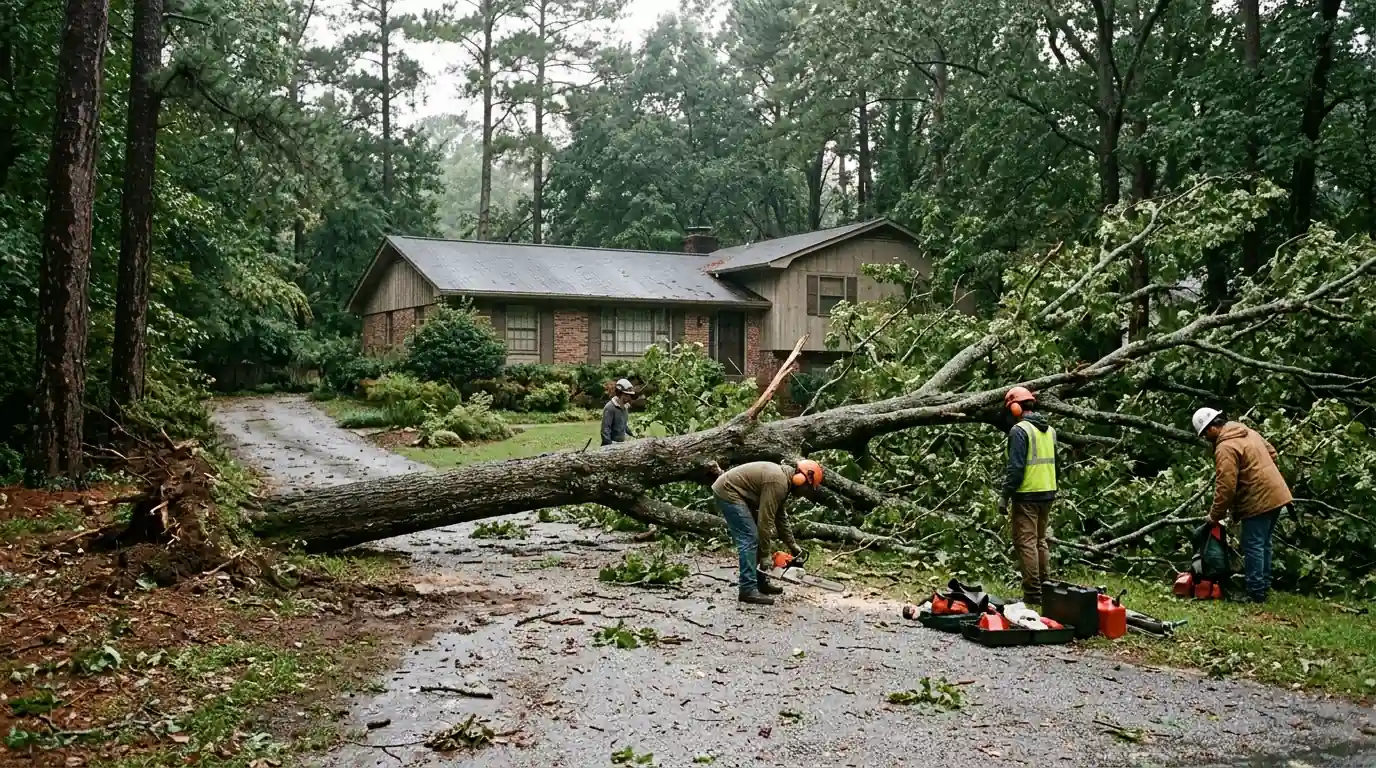
What storm cleanup looks like on a Tucker property
The first job after a storm is making things safe. If a tree is on the house, we take the weight off the roof in pieces rather than dragging the trunk free, which can tear rafters. If wires are involved, we treat any downed line as energized and wait for Georgia Power. Then we open the driveway so you can get a car out.
Once the urgent work is done, the rest of the storm cleanup follows: cutting fallen trees into rounds, chipping the brush, removing hangers caught in the canopy, and taking down any tree left cracked or leaning. Our article on the first hour after a tree hits a house covers what to do before we arrive.
Tucker's own rules and the trees worth keeping
Tucker became its own city in 2016, and it sets its own tree rules rather than following unincorporated DeKalb. We look up what the city requires before quoting a removal, and storm work is no exception: we tell you what has to be documented or filed once the urgent danger is cleared.
Not every tree near the house needs to go. Many of the white oaks along Tucker's wooded lots are sound, slow-growing trees that can live far longer than a water oak or a pine. A risk assessment sorts the trees that should come down from the ones that just need deadwood cleared or a heavy limb reduced.
Near Main Street Tucker and Henderson Park
Closer to Main Street Tucker, lots get a little smaller and the trees closer together, so removals there lean more on rope work and rigging. Out toward Henderson Park, the lots open up and back yards run deep into hardwoods, where a big poplar or oak can sometimes be felled into a clear lane.
Each setting calls for a different plan. A clear lane saves time and cost, but only when the wood is sound and nothing sits within reach of the fall. Hickories and sweetgums in those back woods drop a steady supply of nuts and gumballs, and the sweetgum surface roots catch mower blades, so some owners ask us to thin the stand rather than clear it. Next door in Chamblee and Lilburn, the lots and trees are similar, and the same storm habits apply.