Limb clearance over roofs and service drops fills most of our Virginia-Highland calendar, along with removals done entirely by climbing and hand lowering, since narrow side yards and parked-up streets leave no room for a bucket truck or crane. Willow and water oaks dominate, with crape myrtles and dogwoods out front. The neighborhood sits inside Atlanta city limits, so a tree 6 inches or more at 4.5 feet (pines 12) needs a city permit. Call any hour.
Oaks that outgrew the bungalows beneath them
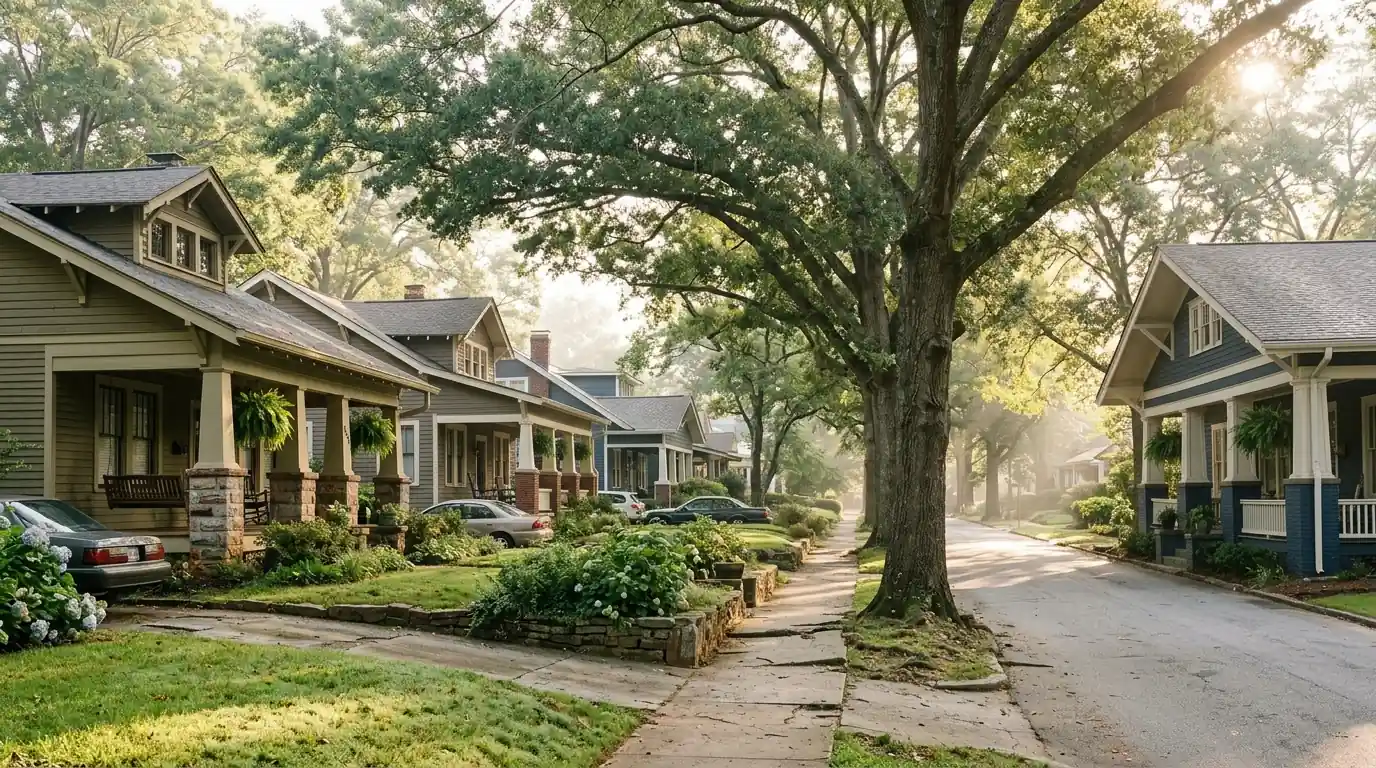
Houses here went up close together, on lots that run deep and narrow back from the street. Oaks planted along those blocks a century ago now spread across two or three roofs at once, and a single willow oak can shade a whole row of porches between North Highland Avenue and Piedmont Park. Most of our work is keeping those trees and the houses beneath them on good terms.
The trouble is usually limbs rather than whole trees. Branches settle onto shingles and wear through them, scrape gutters, or grow into the service drop running from the pole to the house. Cutting back overhanging limbs and lifting the lower crown clears the roof without leaving the tree looking butchered. Front-yard crape myrtles get topped all over the neighborhood, and our crape myrtle guide shows the better way.
Working around service drops and Georgia Power lines
Wires run overhead on most Virginia-Highland streets, and the drop to each house often threads straight through an oak crown. Georgia Power prunes trees that threaten its own lines on its maintenance cycle, but the limb over your drop and your roof is usually yours to deal with. If a branch is resting on any wire, report it to Georgia Power and treat the line as energized.
We never cut around a live line. When a job needs work close to wires, we coordinate with the utility first and plan each cut so nothing swings into them. A limb tangled in wires after a thunderstorm is a job for tree work near power lines, and it starts with that call to Georgia Power rather than with a saw.
Climbing, hand lowering and carrying wood through side yards
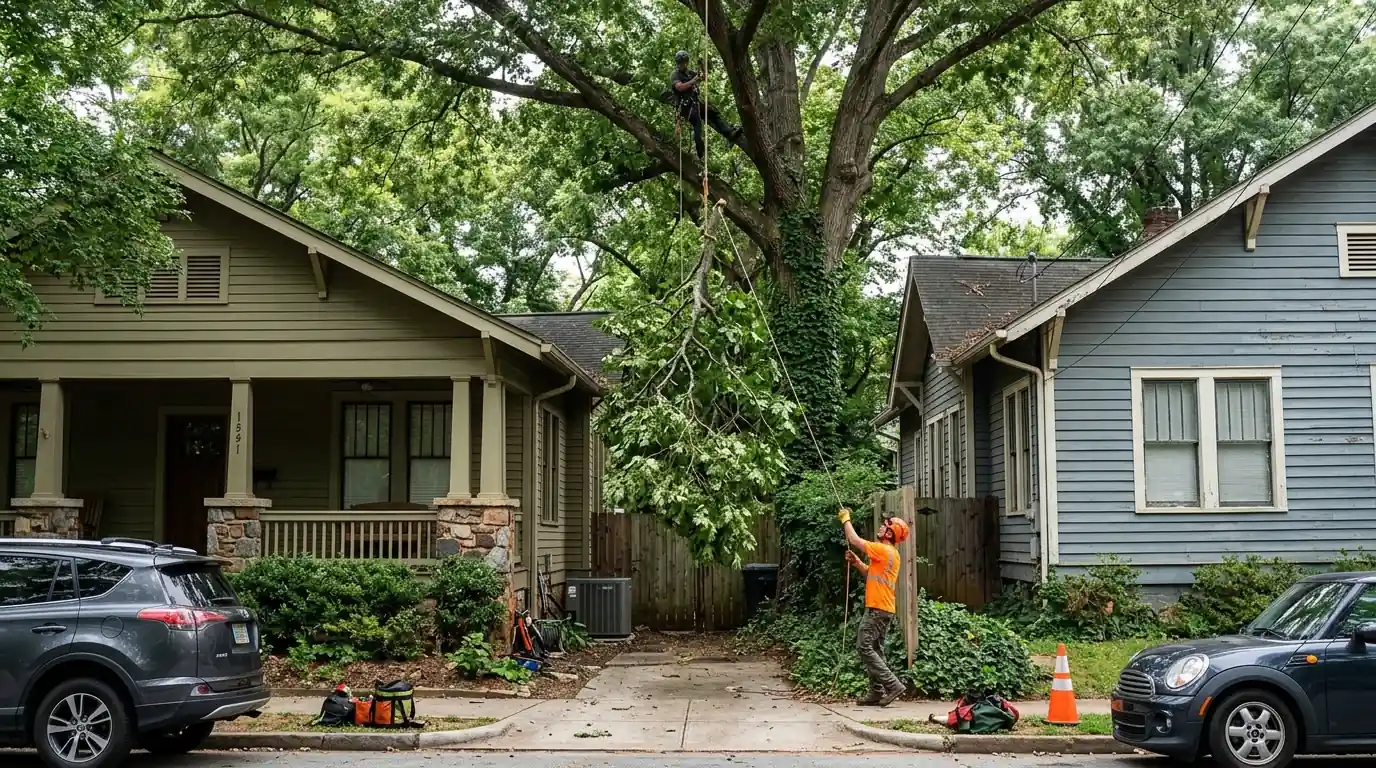
Side yards here are often four or five feet wide, with an AC unit, a gas meter and a fence gate in the way. No bucket truck fits, and a crane can't set up on a street lined with parked cars. So the climber works from inside the tree, and every piece comes down on a rope to someone on the ground who steers it clear of the house next door.
Then the wood leaves the way it came in, by hand. Rounds get cut short enough to carry or roll, brush is dragged out on tarps, and the chipper at the curb runs only as long as it must. That is slower than a lot with a driveway, which is why access, more than height, sets the price of a tree removal on these streets.
The permit rule is the same as anywhere in the city. A private tree 6 inches or more at 4.5 feet needs an Arborist Division permit, pines start at 12 inches, and pruning needs none as long as the cuts meet the city's standards. Dead or hazardous trees still need the permit, with no fee and no recompense once the city confirms the condition. Neighbors in Morningside and Inman Park work under the same rules.