We remove, prune and clean up trees across DeKalb County, from the Atlanta neighborhoods on its west side to Tucker, Dunwoody and the unincorporated streets between. In unincorporated DeKalb, a single-family lot can lose up to five healthy, non-specimen trees a year with no notice; more than that, or any specimen tree, needs a Notice of Tree Removal. Cities such as Decatur and Brookhaven run their own programs. Call any time and we will check your address.
How the unincorporated DeKalb rule works
On unincorporated land, a homeowner can remove up to five healthy, non-specimen trees per single-family lot each calendar year without giving notice. A sixth tree in the same year, or any specimen tree at all, needs a Notice of Tree Removal, which the County Arborist looks over in up to five working days. That window is short, but it belongs in the plan, so we file the notice early and set the work date after it clears.
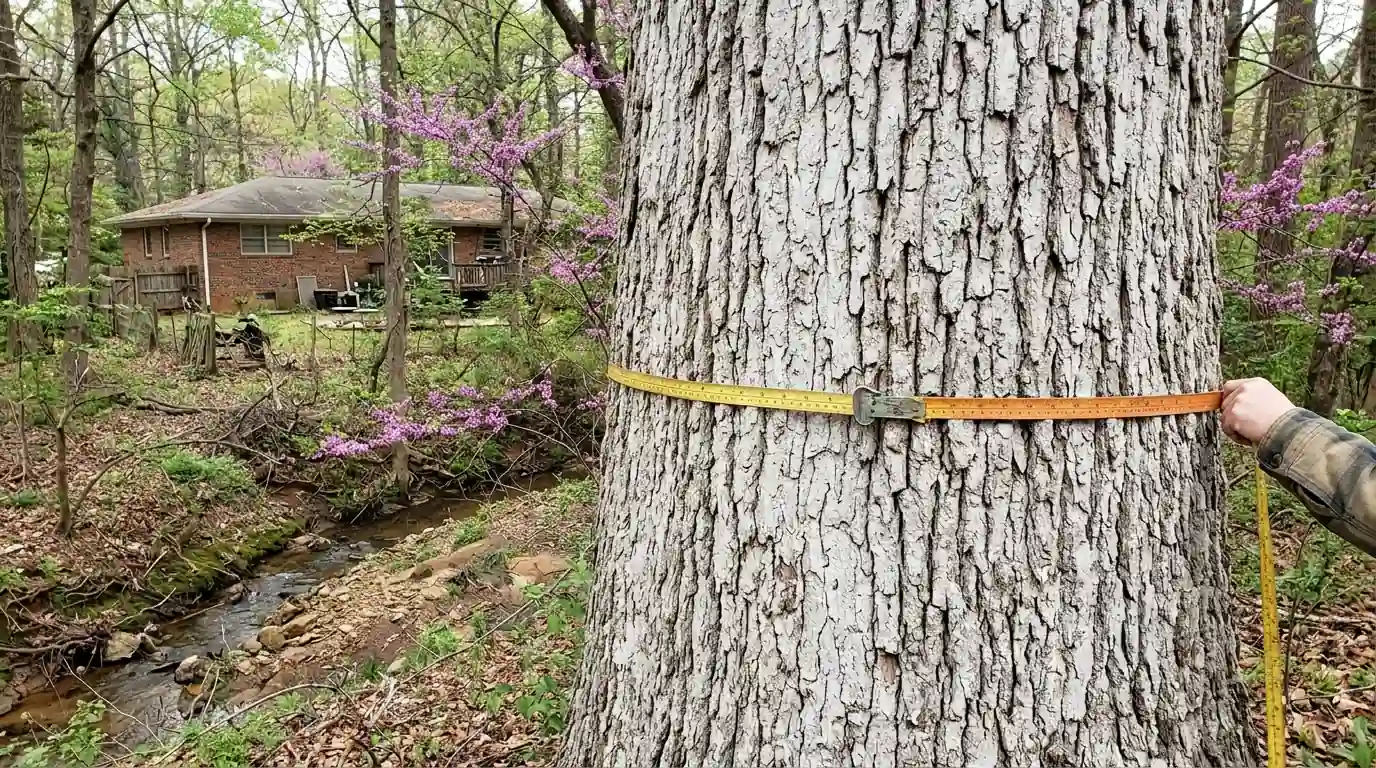
Size decides what counts as a specimen. Overstory species such as oak, poplar and pine qualify at 30 inches DBH or more, and understory species such as dogwood and redbud at 10 inches or more. That second number surprises people: an old dogwood by the front walk can be a specimen when the oak behind the house is not. Dead, diseased or hazardous trees can come down at any time once a certified professional documents the risk.
Creeks add one more check. Stream buffers in unincorporated DeKalb run 75 feet, and plenty of lots here slope toward a branch of Peachtree Creek, Snapfinger Creek or a smaller stream. Inside that buffer, we keep machines back and plan the work to disturb as little ground as possible.
Decatur, Brookhaven and the other DeKalb cities
Once a house is inside a city, the county rule steps aside. Brookhaven requires a permit for any tree 4 inches DBH or larger, dead, dying and hazardous trees included, with applications filed through the city's Project Portal along with photos and a site plan. Decatur requires a permit for untreatably diseased or infested trees and for hazard trees placed at moderate or higher risk in a certified arborist's report, while dead trees go through a dead tree affirmation statement emailed with photos.
Dunwoody, Tucker, Chamblee and Doraville each set their own tree rules too. We look up the current rule for each address on the first visit. Our Atlanta office on Chestnut Drive sits a few minutes from Chamblee and Doraville, so jobs in the north end of the county are close to home.
The Atlanta neighborhoods on the DeKalb side
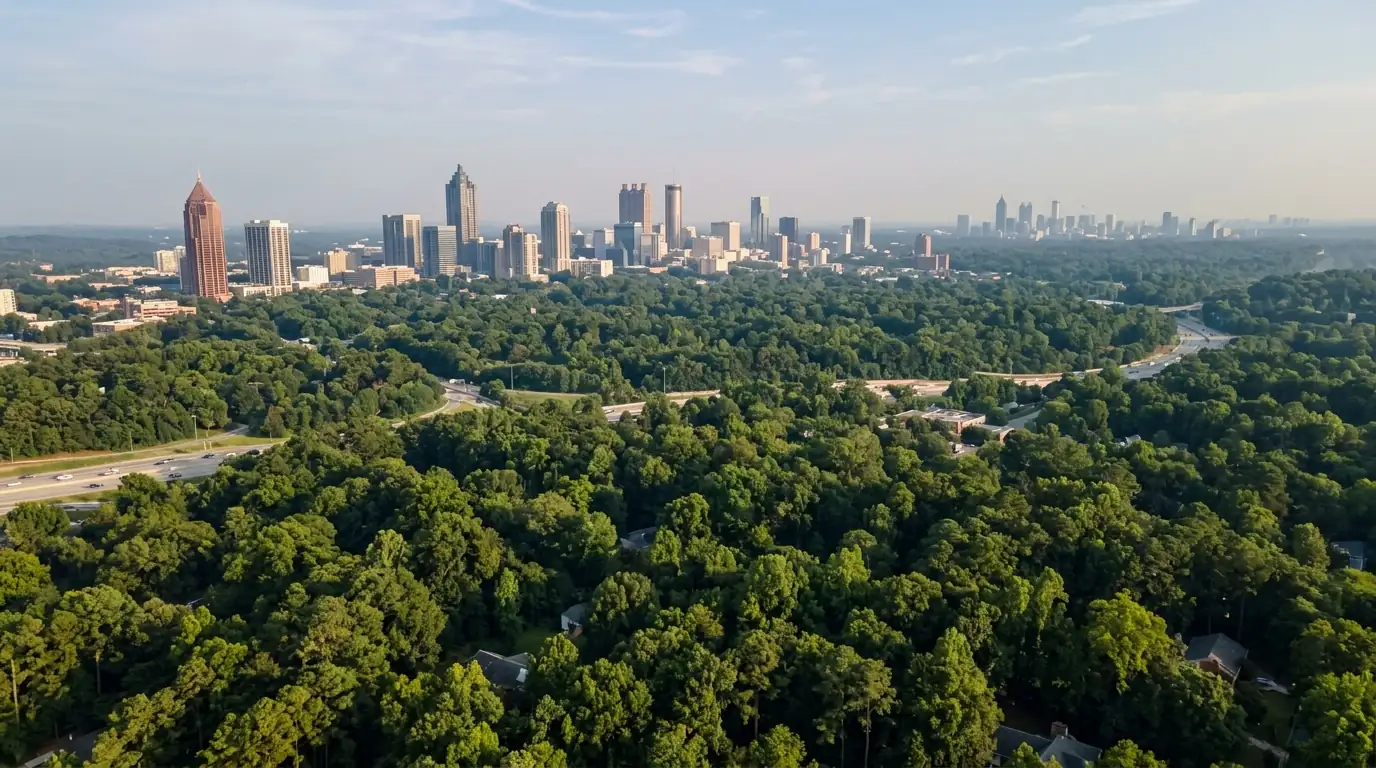
Part of the City of Atlanta lies in DeKalb, and those neighborhoods follow the Atlanta rule, not the county one: a permit for most private trees 6 inches across or larger, pines from 12 inches. In Candler Park and Kirkwood, that usually means old oaks and tall pines on narrow lots between bungalows, often during a rebuild. In East Atlanta, it means ivy-covered ravine lots, and around East Lake it means big oaks over wide lawns.
Druid Hills is the neighborhood where the line matters most, since part of it sits inside Atlanta and part in unincorporated DeKalb. Two houses a few blocks apart can follow different rules, one with a 6-inch permit threshold and the other with the five-tree limit and a 30-inch specimen size for its oaks. We confirm which side the house is on before we price anything.