Lifting limbs off sidewalks and parked cars, keeping branches off wires and roofs, and taking down failing trees where nothing can be dropped: that covers most of what we do in Midtown. Expect street parking only, short setbacks and buildings close on every side. Midtown is inside Atlanta city limits, so removing a private tree 6 inches or more at 4.5 feet, or a pine at 12, needs a city permit. Call the 24/7 line.
Old houses, new buildings and the trees in between
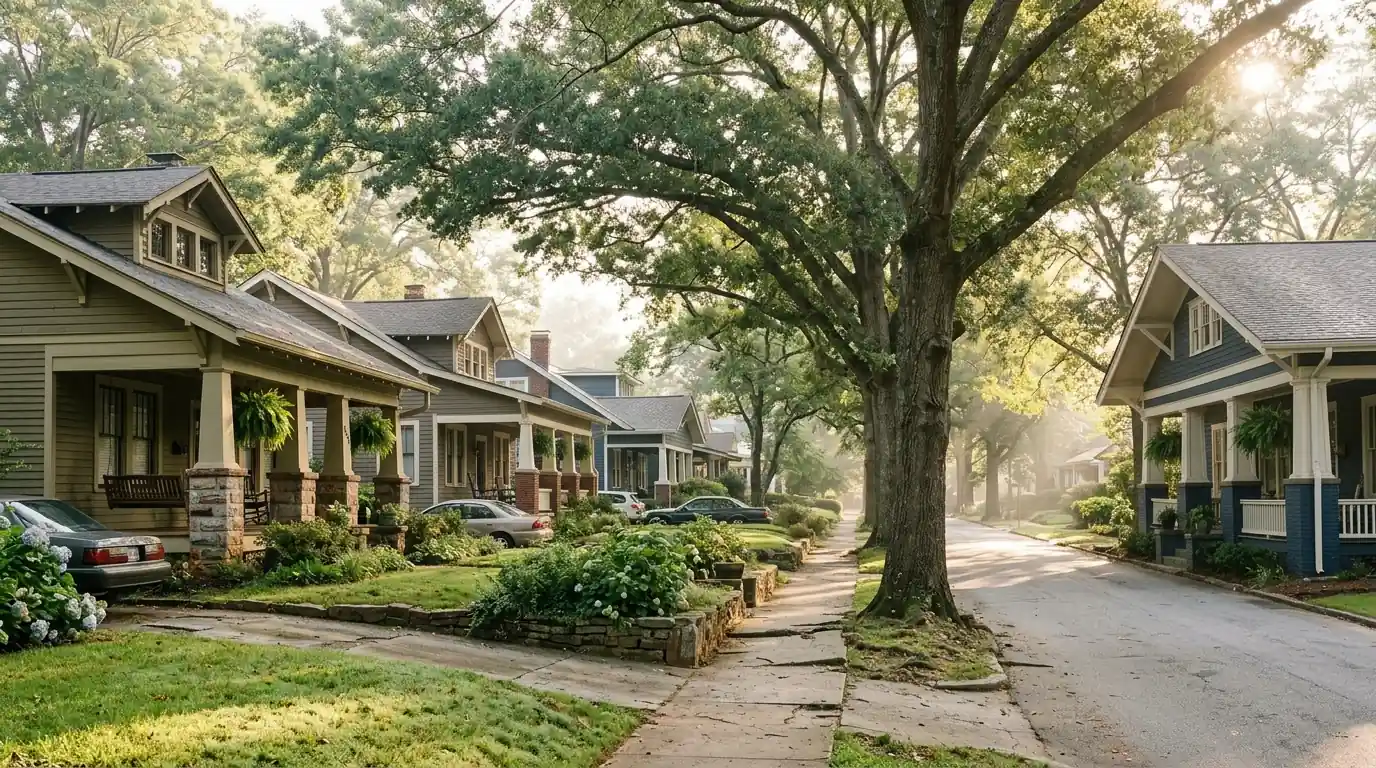
Midtown's residential blocks, roughly from Peachtree Street east to Piedmont Park, mix century-old bungalows and Victorians with apartment buildings and newer townhomes. The trees on those lots grew up before most of the neighbors did, much like the oaks in neighboring Ansley Park. A willow oak planted beside a porch in the 1920s may now hang over a parking area, a fence line and two roofs.
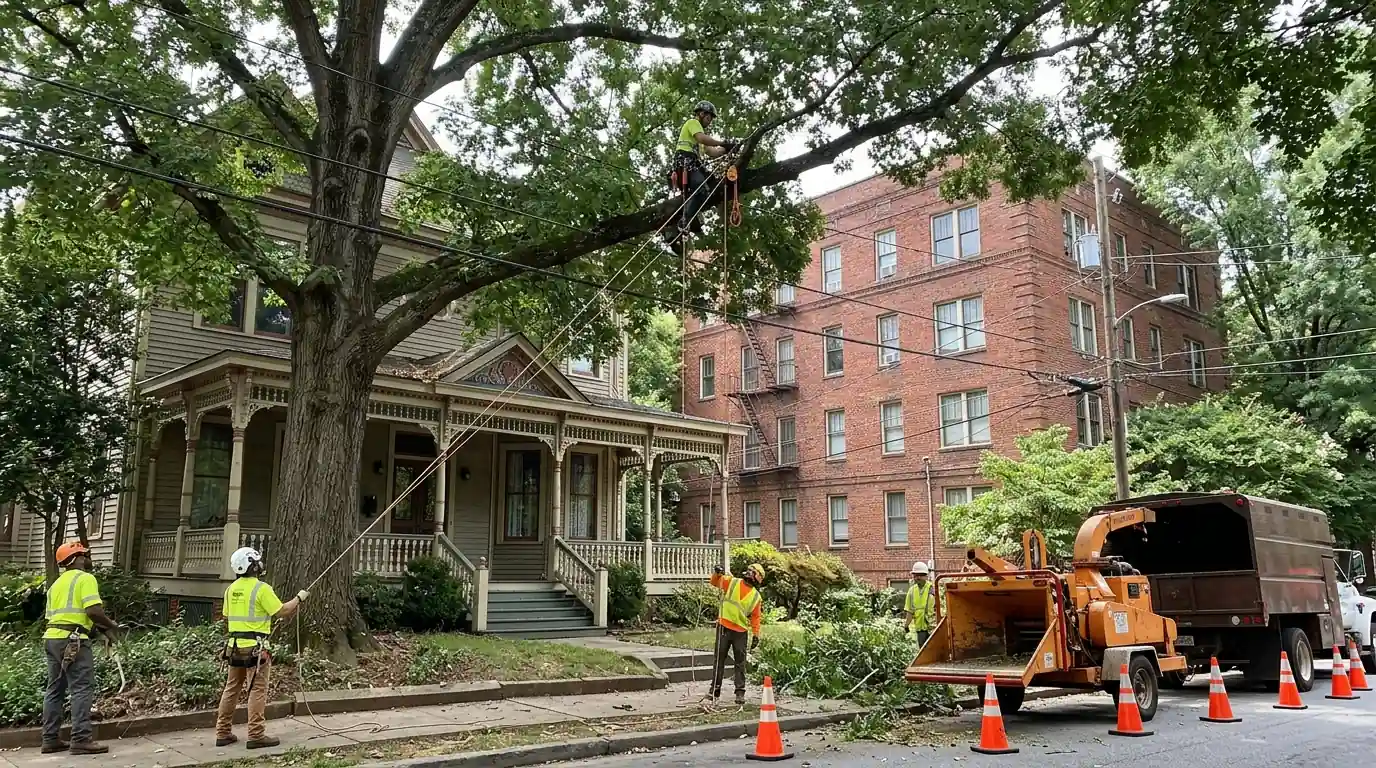
Space is what sets these jobs apart. Front yards are shallow, back yards are small, and the house next door can be close enough to touch from the side yard. There's no lane to drop anything into, so every removal and most pruning is done by a climber who ties in high and lowers each piece. We see the same kind of tight-lot work over in Inman Park.
Sidewalk, street and wire clearance
Low limbs over a Midtown sidewalk catch umbrellas, delivery vans and the tops of parked SUVs. Crown raising lifts the lowest branches so people walk under them easily and box trucks clear them at the curb, without stripping out the shade. We take those limbs back to the branch collar, which keeps decay from setting into big stubs.
Wires are the other constant. Georgia Power prunes trees that threaten its lines on its own maintenance cycle, but limbs around the service drop and over your roof are usually yours. Anything touching a line should be reported to Georgia Power and treated as energized, and we never cut around a live wire. A tree on the planting strip may sit in the public right-of-way rather than on your lot, so we confirm whose tree it is before pricing the work.
Rigging over neighbors, and the permit rules
When a tree leans over the building next door, rigging is everything. The climber sets a lowering line high in the crown, cuts each limb so it swings away from the neighbor's wall and windows, and the ground crew lets it down slowly onto a cleared patch of yard or sidewalk. Bradford pears with split crotches and hollow water oaks come out this way, which is why access, more than height, moves the number on our price guide.
For permits, the numbers match the rest of the city: 6 inches at 4.5 feet for most private trees and 12 inches for pines. A dead, dying or hazardous tree needs the permit too, with no application fee and no recompense once the Arborist Division confirms it. If a storm drops a tree onto a building and the building holds it up, no permit is needed. Take photos, notify the Arborist Division, and call our emergency crew.