Most Dunwoody calls involve trimming, thinning or removing tall loblolly pines, white oaks and water oaks, mostly on 1970s subdivision lots near Dunwoody Village, Brook Run Park and the streets off Mount Vernon Road. Aging oaks with dead tops and pines grown far above the rooflines are the usual calls. Dunwoody sets its own tree rules, separate from unincorporated DeKalb, so we check the requirement for your address before we quote. The line is answered 24/7.
Fifty years of growth over a 1970s roofline
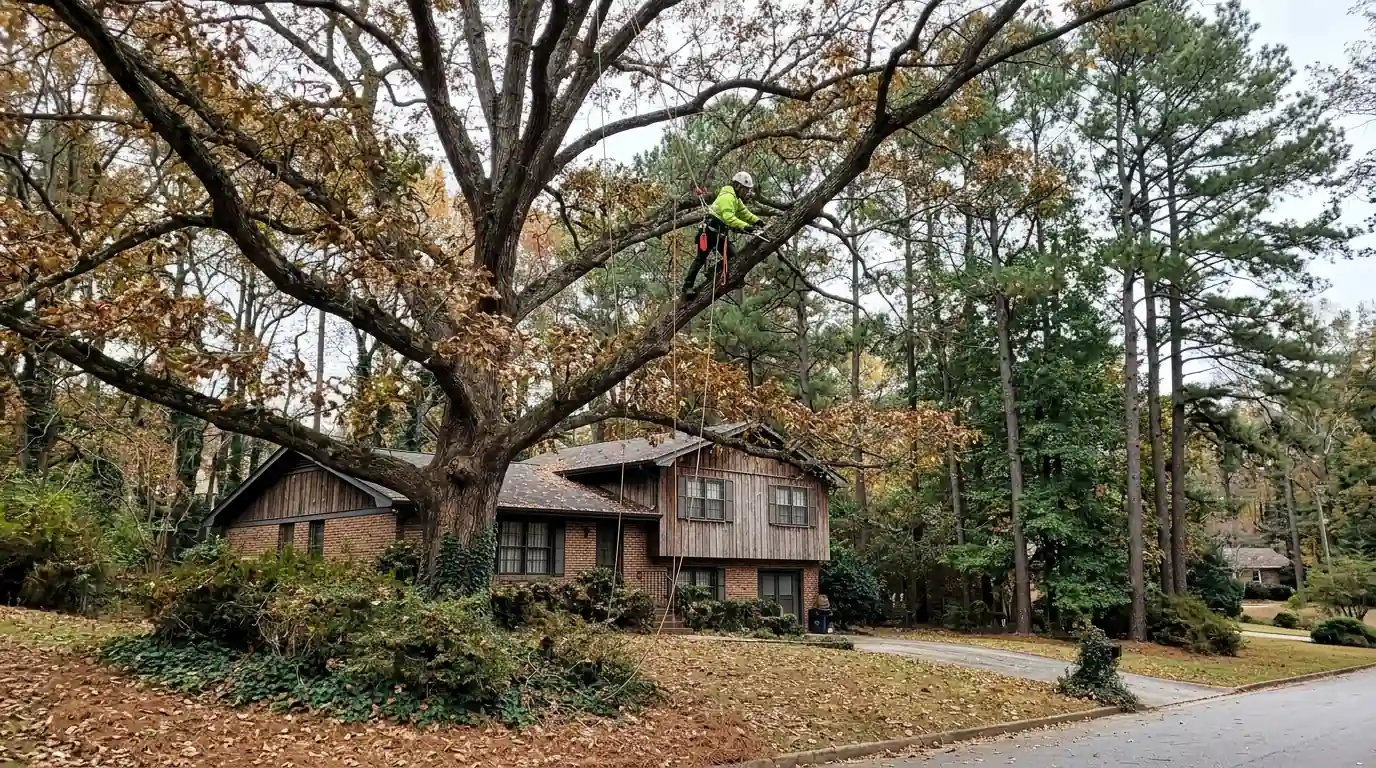
Walk any street between Dunwoody Village and Chamblee Dunwoody Road and you'll see the same picture: a house set back on a gentle slope, pines rising well above the ridge, and a big oak or two shading the driveway. When those houses were new, the trees were maybe half their current height. Now the limbs that once cleared the roof by twenty feet are resting on the shingles.
Most Dunwoody calls start as trimming work, not removals. We take weight off limbs over the roof, clear branches from gutters and chimneys, and lift the lower crown over driveways so delivery trucks stop scraping. Where a tree has already lost its top or shows decay at the base, the conversation turns to removal.
Water oaks near the end of their run
Water oaks were a favorite shade tree when these neighborhoods were planted, and they are relatively short-lived. Many in Dunwoody have reached the age where heart rot hollows the trunk and dead limbs appear high in the crown. A water oak can look full from the street while the wood carrying it has gone soft.
White oaks on the same lots tend to hold up far better, so we don't treat every oak the same way. Our article on failing water oaks lists the signs we look for. When the trunk sounds hollow under a mallet or conks are growing at the base, we usually recommend taking the oak down in sections before a storm does it for you.
Dunwoody rules, Perimeter traffic and getting the truck in
Dunwoody incorporated as its own city and sets its own tree rules, so the unincorporated DeKalb allowances don't carry over automatically. We look up what the city requires for the tree in question before we quote, then tell you what has to be filed and who files it.
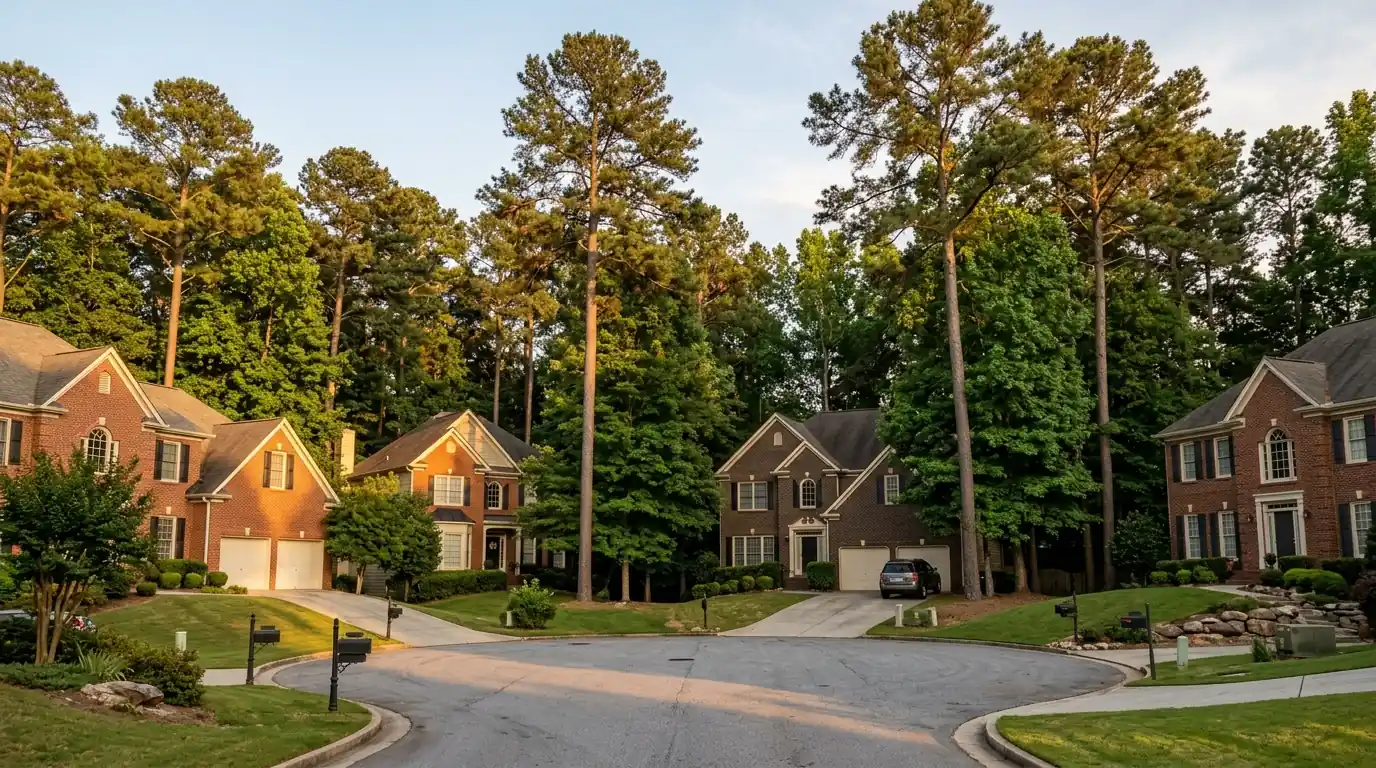
Access is usually manageable in the subdivisions, with wide driveways and room for a chipper at the curb. Near Perimeter Center the timing changes: we schedule around rush-hour traffic on Ashford Dunwoody Road so the truck and the chipper aren't idling in a turn lane. Brook Run Park neighborhoods often have back yards that run into the wooded edge, which is where the tallest pines stand.
Understory trees that need a lighter hand
Under the big canopy, many Dunwoody yards have dogwoods and redbuds planted when the houses were new. Dogwood anthracnose spreads in the damp shade these lots create, starting as tan leaf spots and dieback on lower twigs. Thinning the overstory to let air and light reach them, and pruning out the infected wood, does more good than spraying alone.
Crape myrtles by the mailbox are the other small-tree job we see on every street, and too many get topped into knuckles each winter. We cut them back to a side branch instead, which our crape myrtle pruning guide explains. Just south, Brookhaven yards carry the same dogwoods under even bigger oaks, and the ranch streets of Chamblee have more than their share of knuckled crape myrtles.