Two different jobs that people call by the same name
When most people say stump removal, they mean the stump should stop being a problem. That can be done two ways. Stump grinding uses a machine with a toothed cutting wheel to chew the stump into chips, usually 6 to 12 inches below the soil surface. The roots stay in the ground and rot away over the years. Full stump removal pulls or digs out the stump and its root ball, leaving a hole you can build in, pave over or plant into right away.
Grinding is by far the more common choice in residential yards. Full removal is the right tool for a narrower set of jobs, and when you need it, nothing else really does the same thing. The trick is knowing which camp your project falls into before you pay for the wrong one.
What each one costs, and why
Grinding almost always costs less than full removal for the same stump. A grinder can work through most stumps in well under an hour, it fits through a standard gate, and it leaves the root system in place, so there's no large hole to fill. The price mostly follows the stump's diameter, how hard the wood is, and how easy it is to reach.
Full removal is slower and heavier. It usually takes an excavator or a lot of digging, a large root ball packed with wet clay is very heavy, and the hole has to be backfilled and compacted. Removing the root ball can also disturb lawns, irrigation and nearby plantings, which adds repair work. On a tight lot with no machine access, it may mean hand digging.
Several stumps on one visit lower the cost per stump for either method, because setup is a large share of the job. Our price guide has the current ranges for both.
What each one leaves behind
The difference in the yard afterward is bigger than most people expect.
After grinding
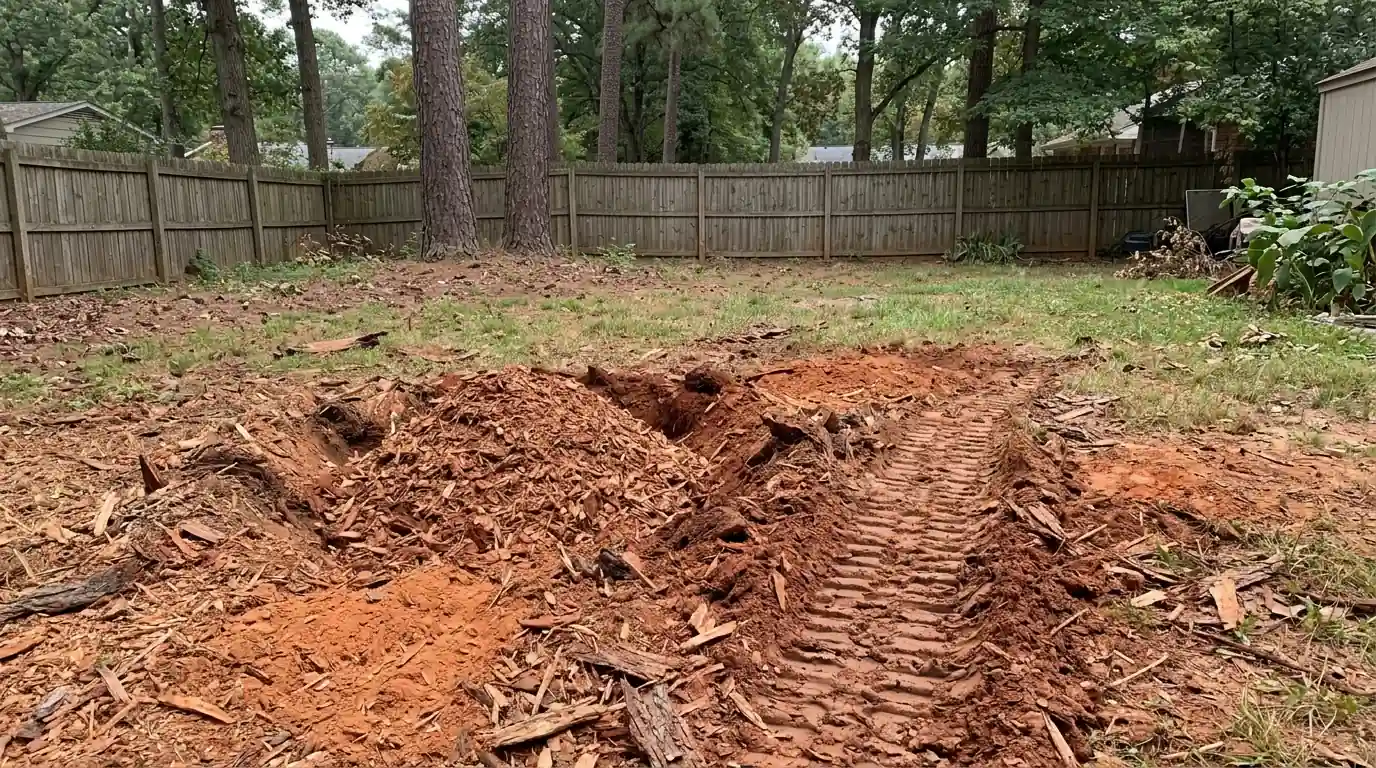
You're left with a shallow bowl filled with a mound of wood chips and soil, roughly the width of the old stump plus a little. Surface roots that ran outward are ground off near the stump, but the deeper roots stay in the soil and slowly decay. As they rot, the ground over them can settle, so a grinding spot may need topsoil added once or twice over the next few years. The chips can be raked back into the hole, spread as mulch or hauled away.
After full removal
You're left with a real hole, often several feet wide and deep, where the root ball came out. That hole gets backfilled with soil and compacted so it won't sink later. The large structural roots are gone, so there's nothing left to rot under a slab or a footing. The surrounding lawn usually takes more disturbance, and you'll need to reseed or resod a wider area.
How Atlanta clay changes the picture
Georgia red clay holds water and packs hard, which affects both methods. A grinding hole in clay drains slowly, so fill it with a looser topsoil mix rather than packing the chips and clay back in. A removal hole in clay needs careful compaction in layers, or it can settle into a soft spot after the first long rain. On the sloped lots common in Roswell and Marietta, we also keep a removal hole from turning into a channel for runoff.
Replanting, building and sprouting species
What you plan to do with the spot is the biggest single factor in the choice.
Planting grass or a garden bed
Grinding works well. Rake out most of the chips, since fresh wood chips mixed into soil tie up nitrogen as they break down, then add topsoil and seed or sod. Expect some settling and top it up as needed.
Planting a new tree in the same spot
This is harder than it sounds. Old roots and decaying wood make poor planting soil, and the new tree's roots will run into them. Shift the new tree a few feet away from the old stump if you can. If it has to go in the same place, full removal gives the new tree clean soil to grow into. Our planting crews can help pick a spot and a species.
Building a patio, shed, addition or driveway
Full removal is the safer choice. Roots left to rot under a slab or footing leave voids that can settle and crack what's above them. If the project is near a foundation, removing the roots now avoids problems years down the road.
Setting a fence post
Grinding is often enough for a fence line, as long as the grinder goes deep where the post lands. If the stump is right on the line and was large, removal makes setting posts easier.
Stumps that sprout
Some trees keep sending up shoots from the roots long after the trunk is gone. Sweetgum, black cherry, Callery pear and many others can throw up suckers. Grinding deeper and wider helps, and repeated mowing or cutting of new shoots usually wears the roots out. Running bamboo is a separate problem, and getting bamboo out takes digging the rhizomes, not just grinding.
Georgia 811 comes first for either method
Grinding and digging are both mechanized work below the surface, and mechanized digging needs a locate request through Georgia 811 before the work starts. Georgia 811 lists removing tree roots among the projects to call about. Gas, power, water, cable and fiber lines often run near old trees, especially along the street and near the house.
We file a locate before we grind a stump or cut roots, then wait for the utilities to mark their lines. That means a few days between the call and the grinding. Private lines, such as irrigation, landscape lighting, a gas line to a grill or a buried dog fence, aren't marked by the locate service, so tell us about those before the work starts.
A quick decision list
If you're still not sure, run down this list. The first line that matches your situation is usually your answer.
- Building a slab, footing, addition or driveway over the spot: full removal.
- Replanting a tree in the exact same hole: full removal, or move the new tree a few feet and grind.
- Lawn, garden bed or mulch over the spot: grinding.
- Fence line or path over the spot: grinding, deeper where posts go.
- Stump on a slope or a tight lot with no machine access: grinding, which needs far less room.
- Stump of a sprouting species: grinding deep and wide, then cut back new shoots.
- Several stumps from an old clearing: grinding, done in one visit.
- Not sure yet: grind now, since it rarely rules out other options later.
Getting the stump taken care of
For most yards, grinding below grade is the practical answer, and it can often be done the same visit as the tree removal. When a project needs the roots gone, full stump and root-ball removal clears the ground so a slab or footing sits on solid soil. If roots are also lifting a walkway or crowding a foundation, targeted root removal handles those separately.
Tell us what you plan to do with the spot, and we'll recommend the method that fits. If the tree is still standing, our guide to what drives tree removal cost explains how the stump fits into the overall price.
Key takeaways
- Stump grinding chips the stump below grade and leaves the roots to decay, while full removal pulls the stump and root ball out.
- Grinding costs less, fits through a gate and suits lawns, beds, paths and most fence lines.
- Full removal makes sense for slabs, footings, driveways and replanting in the exact same hole.
- A Georgia 811 locate request comes before any grinding or root cutting.