Aging water oaks are the main story in Chamblee: we remove them, grind the stumps they leave and prune the pines and maples around postwar ranch homes in Huntley Hills and the streets off Peachtree Industrial Boulevard. Lots are modest and flat, so access is easier than in the hill country to the north, but the trees are often older than the houses. Chamblee sets its own tree rules, which we check before quoting. Call the 24/7 line to set up a look.
Huntley Hills ranches and the water oaks planted with them
Huntley Hills and the neighborhoods around it went up in the 1950s and 1960s, and water oaks were the shade tree of the era. They grow fast and look full for decades, but they are relatively short-lived. By the time a water oak passes sixty years, heart rot has often hollowed the lower trunk and the top of the crown has started to die back.
We see the results after almost every windy week in Chamblee: a dead limb through a carport roof, a split leader across the driveway, a whole tree tipped over at a rotted root flare. Our water oak article explains why the species fails the way it does. When the decay is advanced, we recommend removing the oak in sections before the next storm.
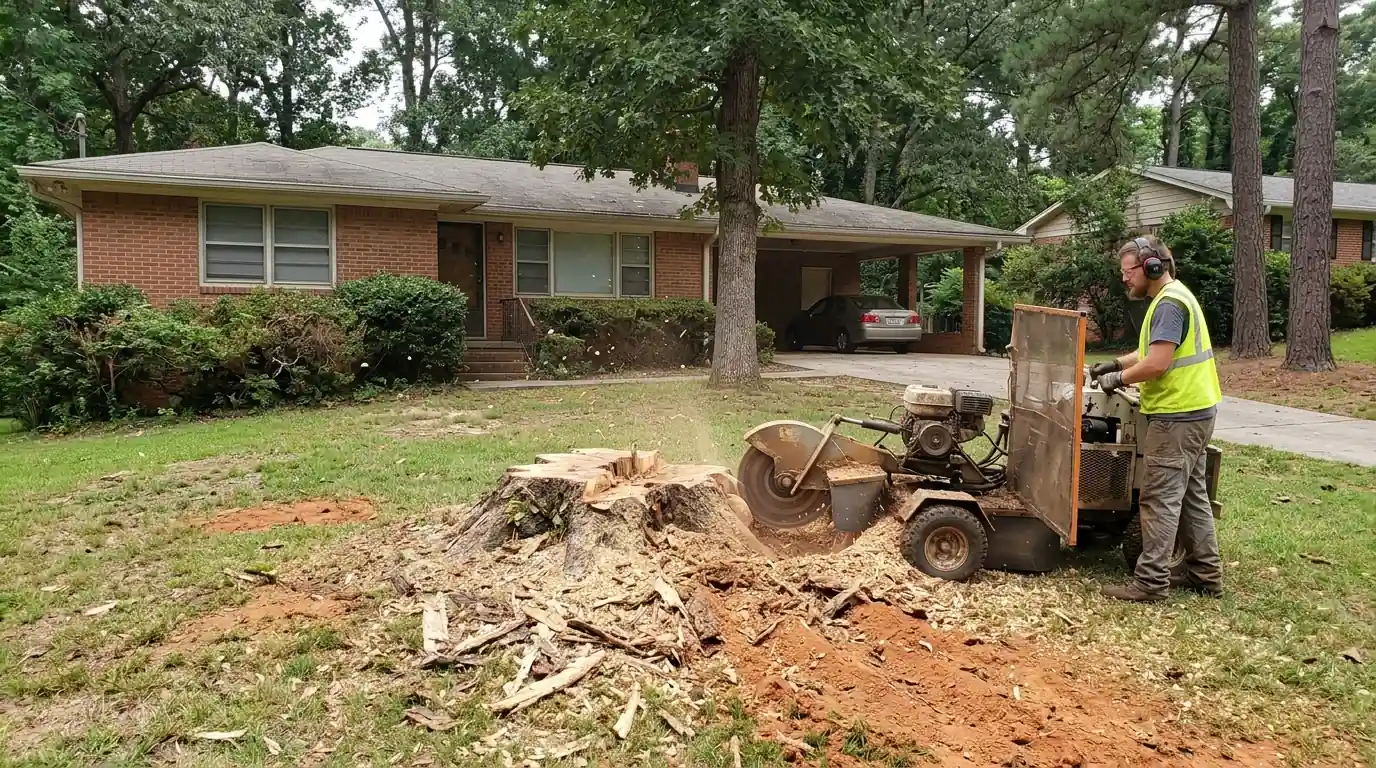
Grinding the wide stumps these oaks leave behind
A water oak that took sixty years to grow leaves a stump three or four feet across, with surface roots running toward the house and the sidewalk. Most Chamblee homeowners want it gone so they can replant grass or put in a new bed. Before any grinding, we file a Georgia 811 locate request, because gas, water and cable lines often run right through these old front yards.
Flat lots and wide driveways make the grinding itself simple here. We set the machine, chew the stump below grade, and rake the chips back into the hole or haul them off as you prefer. Our page on stump grinding explains how deep we go, and when full stump removal makes more sense for a new driveway or addition.
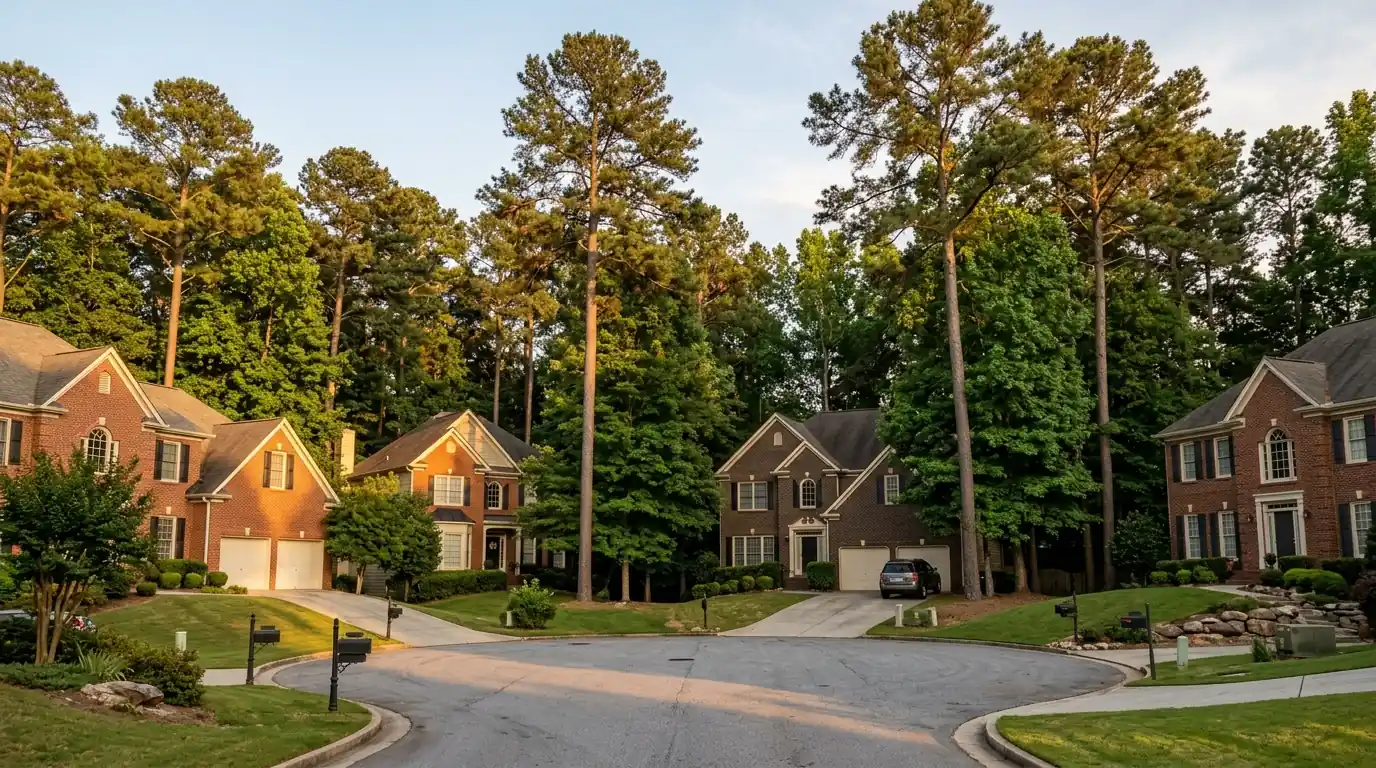
Chamblee rules and quick trips from our Chestnut Drive office
Chamblee is its own city and sets its own tree rules, separate from unincorporated DeKalb. Rather than assume, we look up what the city requires for the tree and the lot before we give you a price, and we tell you plainly whether anything needs to be filed.
Being close to our office on Chestnut Drive helps most after storms. Peachtree Industrial Boulevard can turn slow with downed limbs and signal outages, but the side streets into Chamblee are short runs for our trucks. When a tree is down on a Chamblee house, the first visit is about making the roof safe and the driveway passable, and the full cleanup follows.
Keswick Park streets and the smaller trees that need care
Around Keswick Park, the yards are shaded by a mix of pines, maples and the odd big willow oak, with crape myrtles at nearly every mailbox. Many of those crape myrtles have been topped for years and now sprout thick clusters of weak shoots. We prune them back to a clean framework instead of cutting the knuckles again.
Red maples and sweetgums planted in the 1970s along these streets are worth a look too. Sweetgum surface roots lift sidewalks and catch mowers, and red maples on compacted clay often show dieback on one side. Ranch streets next door in Doraville share that mix, while the 1970s lots in Dunwoody lean toward taller pines.