Minute one: get everyone out of the affected rooms
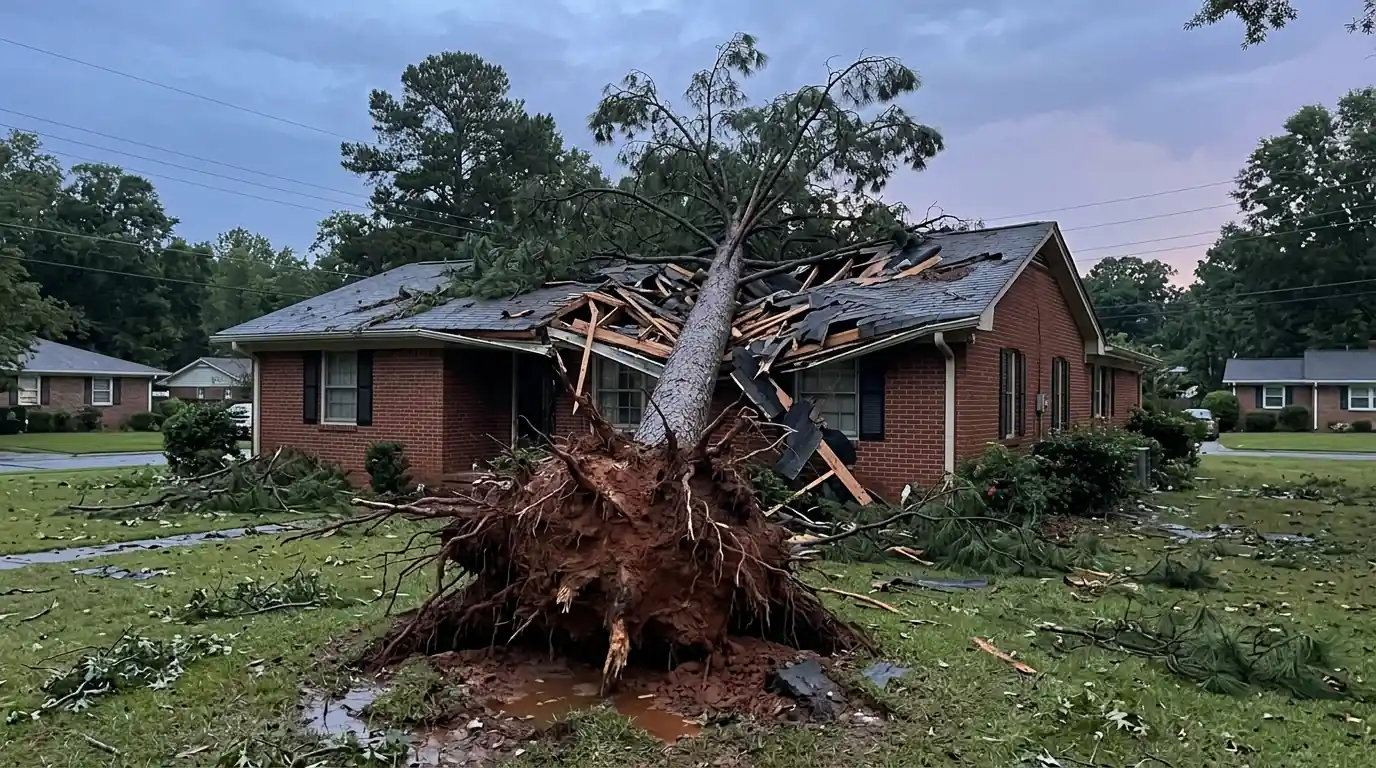
Start with people, not the house. Get everyone out of the rooms where the tree came in, and out of any rooms below them. A tree resting on a roof can shift as limbs break or as rain adds weight, and a damaged ceiling can come down without warning. If the impact was heavy or you hear creaking, move everyone outside to a spot well away from the tree and from any wires.
Account for every person and pet. Then stop and look before you do anything else. Most injuries after a tree strike happen in the minutes afterward, when people go back in to check on the damage or try to move something.
Call 911 if anyone is hurt or trapped
If anyone is injured, trapped under debris or stuck in a room the tree has blocked, call 911 right away. Do the same if you smell gas, see sparks or smoke, or think the structure is unstable. Firefighters are trained to stabilize a damaged building and get people out, and they can shut off utilities if needed. If no one is hurt and nothing is burning, 911 isn't necessary, and the next steps are about keeping the damage from getting worse.
Treat every line as live and call Georgia Power
If the tree brought down a wire, or is resting on one, assume it is energized. That includes the service drop to your house, a cable or phone line you think is harmless, and any wire lying in wet grass or a puddle. Stay well back, at least the length of a car or two, and keep everyone else away too, including neighbors who come over to help. A live wire can energize the wet ground around it.
Call Georgia Power to report a downed line or a tree on a line. Georgia Power handles the lines themselves, and the crew needs the power off before anyone can work near them. Our crews never cut around a live line. If the tree is tangled with your service drop, work near the lines waits until the utility makes it safe.
Don't climb on the roof or cut anything under tension
This is the step people most want to skip. A tree lying on a house is a pile of stored energy. Limbs bent against the roof or pinned under the trunk are loaded like springs, and cutting one with a chainsaw can make it whip back or drop the trunk onto the person holding the saw. Leave the saw in the garage, even if you own one and know how to use it.
Stay off the roof as well. The framing under the impact area may be cracked, the shingles are wet and slick, and the tree can shift. If rain is coming in, put buckets and towels down inside, move furniture and electronics away from the leak, and wait for a tarp until the tree is off and the roof is safe to walk.
Take photos and video before anything moves
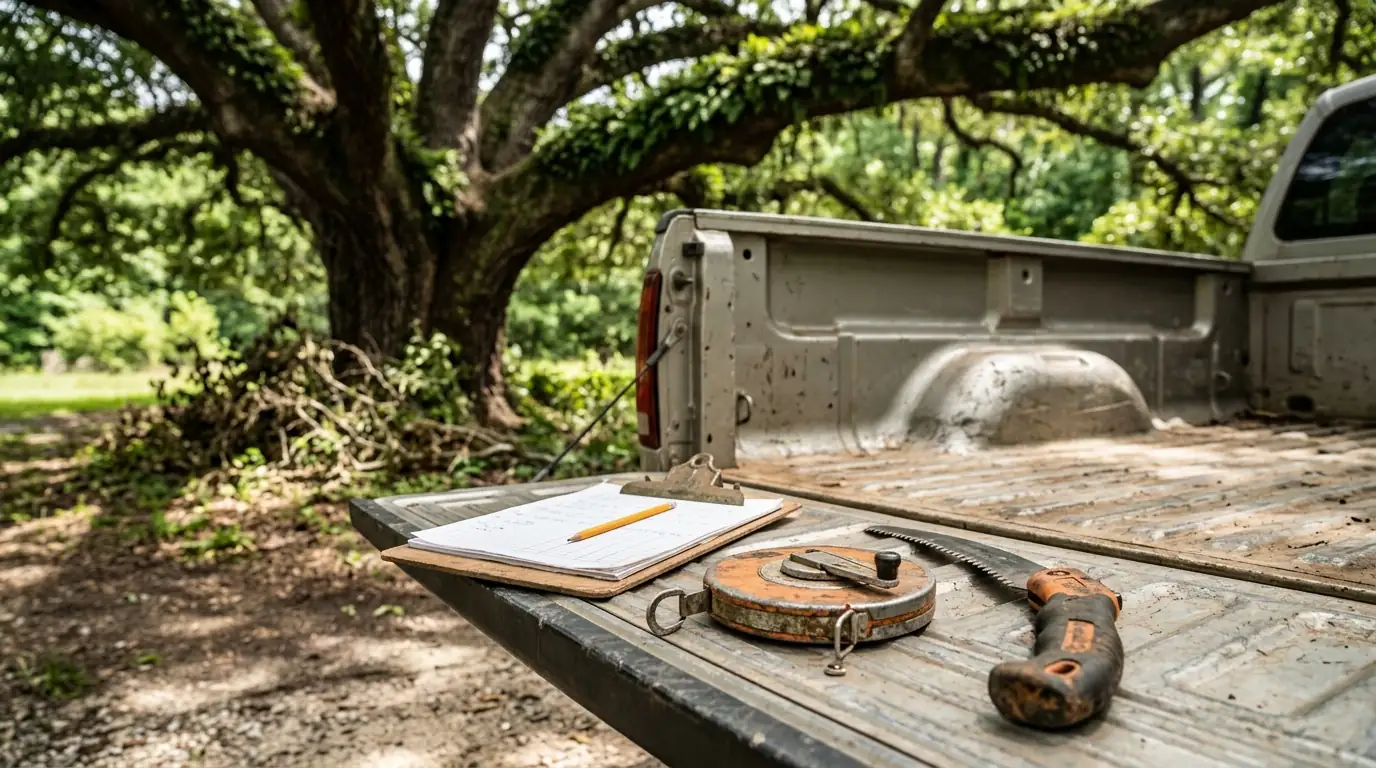
Your insurer will want to see the damage as it was. From a safe spot, take wide shots of the tree and the house from several angles, then closer shots of the roof, gutters, siding, windows, fences and cars. Inside, photograph the ceilings, walls, water damage and anything broken. A slow walk-around video helps an adjuster understand the scene.
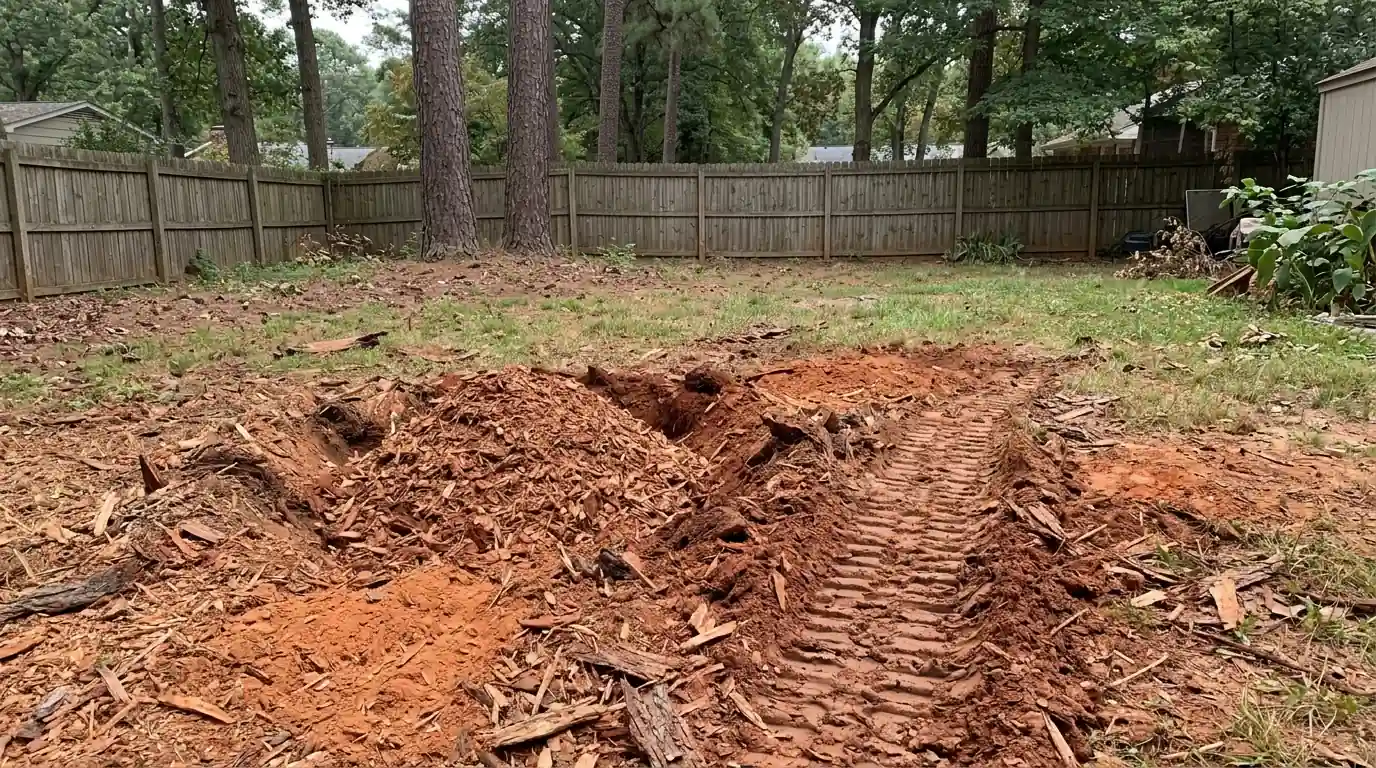
Photograph the stump or root plate too. A clean break, a hollow trunk or a lifted root plate tells the story of how the tree failed. If you have older photos showing the tree in good shape, keep them handy.
- Wide shots of the tree on the house from the front, side and back.
- Close shots of the point of impact, the roofline and any holes.
- Interior photos of ceilings, walls, floors and water coming in.
- Damage to fences, sheds, vehicles and the neighbor's property.
- The base of the tree: the stump, the break or the root plate.
- A short video walking around the whole scene.
Call your insurer, then call us
Call your homeowners insurance company and open a claim. Ask what they need from you and whether they want to send an adjuster before the tree comes off. In many cases the insurer will tell you to go ahead with emergency removal and tarping to prevent further damage, and they'll want the paperwork from the crew that did it. Keep every receipt.
Then call us at (470) 745-9324. We answer around the clock, every day of the year. Tell us where the tree hit, whether any lines are involved, and whether rain is getting in. Our emergency tree crews work storms all over the metro, so the more you can describe, the better prepared we are when we arrive.
What our crew does first when we arrive
The first thing we do is look, not cut. We walk the scene, confirm the lines are safe, check where the weight of the tree is resting and figure out which limbs are under tension. That tells us the order of cuts that will take the load off the house without making anything worse.
From there, a climber or a crane takes the tree apart from the top down, lowering limbs on ropes and lifting the heavy trunk pieces off the roof instead of dragging them. Once the weight is off, we can tarp the opening to keep rain out until your roofer arrives. Brush and wood are cleaned up afterward, and our storm cleanup handles any other downed limbs in the yard. If the tree is very large or lying across the roof's ridge, a crane removal is often the gentlest way to lift it off.
Once the tree is off: the rest of the day
With the weight off the house and a tarp in place, the pressure drops. This is the time to call a roofer and, if water got into ceilings or walls, a water damage company. Keep your photos, the crew paperwork and every receipt together in one folder for the adjuster.
Walk the yard in daylight before anyone relaxes under the trees. Storms that drop one tree often leave others with cracked limbs hanging in the crown, called hangers, that can fall days later. Look up into every large tree near the house, the driveway and the play area. Bare soil heaved up on one side of a trunk, or a lean that wasn't there yesterday, deserves a call as well.
In neighborhoods like Candler Park and Smyrna, where older oaks and pines crowd small lots, one failure often loads the trees beside it. Have those looked at before the next round of storms.
The fallen tree rule inside Atlanta
Inside Atlanta city limits, a tree that has already fallen and is held up by the ground, another tree or a structure needs no removal permit. That covers a tree resting on your house. Photograph the tree where it lies and notify the city's Arborist Division. The photos you took for insurance usually cover this as well.
A tree that is cracked or leaning but still standing is different. That counts as a hazardous tree, which still needs a permit, though there's no application fee. Our permit guide explains the rest. Once the emergency is over, it's worth looking at the other trees near the house, especially tall pines that lost neighbors in the same storm.
Key takeaways
- Get everyone out of the affected rooms first, and account for every person and pet.
- Treat every downed line as live, keep well back and call Georgia Power.
- Call 911 if anyone is hurt or trapped, or if you smell gas or see sparks.
- Do not climb on the roof or cut limbs under tension, and photograph everything before it moves.
- Inside Atlanta, a fallen tree needs no permit, but photograph it and notify the Arborist Division.