We remove pines and oaks, protect keeper trees during construction and grind stumps across Kirkwood. Loblolly pines and willow oaks stand over both old bungalows and new infill homes. Kirkwood is a DeKalb neighborhood that follows Atlanta's ordinance, which sets the permit line at 6 inches at 4.5 feet (pines at 12) and charges builders recompense on healthy trees. Phone the 24/7 line and we'll come walk the lot.
Rebuilds, infill and the trees caught in the middle
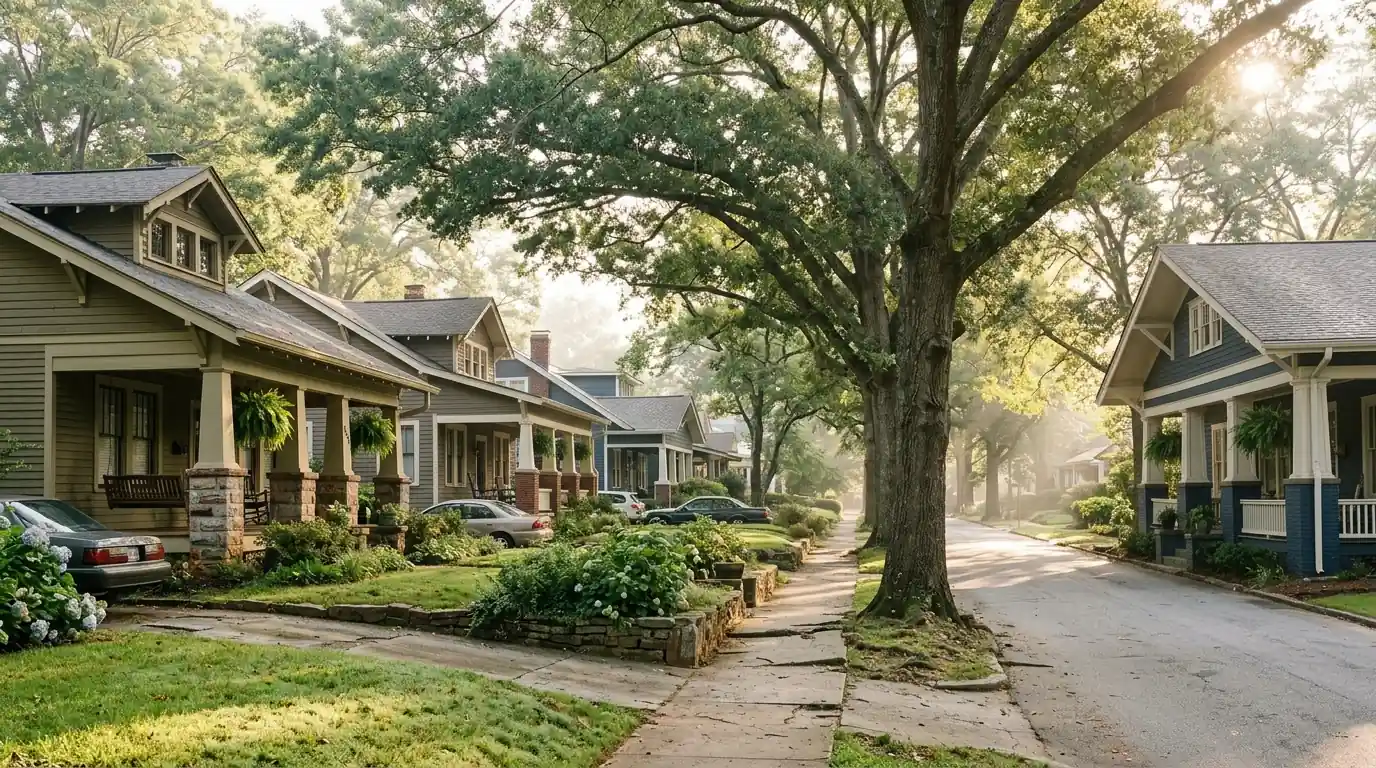
Plenty of Kirkwood streets show the pattern in a single block: a 1920s bungalow, then a tall new house on a lot that held a cottage two years ago, then another bungalow with a dumpster in the drive. Each rebuild forces a decision about the trees. Some stand in the new footprint and have to go. Others could stay, but only if someone protects their roots while the foundation is dug.
Owners and builders call us at both ends of that process. Before demolition, we walk the lot, measure every tree and mark which ones are worth keeping. We prepare the removal permits for the rest. After the framing is up and the grading is finished, we come back for stumps, damaged limbs and the trees that didn't survive the work.
Tall pines over bungalows and new rooflines
Loblolly pines rise well above Kirkwood rooftops, and many were left standing when the original houses went in. They're shallow-rooted in red clay, exposed to wind and prone to southern pine beetle and Ips engraver beetles after a dry summer. A pine with yellowing needles at the top or pitch tubes on the bark usually turns brittle within months, so it should come down while the wood still holds a rope.
Most pine removals here are climbed. The tops come off in short pieces, the limbs drop into whatever clear lane the lot allows and the spar is lowered in rounds. On cleared rebuild lots we can sometimes fell the trunk whole. Our article on tall pines near the house explains how to judge the risk, and our pine removal service covers the method.
Keeping a healthy oak alive through construction
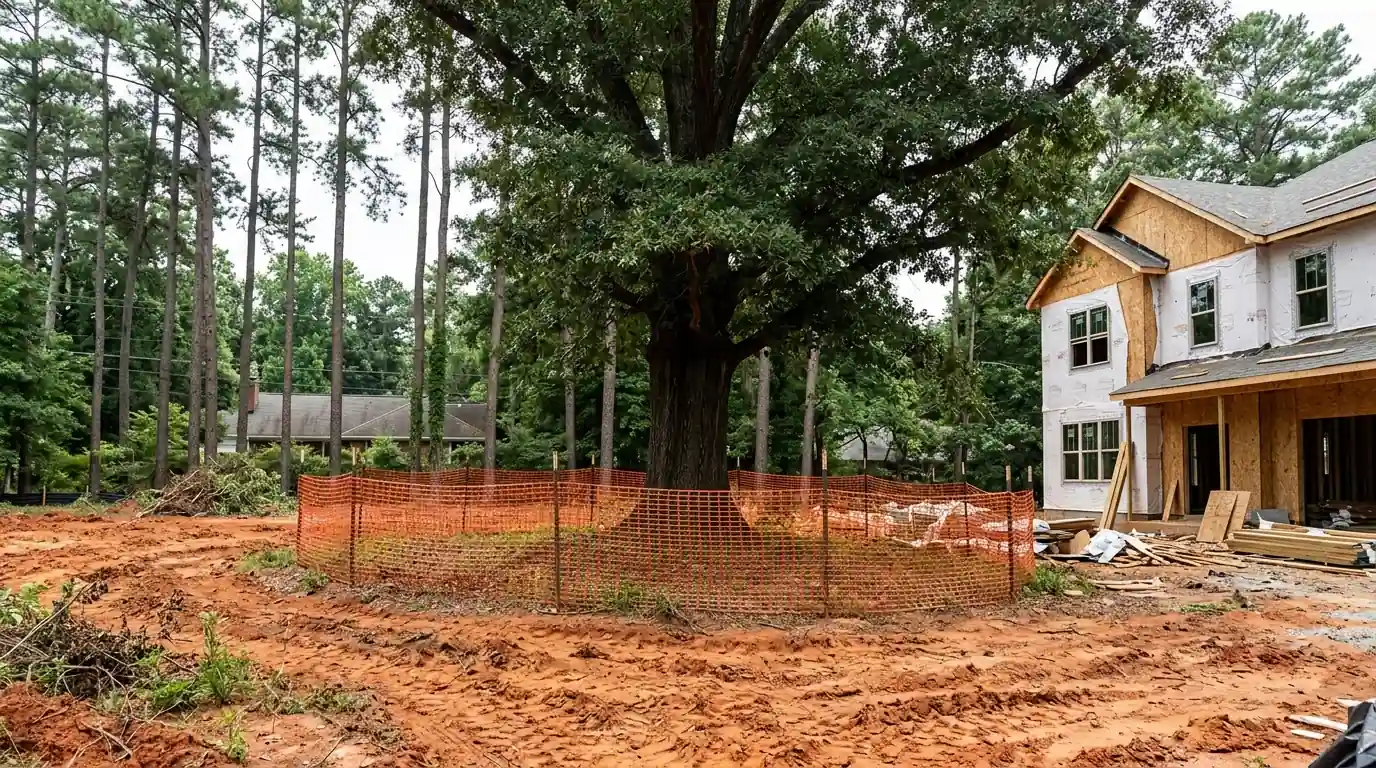
Most construction damage happens below ground. Trenching for sewer and water laterals, grading for a driveway and parking loaded trucks on the root zone can kill a healthy oak over two or three summers, long after the house is finished. By then the builder is gone, and the owner inherits a declining tree beside a new roof.
Our tree protection work starts with fencing at the drip line, mulch over any root zone that must carry traffic and root pruning with clean cuts where a trench can't be rerouted. A healthy tree removed under a building permit owes recompense to the city, and City Council raised those charges in 2025, effective January 2026, so saving the right trees often costs less than replacing them.
Grinding stumps once the lot work is finished
A cleared rebuild lot can leave a dozen stumps behind, and the old bungalow yards next door often have a few more from removals years ago. We grind them below grade so sod, beds or a new driveway can go in, and a Georgia 811 locate request goes in before every job because new utility lines go in during construction and don't always match the old plans.
Near Bessie Branham Park and along the side streets off Hosea L. Williams Drive, we also clean up the brush piles and sweetgum seedlings that fill in a lot during a long build. Our grinding service handles the stumps, and owners east of here in East Lake or across in Candler Park call us for the same follow-up work.