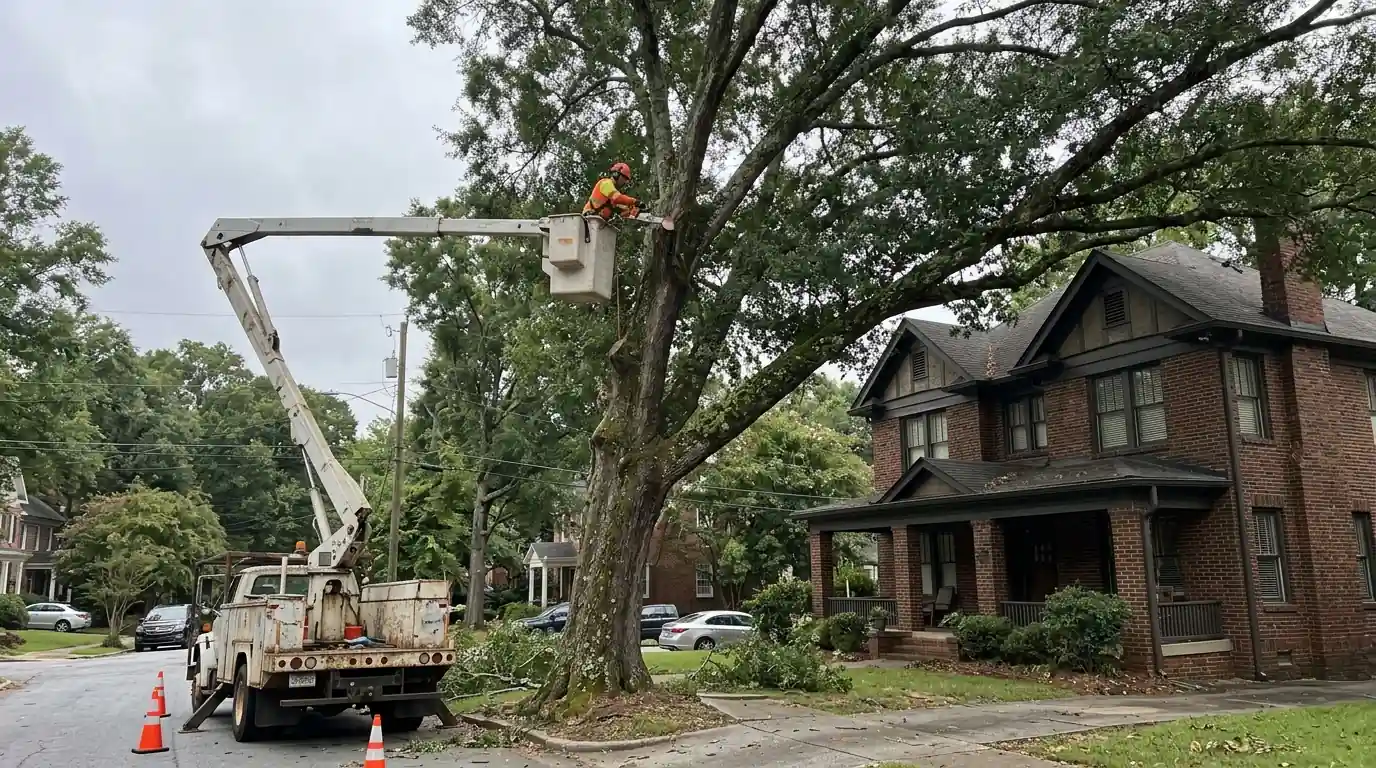
Hazardous tree removal is taking down a standing tree that is likely to fail, with a target underneath it: a house, a driveway, a play set, a street. Many of these trees are too decayed to climb safely, so we work from a lift or use a crane. Inside Atlanta city limits, a dead, dying or hazardous tree still needs a permit from the Arborist Division, but there is no application fee.
Warning signs that a standing tree is likely to fail
One sign on its own isn't always a death sentence, but two or more together usually mean the tree is running out of time.
A lean that changed
An old, steady lean is common. A lean that grew after a storm, with soil mounding or cracking on the side away from the lean, means the roots are letting go.
Root plate heaving
Soil rising and falling around the base in wind, or a ridge of lifted turf, shows the whole root system is rocking in the ground.
Cracks in the trunk
A vertical seam, especially one that opens and closes in wind or runs down from a fork, is a split working its way through the tree.
Cavities and soft wood
Openings at the base or along the trunk, punky wood you can push a screwdriver into, and a hollow sound under the mallet all point to internal decay.
Conks and mushrooms
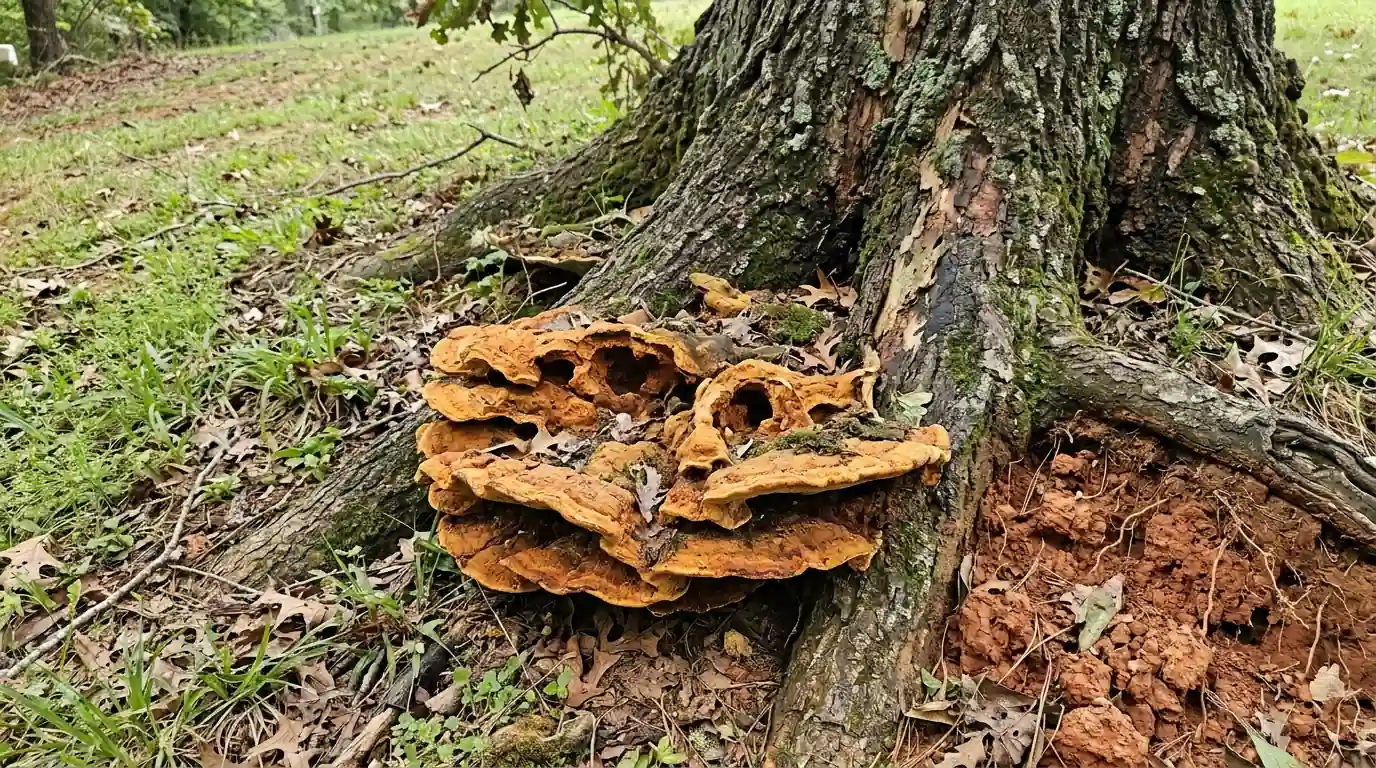
Shelf fungi on the trunk or mushrooms ringing the root flare are the fruiting bodies of decay that's already been working for years.
Dead top or dead leaders
A crown that's bare at the top while the lower limbs still leaf out means the tree is failing from the top down, and dead wood breaks without warning.
Hangers in the crown
Broken limbs caught in the canopy can drop at any time, and they often mean the tree took a hit it hasn't recovered from.
How we take down a tree that isn't safe to climb
With a hazardous tree, the method is chosen around the weakest part of the wood, not around what's fastest.
- 1
Read the wood first
We map the cracks, cavities and dead sections so we know which parts of the tree can hold a climber or a rigging load and which can't.
- 2
Choose how the cutter gets up
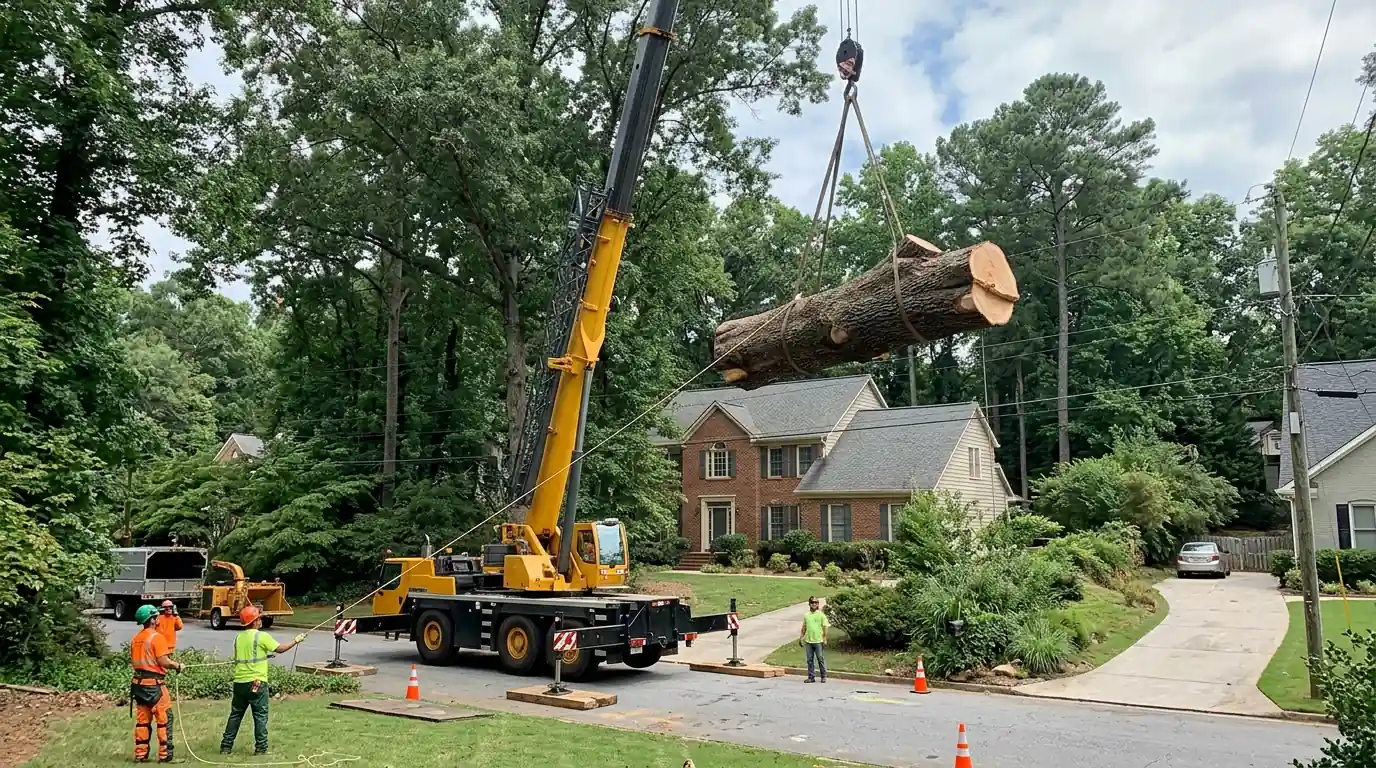
If the trunk is sound enough, a climber goes up. If it isn't, the cutter works from a bucket lift parked outside the fall zone, or a crane holds each piece.
- 3
Set the permit and the perimeter
Inside Atlanta, the dead, dying or hazardous permit goes in first. On the day, we cone off the drop zone, including sidewalks and the street when needed.
- 4
Reduce the weight from the top
The heaviest, highest wood comes off first, in small pieces, so the weakened trunk has less to carry with every cut.
- 5
Lower or lift every piece
Nothing free-falls near the house. Pieces are lowered on rope through a block in a sound part of the tree, or lifted clear by the crane.
- 6
Fell the last stub
When only a short, light section of trunk remains, it's felled into a clear lane and cut up on the ground.
How we decide a tree is a hazard, not just ugly
A hazard is two things multiplied together: how likely the tree or a part of it is to fail, and what it would hit if it did. A hollow oak in the back corner of a wooded lot is a low risk even if it's sure to fall someday. The same oak leaning over a bedroom, a school bus stop or your neighbor's driveway is a different conversation.
So we look at both halves. For the likelihood, we read the trunk, the root flare, the unions and the crown, and sound the wood with a mallet where decay is suspected. For the target, we look at what sits inside the fall zone and how often people are there. A tree over a patio used every evening scores higher than one over a woodpile.
When the answer is unclear, a formal risk check puts it in writing, which helps if a neighbor, an HOA or a city inspector wants to see the reasoning. When it's clear, we tell you plainly and price the removal. And when the defect is small, we'll say so, because a tree that can be made safe with deadwood cuts or a cable shouldn't be taken down.
Hazard trees across Atlanta and the permit that comes with them
Inside Atlanta city limits, a dead, dying or hazardous tree still needs a permit from the city Arborist Division before it comes down. There is no application fee for that permit, the city inspects to verify the condition, and no replacement charge applies once it qualifies. We take the photos and measurements the inspector will want and walk you through the paperwork, which our permit help covers in detail.
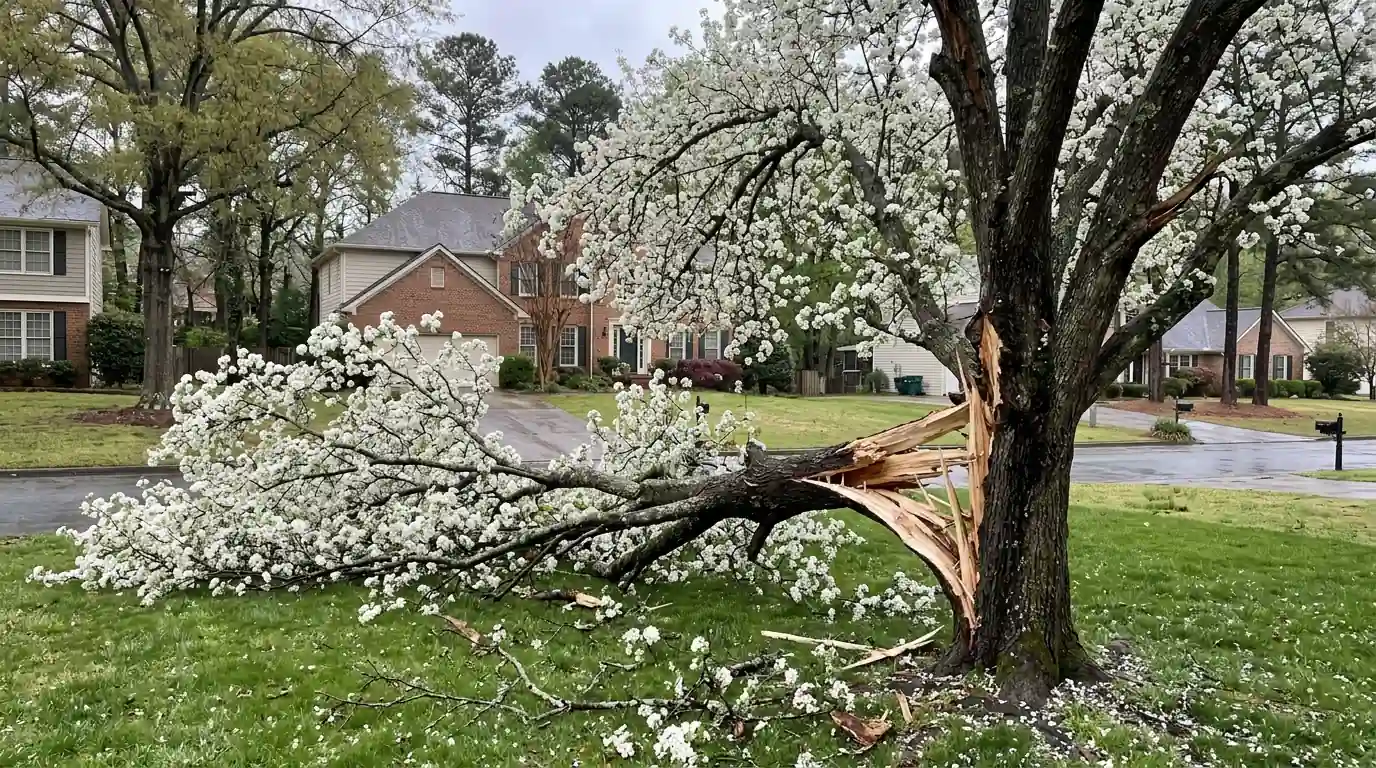
The hazards we see most are water oaks with heart rot planted when the postwar subdivisions went in, tulip poplars dropping brittle limbs after drought, and Callery pears splitting at their V-shaped forks. In Cascade Heights and Tuxedo Park, the trees are large and the lots are deep, so a crane often reaches what a climber can't. In Lilburn, it's more often a pine with a root plate loosened by wet clay.
What drives the cost of a hazardous removal
| Job | Typical range | Priced |
|---|---|---|
| Leaning, cracked or hollow tree near a structure | $760 to $3,850 | per tree |
A hazardous tree almost always costs more than a healthy tree of the same size, because the wood can't be trusted. Pieces have to be smaller, the climber may not be able to use the tree at all, and a lift or crane often replaces rope work. Heavy targets like a slate roof or a neighbor's garage add rigging time, and a tree over the street may need traffic cones and a spotter.
The range below covers most leaning, cracked or hollow trees near a structure in metro Atlanta. Your price is set after we see the defect and the access. Cleanup and hauling are included. Stump grinding is separate, and our tree service price guide lists it with the rest.
Trim and monitor, cable or remove
Not every hazard has to come down. These are the three routes we weigh for a tree with a defect.
| Trim and monitor | Cable and brace | Remove | |
|---|---|---|---|
| Fits when | The defect is small and the target is light | A sound tree has one weak fork or heavy leader | Decay, root failure or a split runs through the main stem |
| What we do | Cut out deadwood and hangers, lighten the end weight | Install cables or rods to share the load across the crown | Take the tree down in sections, by lift or crane if needed |
| Follow-up | A look each year and after big storms | Hardware checked on a regular schedule | Stump grinding and replanting if you want |
| Risk left behind | Some, watched over time | Lower, as long as the hardware is maintained | None from that tree |
Where we do hazardous tree removal around Atlanta
Crews work from our Atlanta office near the 30340 ZIP and our Duluth office. These are the places we cover most, with their main ZIP codes. See all 56 areas.
- Buckhead 30305
- Virginia-Highland 30306
- Druid Hills 30307
- Morningside 30324
- Grant Park 30312
- Kirkwood 30317
- Cascade Heights 30311
- Sandy Springs 30328
- Dunwoody 30338
- Brookhaven 30319
- Decatur 30030
- Duluth 30096
- Lawrenceville 30046
- Marietta 30060
- Smyrna 30080
- Roswell 30075
- Alpharetta 30009
- Johns Creek 30097