We remove pines and hardwoods, grind stumps and clear brush across Gwinnett County. On unincorporated land, a homeowner on a developed single-family lot generally needs no permit unless the tree sits in a buffer, conservation area, Tree Save Area or the Chattahoochee River Corridor, or is a street tree, and at least two live trees must remain. Cities such as Duluth, Lawrenceville and Suwanee set their own rules. Calls to our Duluth office are answered around the clock.
The unincorporated Gwinnett rule and its exceptions
Unincorporated Gwinnett gives homeowners more room than most metro rules. On a developed single-family lot, removing a tree generally needs no permit. The exceptions are what matter: a tree in a required zoning buffer, a stream buffer, conservation or open space, a designated Tree Save Area or the Chattahoochee River Corridor, or a street tree. Some subdivisions carry required buffers along their outer edges, so a lot on the back line of a neighborhood deserves a closer look.
Two more parts of the rule shape real jobs. At least two live trees must remain on the lot, which matters when an owner wants every pine gone in one visit. And inside the river corridor, which covers land within 2,000 feet of the Chattahoochee under the Metropolitan River Protection Act, a dead tree may be removed by hand with the stump left in place. HOA approval is a separate question from the county rule, and many boards here want to see a request before a tree comes down.
Gwinnett's cities set their own rules
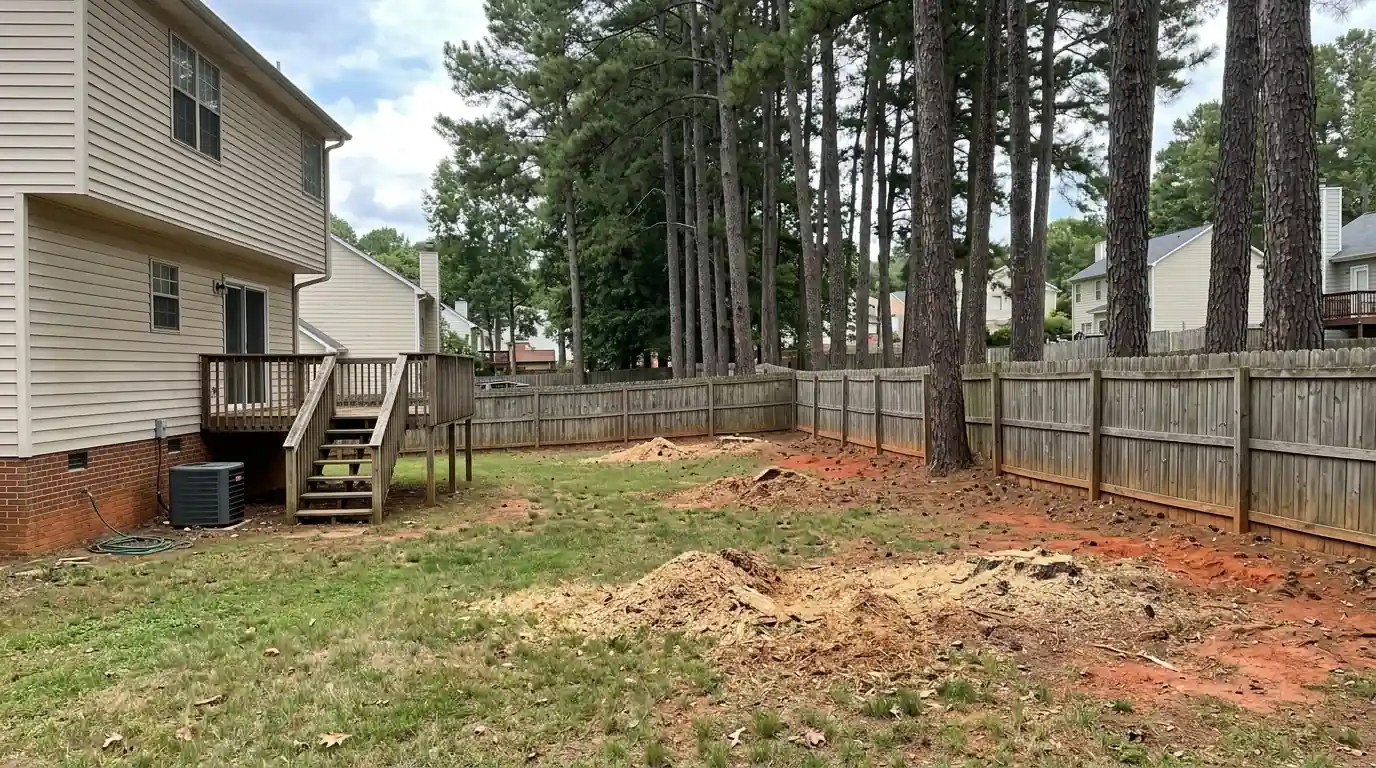
Inside city limits, the county exemption doesn't simply carry over, and each city sets its own tree rules. A mailing address is a poor guide, since many homes with a Duluth, Lawrenceville or Snellville address sit on unincorporated land. We check the city limits for the house first, then the rule that goes with them.
The work changes across the county too. Duluth and Suwanee are mostly tall pines close to houses on subdivision lots. Norcross brings deep lots with brush and debris behind older homes, and Peachtree Corners brings mature hardwoods over 1970s and 1980s roofs. Lilburn sees hardwood storm damage, Lawrenceville keeps the stump grinder busy, and the bigger lots in Snellville mean more lot clearing.
Pines, red clay and the stumps they leave
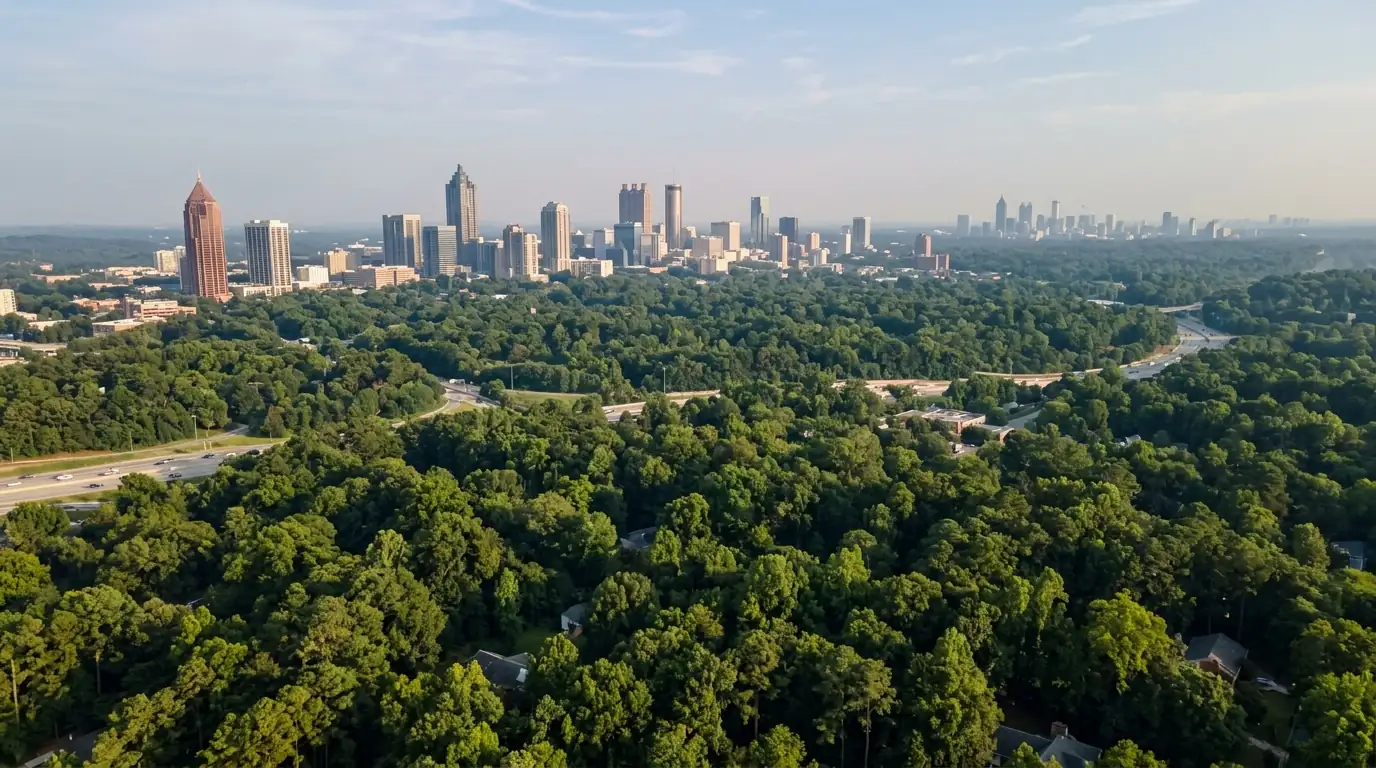
Gwinnett's subdivisions were cut from pine woods and pasture, and builders kept loblollies and shortleaf pines wherever they could. Those trees grew tall on shallow roots in red clay that stays soft after long rains, which is why so many tipped when Tropical Storm Helene soaked metro Atlanta on September 27, 2024. After dry summers, Ips engraver beetles and southern pine beetle work through stressed pines, and a dead one near a house should come down while the wood is still sound to climb.
Nearly every removal here ends with a stump. Before grinding, we file a Georgia 811 locate and ask you to flag private lines such as irrigation and dog fence wire. Sweetgum stumps can sprout from their roots, while pine stumps rarely do. Our guide to grinding versus pulling a stump covers which approach fits a patio, a fence line or new sod.