We remove, trim and clean up after loblolly pines, sweetgums and tulip poplars across Duluth, mostly on subdivision lots where the house was built in among the trees. In unincorporated Gwinnett, a homeowner on a developed lot generally needs no permit unless the tree sits in a buffer, a Tree Save Area or the Chattahoochee River Corridor. Inside Duluth city limits the city sets its own tree rules, and we check them before we quote. The phone is answered 24/7.
Taking tall pines off a Duluth lot without touching the roof
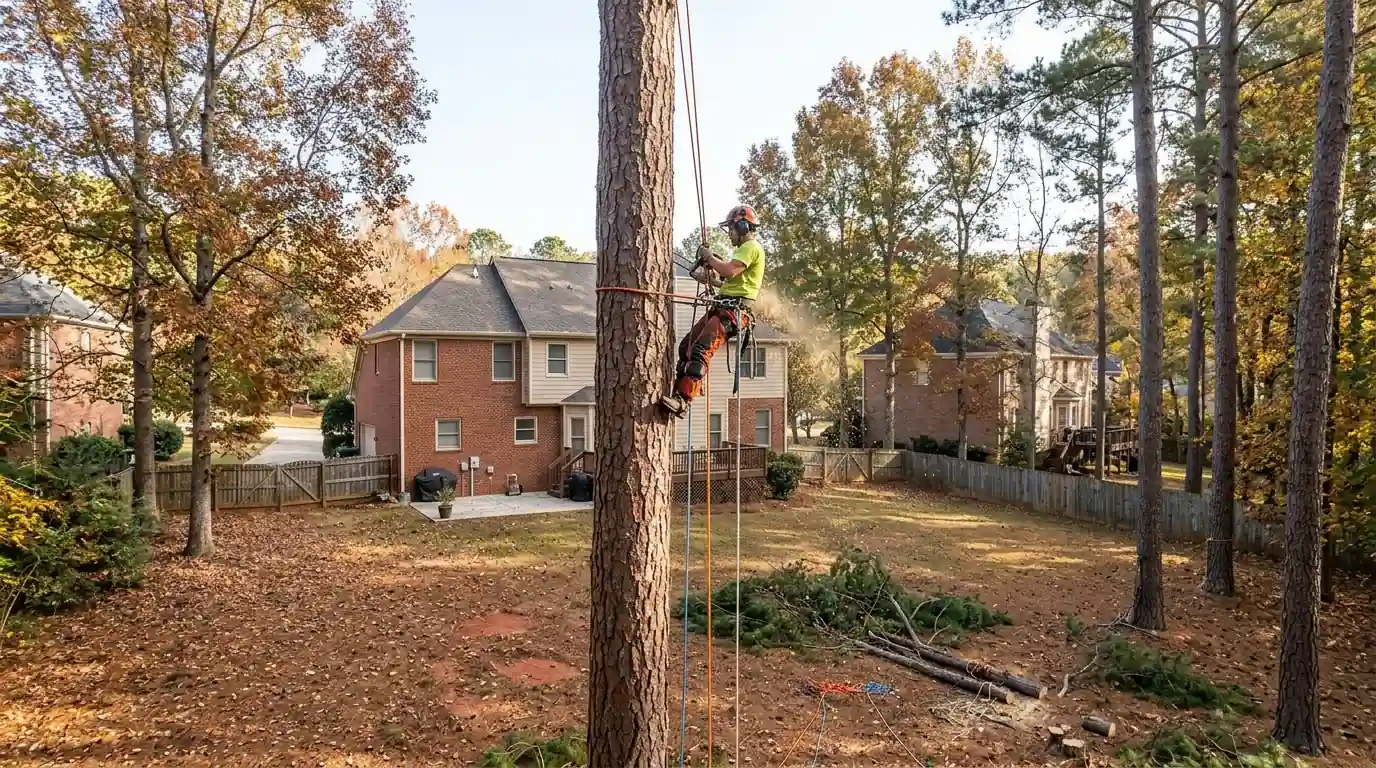
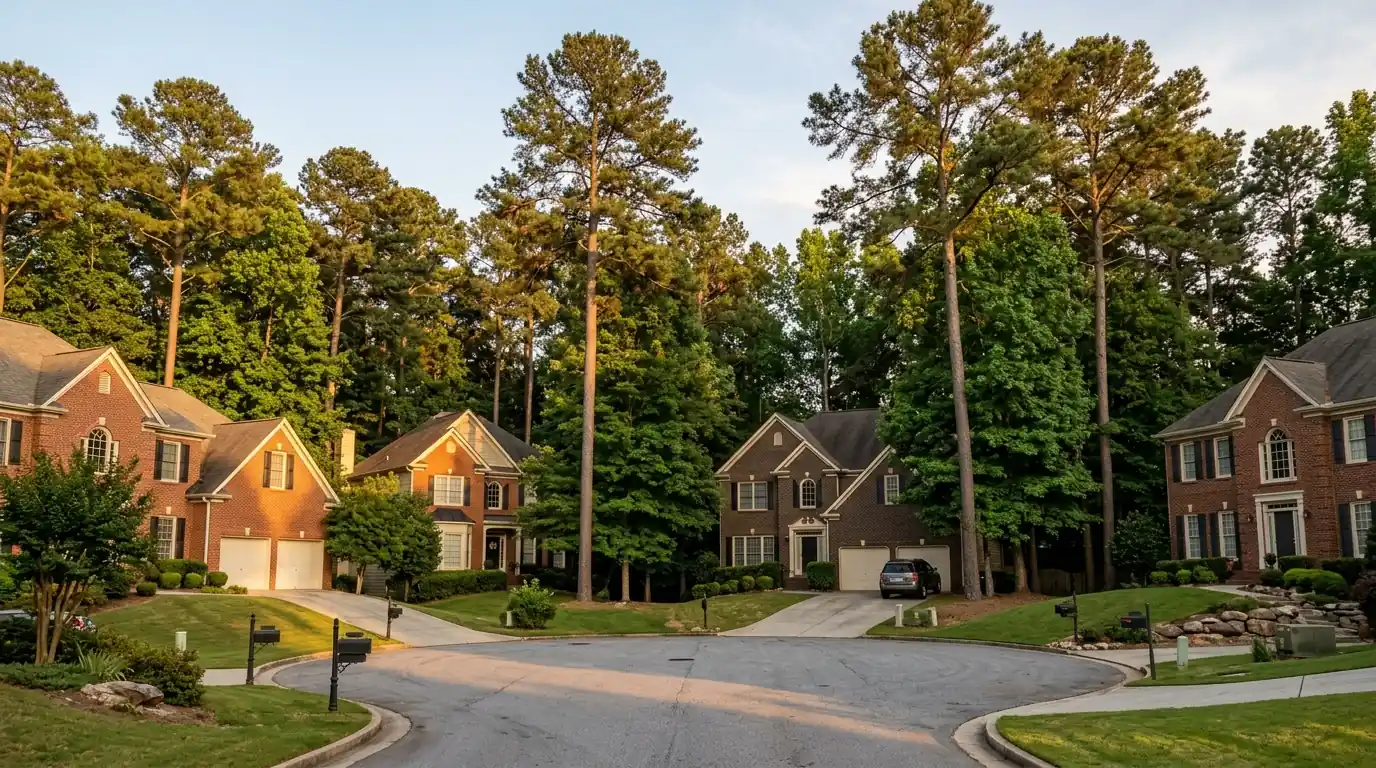
When builders cleared ground for Duluth subdivisions, they often left a ring of loblolly pines around each house for shade and privacy. Those pines kept growing while driveways, patios and irrigation trenches squeezed their roots. Many now stand more than twice the height of the house, with a small crown at the very top and a long bare trunk that catches every gust.
Taking one down usually means a climber on spurs, limbs lowered first, then the trunk cut in rounds and dropped into a lane between the house and the fence. Back yards here often slope toward a creek or a detention pond, and side gates are rarely wide enough for a loader. Our pine removal page covers the method step by step.
Homes near the Chattahoochee follow a different rule
Duluth runs right up to the Chattahoochee, and that matters more than most homeowners expect. Under the Metropolitan River Protection Act, the Chattahoochee River Corridor covers land within 2,000 feet of the river. In unincorporated Gwinnett, a tree inside that corridor is one of the exceptions to the usual no-permit rule, and a dead tree there may be removed by hand with the stump left in place.
That last detail changes the job. No grinder goes in, and the wood has to come out without tearing up a slope that drains to the river. Before we quote a house on the river side of town, we look at how far the lot sits from the water. Our guide to metro tree permits explains how the different rules compare.
Which rule covers the rest of Duluth
Away from the river, unincorporated Gwinnett generally lets a homeowner on a developed single-family lot remove trees without a permit. The exceptions are trees in a required zoning buffer, a stream buffer, conservation or open space, a designated Tree Save Area, or a street tree. At least two live trees have to remain on the lot, which catches people who want every pine gone in one visit.
A Duluth mailing address doesn't always mean Duluth city limits, so the first thing we confirm is which side of the line the house sits on. Inside the city, Duluth sets its own tree rules, and we check them before the quote rather than after the first cut. Many subdivisions also have an HOA with a say on tree removal, so ask the board early.
What wet clay and dry summers do to Duluth pines
Georgia red clay holds water after a long rain, and pine roots in it stay shallow. When Tropical Storm Helene soaked the ground on September 27, 2024, that combination tipped trees onto homes across metro Atlanta. A pine that took on a new lean after a storm like that deserves a look, especially if the soil has cracked or heaved on the far side.
Drought is the other threat. Southern pine beetle and Ips engraver beetles move into stressed loblollies, and the first signs are pitch tubes on the bark or a crown fading from green to rust. Dead pines turn brittle fast, so we'd rather remove them while they're sound enough to climb. We see that beetle pattern on lots in Suwanee too, and across the river in Johns Creek the pines are just as tall.