We prune, cable and remove very large oaks across Brookwood Hills, the historic neighborhood just off Peachtree Road known for its private park and pool. White oaks, southern red oaks and water oaks stand over 1920s homes on lots served by narrow, winding streets. Brookwood Hills is inside Atlanta city limits, so removing a tree 6 inches or more at 4.5 feet (pines 12) needs an Arborist Division permit. Call the 24/7 line to set up a visit.
Oaks older than the houses beneath them
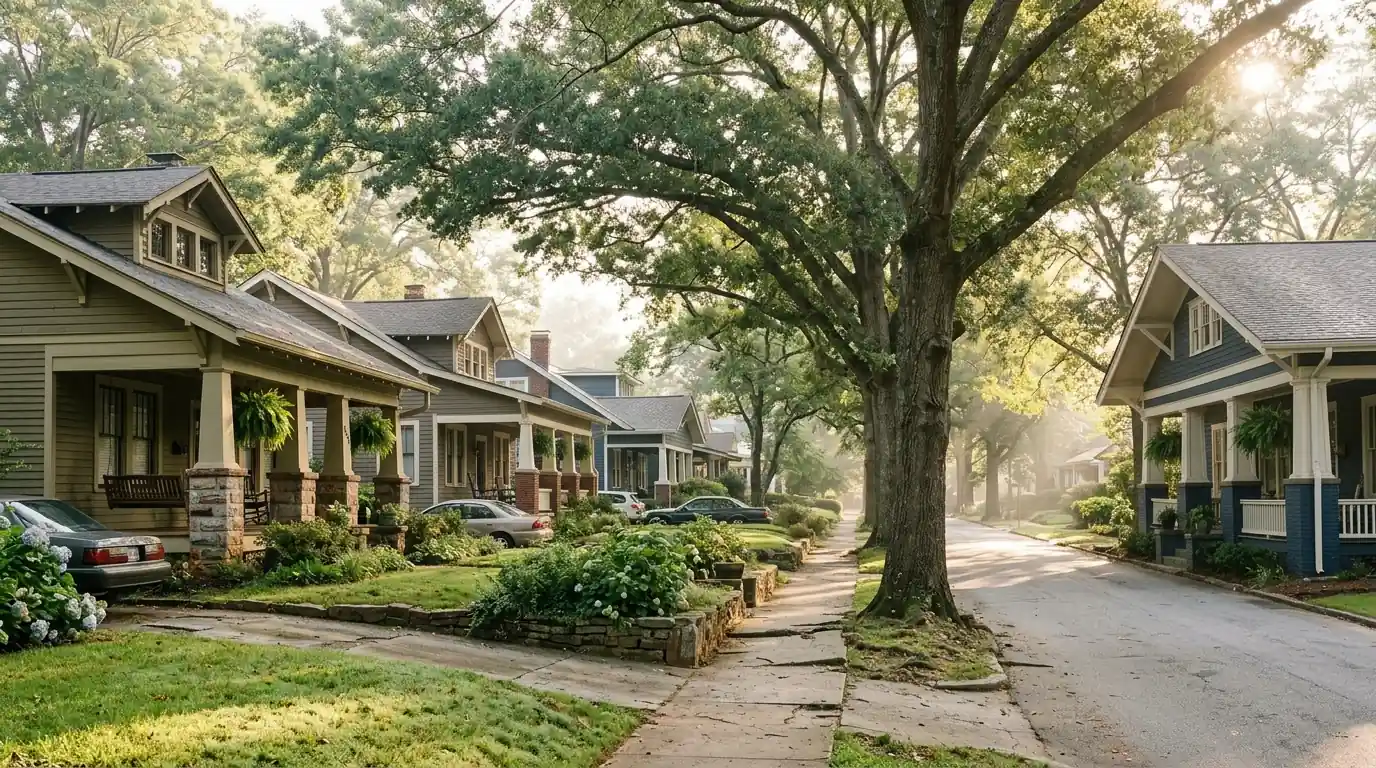
Brookwood Hills was developed in the 1920s on rolling ground just off Peachtree Road, and many of its oaks have been growing since those first houses went in, some for longer. Today their trunks can be wider than a front door, and their crowns spread over the house, the driveway and half the street. The neighborhood's private park and pool sit in the middle of that canopy, and residents here tend to treat the trees as part of the place's history.
Trees this size don't fail the way young trees do. The usual trouble is one massive limb that has grown long and low over a roof, an old cavity where a limb was lost decades ago, or a slow decline at the top after the roots were disturbed. Each one calls for a different answer, so our first visit is mostly looking: from the ground, from the roof line and, when needed, from a climber's rope.
Climbing work in very large crowns
Most of our work here is done by climbers, not machines. A climber ties in near the top, moves out along the big limbs and makes the cuts by hand, lowering each piece on a rope through a block hung higher in the tree. On a crown this wide, a single pruning visit can mean hours aloft, working out to limb ends that are well over a neighbor's yard.
The aim is to keep these oaks standing. We take out deadwood, shorten the heaviest limbs to a strong lateral and leave the living crown as intact as possible, since big old oaks don't recover well from heavy cuts. Where a sound tree has a weak fork or a long limb that can't be shortened enough, we install steel cables and bracing to share the load. Our light crown thinning lets wind through without stripping the interior.
Bringing a crane down narrow, curving streets
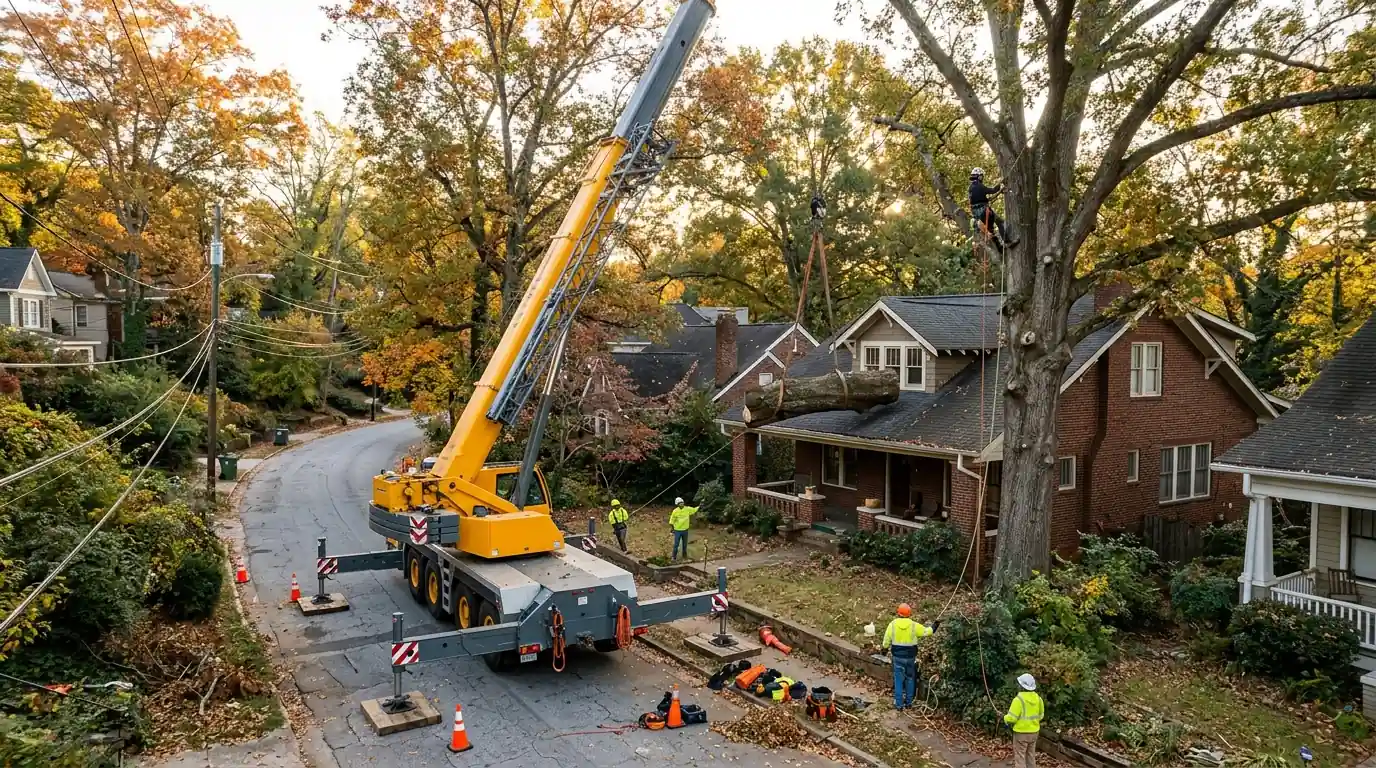
When an oak in Brookwood Hills has to come down, the size of the wood and the house underneath often rule out ordinary rigging. A trunk section several feet across weighs far more than any lowering line can safely hold, so we lift it out with a crane instead. The hard part is getting the crane in place on streets that curve and narrow, with parked cars, low branches over the road and limited room to extend the outriggers.
We walk the route in advance, measure the setup spot and plan where each piece will land, often in the street on a truck bed. Neighbors get a heads-up and the day is planned so the street is closed for as few hours as possible. Our crane removal service covers the whole job, and our price guide shows how a crane day changes the math on a big removal.
Permit rules for removing a historic oak
Brookwood Hills lies within Atlanta city limits in Fulton County. Removing a private tree 6 inches or more at 4.5 feet needs a permit from the Arborist Division, and pines start at 12 inches. Healthy oaks taken out for a renovation or addition owe recompense under the higher fees in place since January 2026, while dead or hazardous trees go through without an application fee once the city verifies them. Collier Hills and Ansley Park follow the same rule.