Tree insect treatment means protecting a tree from boring or sap-feeding insects with trunk injections, soil applications or bark sprays, chosen for the pest and timed to its life cycle. Around Atlanta the big threats are southern pine beetle and Ips engraver beetles on drought-stressed pines, emerald ash borer, crape myrtle bark scale, ambrosia beetles and bagworms. Preventive treatment on a healthy tree works far better than rescue once the insects are deep inside the wood.
Why the insect has to be named before anything is applied
Every pest feeds in a different place on the tree. Pine bark beetles tunnel just under the bark. Emerald ash borer larvae chew through the layer that carries water and sugar. Crape myrtle bark scale sits on the outside of the bark and sucks sap. Bagworms eat needles from inside a silk bag. A spray that kills bagworms does nothing for a borer already under the bark, so naming the pest comes first.
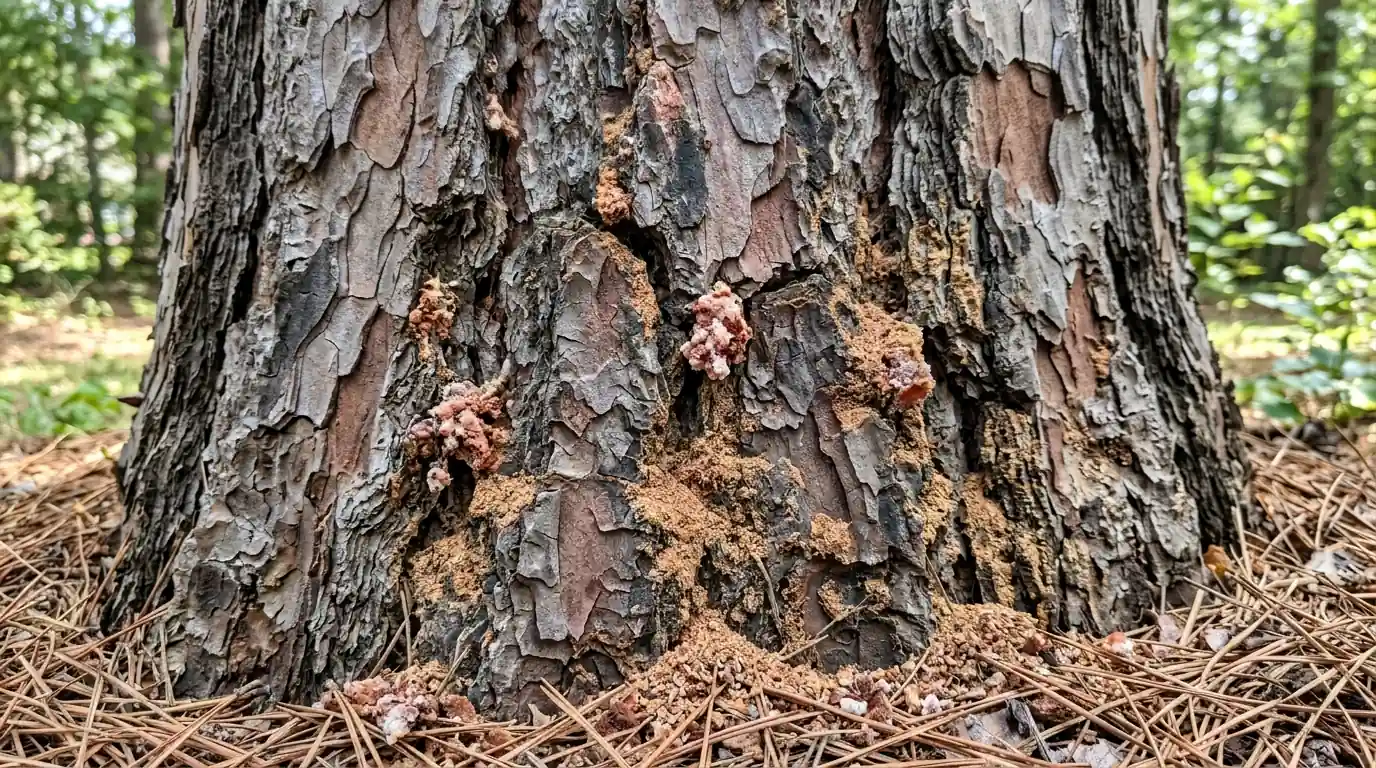
We look for the signs each insect leaves behind: pitch tubes and boring dust, D-shaped exit holes, white felt-like crusts on crape myrtle bark with black sooty mold below, strands of compressed sawdust poking from a young trunk, or bags hanging like small pine cones. We also judge how far the damage has gone. A tree that's lightly attacked can often be protected. One that has already lost much of its crown usually can't, and we'll tell you that plainly.
Protecting a healthy ash tree before the borer gets there
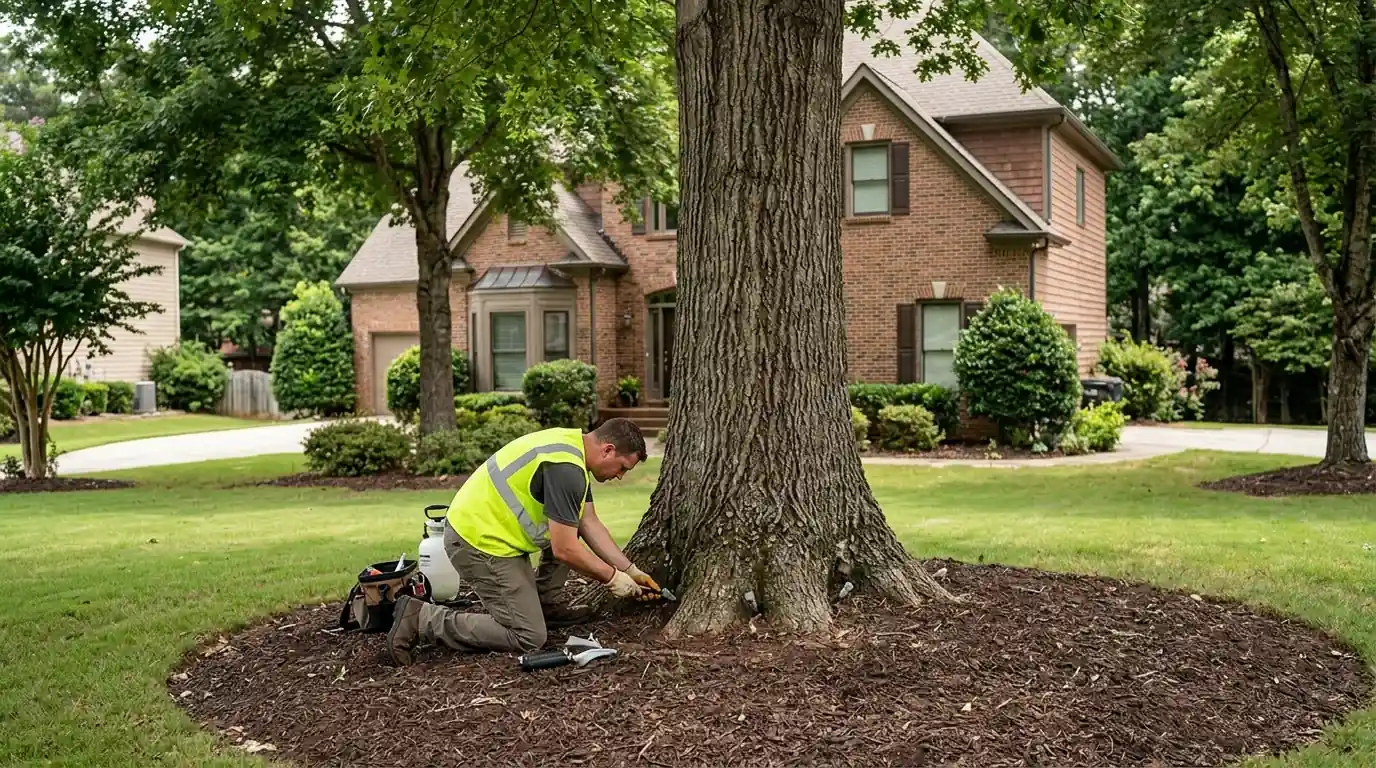
Emerald ash borer was first found in Georgia in July 2013, in DeKalb and Fulton counties. By 2023 it had been confirmed in all ten core metro counties and in Forsyth, so an untreated ash anywhere in the metro is at real risk. Once a tree has lost much of its canopy, the borer has usually done too much damage to the inside of the trunk for treatment to save it.
A healthy ash with a full crown is a different story. Preventive trunk injections, repeated on a regular schedule, protect the tree as long as the program continues. For a big ash that shades a patio or a west-facing wall, that's usually far cheaper over time than a removal and a replacement tree. If an ash is already declining, we'd rather help you plan a controlled removal while the wood is still sound enough to climb.
The tree insects we treat most around Atlanta
Each of these leaves its own signs, and each calls for a different approach.
Southern pine beetle
Attacks loblolly and shortleaf pines in groups, leaving small pitch tubes up the trunk. A crown that turns yellow, then red, can mean the pine is already dead.
Ips engraver beetles
Move into pines stressed by drought, lightning, storm damage or construction. They often start high in the crown or in freshly cut pine debris left on the ground.
Emerald ash borer
Kills green and white ash by tunneling under the bark. Thinning tops, bark splits, woodpecker damage and small D-shaped exit holes are the signs.
Crape myrtle bark scale
White or gray crusts on the bark and branches that ooze pink when crushed, with black sooty mold on the trunk and the leaves below.
Ambrosia beetles
Bore into young, stressed or newly planted trees in early spring and push out thin strands of sawdust that look like toothpicks.
Bagworms
Spin silk bags covered in needle bits on Leyland cypress, arborvitae, juniper and cedar, and can strip a hedge row bare by late summer.
Treatment timing for the common Atlanta pests
Timing does as much work as the product itself, so this is the rough calendar we follow.
- Emerald ash borer: injections in spring, once the tree has leafed out and sap is flowing well.
- Crape myrtle bark scale: soil applications in spring, with bark washing to clear crawlers and sooty mold.
- Ambrosia beetles: protection on young or newly planted trees in late winter, before the early spring flights.
- Bagworms: sprays in late spring and early summer while the larvae are small, or hand-picking bags in winter.
- Pine bark beetles: protective bark sprays on valuable pines during drought or after construction stress.
- Beetle-killed pines: removed promptly, and fresh pine debris chipped or hauled rather than left in piles.
- Every tree treated: watered deeply through summer drought, since stressed trees attract more insects.
How an insect treatment visit runs
Most visits follow the same order, whether it's one ash tree or a row of crape myrtles.
- 1
Identify the pest
We look for exit holes, pitch tubes, frass, scale crusts and feeding damage, and confirm the tree species, because many pests attack only one kind of tree.
- 2
Judge the damage
We estimate how much of the crown is still healthy. That decides whether treatment is worth it or the tree is already lost.
- 3
Pick the method
Injection, soil application or spray is chosen for the pest, the tree's size, nearby water and how close it stands to gardens and play areas.
- 4
Time it right
We schedule the work for when the insect is vulnerable and the tree is moving sap, often spring for borers and scale.
- 5
Apply and record
Treatment goes on according to the product label, and we note the date and product so the next round is on time.
- 6
Remove what's lost
Trees already killed by beetles are flagged for removal, since dead pines and ash turn brittle fast and can fuel the next attack.
Pine beetles, drought and the north metro pine stands
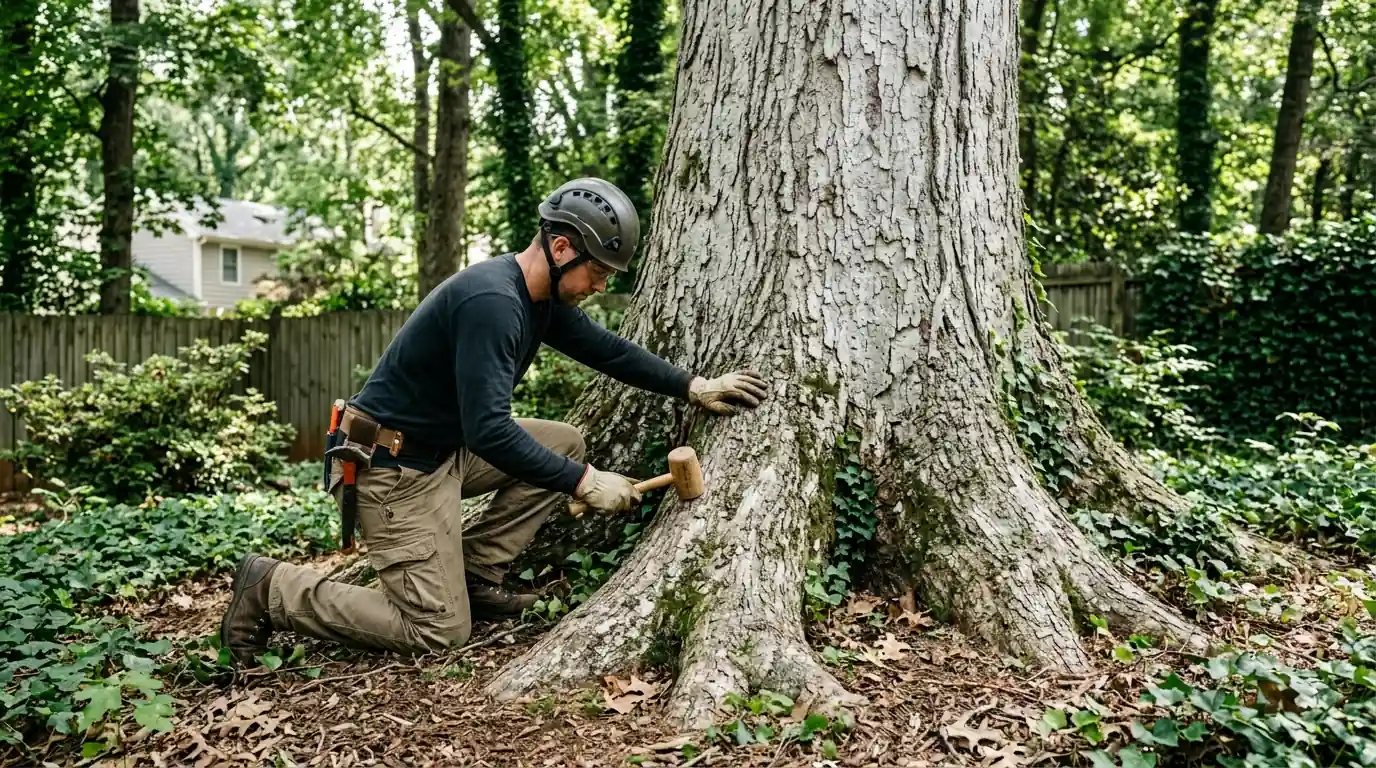
Tall loblolly pines left standing when subdivisions were built across Johns Creek, Lawrenceville and much of Gwinnett and Cobb are the trees we watch most closely after a dry summer. Drought, lightning strikes and roots cut by construction stress pines, and stressed pines draw Ips engraver beetles first. Where southern pine beetle moves in, it can kill a group of neighboring pines in a single season. A pine that browns from the top down in late summer is often already lost.
Crape myrtle bark scale has spread through intown plantings and shopping center islands, and the black trunks it leaves are easy to spot from the street in neighborhoods like Grant Park. Bagworms show up every summer on the Leyland screens planted along back fences in newer neighborhoods. Pairing treatment with proper crape myrtle pruning and good watering keeps the problem from coming right back.
Trunk injection, soil application or bark spray
The method follows the pest and the site, and here is how the three compare.
| Trunk injection | Soil application | Bark or foliage spray | |
|---|---|---|---|
| How it works | Small ports at the base deliver product into the sap stream | Product goes into the soil at the base and roots take it up | Product is applied to the bark or leaves where insects feed |
| Suited to | Ash borer and other borers on valuable trees | Scale and some borers on smaller trees | Bagworms, bark beetle prevention on high-value pines |
| Drift and runoff | None | Low when applied correctly | Higher, so we watch wind and nearby water |
| Speed | Days to a few weeks | Several weeks to move up the tree | Works on contact or soon after |
What moves the price of tree insect treatment
| Job | Typical range | Priced |
|---|---|---|
| Insect treatment or preventive injection | $125 to $540 | per tree |
Trunk diameter sets most of the price for injections, because product is dosed by the size of the tree. A small crape myrtle with scale is a short visit with a soil treatment. A 24 inch ash takes more product and more injection sites. Spray work depends on height and how much of the crown needs coverage, and a hedge row of Leylands with bagworms is priced by length.
Preventive programs repeat on a schedule, so we tell you up front how often the treatment needs to happen and what each round costs. Removals of trees already killed by beetles or borers are quoted separately, as is any pruning of dead limbs. You'll find typical ranges for treatment and related work on our price guide.
Where we do tree insect treatment around Atlanta
Crews work from our Atlanta office near the 30340 ZIP and our Duluth office. These are the places we cover most, with their main ZIP codes. See all 56 areas.
- Buckhead 30305
- Virginia-Highland 30306
- Druid Hills 30307
- Morningside 30324
- Grant Park 30312
- Kirkwood 30317
- Cascade Heights 30311
- Sandy Springs 30328
- Dunwoody 30338
- Brookhaven 30319
- Decatur 30030
- Duluth 30096
- Lawrenceville 30046
- Marietta 30060
- Smyrna 30080
- Roswell 30075
- Alpharetta 30009
- Johns Creek 30097