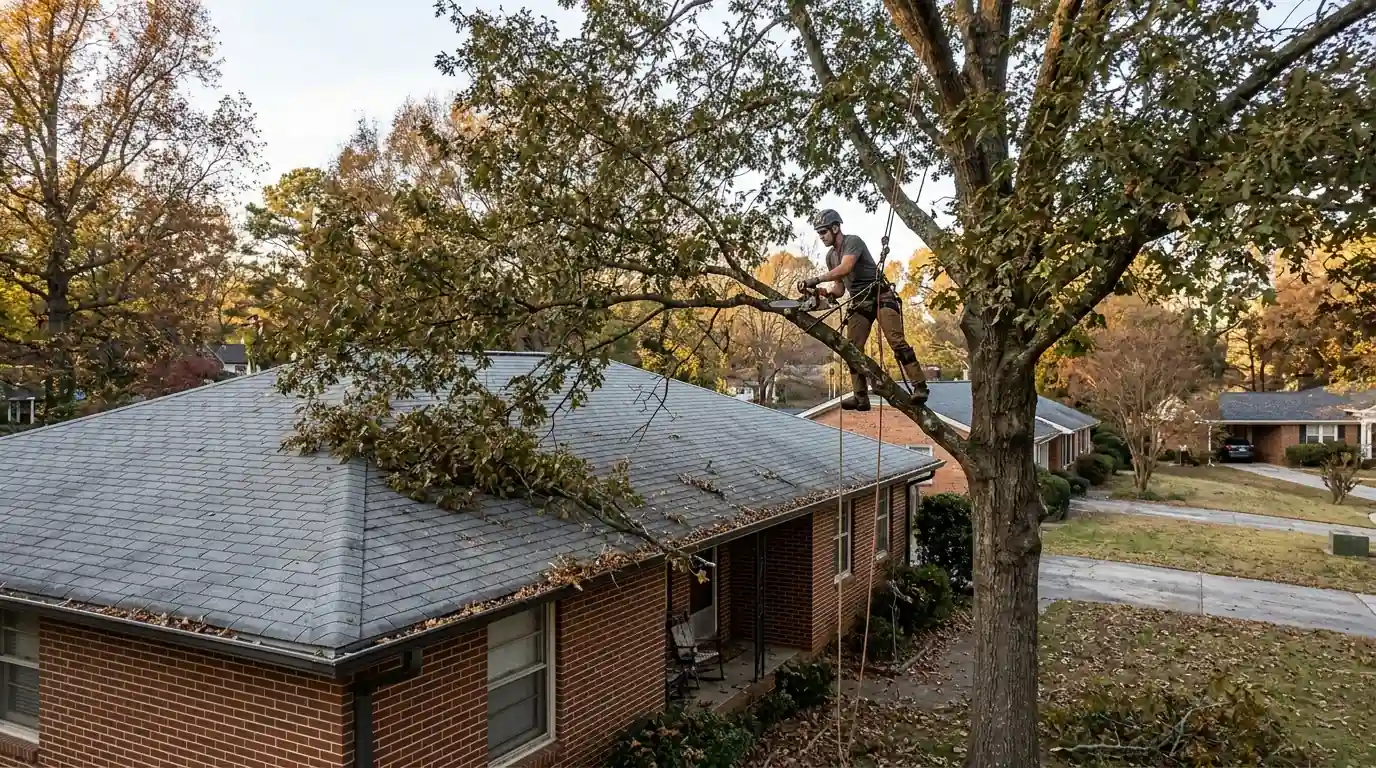
Tree trimming is maintenance pruning for clearance and shape: limbs taken back from the roofline, gutters, siding, driveway and the neighbor's side, plus dead and broken branches removed while we're up there. Most mature yard trees in Atlanta need it every three to five years. Pruning a private tree inside city limits needs no permit, but the ordinance's pruning standards still apply, and our cuts go to the collar with no topping.
What a routine trim takes off and what it leaves alone
A trim is defined by clearance. We look at where the tree touches or crowds something you care about, then work branch by branch to open space around it. On most Atlanta lots that means limbs resting on shingles, branches dragging across the gutters, twigs scraping the siding on windy nights and low growth hanging over the driveway where a delivery van or a camper has to pass.
The goal is not to make the tree smaller everywhere. A good trim takes the least wood needed to clear those targets, removes dead and broken branches we find along the way, and leaves the rest of the crown in its natural shape. If a tree needs height or spread taken off across the whole canopy, that's a different job, and we'll talk you through shortening the crown properly instead.
Trimming also covers the neighbor's side. Limbs that cross the property line over a fence, a shed or a parked car are cut back to a side branch or to the collar, not hacked off flat at the fence line. We would rather clear it properly once than leave a row of stubs that sprout back into a tangle by next summer.
Where trimming pays for itself on an Atlanta house
These are the clearance problems we're called about most, and each one costs more to fix later than to trim now.
Limbs on the roof
Branches resting on shingles grind away the granules every time the wind moves them, and they give squirrels a bridge straight to the attic vents.
Gutters full every month
Overhanging oaks, sweetgums and pines drop leaves, gumballs and needles straight into the gutters, so water backs up under the drip edge in heavy rain.
Siding that stays damp
Foliage pressed against siding and trim keeps it shaded and wet, which feeds mildew and softens painted wood over a few seasons.
Low limbs over the drive
Trucks, campers and box vans snap low branches and leave torn bark that invites decay. A clean cut made on purpose is far kinder to the tree.
Branches over the neighbor
Limbs hanging over a fence, a deck or a parked car next door are a common source of friction, and one of the easiest to settle.
Wires to the house
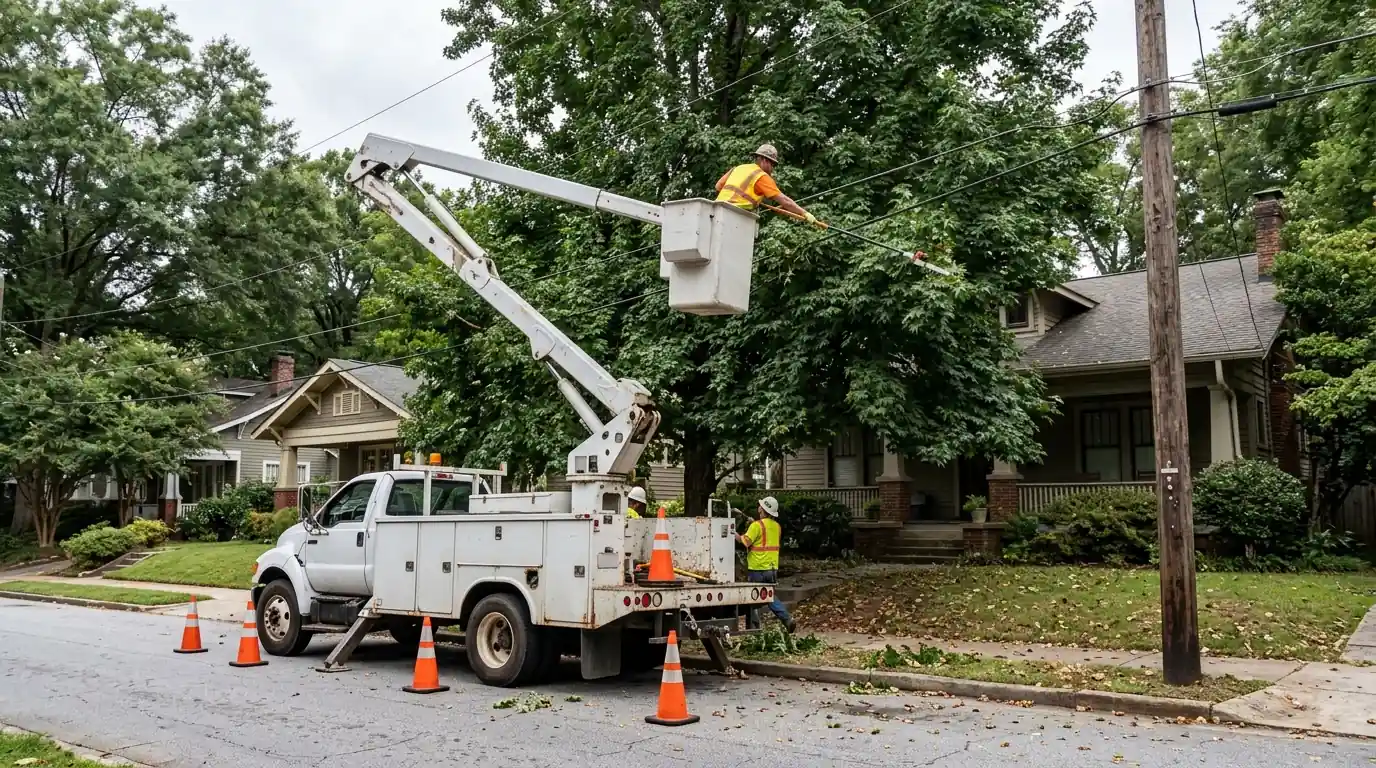
Branches growing into the lines that feed your home need attention before they rub through. We never cut around a live line, so anything close is coordinated with Georgia Power, and bigger jobs follow our utility line process.
What good trimming leaves behind in your tree
When the crew packs up, walk under the tree and look for these marks of careful work.
- Cuts made just outside the branch collar, the slightly swollen ring where a limb joins a larger one.
- No stubs sticking out past the collar, since stubs die back and carry rot into the trunk.
- No flush cuts shaved tight against the trunk, which open a wound far larger than it needs to be.
- No topped stems cut off mid-branch with nothing left to take over.
- No strips of torn bark hanging below a cut, the sign of a heavy limb dropped without an undercut.
- No spike holes up the trunk, because climbing spurs belong on removals, not on a tree that's staying.
- A crown that still looks like the same tree, just clear of the roof, the drive and the wires.
How a trimming visit runs from walk-around to cleanup
The order stays the same whether we're trimming one tree or every tree on the lot.
- 1
Walk the lot with you
We stand under each tree with you, point out what needs clearing and agree on how far back each limb goes before anyone climbs.
- 2
Choose bucket or climber
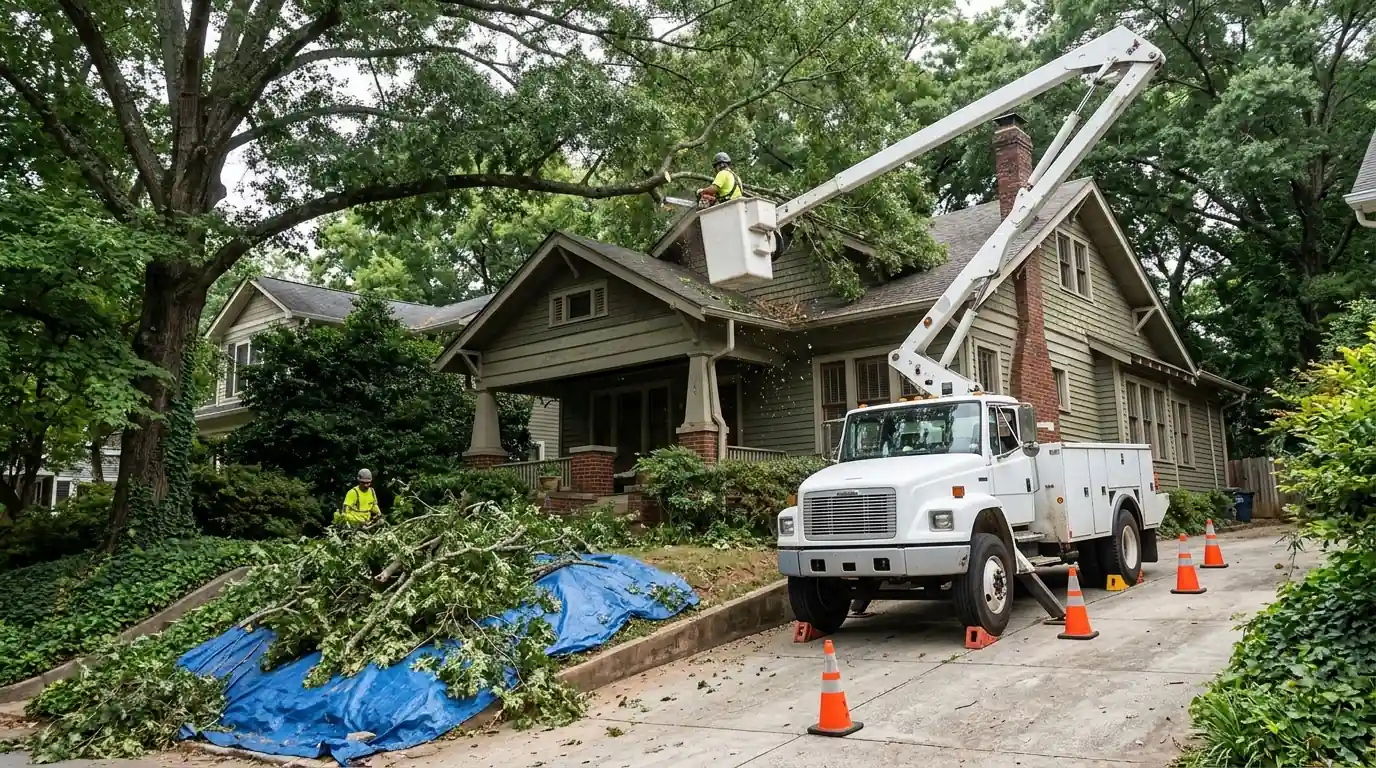
If the drive and lawn can carry a bucket truck and it can reach, we use it. Otherwise a climber ties in and works from inside the crown.
- 3
Deadwood and broken limbs first
Dead branches come out early so they can't break loose and fall while the climber is moving around the tree.
- 4
Make the clearance cuts
Each limb is cut back to a side branch or to the collar where it meets a larger stem, with a three-cut sequence on heavy wood so the bark can't tear.
- 5
Step back and look
The climber pauses while the ground person checks the tree from the street and the yard, and we even out anything that looks lopsided.
- 6
Chip and clean
Brush goes through the chipper, small debris is raked out of the beds, and the gutters and roof edge are checked for twigs we dropped.
Trimming cycles and clearance problems around Atlanta
Many intown lots put a mature oak within a few feet of the roofline, so clearance is a regular need rather than a one-time fix. On the bungalow streets of Kirkwood and the cottage blocks of Ormewood Park, the usual call is a willow or water oak resting on the back roof, with a driveway so narrow that a climber does the work instead of a bucket.
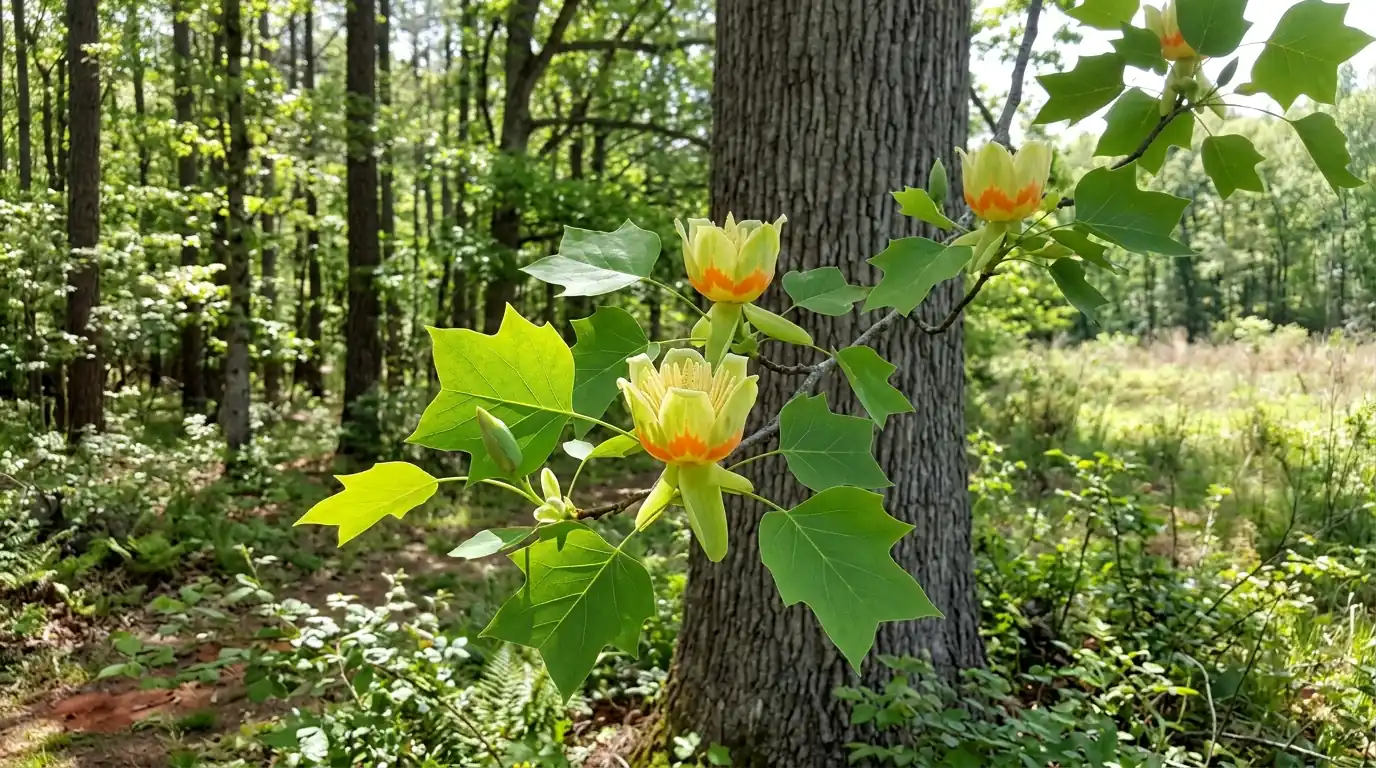
We usually suggest a trim every three to five years for mature hardwoods and a little more often for fast growers like tulip poplars, sweetgums and red maples. Out in Tucker and the older ranch-house subdivisions around it, the bigger complaint is pine needles and sweetgum balls filling gutters, and a lighter trim on a shorter cycle keeps that under control. If a water oak keeps dropping limbs between trims, our note on aging water oaks explains what that can mean.
Bucket truck or climber: which one trims your tree
We choose by access and ground conditions, and either one makes the same quality of cut.
| Bucket truck | Climber on rope | |
|---|---|---|
| Needs | A firm path within reach of the tree, usually off the drive or the street | A sound tree to anchor in and room on the ground to lower brush |
| Works well for | Street-side trees, front yards and limbs over a driveway | Backyards, fenced lots, steep slopes and trees tucked behind the house |
| Ground impact | Heavy outriggers, so we keep it off wet lawns and septic fields | Light footprint: ropes, tarps and foot traffic |
| Pace | Quick on limbs the boom can reach | Steady, limb by limb from inside the crown |
| Reach | Works from outside the canopy | Gets to interior limbs and backyard trees a boom never could |
What moves the price of tree trimming in Atlanta
| Job | Typical range | Priced |
|---|---|---|
| Small tree trim | $185 to $435 | per tree |
| Medium tree trim | $395 to $860 | per tree |
| Large tree trim | $760 to $1,940 | per tree |
Trimming is priced per tree by the work inside it, not by height alone. A tall oak that only needs two limbs lifted off a roof can cost less than a mid-size tree packed with deadwood that a climber has to work through limb by limb. Reach matters too: a tree the bucket can get to from the drive goes faster than one behind a fence at the bottom of a sloped backyard.
Chipping, raking and hauling the brush are part of the trim price, and quoting several trees on one visit means you aren't paying for setup twice. The ranges below are typical for small, medium and large trees in metro Atlanta, and our full price guide shows how trimming compares with the rest of the work we do.
Where we do tree trimming around Atlanta
Crews work from our Atlanta office near the 30340 ZIP and our Duluth office. These are the places we cover most, with their main ZIP codes. See all 56 areas.
- Buckhead 30305
- Virginia-Highland 30306
- Druid Hills 30307
- Morningside 30324
- Grant Park 30312
- Kirkwood 30317
- Cascade Heights 30311
- Sandy Springs 30328
- Dunwoody 30338
- Brookhaven 30319
- Decatur 30030
- Duluth 30096
- Lawrenceville 30046
- Marietta 30060
- Smyrna 30080
- Roswell 30075
- Alpharetta 30009
- Johns Creek 30097