Nearly every Brookhaven removal starts with paperwork, from Historic Brookhaven to Ashford Park, whether the tree is an oak, a pine or a poplar. The city requires a permit to remove any tree 4 inches in diameter or larger, including dead, dying or hazardous trees, subject to city arborist approval. Applications go through the city's online Project Portal with photos and a site plan, and we prepare that package before quoting a date. Call any time to set up a visit.
How Brookhaven's 4-inch rule shapes every job
Inside Atlanta city limits the line starts at 6 inches, so homeowners moving to Brookhaven are often surprised. Here a permit is required to remove any tree 4 inches DBH or larger, and that includes trees that are dead, dying or hazardous. The city arborist has to approve those, which means a dead pine leaning at the house still needs an application before it comes down.
Applications go through the city's online Project Portal and need photos and a site plan. We take the measurements at 4.5 feet, photograph the tree from several sides, mark its location on a sketch of the lot, and put the package together for you. Our permit service page covers what goes into a clean application, and our metro permit guide compares Brookhaven with its neighbors.
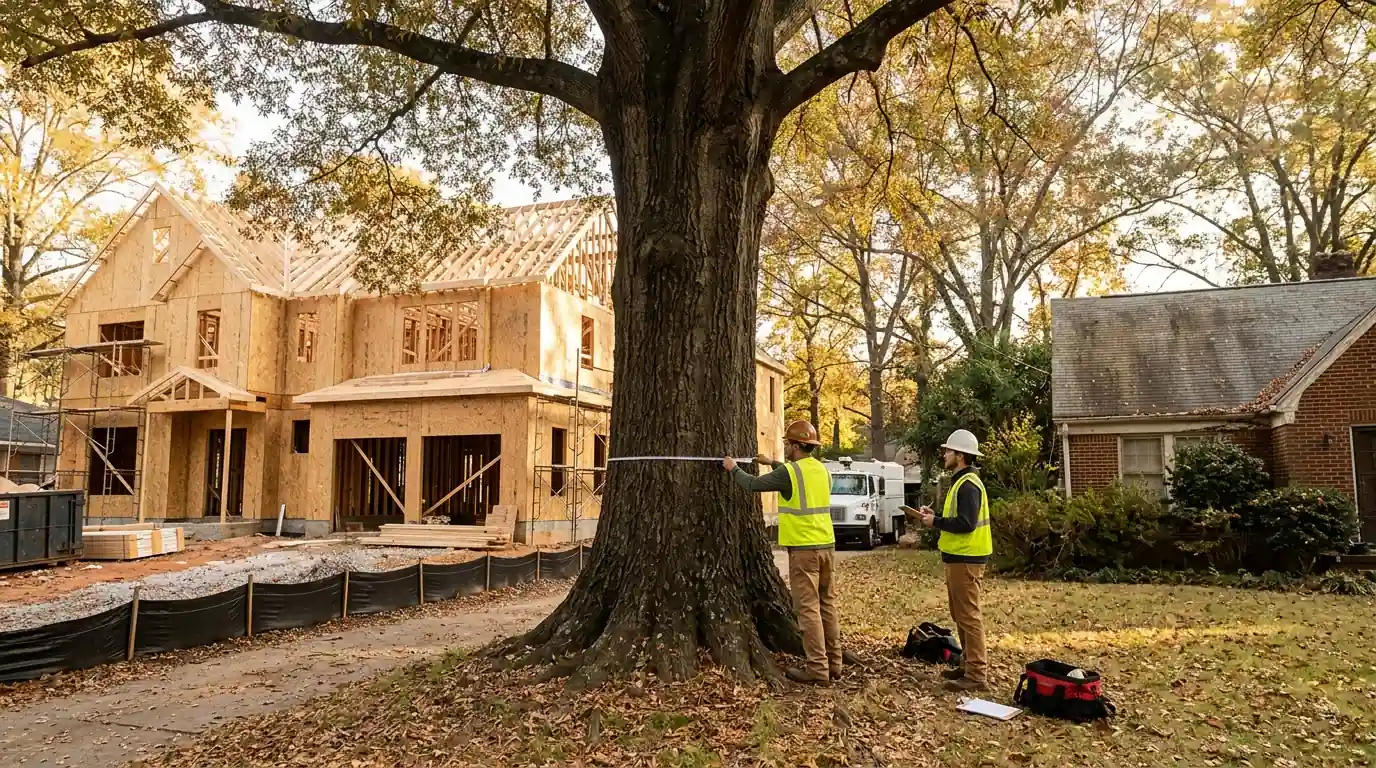
Teardowns, rebuilds and the trees caught in between
Along the side streets off Peachtree Road and through Ashford Park, small postwar houses are coming down and larger homes are going up in their place. Each rebuild means excavators, trenches for new utilities and heavy trucks parked over root zones. Trees that survived seventy years can decline within a few seasons once a third of their roots are cut.
When an oak needs to stay through construction, tree protection fencing, root pruning ahead of the trench and mulch over the travel path give it a real chance. When it can't stay, we coordinate the removal with the builder's schedule so the permit, the cut and the stump work happen before the foundation crew arrives.
Old oaks in Historic Brookhaven and around the parks
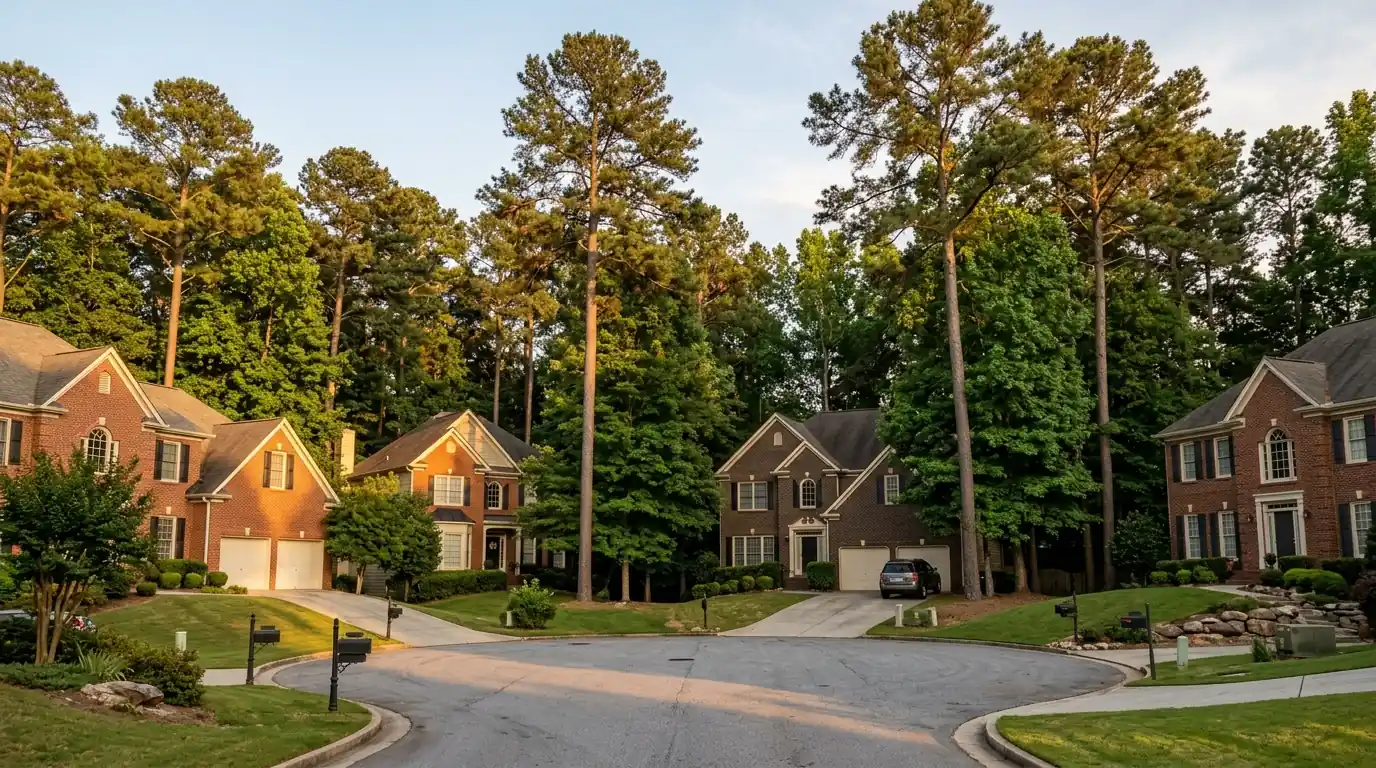
Historic Brookhaven, laid out around a golf course, has some of the largest willow and white oaks on our routes. Their limbs reach across wide lawns and over slate and tile roofs that cost far more to repair than shingles. We prune these trees from rope and harness, cutting back to sound laterals so the crown stays balanced.
Near Blackburn Park and Murphey Candler Park, back yards often run into wooded edges with tall poplars and pines. Those trees take the wind first, and after a wet week on Georgia red clay they are the ones we see leaning. Bradford pears planted along driveways in the 1980s are splitting at their weak V-crotches too, and almost all of them need a permit to remove here.
Planning a Brookhaven removal around the permit clock
Because the city has to approve nearly every removal, the order of work matters. A tree that is merely crowding a patio can wait for the permit. A pine with pitch tubes and a fading crown is a different story, since dead pines turn brittle quickly, so we document it right away and file the application without waiting.
Storm damage is handled the same careful way. If a limb is already on the roof after a storm, we photograph the damage from every side for the city and your insurer, check with the city on how it wants the standing trunk handled, and then finish the storm cleanup once the paperwork is squared away. Neighbors in Chamblee and Dunwoody run under different rules, so we never assume one city's answer fits the next.