We prune for storm season, remove failing trees and clean up after storms across Collier Hills, between Collier Road, Tanyard Creek and the Atlanta Memorial Park greenspace near Peachtree Battle. Tall tulip poplars, white oaks and water oaks grow on creekside lots where the ground stays wet after heavy rain. The neighborhood is inside Atlanta city limits, so removals at 6 inches or more at 4.5 feet (pines 12) need a city permit. We answer 24/7.
A creek valley full of tall, fast-growing trees
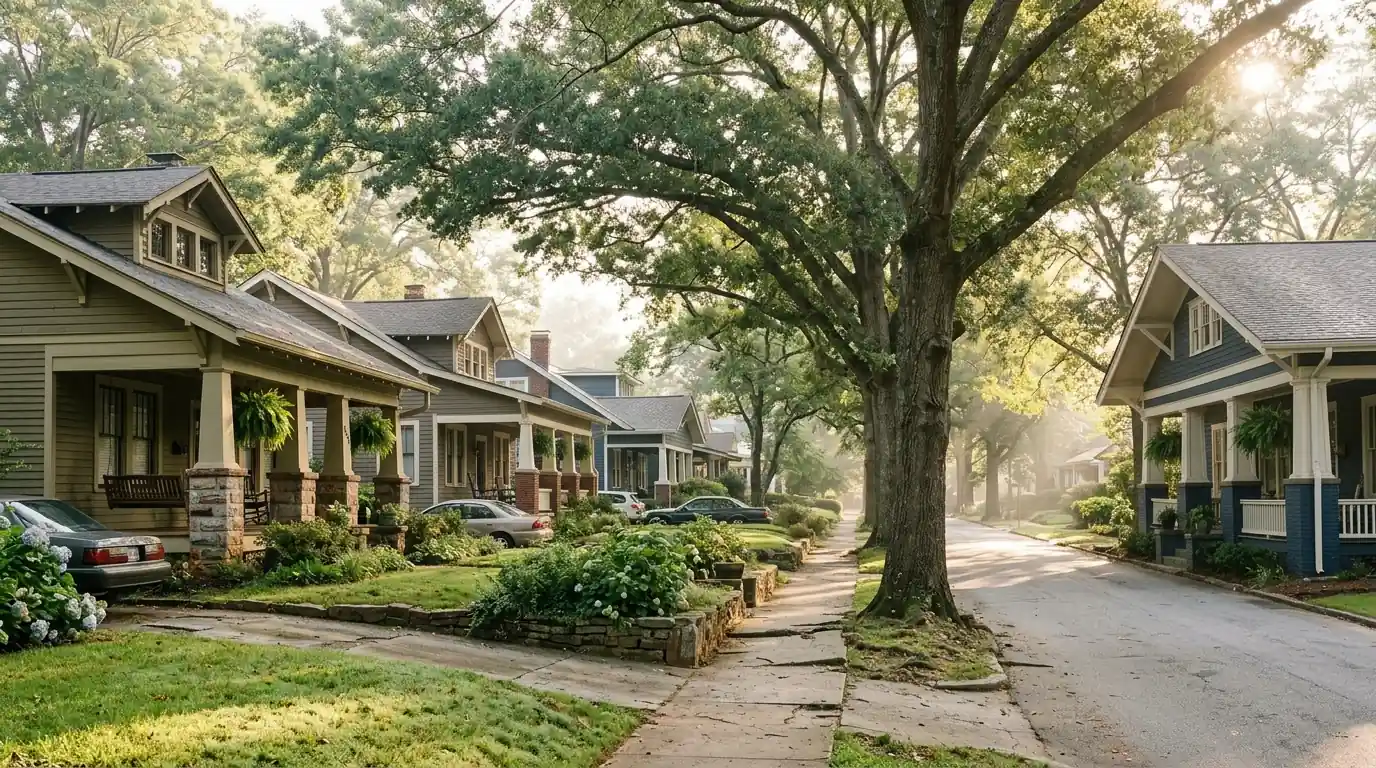
Collier Hills is a mid-century neighborhood, with ranch and split-level homes spread along streets that curve down toward Tanyard Creek. The creek joins Peachtree Creek near the Atlanta Memorial Park greenspace, close to the Peachtree Battle area. The moist bottomland suits tulip poplars, which grow straight and very tall, and the slopes above hold white oaks and water oaks that have had seventy years to spread.
That mix means height. A tulip poplar beside a creek can tower well above the ridge of a one-story house, and its wood is lighter and more brittle than oak. In summer storms, poplars tend to shed limbs high in the crown, while the oaks are more likely to fail at the roots when the ground is soaked. Knowing which tree fails which way shapes every pruning plan we write here.
Storm pruning before the summer thunderstorms
Most storm damage we see in Collier Hills could have been cut down to size the winter before. Dead limbs, weakly attached sprouts from old topping cuts and branches rubbing each other raw are the parts that break first. We clear those out, thin the crown lightly so wind passes through and shorten any limb hanging over the roof that has grown long and heavy at the tip.
Poplars get extra attention. They grow tight forks with bark pinched between the stems, a weak joint that can split in a gust. Depending on the size of the tree, we either remove one side of the fork while it's still small or recommend cabling to support the union. Late fall through winter suits this work, because with the leaves down we can read the structure of the crown from the ground.
Flood-soaked roots and trees that tip on the banks
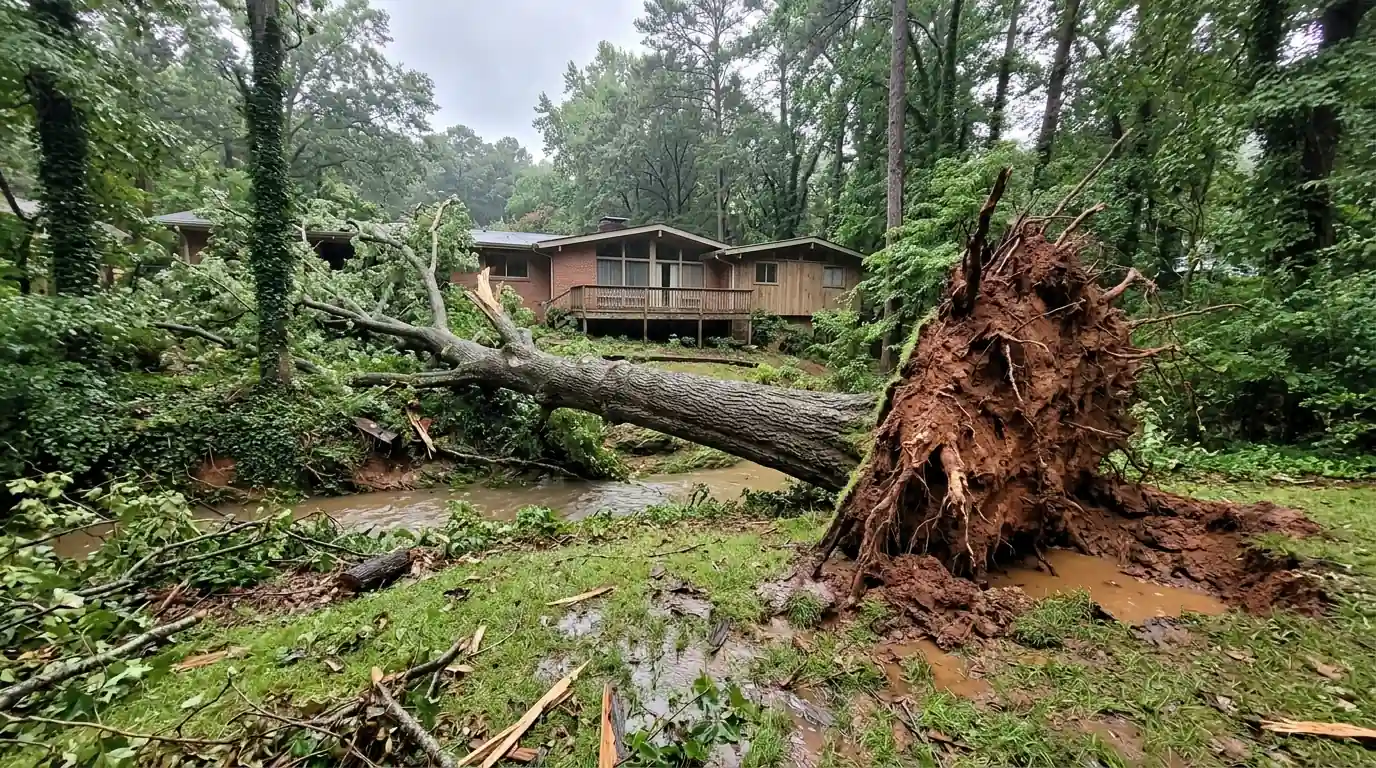
When Tanyard Creek rises after a heavy rain, the clay along its banks stays saturated for days. Roots in that soil are shallow, and some along the bank have been undercut by years of erosion. A big tree can tip out of the ground with its whole root plate in one gust. Tropical Storm Helene's soaking rain in September 2024 showed how quickly that happens across metro Atlanta.
After a storm, we check the trees still standing as well as the ones down. Watch for soil cracking or mounding on one side of a trunk, a fresh lean or exposed roots on the creek side. A tree like that can go next. Where one has already fallen and rests on a house, a fence or another tree, the city needs no permit for it. Photograph it and notify the Arborist Division, then follow our first-hour checklist while our storm cleanup crew is on the way.
Permits and the parkland next door
Every Collier Hills lot lies within Atlanta city limits in Fulton County. Taking down a private tree 6 inches or more at 4.5 feet needs a permit, pines start at 12 inches, and dead or hazardous trees still need one, free of an application fee once the city confirms the condition. Trees on the park side of the line are the city's, not yours, so we stop at the property edge. The same rules hold in Brookwood Hills and Ansley Park to the south.