We remove trees, grind stumps and deal with problem roots across Peachtree Hills, the compact neighborhood between Peachtree Road and Peachtree Creek near Lindbergh. Sweetgums, red maples, water oaks and tulip poplars grow on soggy creek-side ground beside old brick homes. The area sits inside Atlanta city limits, so a removal at 6 inches or more at 4.5 feet (pines 12) needs an Arborist Division permit. Call our 24/7 line.
Brick cottages, duplexes and lots that slope to the creek
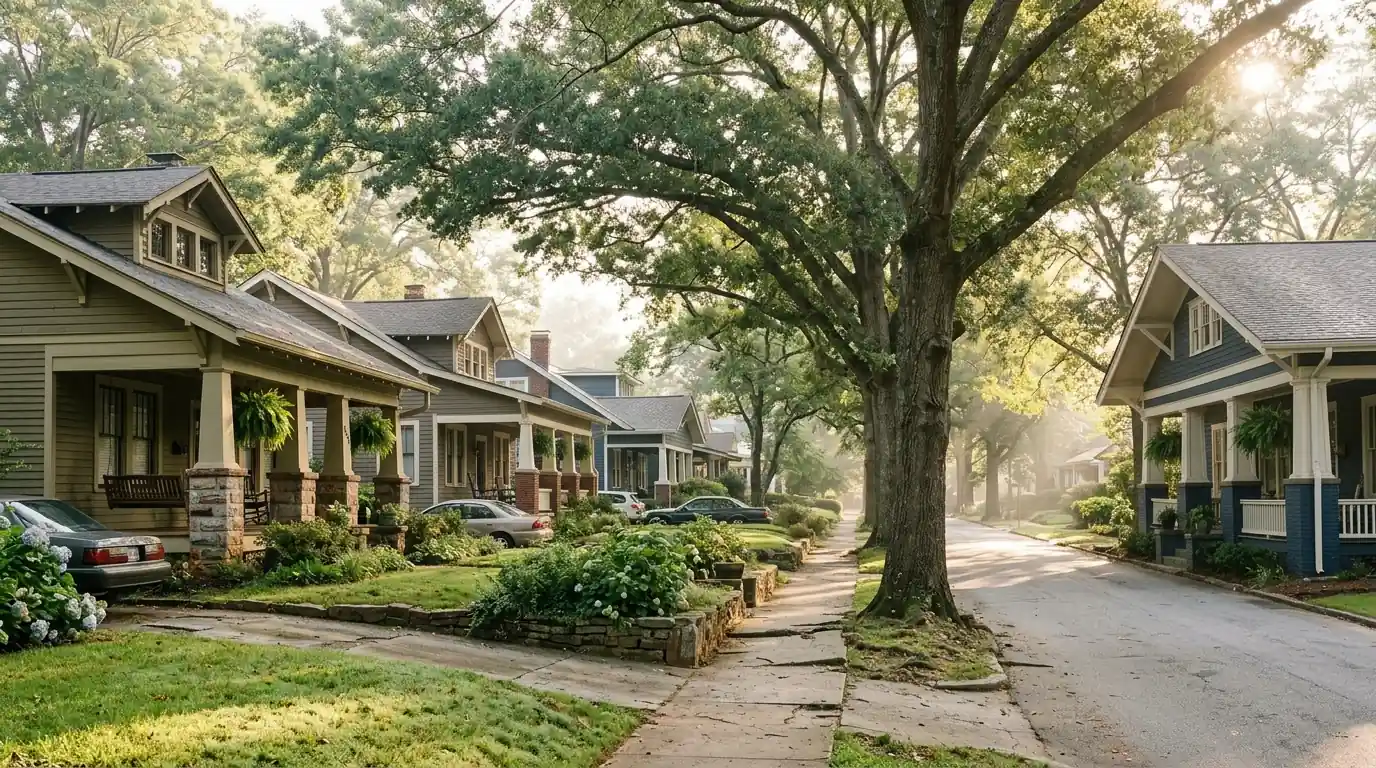
Peachtree Hills is small and walkable, tucked between Peachtree Road and the creek near Lindbergh. Many of its homes are older brick cottages and duplexes set close together, and the streets fall away from Peachtree Road toward the creek, with Peachtree Hills Park in the middle of it all. That slope sets the pattern for every tree job here: the front yards are firm and the back yards are often soft, shaded and slow to dry.
Duplexes add their own wrinkle. Two households share one lot, sometimes one driveway, and the trees on it belong to whoever owns the building. When we plan a removal or a big trim, we talk to the owner about access through both units' yards, where the chipper can sit and which side's car needs to move for the morning.
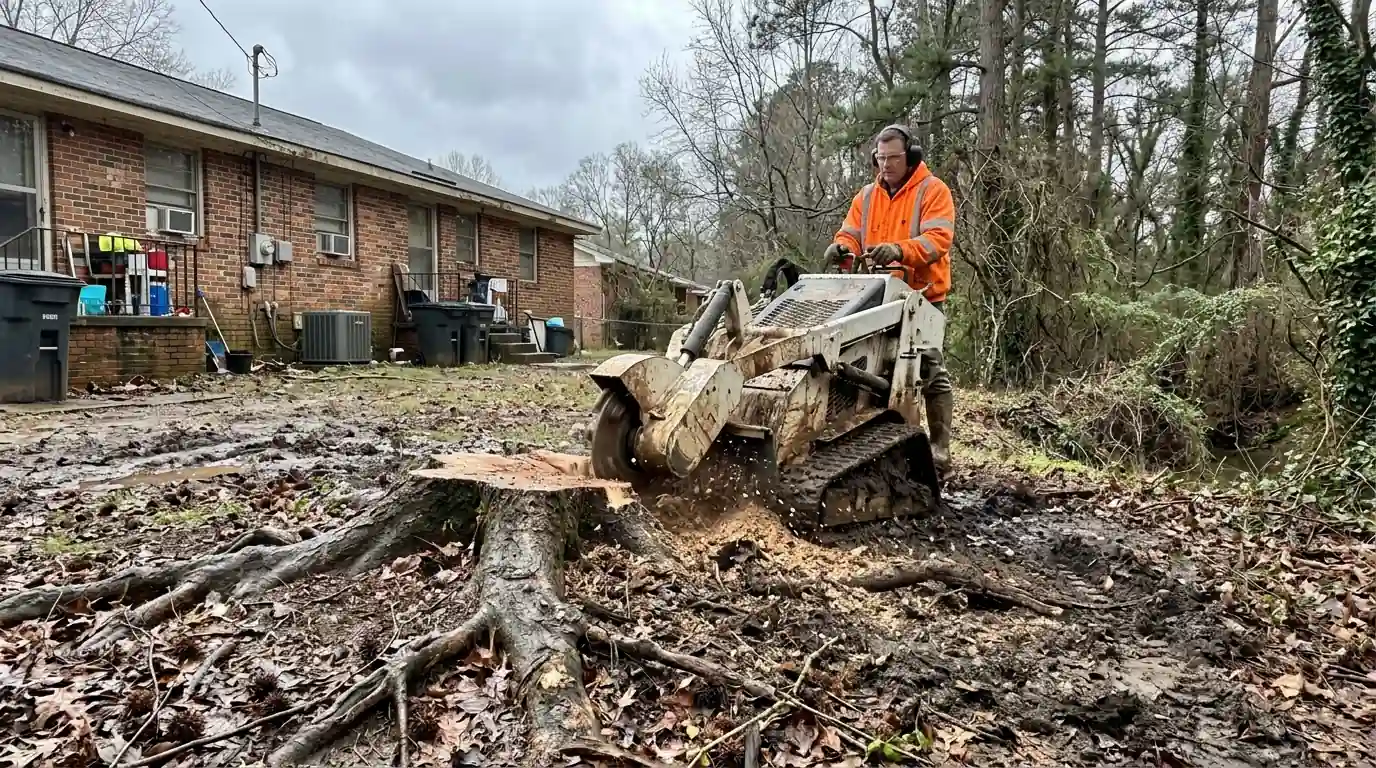
Roots, wet clay and the sewer laterals under them
Wet ground keeps roots near the surface, and on these lots they spread wide looking for air. Old clay sewer laterals running from the houses to the street are an easy target. Water seeping from a cracked joint draws roots in, and a few years later the toilet backs up and the plumber's camera shows a mat of fine roots in the pipe. Sweetgum, red maple and willow oak roots are the usual culprits here.
The fix depends on the tree. If the tree is healthy and the roots are only reaching the line, a plumber clears the pipe and we cut the offending roots cleanly where they approach it, trenching no deeper than we must. When a tree sits right over the lateral or the pipe needs replacing, removal and root removal are often the more lasting answer. Either way, we file a Georgia 811 locate before any digging, and the plumber marks the private line, which 811 does not.
Soft ground and trees that lean after long rains
Trees on saturated clay can shift, and near Peachtree Creek the ground stays wet long after a storm passes. A tree with a shallow root plate can tip slowly over a few days, with soil cracking and lifting on the side away from the lean. That's a tree to call about the same week you notice it. Tulip poplars and water oaks are the ones we most often find leaning toward a cottage roof or the duplex next door.
Wet soil also changes how we work. Heavy trucks stay on the pavement, and rounds come down onto mats instead of straight onto the lawn. When the yard is too soft to cross, we'll suggest waiting a few dry days unless the tree is an active hazard. For leaning or cracked trees, hazard removal goes first, and the signs of a dying tree guide helps owners judge the rest.
Permits for a Peachtree Hills removal
Every Peachtree Hills address lies inside Atlanta city limits and in Fulton County. Removing a private tree 6 inches or more across at 4.5 feet needs a permit, pines at 12 inches, and a tree that is dead, dying or hazardous still goes through the Arborist Division, with no application fee and no recompense once the city confirms it. The same rule covers neighbors in Garden Hills and Brookwood Hills, and our permit service files the paperwork.