We prune, reduce and remove oaks across Garden Hills, the south Buckhead neighborhood off Peachtree Road around Garden Hills Park and its pool. Willow oaks line the streets, water oaks fill the yards, and the lots are small, so one big tree often shades two houses. Garden Hills is inside Atlanta city limits: pruning needs no permit, while removing a tree 6 inches or more at 4.5 feet (pines 12) does. Call any hour.
Willow oaks that turned the streets into tunnels
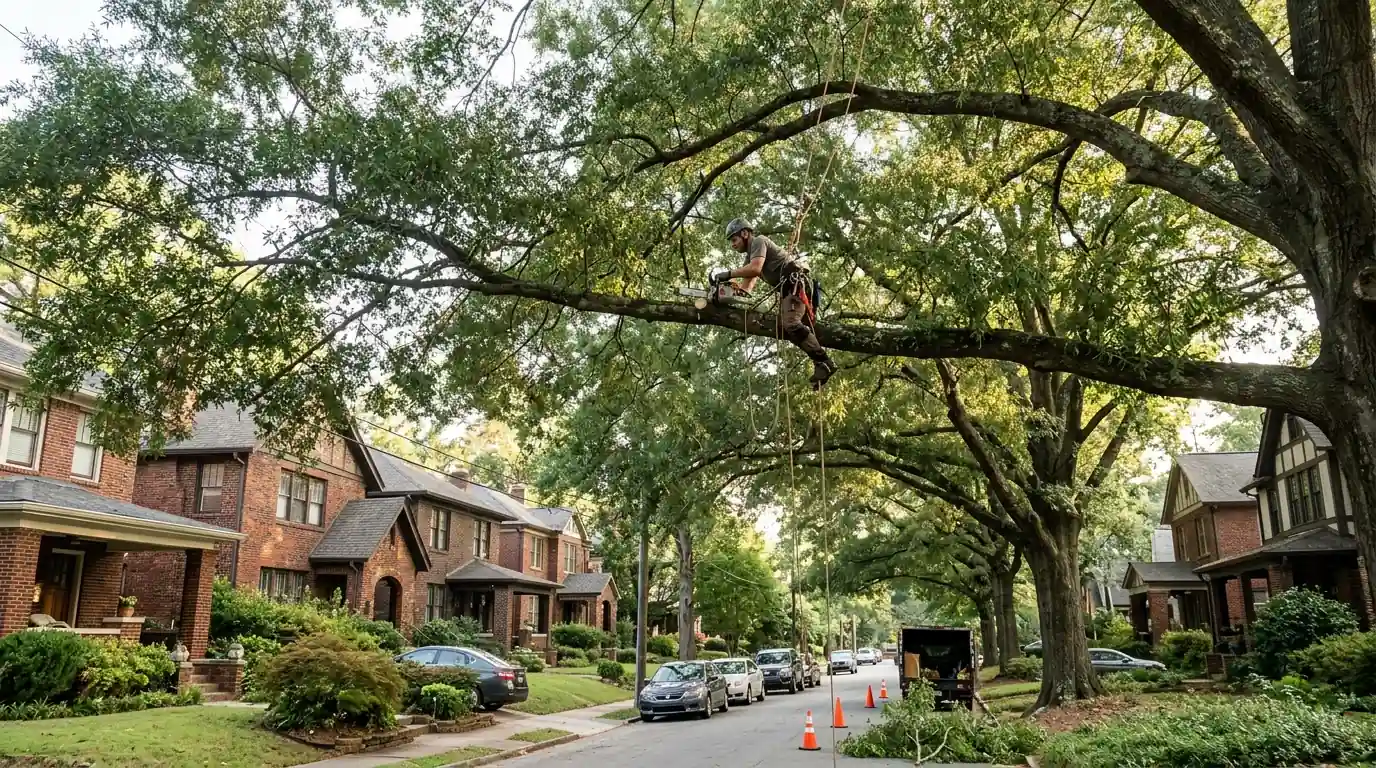
Garden Hills was laid out in the 1920s and built through the 1930s, and much of its character comes from the willow oaks along the curbs. Their narrow leaves and fine twigs make a canopy that closes over the street by midsummer. Willow oaks are among the longer-lived oaks in Atlanta, which is why so many still stand, but age brings long horizontal limbs that reach over roofs, porches and parked cars.
Those long limbs are the bulk of our work in this neighborhood. A limb that grew out toward the light for ninety years carries most of its weight at the far end, and in a wet summer storm the leaves hold water and add more. We shorten it back to a strong lateral branch, which takes strain off the attachment without leaving a stub to rot. Done in stages over a few years, structural pruning keeps the tree's spread and its shade.
Water oaks in the side yards and the limbs they drop
Behind the willow oaks, many Garden Hills yards hold water oaks, and those age differently. A water oak grows fast and lives a shorter life, and by the time it reaches the size of the ones here, heart rot has often hollowed the trunk. The giveaway is usually dead wood high in the crown: bare branch tips above the leaves, bark peeling off upper limbs, small sticks raining onto the driveway after every breeze.
Clearing that deadwood is worth doing even on a tree that has to go in a few years, because a dead limb over a small house is the most likely thing to come through the roof. When the trunk tests hollow at the base or the root flare shows fungal growth, we say so and quote an oak removal instead of another trim. Our article on failing water oaks lists the signs to watch.
When the house next door is torn down
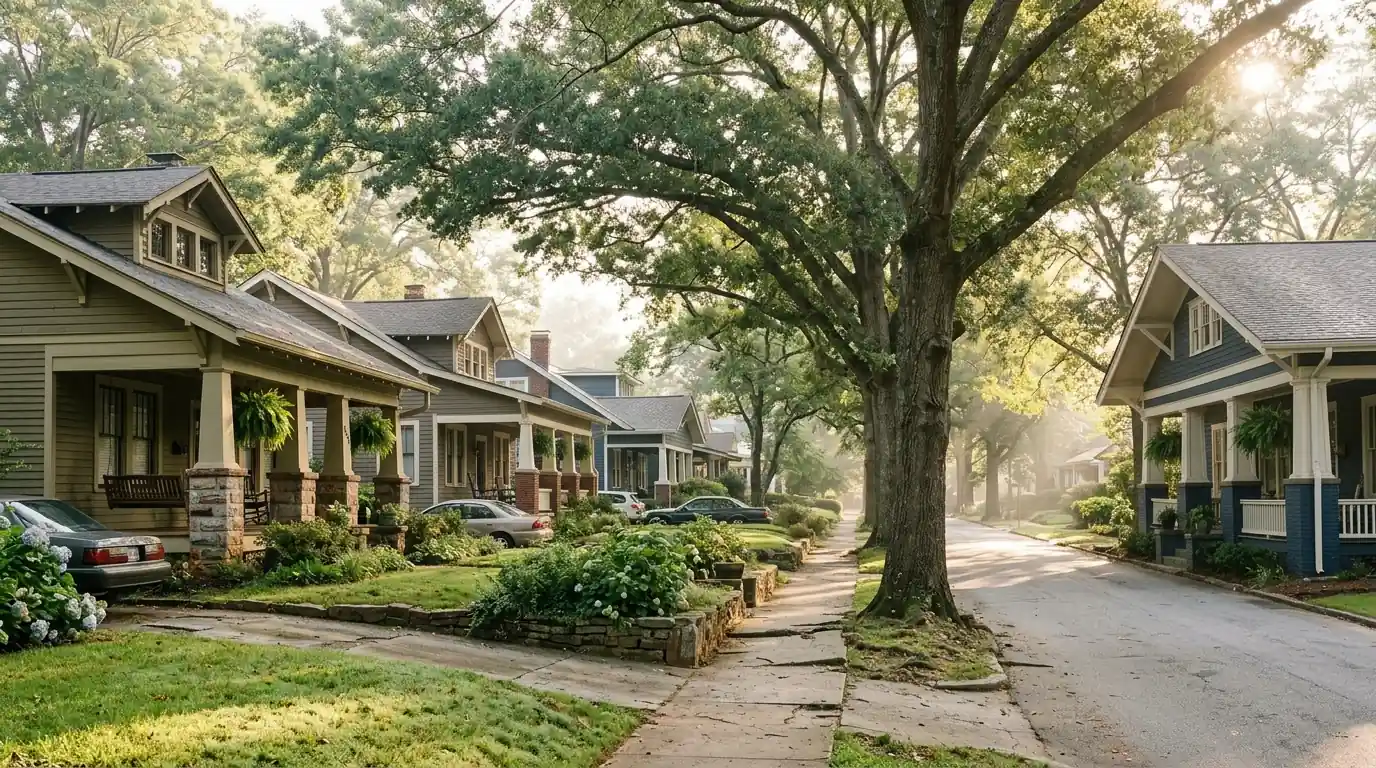
Small lots and rising land values mean rebuilds are steady here, and the trees that suffer most are often the ones on the lot next door. A willow oak in your side yard can have a third of its roots under your neighbor's ground. When an excavator digs a new basement or a wider driveway there, those roots are cut or crushed, and the decline shows on your side two or three summers later: a thinning top, smaller leaves, dead twigs at the crown edge.
If you hear a rebuild is planned, it helps to have us look at the tree first. We note its condition, photograph it and can ask the builder's crew to keep heavy equipment off the root zone along the line. After the work, a hazard check tells you whether the oak is recovering or slipping. Removing it inside the city still means a permit from the Arborist Division, while pruning it needs none, though the ordinance standards apply to every cut.
Working small lots around the park and the pool
The blocks around Garden Hills Park and its pool fill with cars on summer afternoons, and the lots here leave little room for a chipper and a truck. We schedule pruning for weekday mornings, park the chipper where it blocks no driveway and run brush out on foot. Most limbs come down on a rope, because a drop zone on these lots is usually a flower bed or a neighbor's fence. The same tight work carries on next door in Peachtree Hills and up Peachtree Road through greater Buckhead.