We remove large pines and hardwoods, trim heavy limbs and clean up overgrown lots across Cascade Heights in southwest Atlanta. Loblolly pines, tulip poplars, white oaks and hickories crowd the deep wooded lots behind brick ranch homes. These lots are within Atlanta city limits, and a big wooded parcel can hold many trees past the permit line of 6 inches at 4.5 feet, or 12 for pines. Our line is answered 24/7 for storm calls and planned work.
Bigger lots mean bigger trees and bigger jobs
Along Cascade Road and the curving streets off it, many of the homes are mid-century brick ranches and split-levels, set well back from the street on deep lots far larger than the intown grid allows. Builders kept much of the original woods, so the pines and hardwoods standing now have had decades to grow. Pines taller than 90 feet and white oaks with trunks wider than a car door are not unusual.
That scale changes the work. A single removal can fill several truckloads of wood, and the limbs on a big oak can weigh more than a small tree. We plan each job around the equipment it needs: a bucket truck for reachable limbs, a climber for trees deep in the lot and a crane when a big tree leans over the house with no room to lower pieces.
When tall pines start to fail
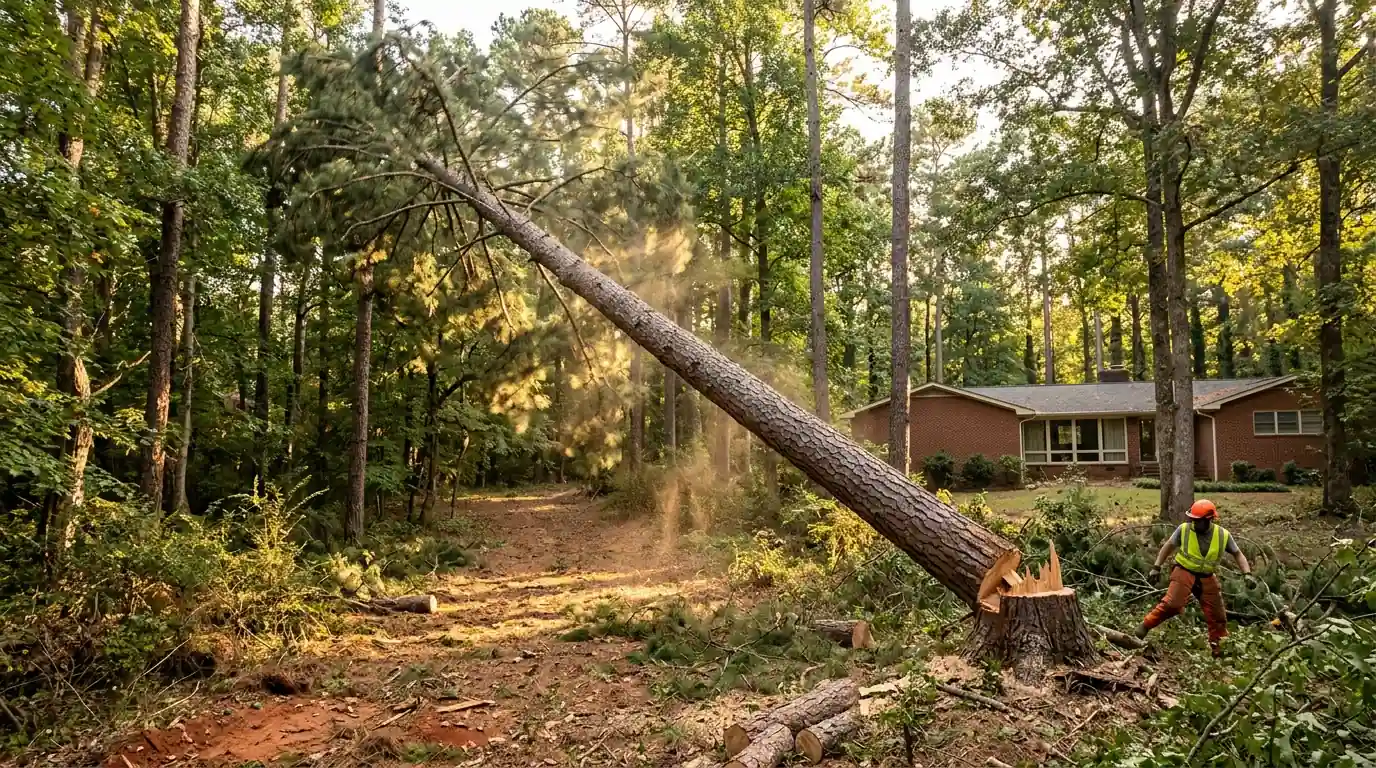
Loblolly pines dominate many Cascade Heights lots, and they carry the risks of their size. They're shallow-rooted in red clay, so a long rain followed by wind can tip them out of the ground roots and all. Bark beetles move in after drought, Ips engravers most years and southern pine beetle in the bad ones, and a beetle-killed pine dries out and grows brittle quickly. The first sign is often needles going from green to straw to rust.
When a pine stands in open ground with room to fall, we fell it whole into a cleared lane, which saves hours. When it stands near the house, we climb and lower the top in pieces, then take the trunk down in rounds. Our pine removal service covers both methods, and our guide to dying trees helps owners spot trouble early.
Clearing overgrown back lots
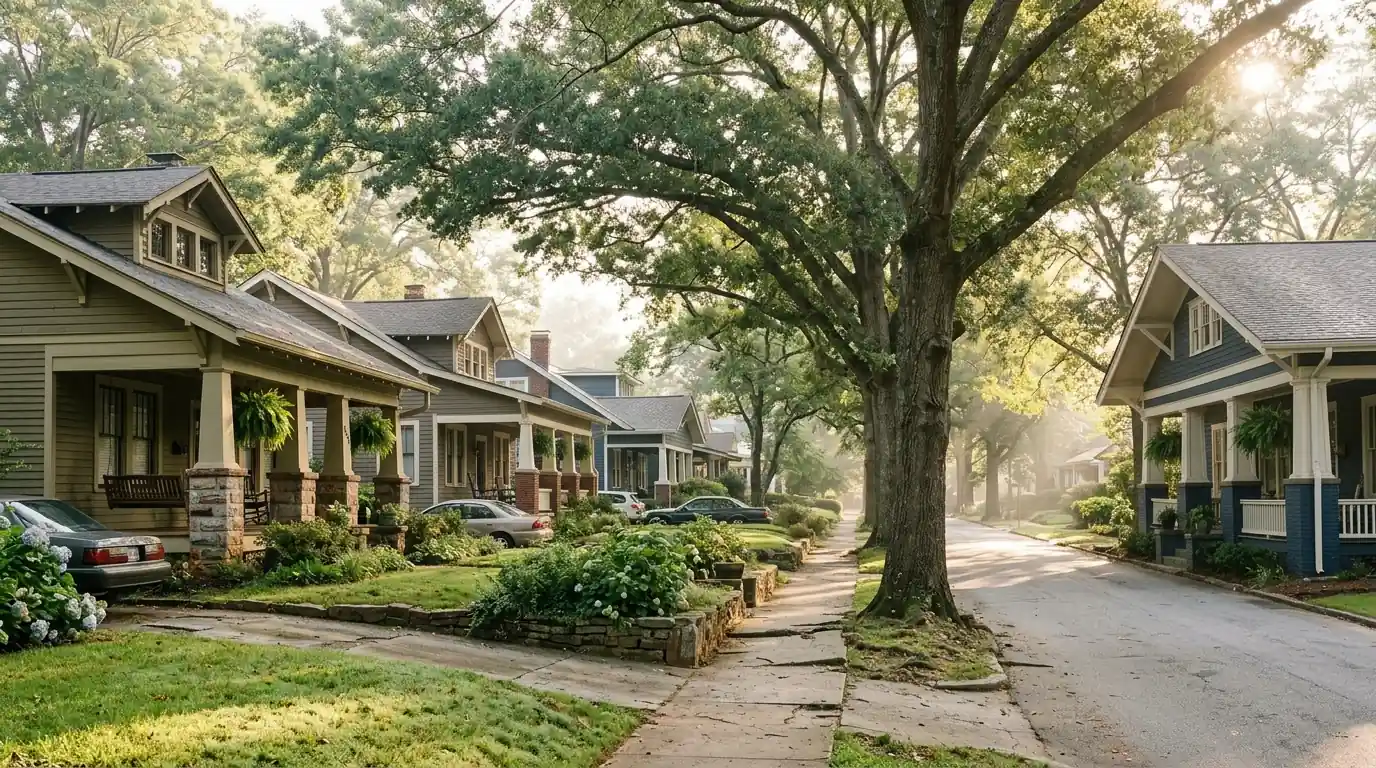
Many Cascade Heights properties have a back half that hasn't been touched in years. Sweetgum and poplar saplings fill in, privet and ivy climb the trunks and fallen limbs pile up. Owners call us to open the space up again, whether for a garden, a play area or simply to see the back fence. We remove the undergrowth and small trees, keep the healthy mature ones and chip everything we cut.
On the larger jobs, lot clearing can mean taking out dozens of small trees and grinding their stumps. We walk the lot first and flag the keepers, then work so the remaining trees aren't scraped or root-damaged. Cascade Springs Nature Preserve nearby shows how these woods look when they're left to grow, and many owners want a yard that keeps some of that feel.
Permits for a big wooded lot
Size cuts both ways at permit time. Because Cascade Heights is within Atlanta, each private tree 6 inches or more at 4.5 feet (12 for pines) has to be listed, and a wooded acre can put dozens on one application. Plan for recompense on any healthy tree taken out for a pool, addition or regrade, since the city's 2025 fee increase now applies to those jobs.
Trees that are already dead, dying or hazardous move through the Arborist Division without an application fee, and once an inspector verifies them, no recompense is charged. We measure each tree, photograph it and handle the permit filing. Owners elsewhere in Fulton County face different rules outside the city, so we check every address first.