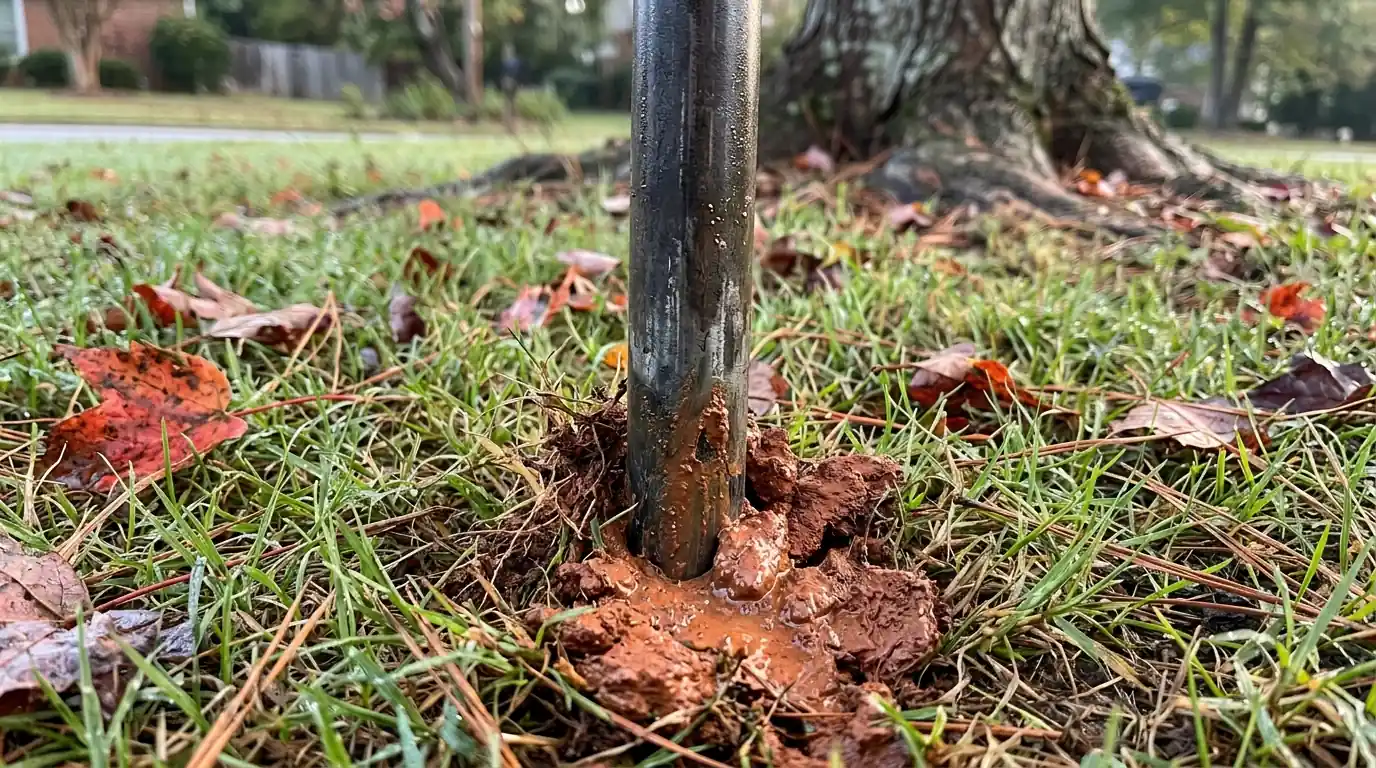
Deep root fertilization injects a liquid mix of nutrients and soil conditioners into the root zone under pressure, a few inches below the surface where most feeder roots grow. It helps trees struggling in compacted Georgia red clay, on new construction lots stripped of topsoil, and after root damage. We test the soil first so the mix matches what's missing, and we time the work for spring and fall, when roots are most active.
What deep root fertilization does underground
Most of a tree's feeder roots live in the top 12 inches of soil, and they spread well past the edge of the crown. In a forest, those roots sit under a layer of fallen leaves that rots into food every year. In a yard, the leaves get raked, the lawn competes for every nutrient, and Georgia red clay packs down so hard that water and air barely move through it.
Deep root fertilization goes after both problems at once. We push a probe into the root zone at points spaced in a grid and inject a liquid mix under pressure. The mix carries nutrients the soil test shows are short, and soil conditioners that help break up compacted clay and feed the soil life roots depend on. The pressure itself opens small channels for air and water, which is part of why the treatment helps.
It's a slow, steady fix rather than an instant one. A tree that has been starving in poor soil for years won't turn around in a month. Most people see better leaf color, fuller canopy and stronger new growth the following season, and the gains build if the soil care continues.
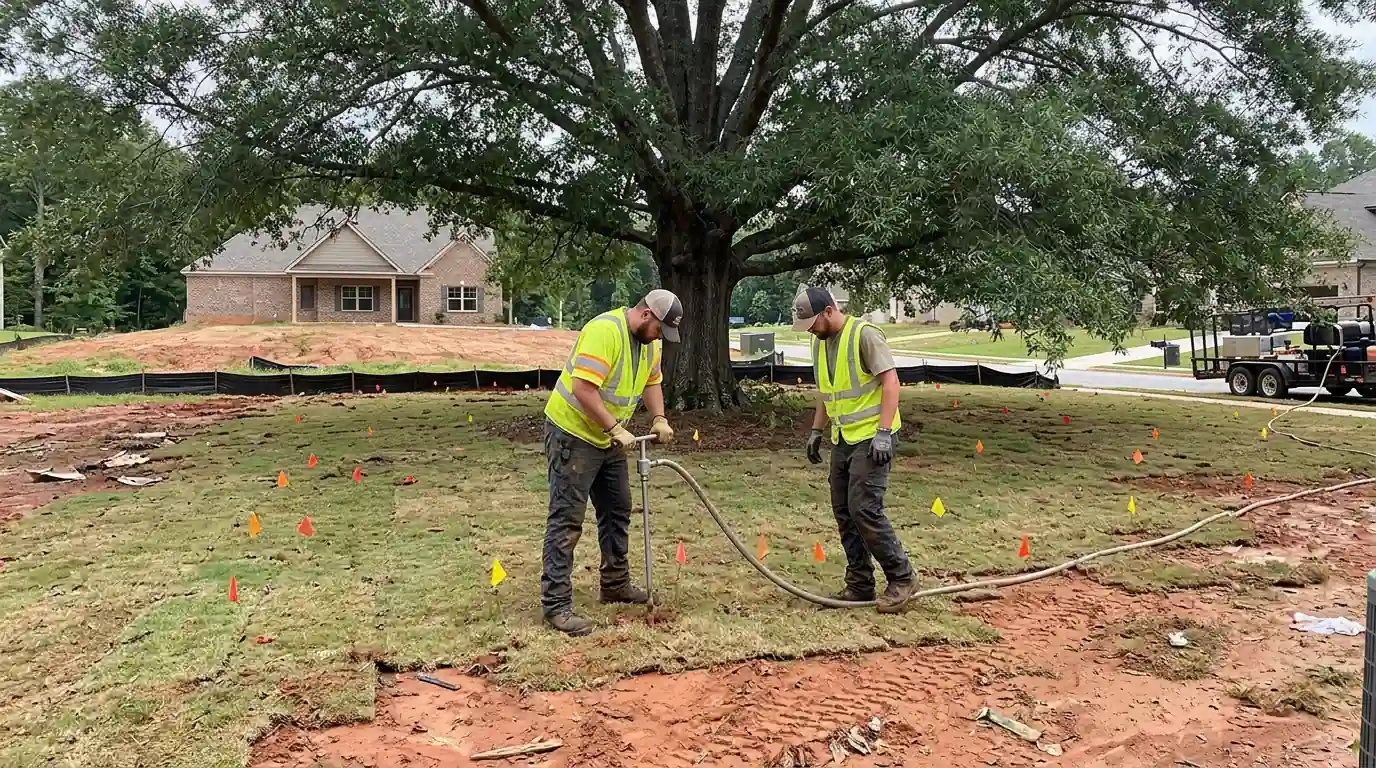
Mulch and water carry the work between visits
Deep root fertilization does the most good as part of a plan, not on its own. A wide ring of wood chip mulch, two to four inches deep and pulled back from the trunk, keeps the clay from baking hard, holds moisture and slowly adds organic matter as it breaks down. Replacing turf over the root zone with mulch takes away a competitor too. Volcano mulch piled against the bark does the opposite and invites rot.
Water matters just as much. During a summer drought, a mature tree needs a slow, deep soak every week or so, not a daily sprinkle that wets only the top inch. A soaker hose laid in a spiral under the crown and left on low for a couple of hours does the job. For trees with deeper problems, we may pair feeding with disease treatment or protection during building work.
Signs a tree may need deep root fertilization
These symptoms don't always mean the soil is the problem, which is why we test first, but they're the ones that make us look.
Pale or yellow leaves
Leaves that stay light green or yellow between the veins through summer often point to missing nutrients or soil pH that locks them up.
Short new growth
Twig growth of an inch or two a year on a tree that used to put on several inches means the roots aren't keeping up.
Thin, small leaves
A canopy you can see through, with leaves smaller than normal, often follows years of poor soil or root loss.
Early fall color
Maples and oaks that turn color or drop leaves in August are usually short on water, roots or both.
A new construction lot
Builders often strip topsoil, grade in subsoil clay and run equipment over the root zone, leaving trees in soil with little to offer.
Recent root damage
A tree that lost roots to a trench, a new driveway or a patio needs help rebuilding what was cut.
How a deep root fertilization visit works
The order keeps us from feeding a tree something it doesn't need.
- 1
Look at the tree first
We check the crown, the root flare and the trunk to rule out disease, insects or buried roots that fertilizer won't fix.
- 2
Test the soil
Samples from the root zone go to a lab for pH and nutrient levels, so the mix answers what's actually missing.
- 3
Set the mix
Based on the results, we choose the nutrient blend and soil conditioners, and adjust for pH when clay holds nutrients out of reach.
- 4
Lay out the grid
Injection points are spaced from a few feet off the trunk out past the drip line, avoiding irrigation lines and marked utilities.
- 5
Inject the root zone
At each point the probe goes in a few inches and releases the mix under pressure, which also opens the clay for air and water.
- 6
Water and recheck
We tell you how to water for the next few weeks, and we look at the tree again at the next season's visit.
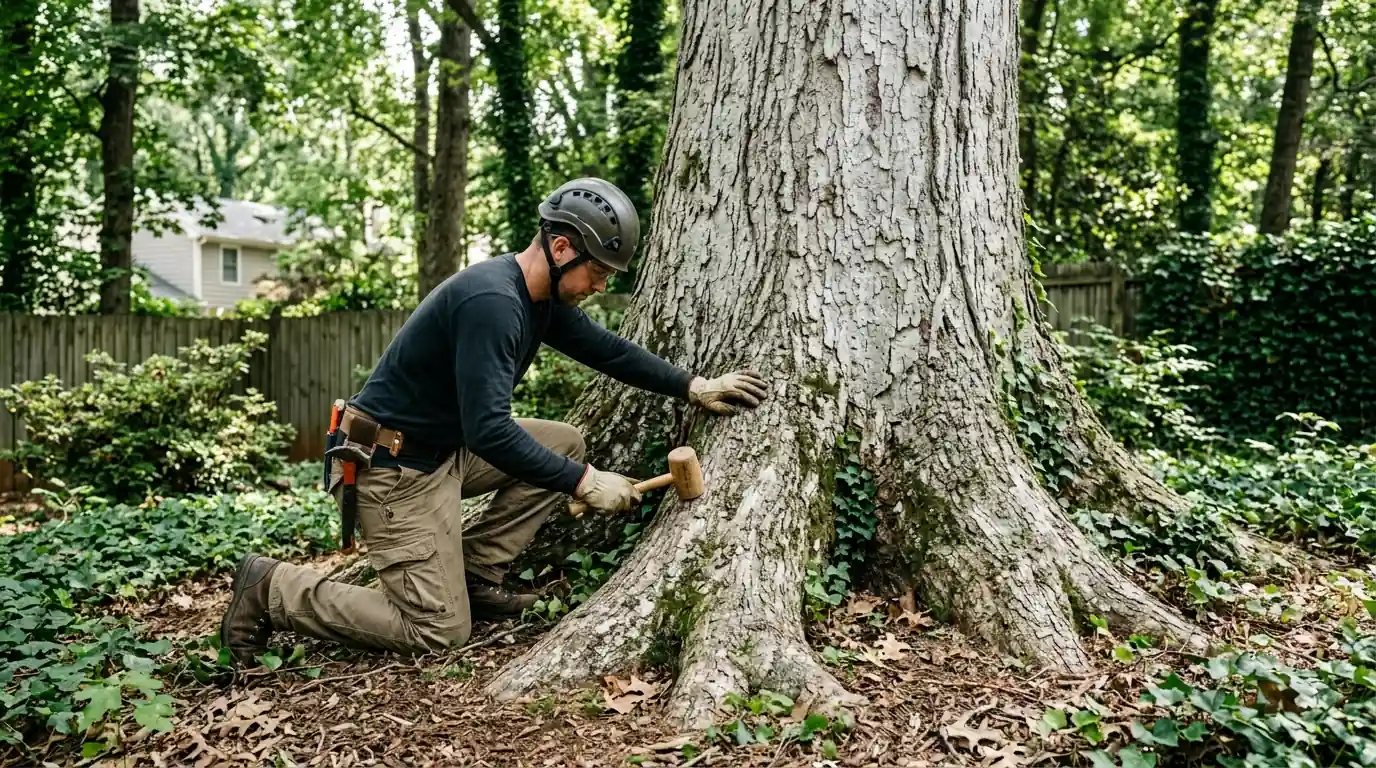
Georgia red clay and why Atlanta trees go hungry
The Piedmont clay under most of metro Atlanta is heavy, low in organic matter and often acidic. It compacts with very little traffic, holds water after long rains and dries hard in August, so roots crowd into a shallow band near the surface. Lawns, cars parked on the grass and decades of raked leaves leave that band with less to offer every year. Older oaks in neighborhoods like Morningside often show it as thinning crowns and short growth.
New construction lots have it worse. In fast-growing parts of Forsyth County and Suwanee, we see trees saved during grading that now stand in subsoil with the topsoil scraped away. Teardown rebuilds intown leave the same problem on a smaller lot. Spring work runs from leaf-out through early summer, and fall work runs once the heat breaks until the ground cools, which are the windows when Atlanta tree roots are most active.
What deep root fertilization can and can't fix
Feeding a tree helps a lot in the right cases and does nothing in the wrong ones.
| Can help | Won't fix | |
|---|---|---|
| Soil | Low nutrients, poor pH, compacted clay near the surface | Severe grade changes or deep fill piled over roots |
| Roots | Recovery after moderate root loss from trenching | A tree that lost most of its roots on one side |
| Pests and disease | General stress that invites insects and canker | An active borer infestation or advanced root rot |
| Structure | Better leaf color and stronger growth | Decay, cracks or weak unions in the trunk and crown |
What moves the price of deep root fertilization
| Job | Typical range | Priced |
|---|---|---|
| Deep root fertilization | $95 to $335 | per tree |
Tree size sets most of the cost, because a bigger root zone takes more injection points and more mix. A young red maple in a front yard is a short visit, while a mature white oak with roots running under half the lawn takes much longer. The soil test adds a little up front, and several trees treated on one visit cost less per tree than separate trips.
Most trees benefit from treatment in spring and again in fall for a year or two, then less often once the soil improves and a second test confirms it. Mulching and other soil work are priced alongside the feeding when you want them, and many people fold the visits into a yearly care plan. Typical ranges per tree are listed on our tree service price guide.
Where we do deep root fertilization around Atlanta
Crews work from our Atlanta office near the 30340 ZIP and our Duluth office. These are the places we cover most, with their main ZIP codes. See all 56 areas.
- Buckhead 30305
- Virginia-Highland 30306
- Druid Hills 30307
- Morningside 30324
- Grant Park 30312
- Kirkwood 30317
- Cascade Heights 30311
- Sandy Springs 30328
- Dunwoody 30338
- Brookhaven 30319
- Decatur 30030
- Duluth 30096
- Lawrenceville 30046
- Marietta 30060
- Smyrna 30080
- Roswell 30075
- Alpharetta 30009
- Johns Creek 30097