Tree disease treatment means identifying the fungus or bacterium behind a tree's decline, then treating it where treatment works and managing it where it doesn't. In Atlanta the usual culprits are hypoxylon canker and bacterial leaf scorch on oaks, armillaria root rot, dogwood anthracnose and canker on Leyland cypress. Many of these can't be cured outright, so the real work is often reducing stress: mulch, water during drought and keeping soil from being packed down.
Why disease treatment starts with the right diagnosis
A tree with brown leaves in August could have a dozen problems, and only some of them are diseases. Drought scorch, root damage from a new patio, a girdling root, beetles and fungal infections can all look alike from the yard. Spraying a fungicide on a tree whose real trouble is a buried root flare wastes your money and the season. So the first visit is diagnosis: which species, what symptoms, where on the tree, and what changed around it lately.
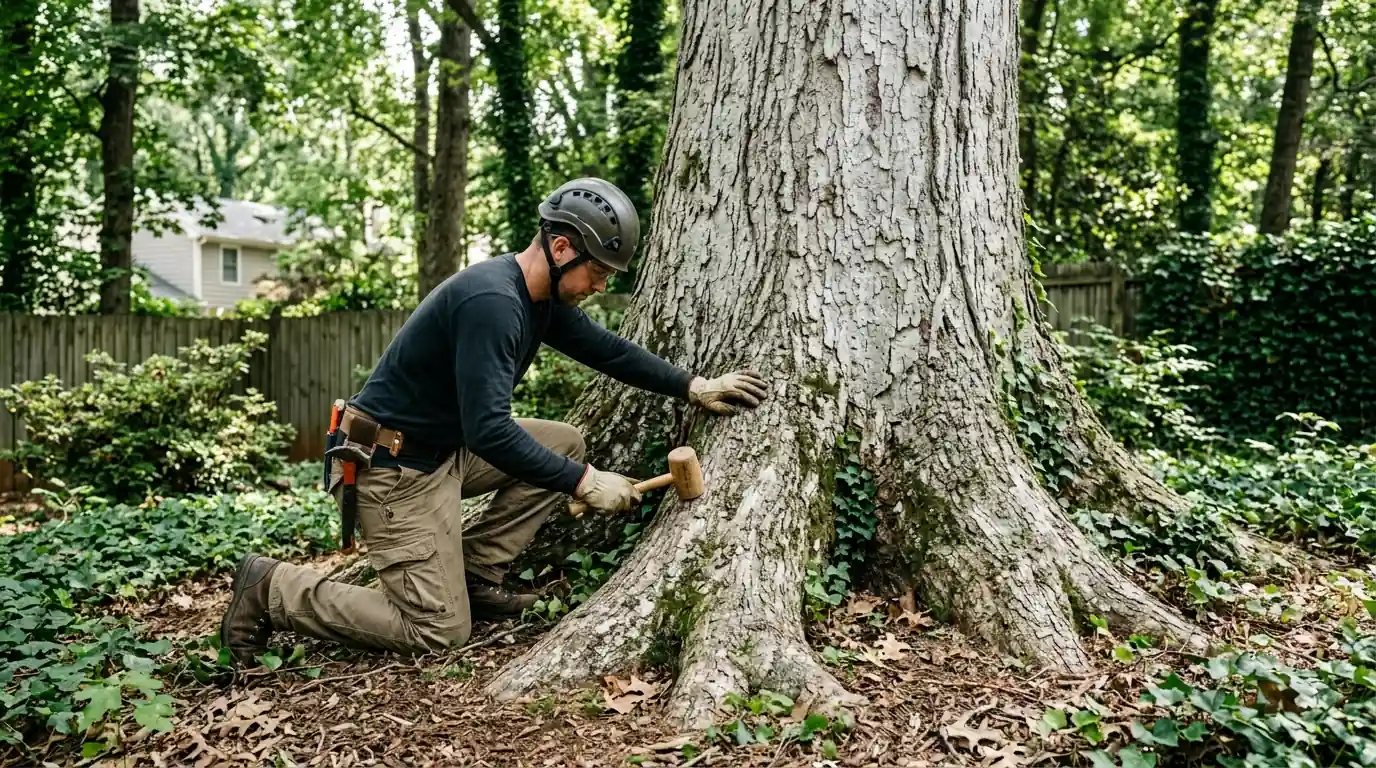
We look at the leaves, the bark, the root flare and the soil, and we ask about the yard's history. A new driveway five years ago, a sprinkler that soaks the base daily or a pile of fill dirt from a pool dig all matter. Sometimes we take samples for a lab to confirm what we suspect. Once we know what we're dealing with, we can tell you whether it responds to treatment, whether it can only be slowed, or whether the tree is already past saving.
Better growing conditions do more than any spray
Many of the diseases on this page are opportunists. Hypoxylon and armillaria are already present in most Atlanta yards, waiting for a tree to weaken. The strongest defense is a tree that isn't stressed, and that comes down to a few plain things: a wide ring of mulch instead of turf over the roots, deep watering during summer droughts, and keeping cars, equipment and foot traffic off the root zone so the clay doesn't pack down.
We spread mulch two to four inches deep out toward the drip line, pull it back from the trunk so the root flare stays dry, and point out where downspouts or sprinklers are drowning the base. When soil is badly compacted or short on nutrients, deep root feeding can help after a soil test. Thinning a dense crown with careful pruning also lets air dry the leaves faster, which matters a lot for anthracnose and leaf spot.
The tree diseases we see most around Atlanta
These six account for most of the disease calls we get across the metro.
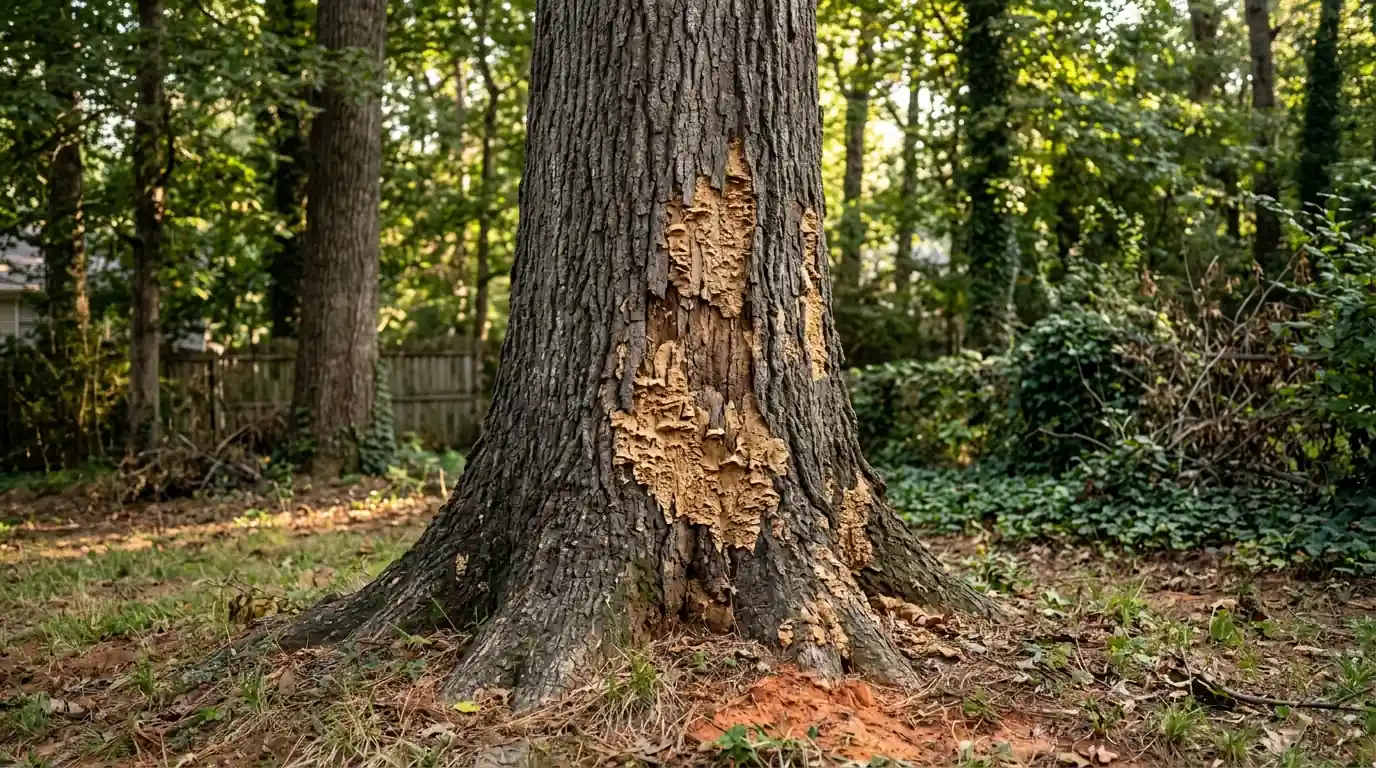
Hypoxylon canker on oaks
A fungus that lives quietly in oak bark and takes over when drought or root damage weakens the tree. Bark sloughs off to reveal a tan or silver crust, and the wood behind it decays fast.
Bacterial leaf scorch
A bacterium that clogs the water-conducting tissue of oaks. Leaves brown from the edges in late summer, a little more of the crown each year, with a yellow band between brown and green.
Armillaria root rot
A root-killing fungus on weakened hardwoods. Look for honey-colored mushrooms at the base in fall and white fans of fungus under loose bark near the soil line.
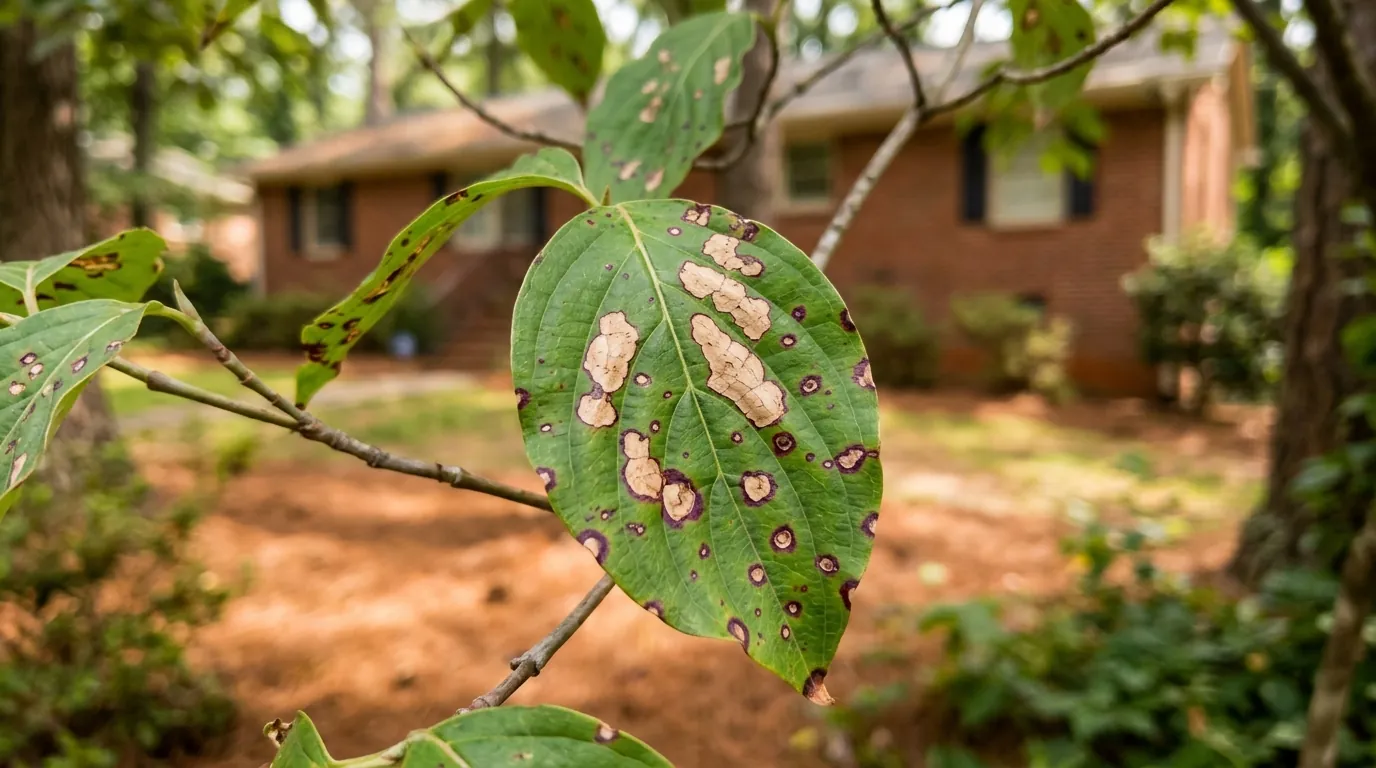
Dogwood anthracnose
A fungal disease that spots leaves, kills twigs from the lower crown upward and can girdle the trunk on dogwoods in shady, damp spots.
Leyland cypress canker
Canker fungi kill individual branches on Leyland screens, leaving brown patches and sometimes oozing resin. Crowded, drought-stressed rows suffer most.
Fungal leaf spots
Spots and blotches on maples, sycamores and other shade trees after wet springs. They look alarming, but they rarely threaten the tree's life.
How a disease treatment visit works
The order matters, because treatment only helps once we know what we're treating.
- 1
Look at the whole tree
We check leaves, twigs, bark, the root flare and the soil, and note where symptoms show up first and how fast they spread.
- 2
Ask what changed
Construction, grade changes, new irrigation, fill dirt and recent drought are often the real start of the problem.
- 3
Confirm the cause
Most problems are clear from symptoms. When they aren't, we take samples to a lab so we're not guessing.
- 4
Explain the outlook
You hear plainly whether the disease is treatable, manageable or terminal, and what each path costs over the next few years.
- 5
Treat and correct
That can mean pruning out infected wood, a fungicide or injection timed to the right season, and fixing mulch, watering and drainage.
- 6
Check back
We revisit at the right point in the season to see whether new growth is clean and adjust the plan if it isn't.
Atlanta conditions that set trees up for disease
Georgia red clay compacts easily, holds water after long rains and dries hard in August, so roots live in a narrow band near the surface. That band gets cut by trenching, smothered by fill and packed down by parked cars. Oaks in older neighborhoods like Virginia-Highland and Kirkwood often show hypoxylon a summer or two after a hard drought or a nearby construction project. Leyland screens planted tight along fence lines in Gwinnett subdivisions decline from canker once they crowd each other.
Removal is sometimes the honest answer. An oak with hypoxylon through the trunk dries out and drops limbs without warning, and an oak that has lost most of its crown to bacterial leaf scorch won't come back. Inside Atlanta city limits a dying tree still needs a permit, though there's no application fee. Decatur requires a permit for untreatably diseased trees. When we reach that point, we'll say so and walk you through taking it down safely.
Which tree diseases can be treated and which can only be managed
Honest expectations matter more than a treatment schedule, so here is how the common problems sort out.
| What we can do | What it achieves | |
|---|---|---|
| Dogwood anthracnose | Prune out infected twigs, improve airflow, fungicide timed to spring leaf-out | Often controlled well on trees caught early |
| Fungal leaf spots | Rake and remove fallen leaves, thin the crown for air, fungicide only on valuable trees | Usually cosmetic, managed easily |
| Bacterial leaf scorch | Trunk injections to slow symptoms, steady watering, reduced stress | Slows the decline but does not cure it |
| Hypoxylon canker | Remove stress early, water through drought, cut out affected limbs | No cure once the trunk is colonized |
| Armillaria root rot | Expose the root collar, fix drainage, remove infected roots where practical | Slows it on lightly affected trees |
| Leyland cypress canker | Prune dead branches back to healthy wood in dry weather, water in drought | Managed, not cured; heavily infected screens decline |
What moves the price of tree disease treatment
| Job | Typical range | Priced |
|---|---|---|
| Disease treatment visit | $145 to $585 | per tree |
Tree size and the treatment method drive the cost. A fungicide spray on a single small dogwood is a short visit. Injecting a mature oak takes more product, more injection sites and more time on the trunk, and some treatments need a repeat visit the following season. Lab testing, when we need it, adds a little up front but keeps you from paying for the wrong treatment.
Pruning out infected limbs, mulching and other corrective work are priced alongside the treatment so you see the whole plan. If a tree turns out to be past saving, a removal is quoted separately. Typical ranges for treatment visits, injections and the related pruning work are on our tree care price guide.
Where we do tree disease treatment around Atlanta
Crews work from our Atlanta office near the 30340 ZIP and our Duluth office. These are the places we cover most, with their main ZIP codes. See all 56 areas.
- Buckhead 30305
- Virginia-Highland 30306
- Druid Hills 30307
- Morningside 30324
- Grant Park 30312
- Kirkwood 30317
- Cascade Heights 30311
- Sandy Springs 30328
- Dunwoody 30338
- Brookhaven 30319
- Decatur 30030
- Duluth 30096
- Lawrenceville 30046
- Marietta 30060
- Smyrna 30080
- Roswell 30075
- Alpharetta 30009
- Johns Creek 30097