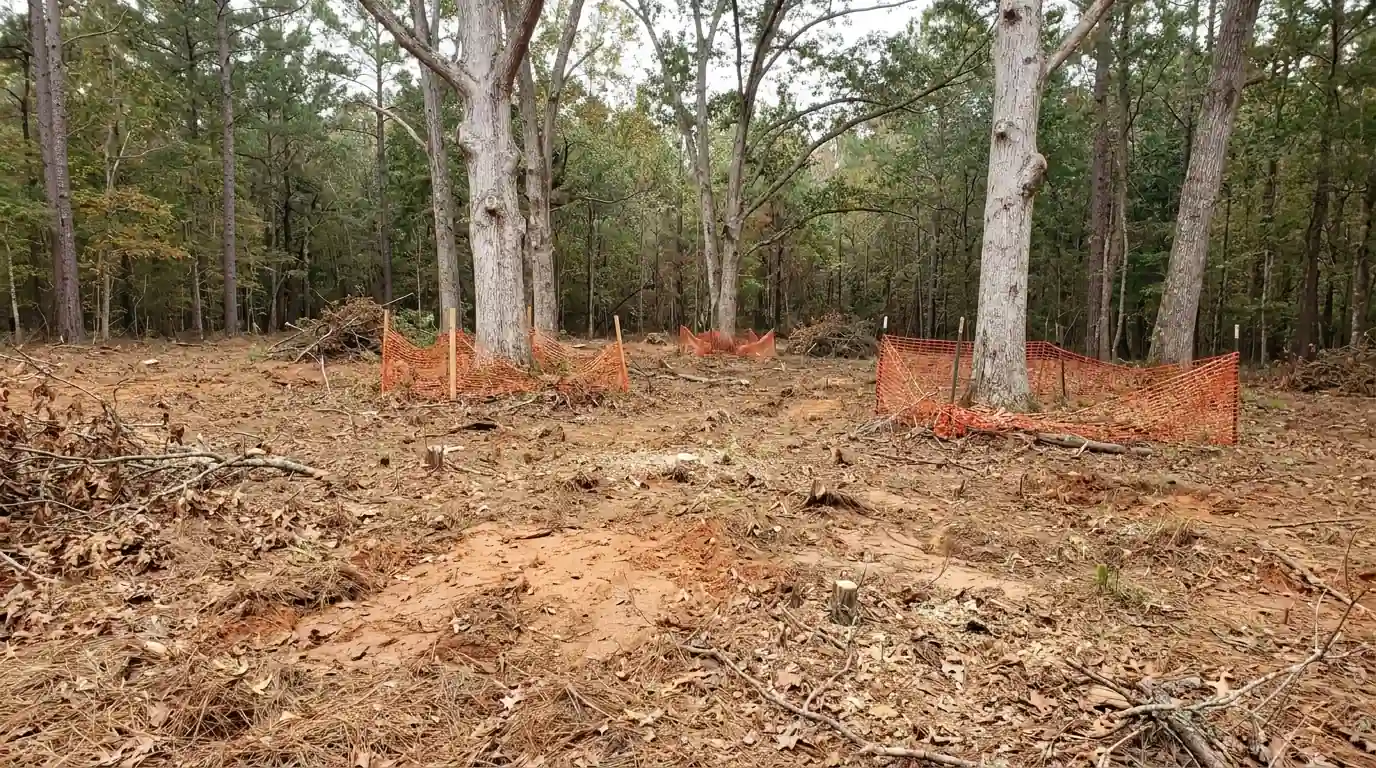
Lot clearing means removing trees, saplings, underbrush and debris from a wooded or overgrown piece of land, either selectively or entirely, so it can be built on, graded or used again. You need it for a new home, an addition, a pool or a backyard lost to privet. Around Atlanta, tree ordinances, land disturbance permits, stream buffers and red clay erosion all shape how much can be cleared and how.
Selective clearing or a cleared lot
Clearing doesn't have to mean bare ground. A lot of our clearing work is selective: cutting out the invasive privet, the crowded saplings, the dead and beetle-killed pines and the vines, while leaving the healthy oaks, hickories and poplars that make a wooded lot worth having. Done well, it feels like the yard got bigger without losing its shade.
Full clearing is for the footprint of a new home, an addition, a driveway or a pool, where the builder needs open ground to grade. Even then, the area outside the footprint can usually keep its strongest trees if they are marked and protected before any machine arrives. Once a tree's roots are compacted by tracks or buried under fill, it is very hard to save.
We walk the lot with you first, flag what stays and what goes, and check what the city or county requires before anything is cut. If a builder is involved, we work from their site plan and limits of disturbance, so the cleared area matches what the grading crew and the permit expect, with no surprise gaps or extra trees lost.
Why privet and saplings come back after a quick clearing
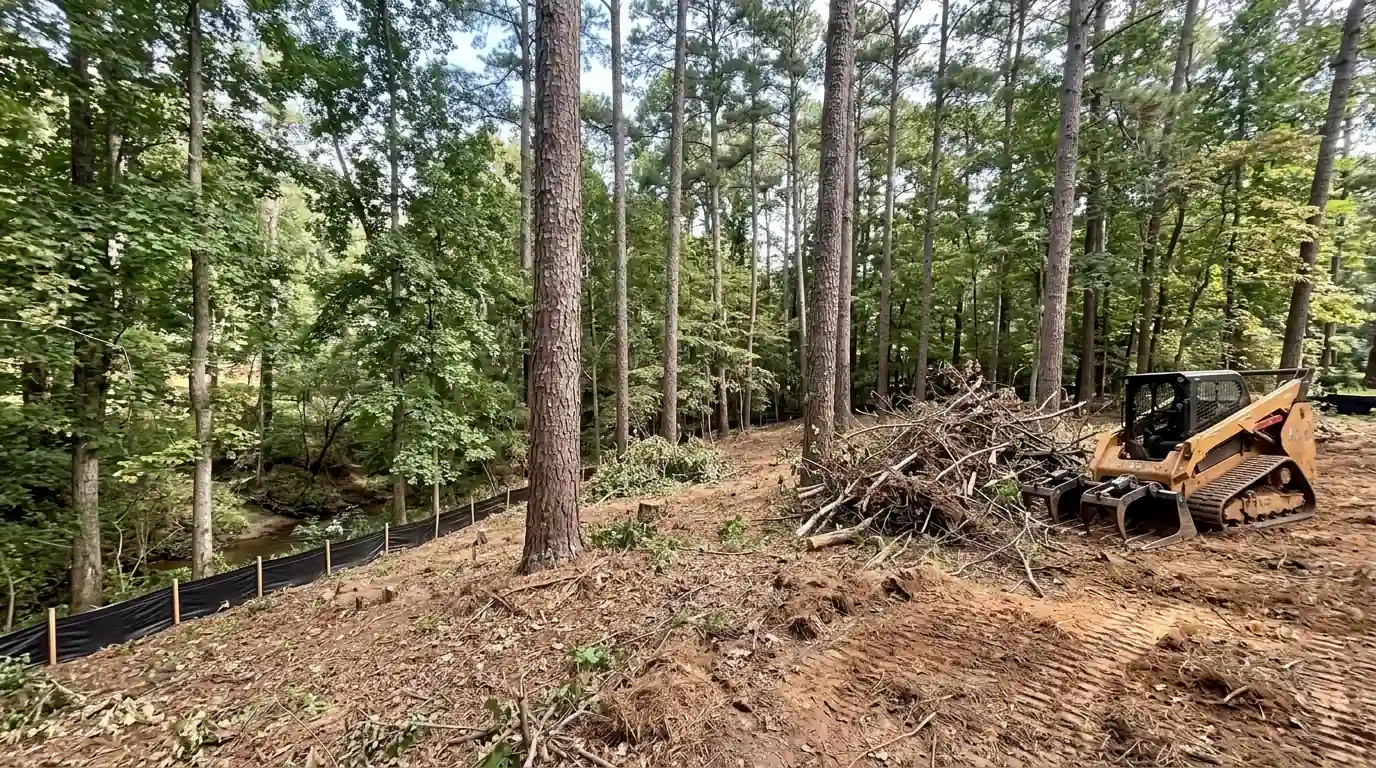
Chinese privet is the plant that swallows most overgrown Atlanta backyards. It grows in dense thickets under the canopy, shades out everything beneath it and resprouts from the stump and roots when it is simply cut down. Bush-hogging a privet thicket makes the yard look open for a season, then it returns thicker than before.
Lasting clearing means dealing with the stumps. On small privet we pull the root crowns where the soil allows, and on larger stems we grind the stumps or, where you approve it, treat the fresh cuts so they don't resprout. Sweetgum and Callery pear saplings behave much the same way. A follow-up visit a few months later catches the new shoots while they are still small and easy to pull.
Lots we clear around the metro
Most clearing jobs fall into a few familiar patterns.
Wooded lots for a new build
Infill lots and older parcels where a house is planned, cleared to the builder's footprint with protection around the trees staying.
Additions and pools
A slice of the backyard cleared for a project, with root zones of nearby trees marked so the excavator stays off them.
Backyards lost to privet
Chinese privet, saplings and vines that turned a usable yard into a thicket, cut out to the trees you want to keep.
Back acreage and fence lines
Overgrown rear lots, sight lines and fence lines cleared so the land can be walked, mowed or fenced again.
Beetle-killed pine stands
Groups of dead loblolly or shortleaf pines removed before they turn brittle and start dropping tops.
Sight and access lanes
Paths for a utility run, a driveway or survey work, cut narrowly to disturb as little as possible.
How a lot clearing job runs
Clearing is mostly planning and order of work, with the cutting coming later than people expect.
- 1
Walk and flag
We walk the lot with you or your builder and flag trees to keep, trees to remove and the limits of the clearing.
- 2
Check the rules
We look at tree ordinances, land disturbance thresholds and stream buffers for the address before cutting starts.
- 3
Erosion control first
Silt fence or other controls go in along the low side when ground will be left bare.
- 4
Protect the keepers
Fencing goes around the root zones of the trees staying, so machines and spoil piles stay clear.
- 5
Cut from small to large
Underbrush and saplings come out first to open the lot, then the larger trees are taken down in a safe order.
- 6
Chip, haul, grind
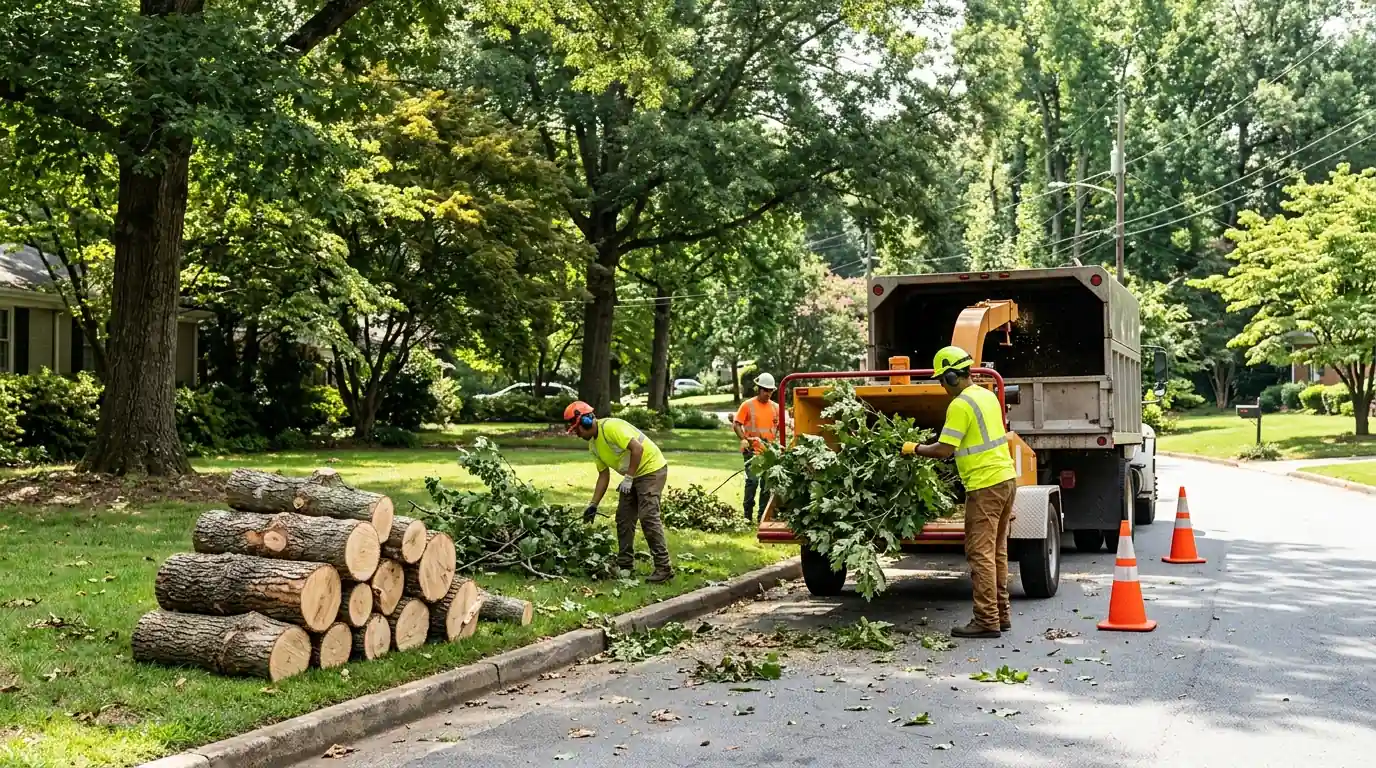
Brush is chipped, wood is hauled or left for you, and stumps are ground or pulled to fit what's coming next.
What to have ready before lot clearing starts
A clearing job moves faster and runs into fewer surprises when these are sorted out first.
- A survey or site plan showing property lines, setbacks and the building footprint.
- Your builder's limits of disturbance, if a home or addition is planned.
- Notes on creeks, drainage swales or wet spots anywhere on the lot.
- A list of trees you want to keep, or time to walk the lot and flag them with us.
- Any permit already issued, so the work matches what was approved.
- Your plan for the wood: hauled, cut for firewood or left in rounds.
- Gate keys, access codes and a word with neighbors whose fence lines are close.
What moves the price of lot clearing
| Job | Typical range | Priced |
|---|---|---|
| Wooded lot clearing | $1,850 to $6,400 | per acre |
Density matters more than acreage. A lot of mostly privet and saplings clears much faster than the same area full of large pines and oaks that have to be felled carefully or taken apart near a house. Slope, wet ground, creeks and how close the work runs to neighbors, roads and lines all affect the equipment and time needed.
Stump work changes the price a lot: grinding stumps for lawn is one cost, while full stump extraction for a slab or footing is another. Erosion control materials, permit preparation and hauling all depend on the project. Our pricing page shows typical per-acre ranges, but most clearing is priced after a walk.
Underbrush clearing, selective clearing or full clearing
The three levels of clearing differ in what stays, what equipment is used and what permits may come into play.
| Underbrush only | Selective clearing | Full clearing | |
|---|---|---|---|
| What goes | Privet, vines, saplings, deadfall | Underbrush plus chosen trees | Everything in the cleared area |
| What stays | All established trees | Healthy trees you choose to keep | Trees outside the work limits |
| Equipment | Saws, brush cutters, chipper | Saws, climbers, compact loader | Loaders, excavators, grinders |
| Permits | Rarely needed | Depends on tree count and size | Often a tree or land disturbance permit |
| Erosion risk | Low | Moderate | Highest, needs controls in place |
Atlanta, DeKalb and Gwinnett rules and red clay
Rules depend on where the lot sits. Inside Atlanta city limits, removing a private tree 6 inches or more at 4.5 feet usually needs a city permit (pines at 12 inches), and healthy trees removed for construction owe recompense. In unincorporated DeKalb County, up to five healthy, non-specimen trees can come out per lot each year without notice. Beyond that, DeKalb points to clearing and grubbing permits when removing roughly 5 to 10 trees and land disturbance permits at 10 or more, and its stream buffers run 75 feet.
Unincorporated Gwinnett generally lets homeowners clear developed lots, except in zoning buffers, stream buffers, Tree Save Areas and the Chattahoochee River Corridor, and at least two live trees must remain. Bare red clay erodes fast in a summer storm, so controls go in first. Clearing calls run steady in Snellville, Doraville and across Forsyth County, and our permit service handles the paperwork.
Where we do lot and land clearing around Atlanta
Crews work from our Atlanta office near the 30340 ZIP and our Duluth office. These are the places we cover most, with their main ZIP codes. See all 56 areas.
- Buckhead 30305
- Virginia-Highland 30306
- Druid Hills 30307
- Morningside 30324
- Grant Park 30312
- Kirkwood 30317
- Cascade Heights 30311
- Sandy Springs 30328
- Dunwoody 30338
- Brookhaven 30319
- Decatur 30030
- Duluth 30096
- Lawrenceville 30046
- Marietta 30060
- Smyrna 30080
- Roswell 30075
- Alpharetta 30009
- Johns Creek 30097