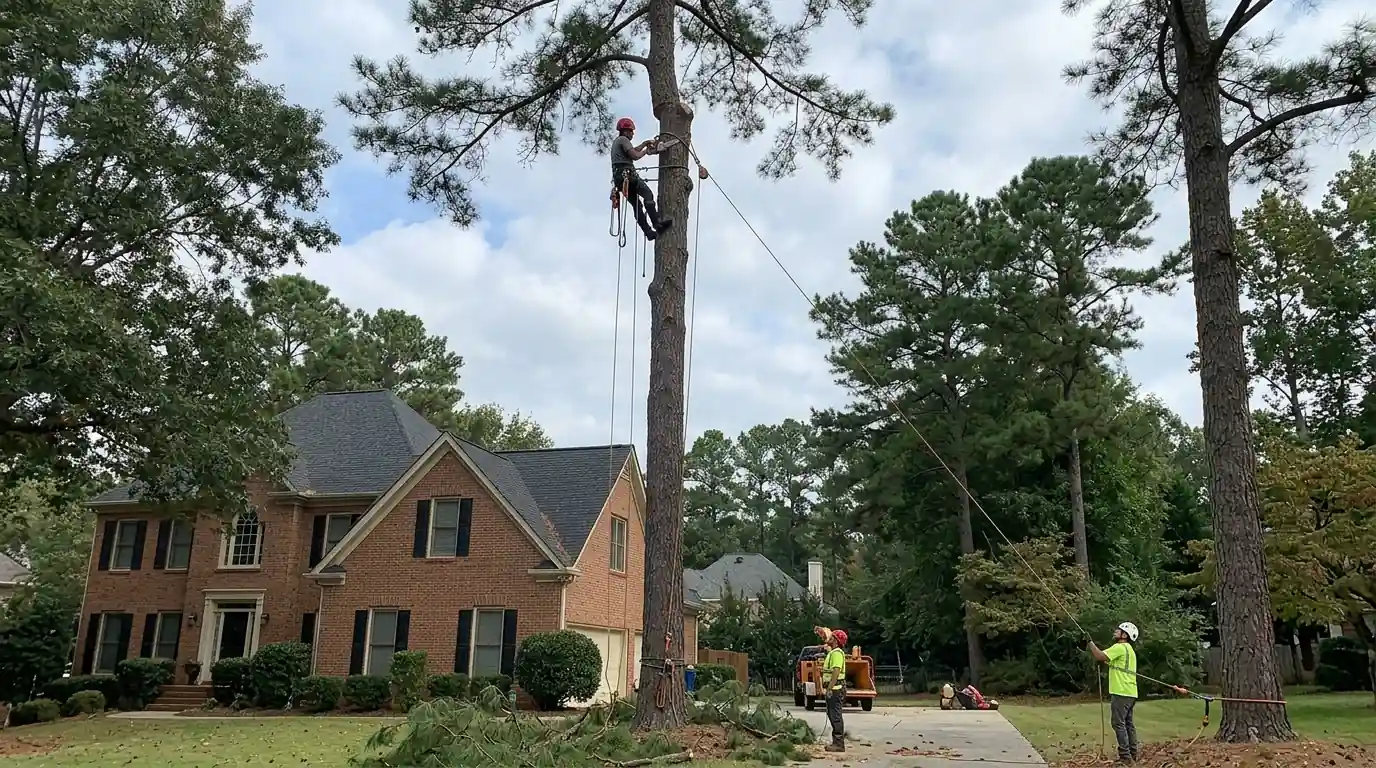
12 servicesTree removal
Whole trees taken down in controlled sections, from a single dead pine to a water oak leaning over the house.
Atlanta tree service, answered 24/7
Almost half of Atlanta sits under tree canopy, and most of those trees stand on house lots. We take them down, trim them back and keep them healthy from offices in Atlanta and Duluth, with a crew line that is answered every hour of the day.
Tree service, the short version
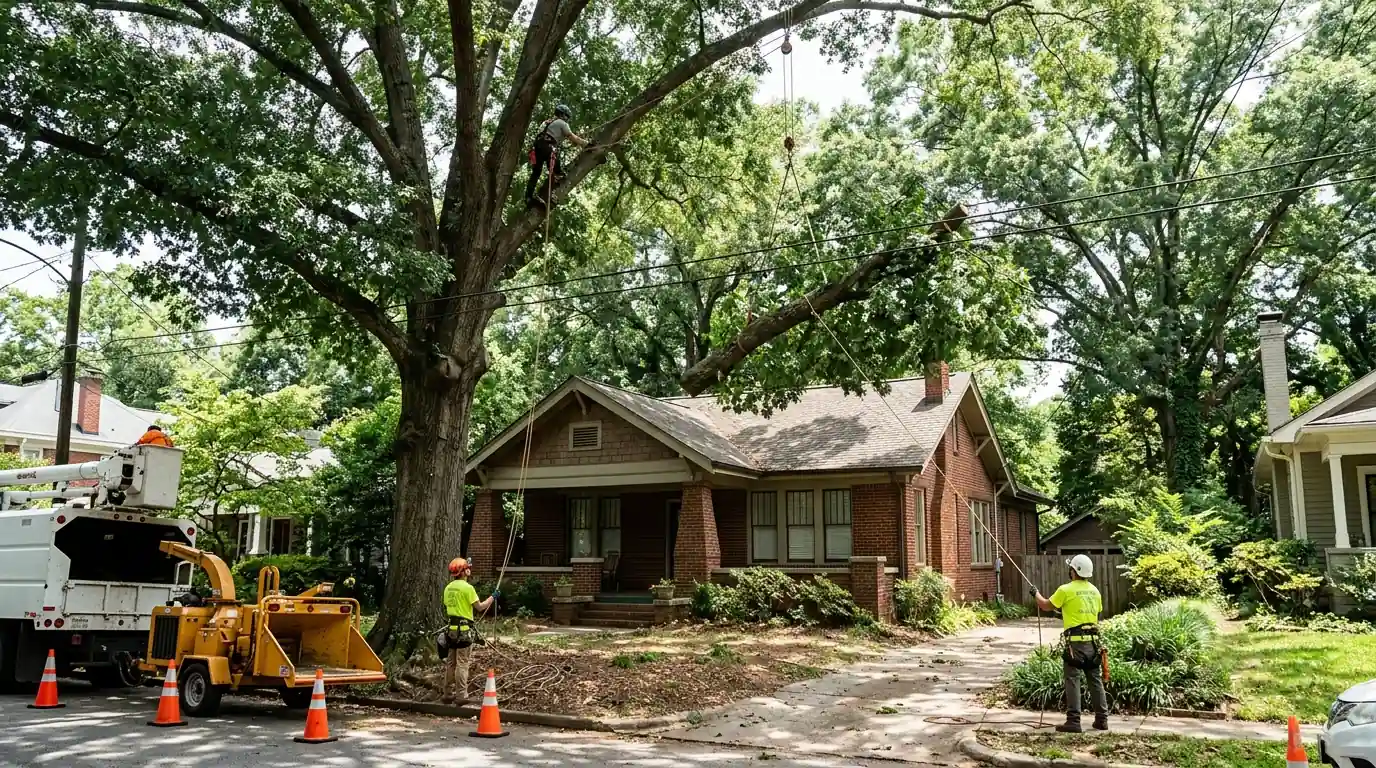
Atlanta's canopy covered 45.7 percent of the city in 2023, according to a Georgia Tech study commissioned by City Council, and about 72 percent of the remaining trees grow on land zoned for single-family homes. That is why so little tree work here is a simple felling job. The water oak over a Morningside slate roof, the row of loblolly pines behind a Duluth subdivision, the split pear hanging over a Smyrna driveway: each one has something underneath it that cannot get hit.
So we work from the top down. Our climbers tie in, rig the heavy wood on lowering lines, and bring every piece down where the ground crew wants it, with plywood mats under the stacks and the yard raked before we leave. When a tree is too big or too rotten to climb, a crane lifts it out. Model City Tree Service keeps two offices, one off Chestnut Drive in the 30340 ZIP and one in Duluth, so the north and east metro are close to a crew most days.
We keep saws, chippers, stump grinders and climbing gear in working order, the kind of equipment made by STIHL, Husqvarna, Vermeer, Bandit, Rayco and Petzl. The gear matters less than how it is used, but well-kept gear is part of working safely over somebody's house.
A tree service removes, trims and cares for trees on your property. In Atlanta that usually means lowering big oaks and pines in sections over roofs, clearing limbs off houses and service drops, grinding stumps, and handling the city permit when a tree is 6 inches or more across. Model City crews work across the city and the north and east metro, and the phone is answered 24/7.
What we do
Every service has its own page with how we do it, typical Atlanta prices and the local rules. See all tree services or jump to a group.
Whole trees taken down in controlled sections, from a single dead pine to a water oak leaning over the house.
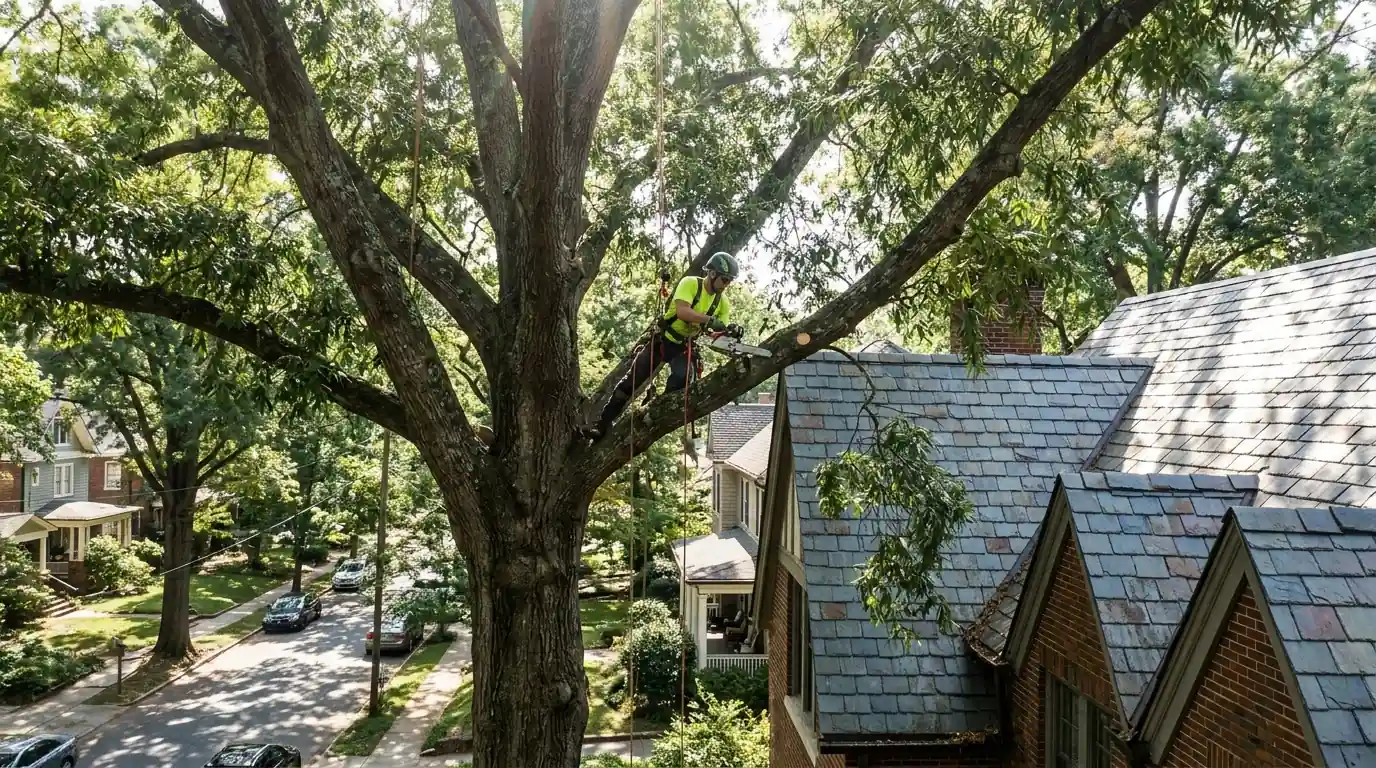
Cuts that keep limbs off the roof, open the crown to wind and light, and keep young trees growing into a sound shape.
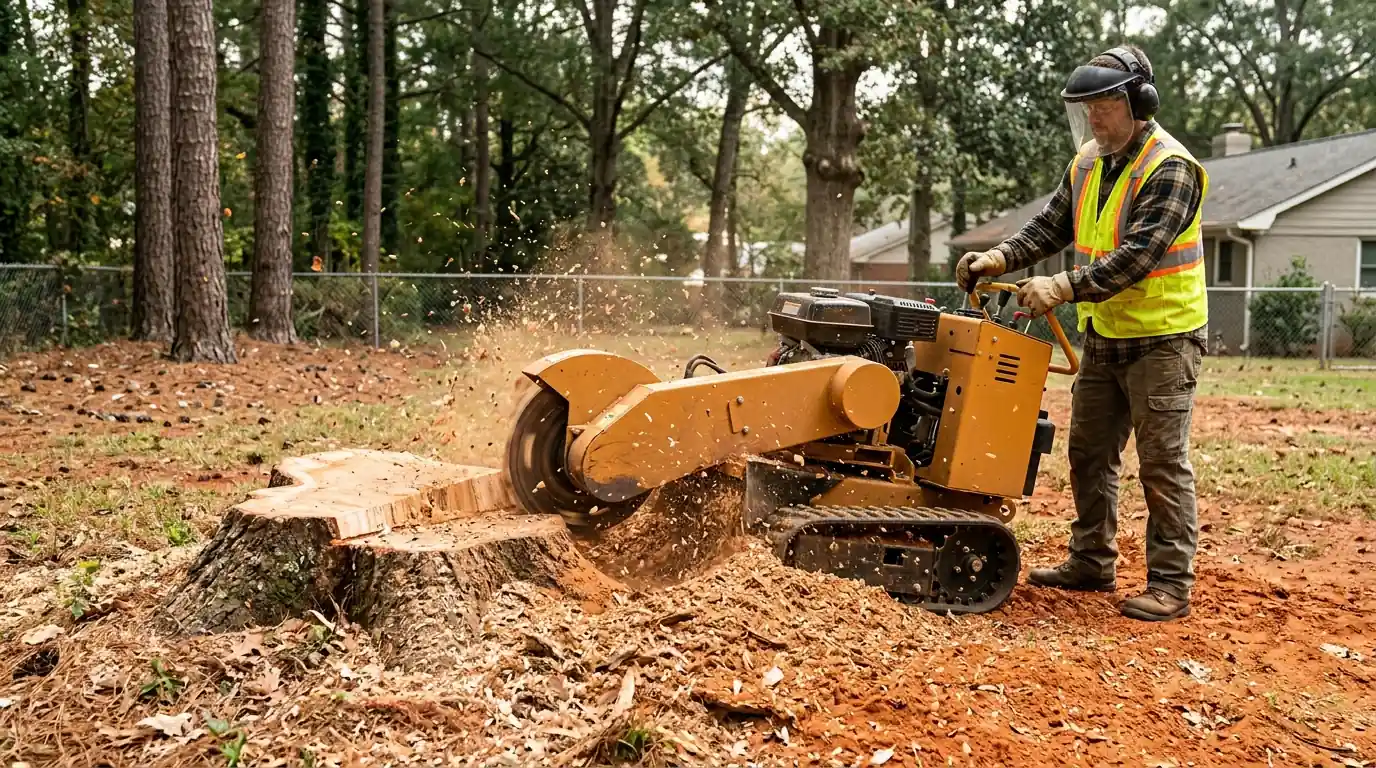
Grinding, root work, brush hauling and clearing the vines, bamboo and underbrush that take over Atlanta yards.
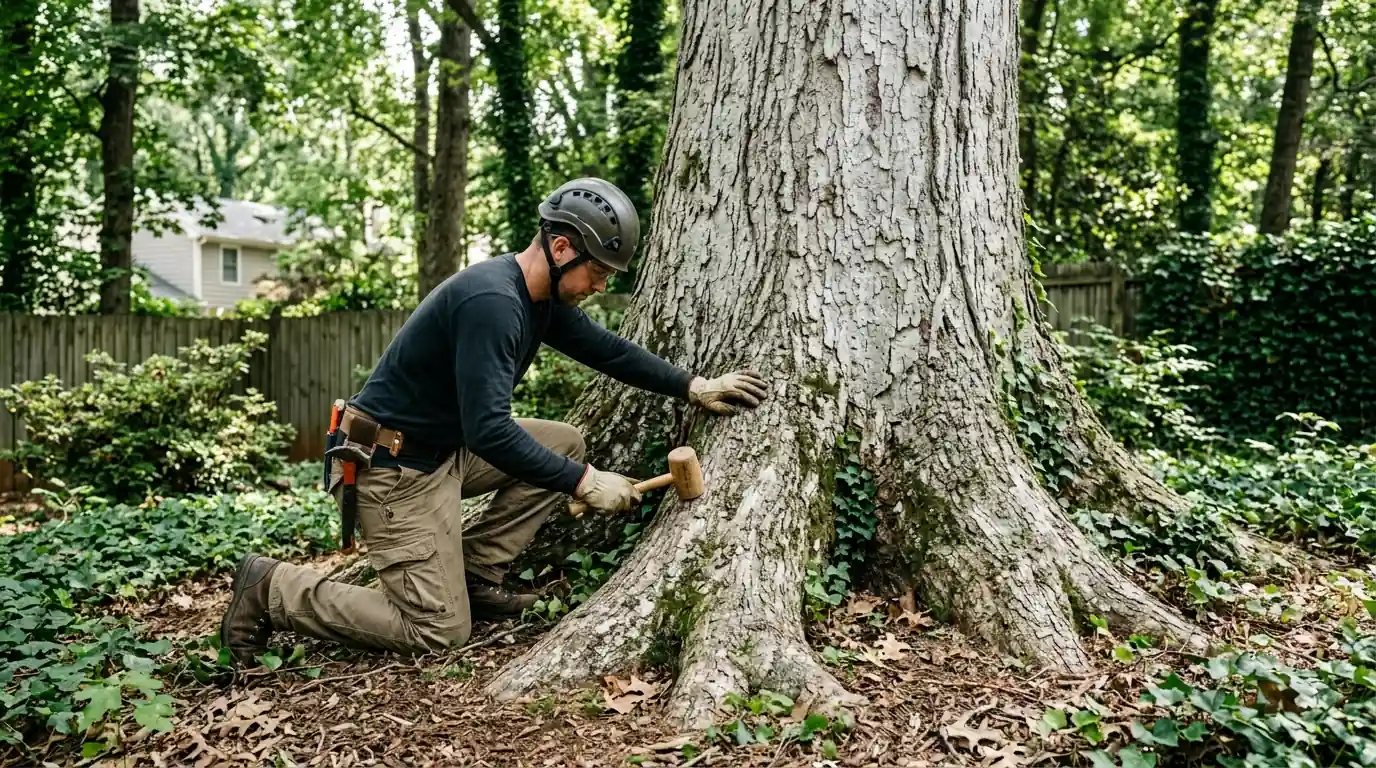
Risk checks, treatments, cabling, planting and protection for the trees you want to keep for another fifty years.
Fall zone check
Slide in the height of the tree and its distance from the house, garage or fence. It is a rough first check, not an inspection, but it shows why most Atlanta removals are done in sections.
What could it hit?
Height is easy to underestimate. A tree that clears a two-story roof by its own height again is often 60 to 70 feet tall. Book an on-site look for a real answer.
Atlanta trees
Eight trees make up a big share of our calls inside the Perimeter and across the north and east metro. Pick one to see the usual trouble and the work that fixes it.
Fast-growing, short-lived and everywhere in mid-century neighborhoods
Water oaks were planted by the thousand when Atlanta's ranch-house subdivisions went in, and many are reaching the end of their run. Heart rot hollows the trunk from the inside while the crown still looks green, and dead upper limbs start dropping in summer storms.
Signs to watch
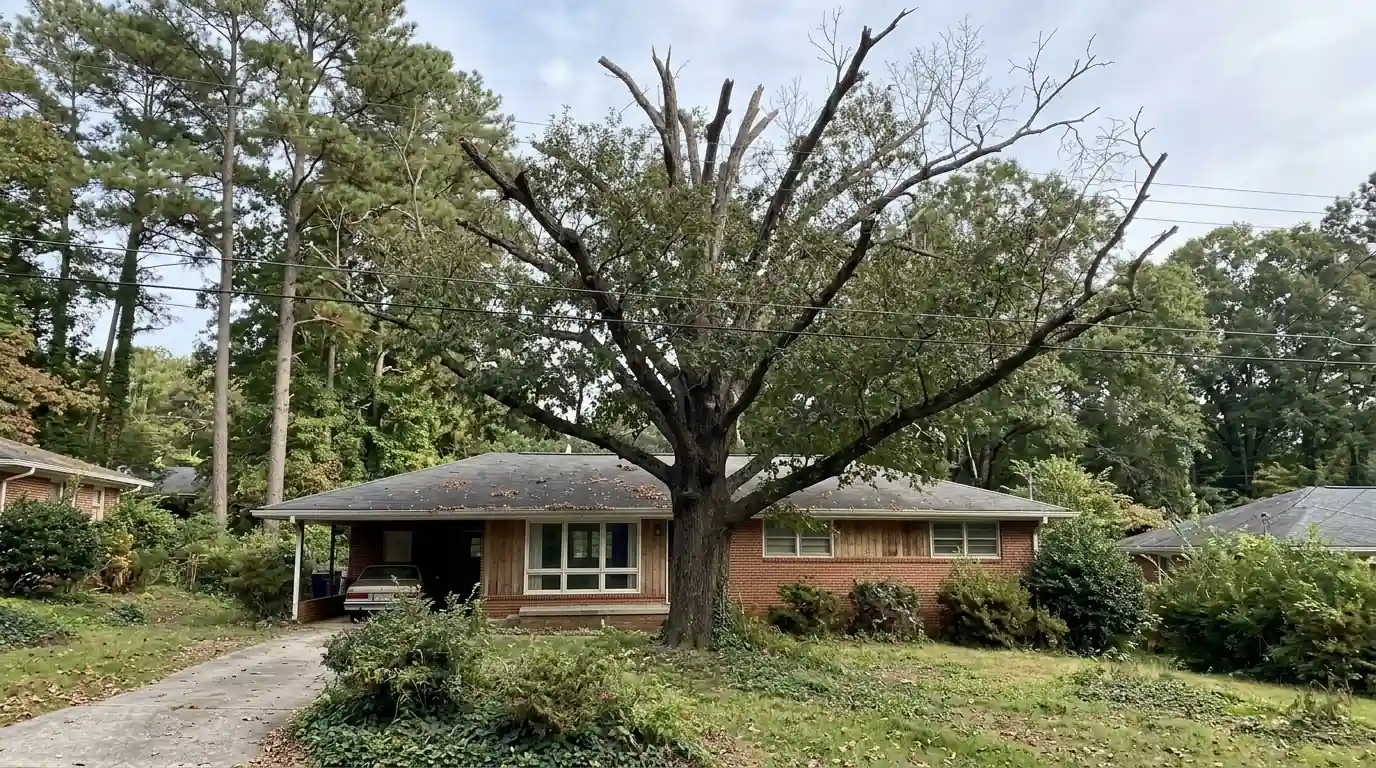
Tall, single-stemmed and exposed to every gust
North metro subdivisions kept the pines that were already on the land, so many homes have 80 foot loblollies within reach of the roof. Saturated red clay lets them uproot in long rains, and drought invites pine bark beetles that can kill a tree in a single season.
Signs to watch
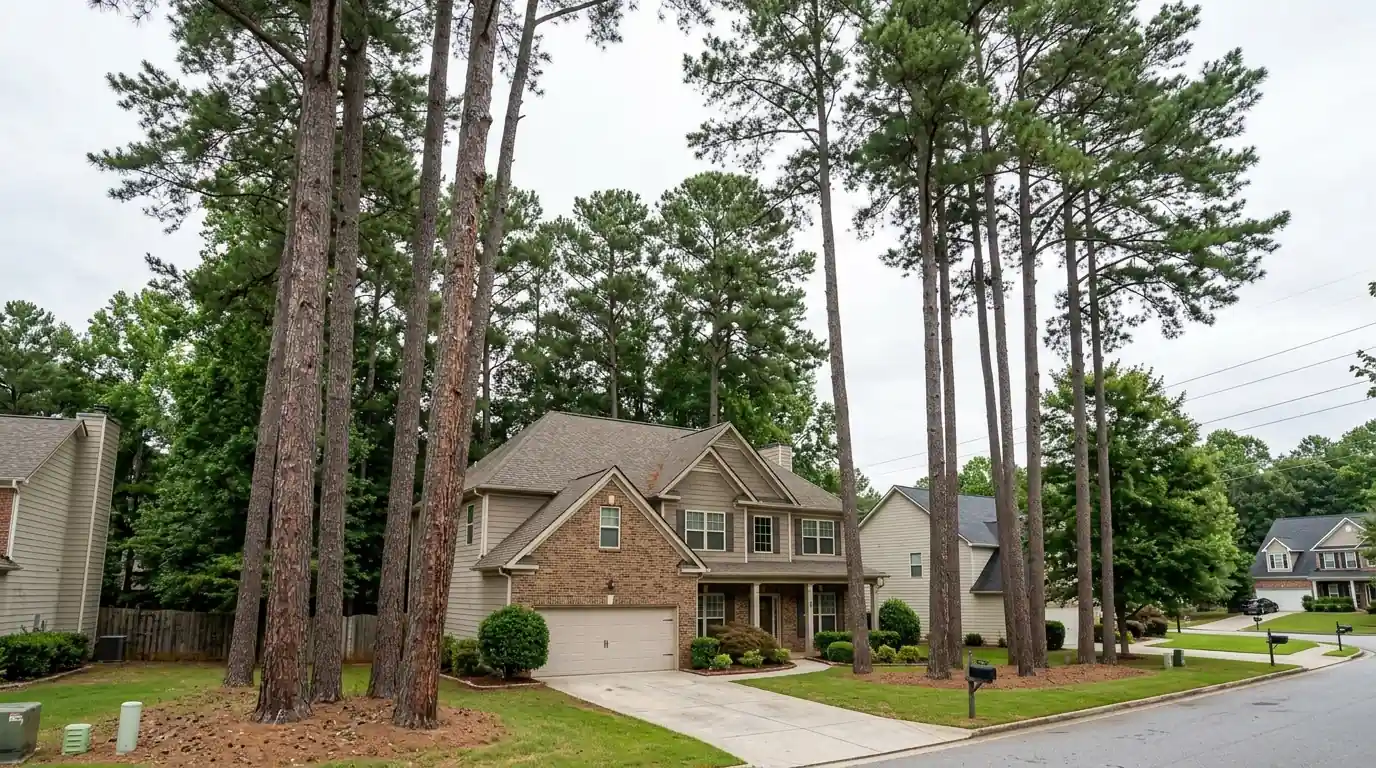
A straight giant with brittle limbs
Tulip poplars grow tall and straight fast, which is why so many tower over Atlanta backyards. The wood is light and brittle, so limbs snap in thunderstorms, and in a dry August the tree drops yellow leaves early, which worries people more than it should.
Signs to watch
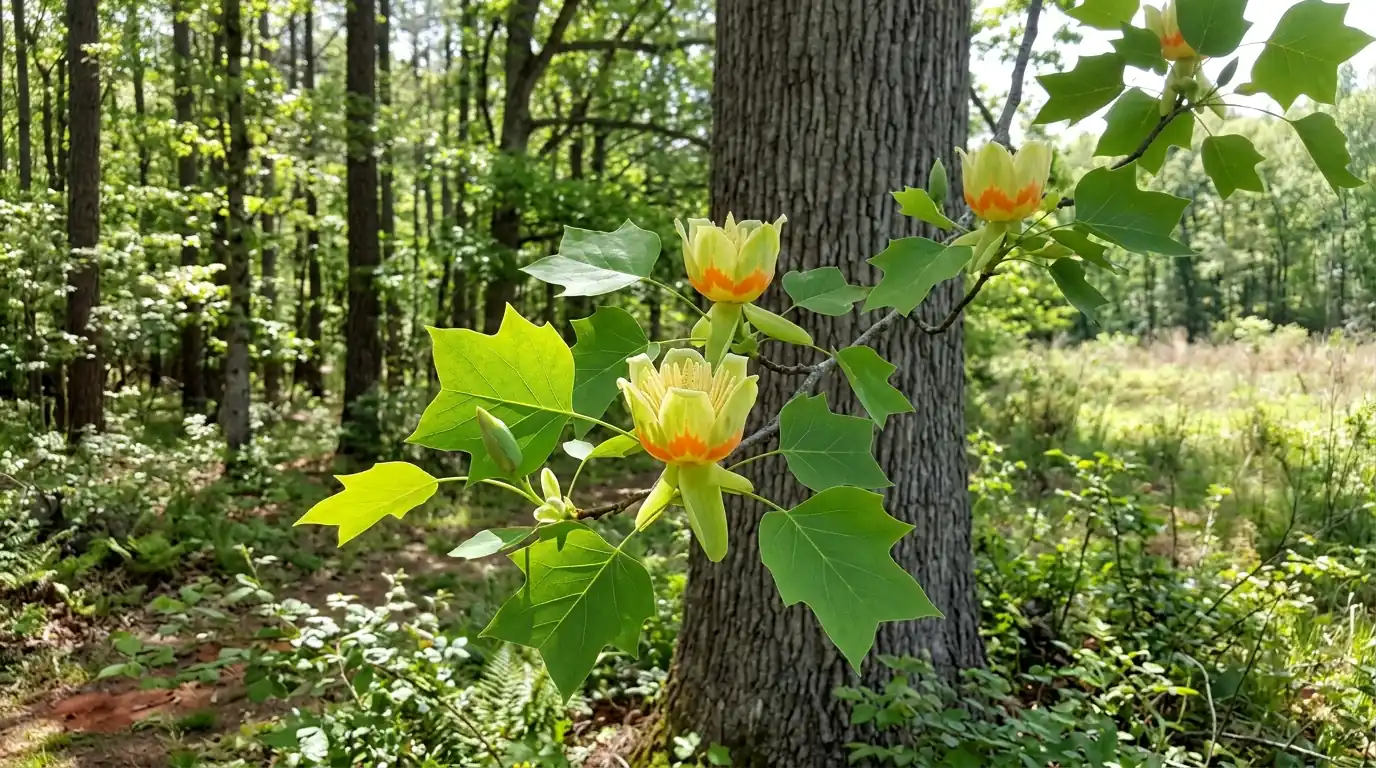
Gumballs, surface roots and sprouting stumps
Sweetgums are sturdy, but their roots run along the surface and lift walks, and the spiky gumballs cover driveways each fall. Cut one down without grinding the stump and it often sends up a ring of sprouts.
Signs to watch
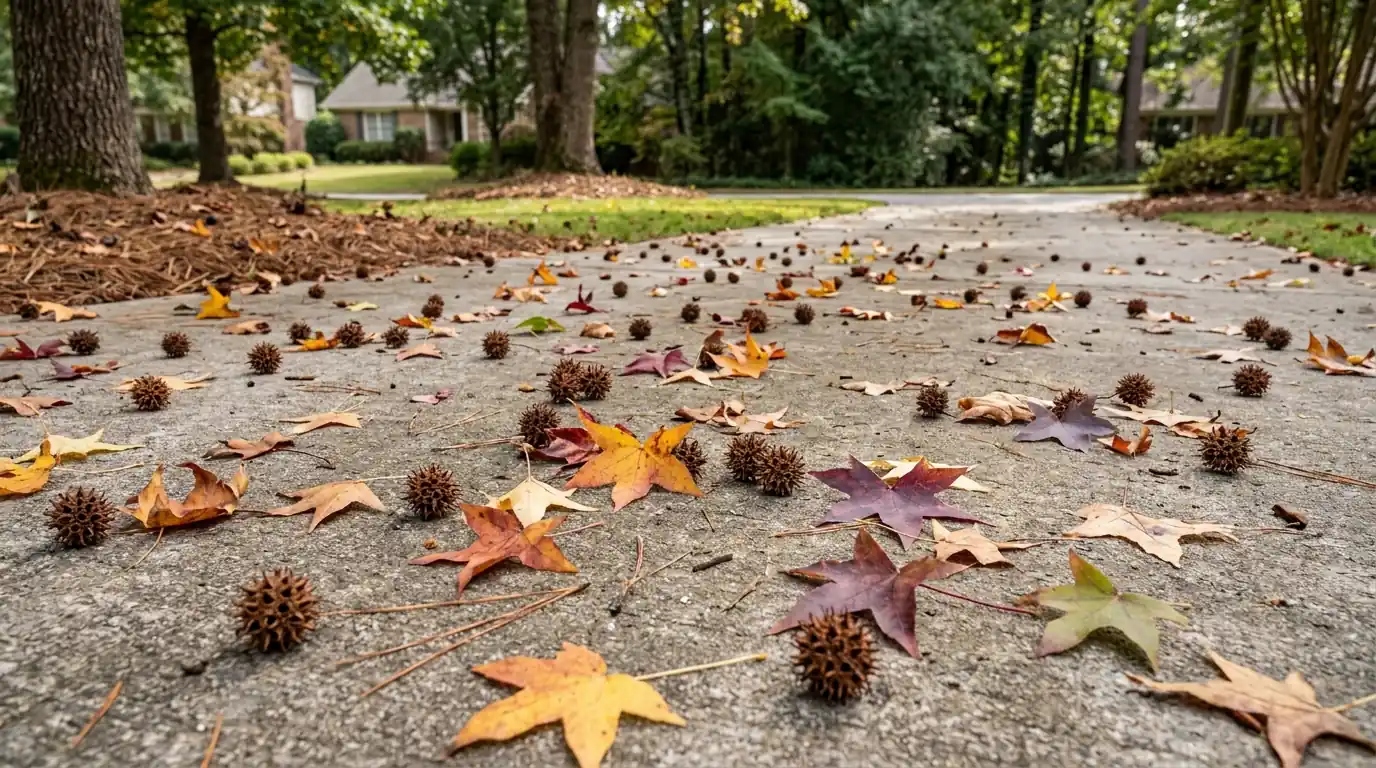
Pretty in March, split by June
Bradford and other Callery pears grow tight V-shaped forks with bark trapped inside, so the tree splits down the middle in wind or ice, usually at about twenty years old. They also seed into woods and fence lines across the metro.
Signs to watch
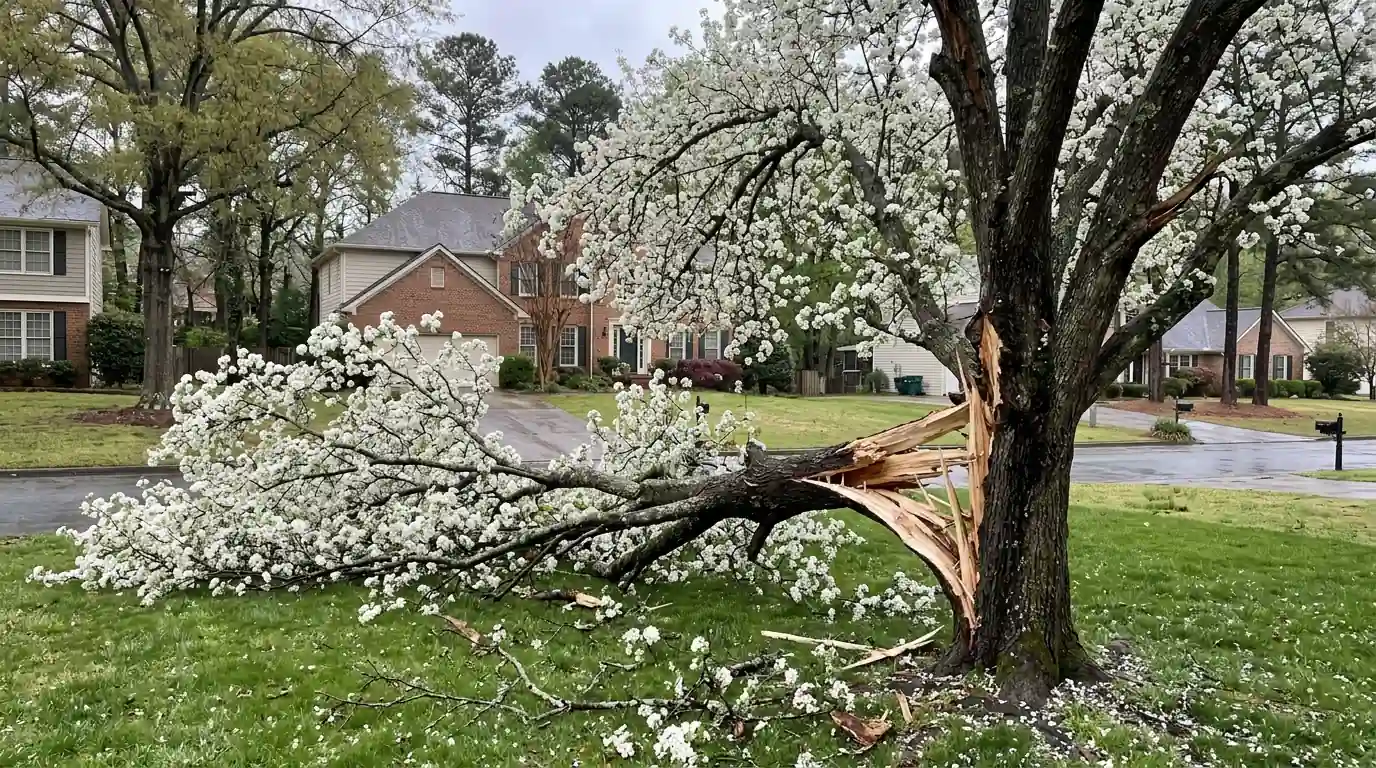
The summer bloomer that gets topped too often
Crape myrtles line Atlanta streets and blooms come on new growth, which leads people to chop them back to knuckles every winter. Topping weakens the tree and the sprouts that follow, and crape myrtle bark scale now shows up as black, sooty bark.
Signs to watch
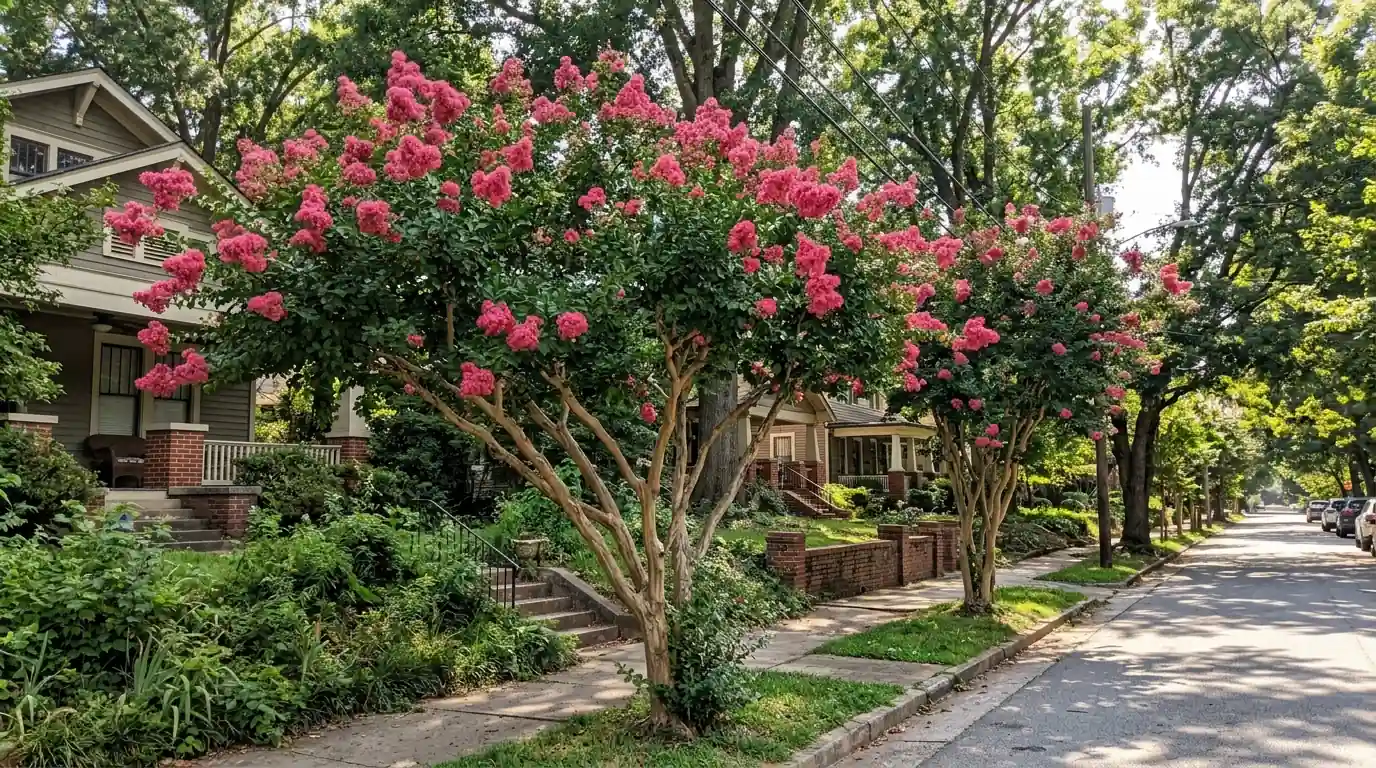
Quick shade with thin bark
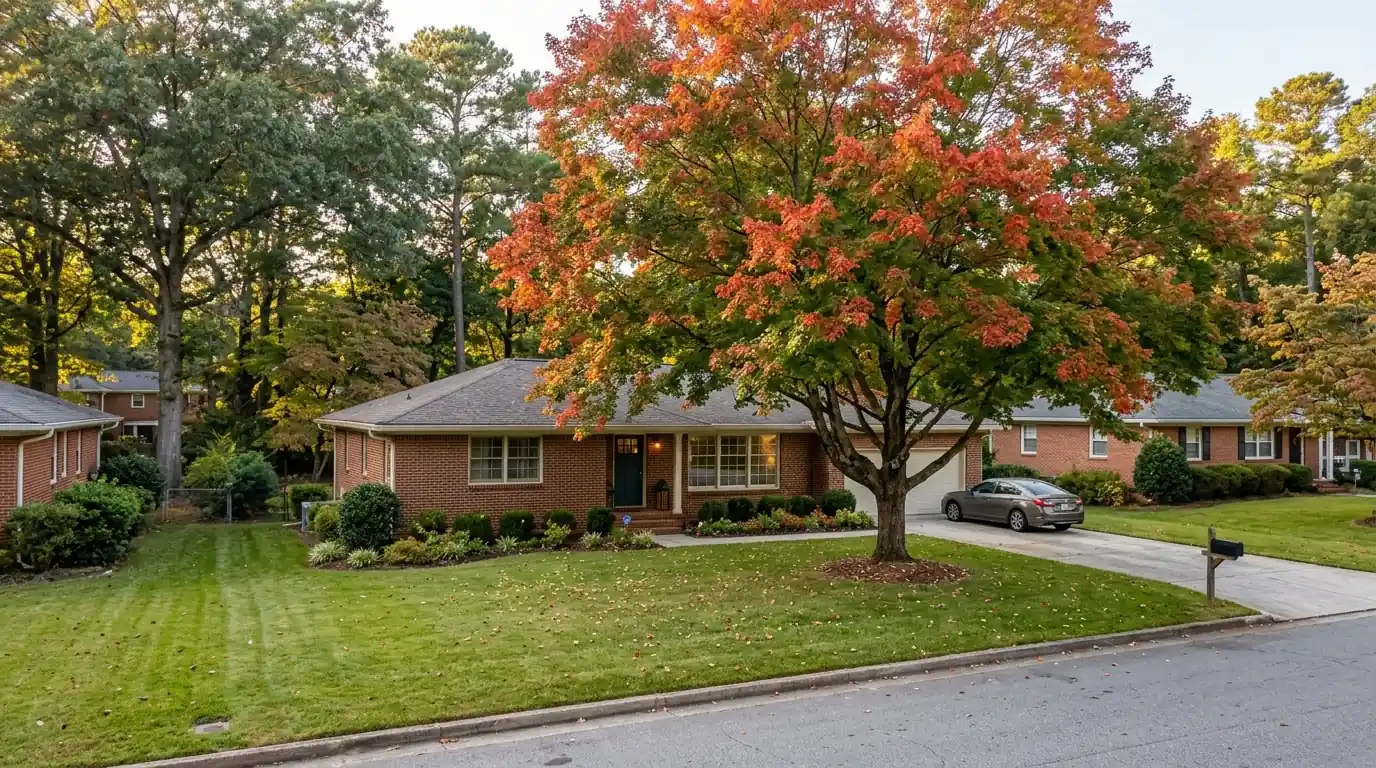
Red maples were the go-to builder tree for decades. Their thin bark bruises from mowers and string trimmers, roots girdle around the trunk in tight planting holes, and older maples develop decay behind old wounds.
Signs to watch
Georgia's spring signature, sensitive to stress
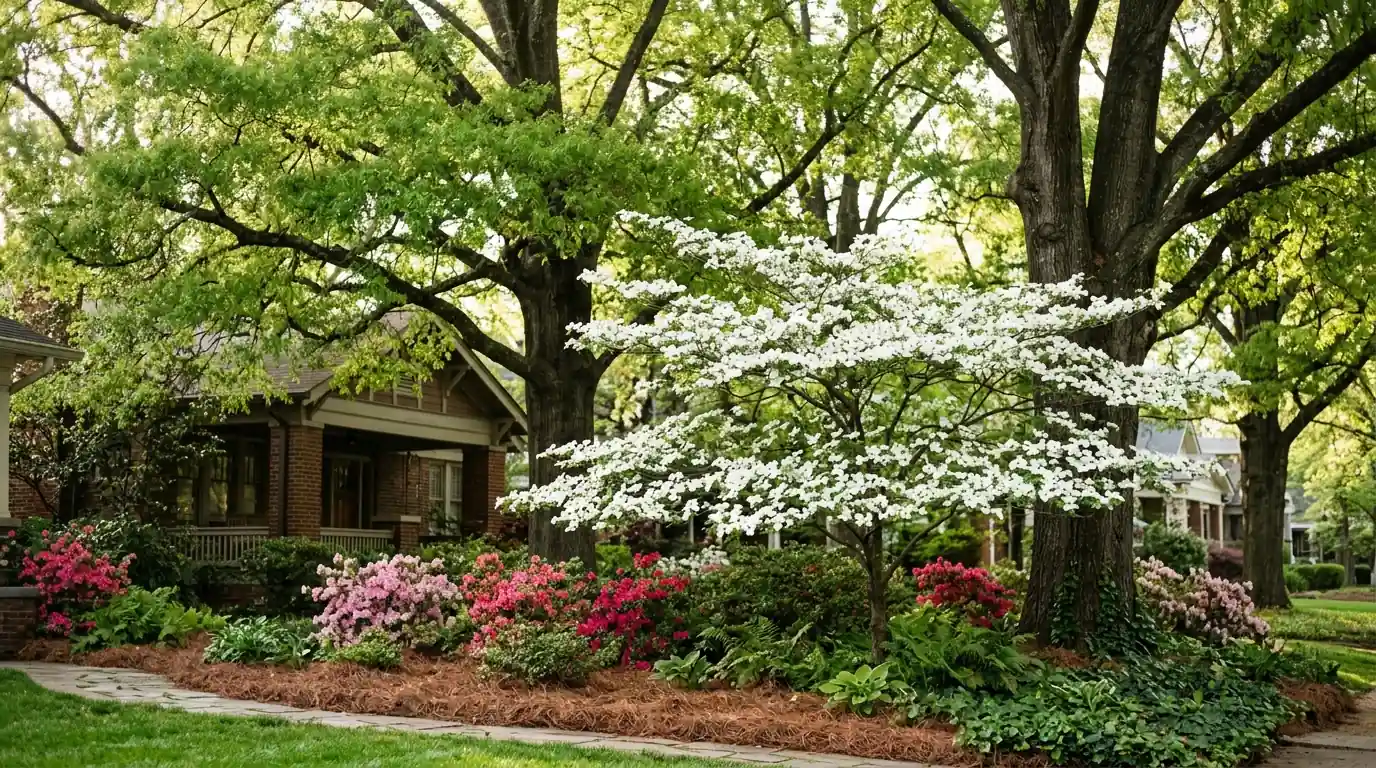
Dogwoods prefer the dappled shade under taller oaks. Too much sun, drought and anthracnose leave them with spotted leaves and dying twigs, and they bruise easily during nearby construction.
Signs to watch
When to call
None of these means a tree has to come down. Each one means it is time for someone to look closely. A risk assessment is the usual first step.
Even a light limb grinds shingles every time the wind moves it, and heavier ones load rafters during storms.
Fungus growing from the root flare usually means decay in the roots or lower trunk, where you cannot see it.
Cracks below forks and leans that got worse after rain are the two failures that come with little warning.
Bare, barkless branches over a driveway or sidewalk will come down eventually, usually in the next summer storm.
Limbs rubbing the wire to your house can pull it loose in wind. That work starts with a call to the utility, then us.
Trenching, grading and new driveways cut roots. Planning protection before the excavator arrives saves trees that would otherwise decline.
From the top down
The same order on nearly every removal, whether it is a dead pine in Snellville or a water oak over a Grant Park Victorian.
We walk the tree and everything under it, check for decay and measure the trunk for permit rules.
Permits are prepared where the city or county requires them, and any utility work is coordinated before we climb.
Mats go down over lawns and soft clay, and furniture, grills and planters are moved clear.
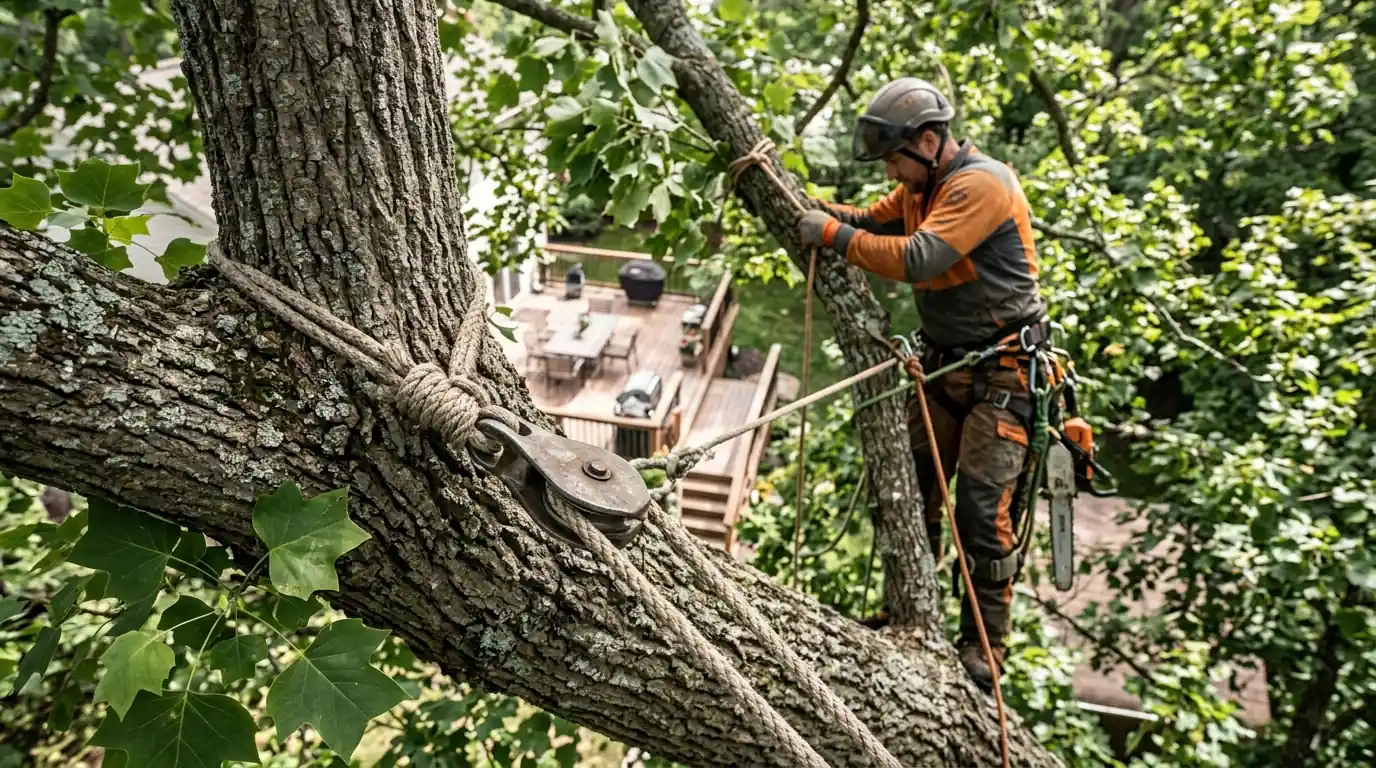
The climber works from the top, lowering each limb on a controlled line to the ground crew.
The trunk comes down in short sections, or a crane lifts it out when climbing is unsafe.
Brush is chipped, wood is hauled or stacked, and the stump is ground if you asked for it.
Rules by address
Whether a removal needs a permit depends on where the house sits, not on the size of the job. These are the three we run into most.
Permit needed for most private trees 6 inches across or larger, pines from 12. Dead, dying and hazardous trees go through the Arborist Division with no application fee.
Up to five healthy, non-specimen trees per single-family lot each year with no notice. More than five, or a specimen tree, goes to the County Arborist first.
Usually no permit for homeowners on a developed lot, unless the tree sits in a buffer, a tree save area or the Chattahoochee River Corridor.
Check your address with the permit checker · How each permit works · Our permit help service
Coverage
Twenty-four intown Atlanta neighborhoods, twenty-six cities and six counties, worked from our Atlanta office near Chamblee and Doraville and our office in Duluth.
How we work
Storms do not keep business hours. The crew line is answered around the clock, and the person who answers can tell you what to do before the truck arrives.
Heavy wood comes down on lowering lines and rigging blocks, so nothing free-falls near gutters, fences or the neighbor's carport.
We check the address against city and county tree rules first, then measure, photograph and prepare whatever the permit asks for.
Mats under the wood, chips blown off the drive, sawdust swept from the walk. You should be able to tell a tree came down only by the light.
Prices
Real ranges for the jobs we do most. Access, size and what sits under the tree decide where your job lands, and the price guide lists every service.
| Service | Typical range | Priced |
|---|---|---|
| Tree Removal | $285 to $2,475 | per tree |
| Tree Trimming | $185 to $1,940 | per tree |
| Stump Grinding | $65 to $485 | per stump |
| Crane Tree Removal | $2,650 to $8,400 | per tree |
| Emergency Tree Removal | $1,150 to $5,900 | per tree |
| Tree Risk Assessment | $165 to $385 | per visit |
Typical Atlanta ranges in 2026, not quotes. See every service in the price guide.
Questions
Yes. The crew line is answered 24/7, including nights, weekends and holidays. If a tree is on the house or across the driveway, the person who answers will walk you through staying safe and get a crew moving as soon as conditions allow.
We work inside the city, from Buckhead and Morningside to Grant Park and Cascade Heights, and across the north and east metro, including Sandy Springs, Brookhaven, Decatur, Duluth, Lawrenceville, Marietta and the counties around them. Check your ZIP with the tool above or call.
We measure the trunk, take the photos and prepare the application for trees inside city limits, then walk you through submitting it or file it with your authorization. Approval is the city's decision, so we never promise it, but we make sure the paperwork is complete.
We price after seeing the tree. Access, height, lean, wood condition, what sits underneath and whether a crane is needed matter more than height alone. The quote covers the cutting, cleanup and hauling, and stump grinding is listed separately.
For the wire running from the pole to your house, yes, after the utility is in the loop. We never cut around a live line. Trees touching the main lines on the poles are Georgia Power's to clear, so report those to them first.
Brush goes through the chipper on site. Logs are hauled away unless you would like them cut to firewood length and stacked, and many customers keep a load of chips for their beds and paths.
From the Tree Blog
Written by our Tree Blog editor from what our crews see on Atlanta jobs. Read the Tree Blog.
June 3, 2026 · 7 min read
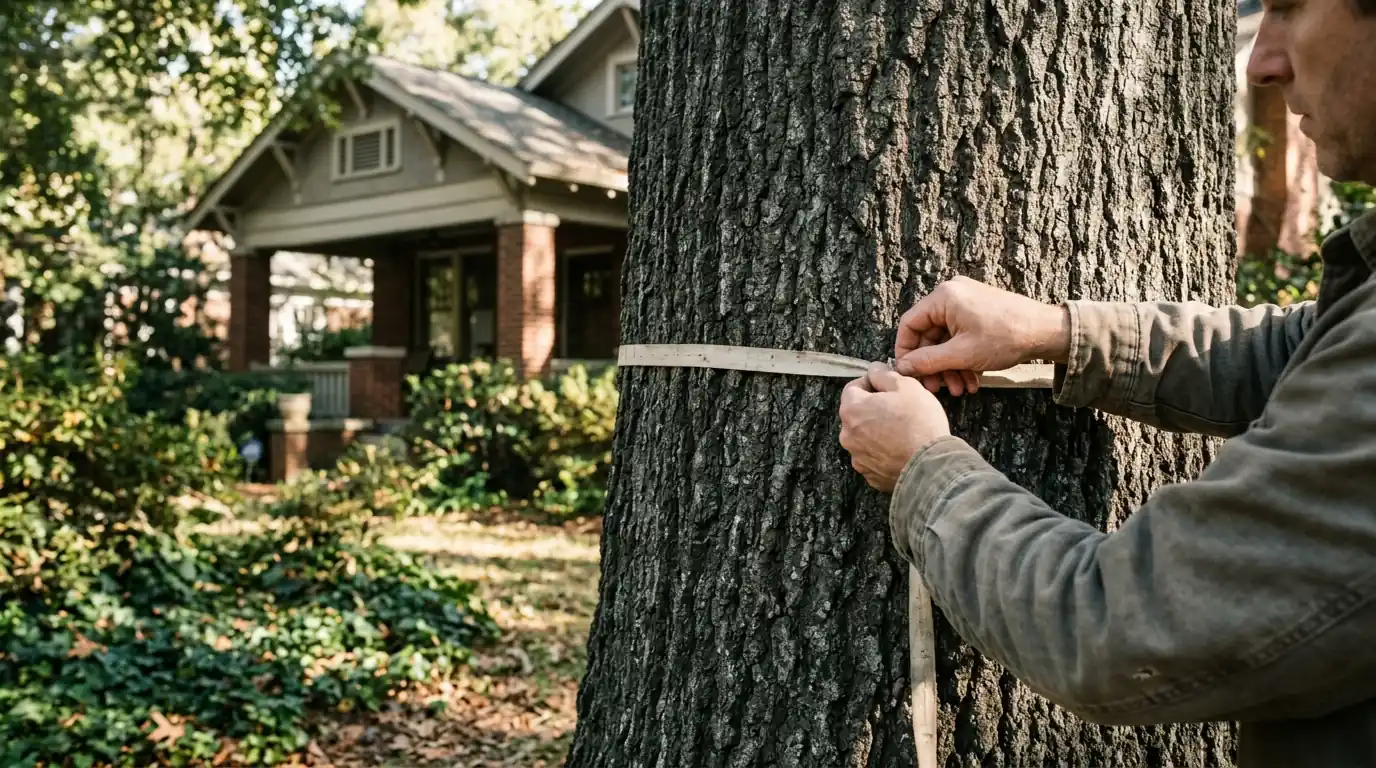
The answer depends less on the tree than on the address. A water oak in Kirkwood, one in Brookhaven and one in unincorporated Gwinnett can fall under three very...
June 17, 2026 · 7 min read
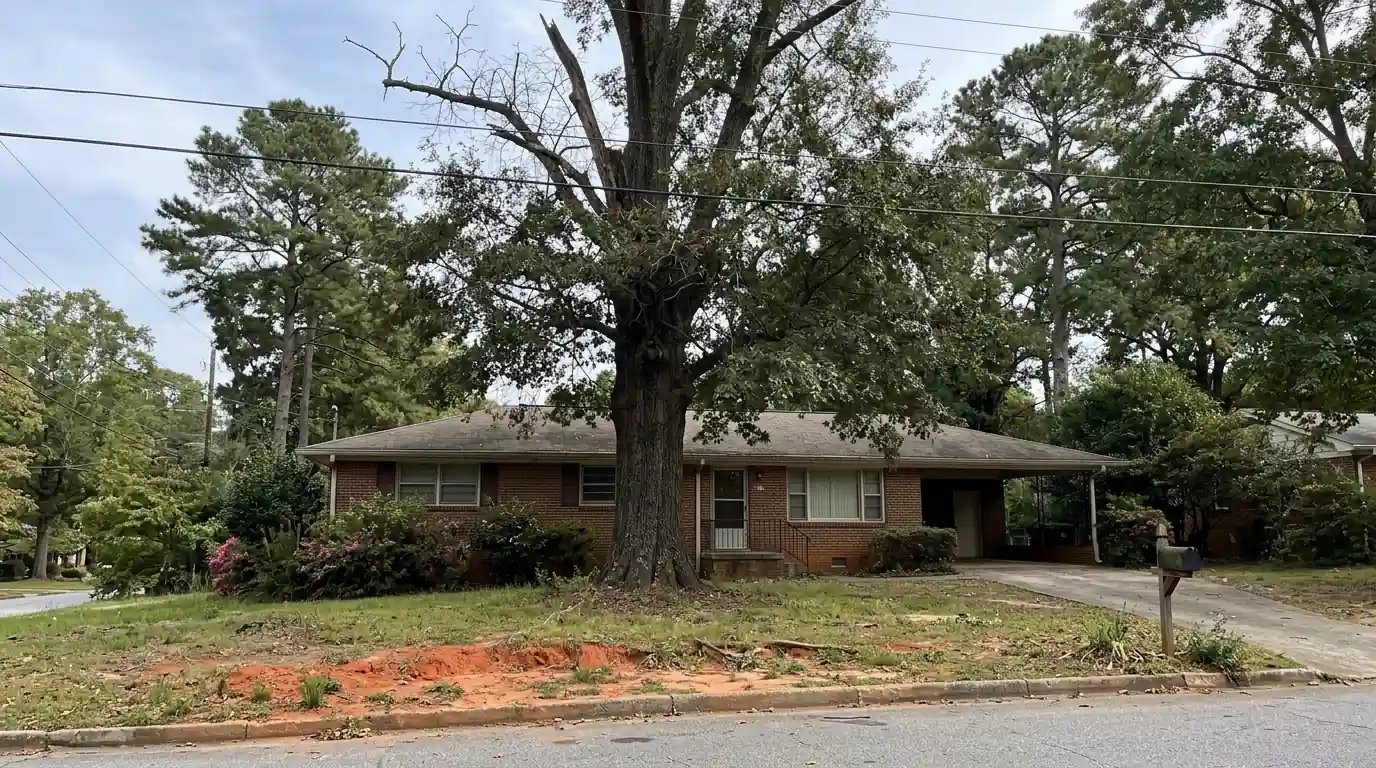
Drive through almost any neighborhood built in the 1950s and 1960s and you'll see them: tall water oaks shading brick ranches, many of them planted or spared when...
July 14, 2026 · 6 min read
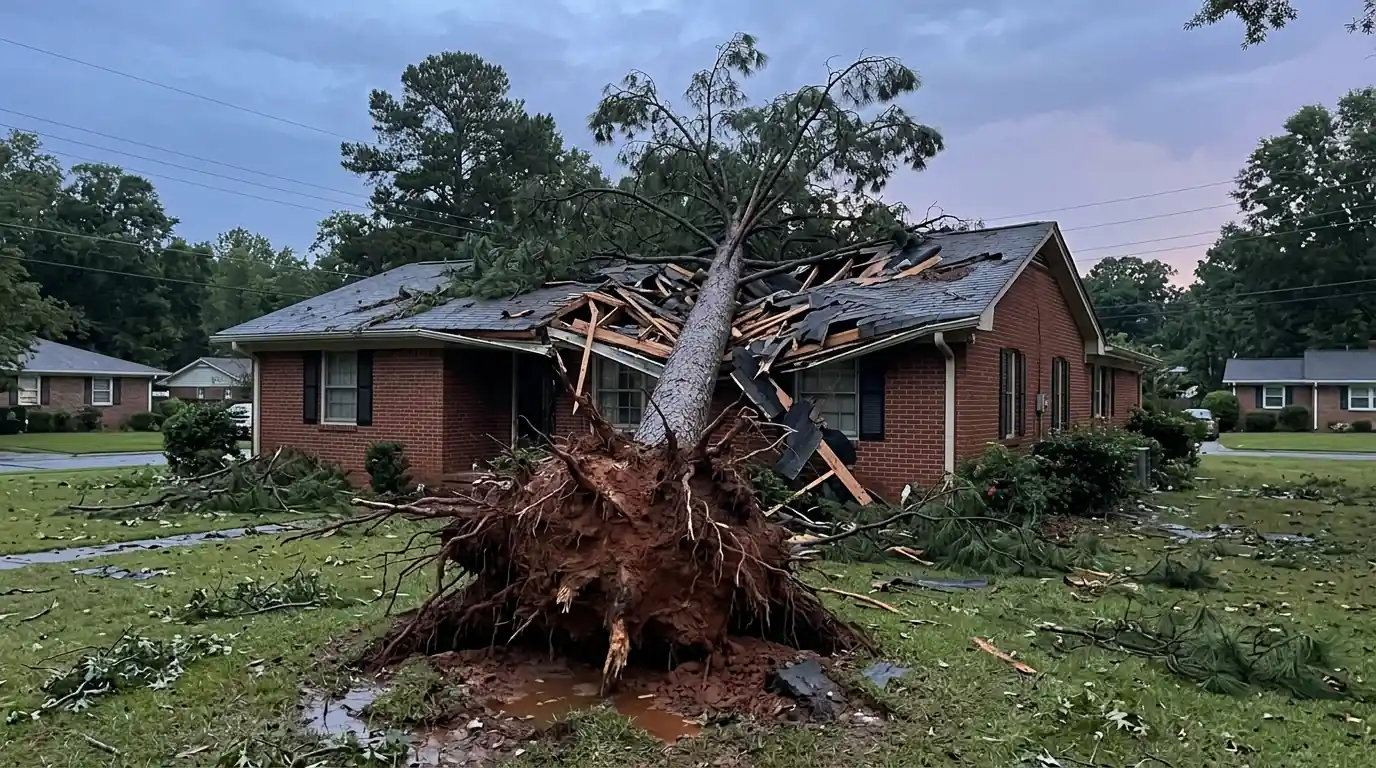
When a tree comes through the roof, the noise and the shock make it hard to think straight. This checklist puts the steps in the order that keeps people safe first...
Reach us
One number for both offices, answered every hour of the year.
The map loads from Google only when you ask for it.