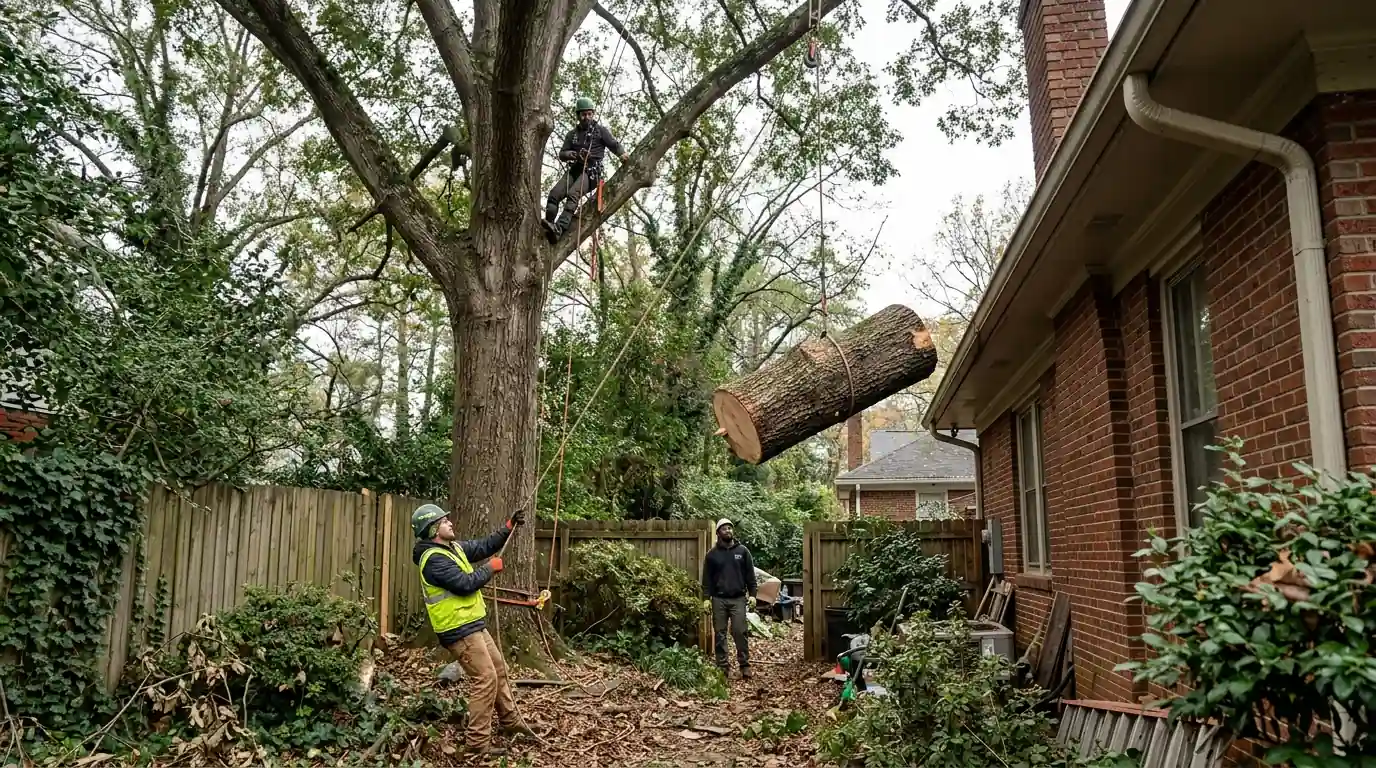
Tree removal means cutting a whole tree down, lowering it in manageable pieces when there is no clear drop zone, then chipping the brush, hauling or bucking the wood and grinding the stump if you want it gone. Inside Atlanta city limits, most private trees 6 inches across or larger (pines 12 inches) need a city permit first. We measure, photograph and handle that paperwork before the first cut.
What a tree removal actually involves
A removal starts on the ground, not in the tree. We walk the drop zone, look at the lean, check the trunk and root flare for decay, and note every target the wood could hit: the roof, the gutters, the fence, the HVAC unit, the neighbor's shed. That walk decides whether the tree can be felled in one piece, taken down in sections by a climber, or lifted out with a crane.
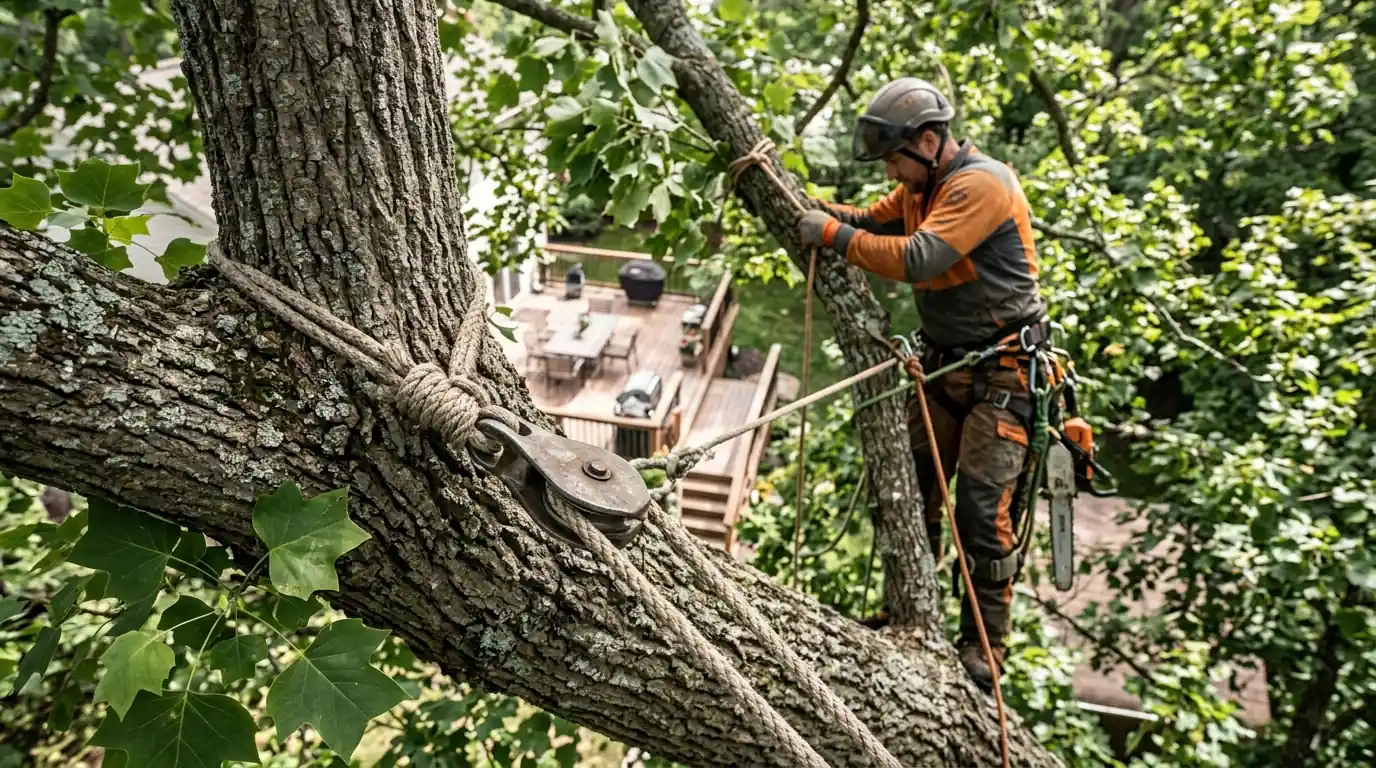
On a typical intown lot, felling whole is off the table. A climber ties in, removes the limbs first, and lowers each one on a rope run through a rigging block so it swings away from the house and lands where the ground crew wants it. Then the trunk comes down in short rounds, cut so each piece is light enough for the lowering system to stop.
Once the tree is on the ground, the cleanup is part of the job, not an extra. Brush goes through the chipper, logs are cut to length and either hauled or stacked for firewood, and the yard is raked and blown. If you want the stump gone too, we grind it below grade the same visit or on a follow-up.
Signs a tree should come down rather than be trimmed
Plenty of trees can be saved with good pruning. These are the conditions where we usually tell people removal is the safer call.
Hollow or soft trunk
Fungal conks, oozing cracks or a mallet that sounds hollow low on the trunk mean the wood carrying the whole crown is gone.
A lean that changed
A tree that has always leaned is one thing. A lean that got worse after a storm, with soil heaving on the far side, is a root failure in progress.
More than half the crown is dead
When most of the canopy leafs out thin or not at all, there is rarely enough live wood left to rebuild the tree.
Split or failing unions
A crack running down from a V-shaped fork, common on Callery pears and some oaks, usually ends with half the tree on the ground.
Beetle-killed pines
Pitch tubes, fine sawdust and a crown fading from green to rust mean the pine is dying, and dead pines turn brittle fast.
Roots cut by construction
Trenching for a sewer line, a driveway or an addition can sever enough roots that a healthy-looking tree goes over in the next wind.
How we take a tree down, from first call to clean yard
Every job is different, but the order rarely changes.
- 1
Look and measure
We check the tree, the targets around it and the trunk diameter at 4.5 feet, which tells us whether a city or county permit applies.
- 2
Permit and utility check
If the tree is inside Atlanta city limits or another city with a tree ordinance, we prepare the application. If a line runs through it, we coordinate with the utility first.
- 3
Protect the ground
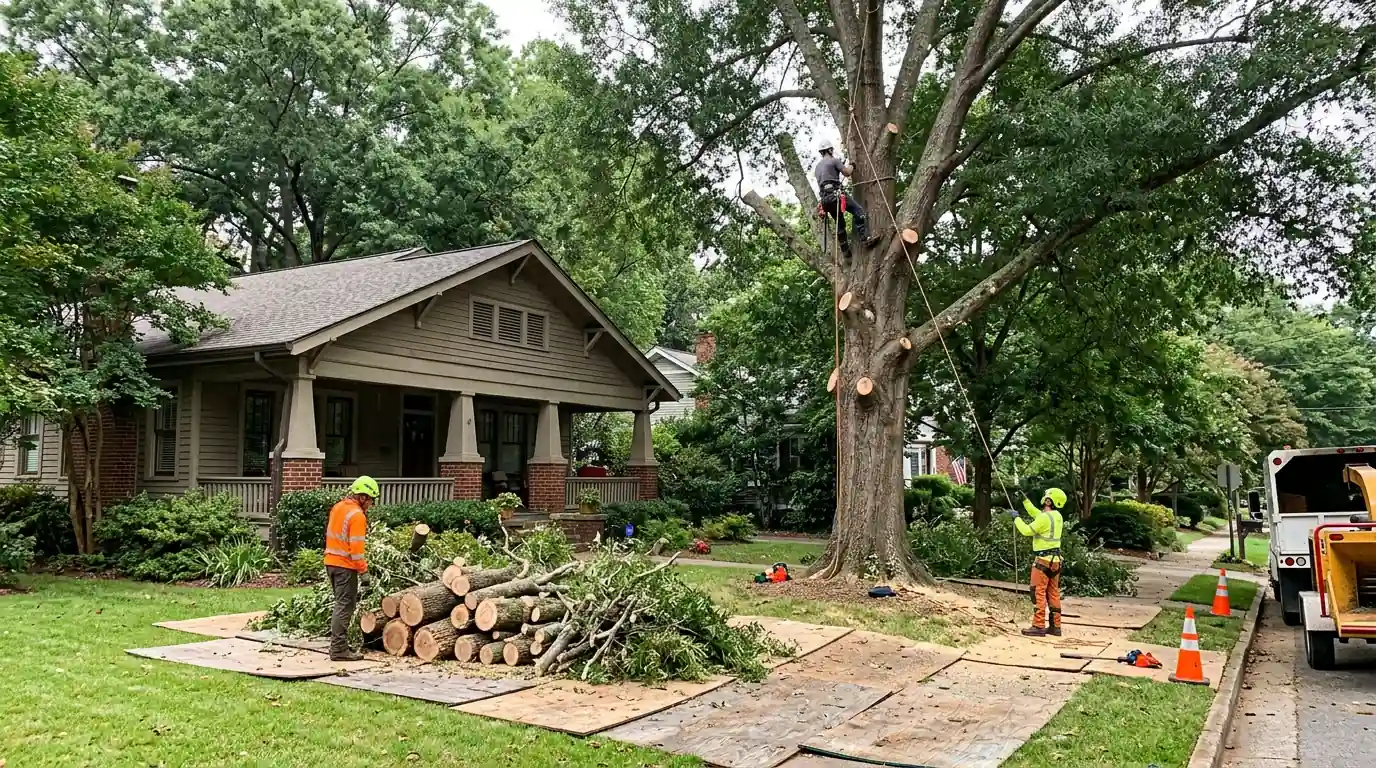
Plywood mats go down over lawns and soft spots, and patio furniture, grills and planters are moved out of the work zone.
- 4
Limb and lower
The climber removes limbs from the top down and the ground crew lowers each one on a controlled line so nothing free-falls near the house.
- 5
Trunk in sections
The spar is cut into rounds from the top down, or felled into a clear lane when there is room and the wood is sound.
- 6
Chip, haul and rake
Brush is chipped, wood is hauled or left stacked as you asked, and the yard is raked and blown before we leave.
How to get the yard ready before removal day
None of this is required, but each item saves time on the day and keeps your things out of harm's way.
- Move cars out of the driveway and off the street in front of the tree the night before.
- Clear patio furniture, grills, planters and kids' toys from anywhere under the crown.
- Leave side gates open and tell us about pets, sprinklers, invisible fence wire and septic lines.
- Tell your neighbor which day we're coming if limbs hang over their side or we need their driveway for a minute.
- Mark buried items we can't see, like landscape lighting cable, irrigation heads and drain lines.
- Decide ahead of time whether you want the logs hauled, cut for firewood or left in rounds.
- If the tree is inside a city with a tree ordinance, keep the permit card posted where the crew and inspector can see it.
What tree removal costs in Atlanta
| Job | Typical range | Priced |
|---|---|---|
| Small tree, under 30 ft, open drop zone | $285 to $640 | per tree |
| Medium tree, 30 to 60 ft | $640 to $1,380 | per tree |
| Large tree, 60 to 80 ft, rigged in sections | $1,380 to $2,475 | per tree |
Height matters less than access. A 70 foot pine standing alone at the back of a lot can cost less than a 45 foot oak wedged between two houses, because the oak has to be lowered piece by piece and carried out by hand. Steep driveways, no truck access, fences that have to be protected and a crane day all move the price up.
The ranges below are typical for metro Atlanta this year. Your price comes after we see the tree, and it covers the cut, the cleanup and the hauling. Stump grinding is priced separately, and you'll find every service in one place on our tree service price guide.
Felling whole, sectional removal or a crane
The method is chosen by the site, not by preference. Here is how the three compare.
| Felled whole | Climbed and lowered | Crane assisted | |
|---|---|---|---|
| Needs | A clear lane longer than the tree | A sound trunk to tie into | Truck access and a setup spot |
| Best for | Back acreage and open lots | Most intown and suburban yards | Big trees over roofs or with decay too risky to climb |
| Time on site | Fastest | Most of a day for a large tree | Often fastest for very large trees |
| Cost | Lowest | Middle | Highest, offset by speed on big jobs |
Atlanta tree rules and the trees we remove most
Inside Atlanta city limits, removing a private tree 6 inches across or larger at 4.5 feet usually needs a permit from the city's Arborist Division, and pines start at 12 inches. Dead, dying and hazardous trees still need that permit, but there is no application fee and no replacement charge once the city verifies the condition. Brookhaven and Decatur run their own programs, and unincorporated Gwinnett generally lets homeowners remove trees on an existing lot unless the tree sits in a buffer. Our permit guide walks through each one.
The trees we take down most are aging water oaks from the 1950s and 1960s subdivisions, tall loblolly pines that were left standing when north metro neighborhoods were built, and split Callery pears. In Druid Hills and Morningside it is usually a big oak over a slate or tile roof. Out in Duluth and Lawrenceville it is more often a stand of pines leaning toward a house after a wet week of Georgia red clay.
Where we do tree removal around Atlanta
Crews work from our Atlanta office near the 30340 ZIP and our Duluth office. These are the places we cover most, with their main ZIP codes. See all 56 areas.
- Buckhead 30305
- Virginia-Highland 30306
- Druid Hills 30307
- Morningside 30324
- Grant Park 30312
- Kirkwood 30317
- Cascade Heights 30311
- Sandy Springs 30328
- Dunwoody 30338
- Brookhaven 30319
- Decatur 30030
- Duluth 30096
- Lawrenceville 30046
- Marietta 30060
- Smyrna 30080
- Roswell 30075
- Alpharetta 30009
- Johns Creek 30097