We remove, prune and care for trees across Fulton County, from intown Atlanta neighborhoods under old oaks to north Fulton lots crowded with tall pines. In Fulton, the city a home sits in decides the tree rule: inside Atlanta city limits most private trees 6 inches across or larger need a permit, while Sandy Springs, Roswell, Alpharetta and Johns Creek each set their own. We check the address first, and the phone is answered 24/7.
One county, several sets of tree rules
Inside Atlanta city limits, removing a private tree 6 inches or more in diameter at 4.5 feet above grade needs a permit, and pines start at 12 inches. Dead, dying and hazardous trees still need that permit from the city Arborist Division, but there is no application fee, the city inspects to confirm the condition, and no replacement charge applies once it does. Healthy trees taken down under a construction or landscape permit owe recompense, and City Council raised those fees and fines in 2025, with the new rules in effect from January 2026.
Two parts of the Atlanta rule save people time. Pruning a private tree needs no permit, though the cuts still have to meet the ordinance standards. And a tree that has already fallen and is held up by the ground, another tree or a building needs no permit either: photograph it and notify the Arborist Division before the cleanup.
North of the city, the picture changes. Sandy Springs, Roswell, Alpharetta and Johns Creek each run their own tree rules, and a mailing address in north Fulton often names a different city than the one the house sits in. We look up the actual city limits for the house, not the mailing address, before we quote.
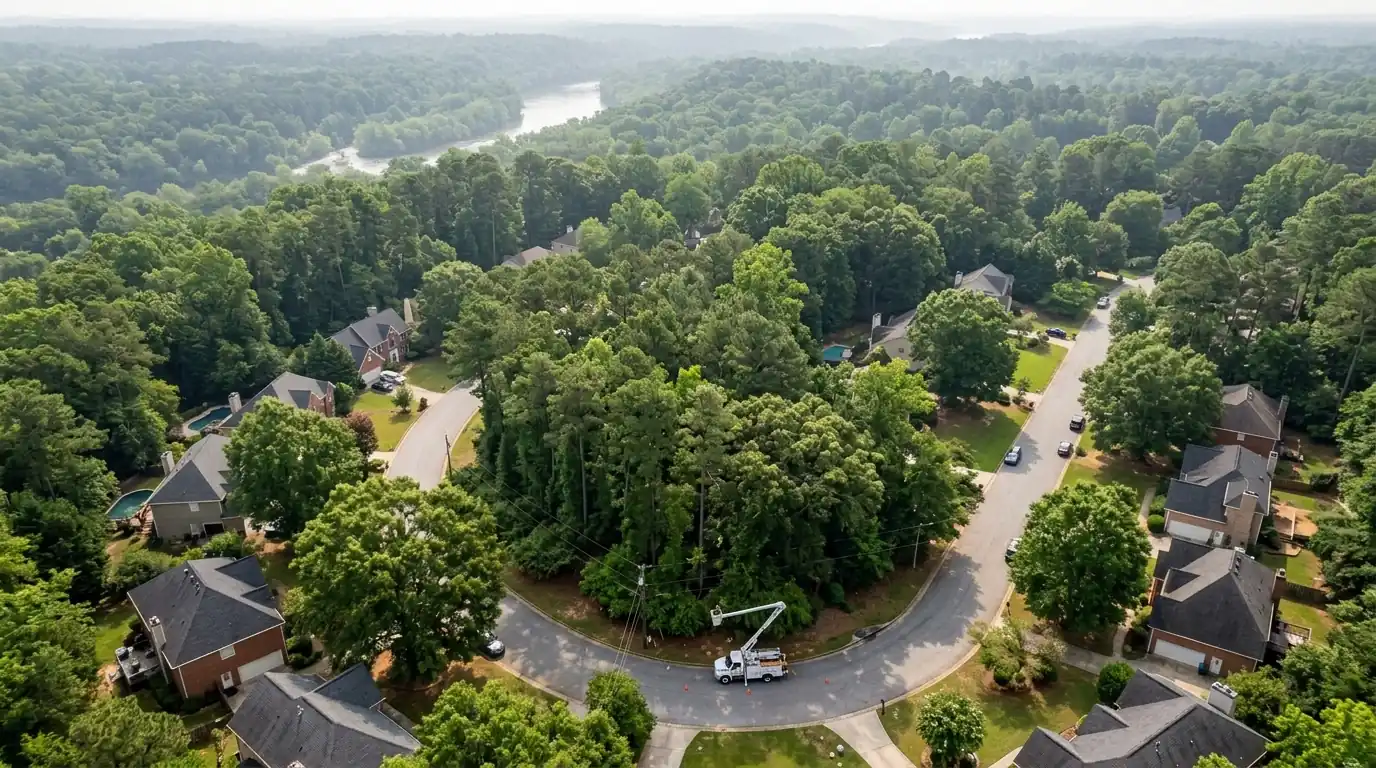
Intown Atlanta: an old canopy on small lots
The City of Atlanta's tree canopy measured 45.7 percent in 2023, down from 46.5 percent in 2018, and about 72 percent of the remaining trees stand on land zoned for single-family homes. In practice, that means most of the city's big trees are in backyards, and a lot of them are water oaks and willow oaks planted or spared when the older neighborhoods were built. Water oaks especially are reaching the end of a short life, with hollow trunks and dead tops over slate and shingle roofs.
The work looks different from one neighborhood to the next. In Buckhead it's often a rebuild lot with a big oak worth saving. In Midtown it's tight rigging between buildings and over sidewalks. In Grant Park it's storm cleanup on narrow lots with no alley, and in Cascade Heights it's tall pines and hardwoods on larger wooded lots in southwest Atlanta.
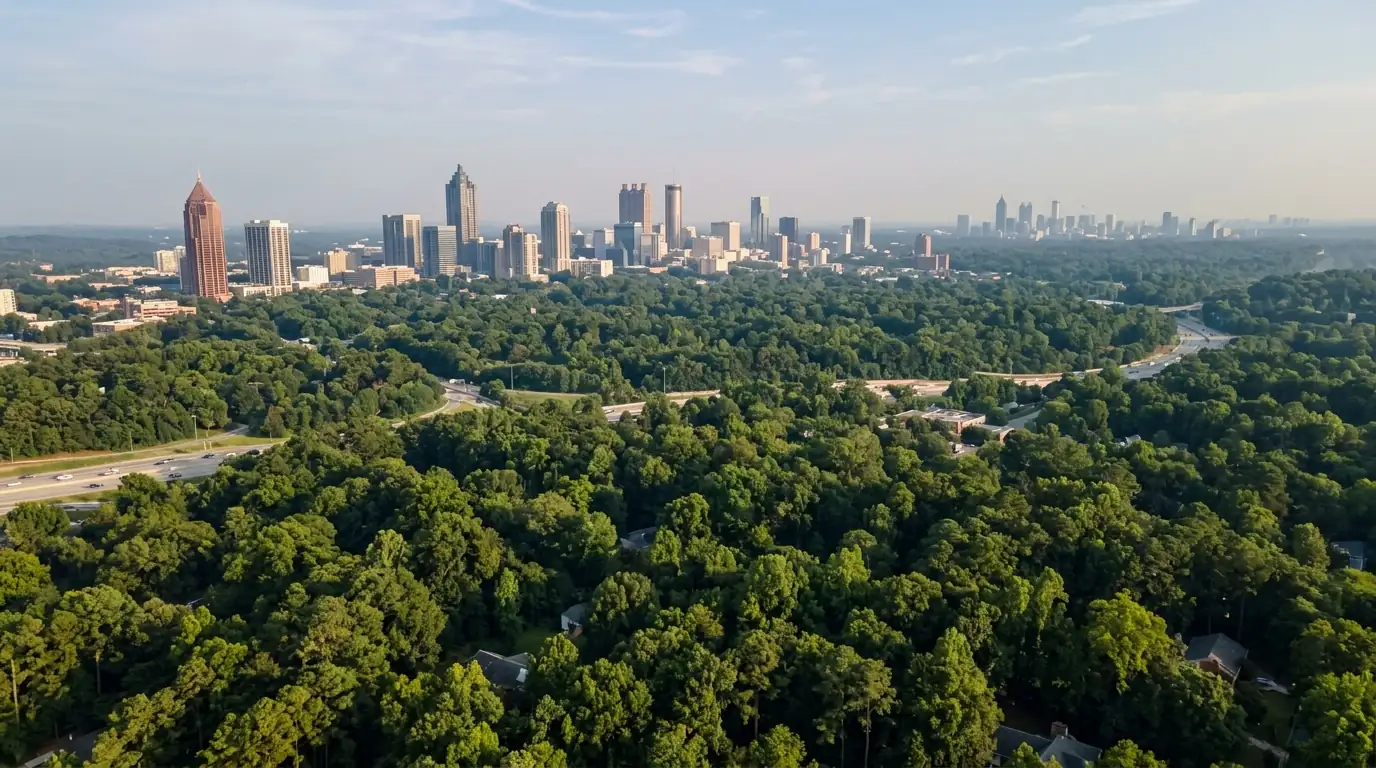
North Fulton: tall pines and the river corridor
Past the Perimeter, Fulton turns into subdivisions built from the 1980s onward around stands of loblolly pine, tulip poplar and sweetgum. Pines left close to houses during construction are the most common removal, and Ips engraver beetles move into them after dry summers. In Alpharetta, pine rows along lot lines and failing Leyland cypress screens fill much of the schedule.
The Chattahoochee runs along the Gwinnett side of Johns Creek and past Roswell and Sandy Springs, and land within 2,000 feet of the river sits inside the corridor set by the Metropolitan River Protection Act. Work there is held to tighter limits on clearing and ground disturbance, so we plan those jobs with lighter equipment and more hand work, and we confirm what applies before the first cut.