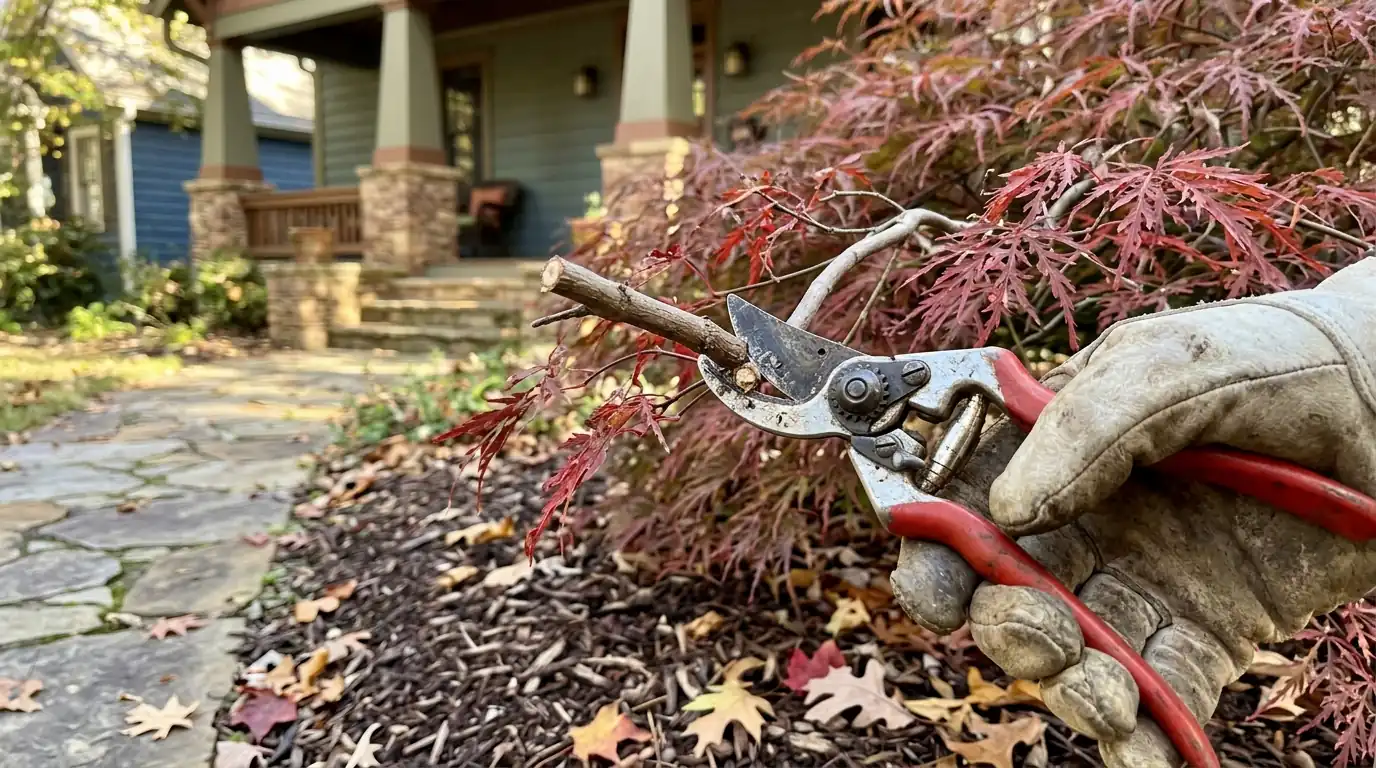
Ornamental tree pruning is light, detailed work on small specimen trees such as Japanese maples, dogwoods, redbuds, flowering cherries and magnolias. It uses hand saws and pruners rather than chainsaws, removes only a little wood per visit and follows each tree's natural shape. Timing depends on the species and when it blooms. In Atlanta, we also watch for dogwood anthracnose and protect thin bark from the sun scald that heavy cuts can cause.
Why small specimen trees need a lighter hand
Ornamental trees are planted for how they look: the layered branches of a dogwood, the cascading habit of a laceleaf maple, the zigzag twigs of a redbud. A pruning cut that would be invisible on a sixty-foot oak shows plainly on a twelve-foot maple by the front door. One wrong cut can change the tree's character for years.
That's why we approach these trees differently. Instead of chainsaws, the work is done with hand saws, pole pruners and bypass pruners. Instead of a target height or clearance line, the goal is to remove the few branches that detract from the tree's shape or health and leave everything else alone. Most visits take off far less wood than people expect.
Ornamental pruning also pays attention to what's around the tree. These trees usually sit near patios, entries, walkways and garden beds, so we work carefully around plantings, lighting and hardscape, and we clean up thoroughly afterward. If the tree is a crape myrtle, we have a separate approach for those.
Dogwood anthracnose and other problems we watch for
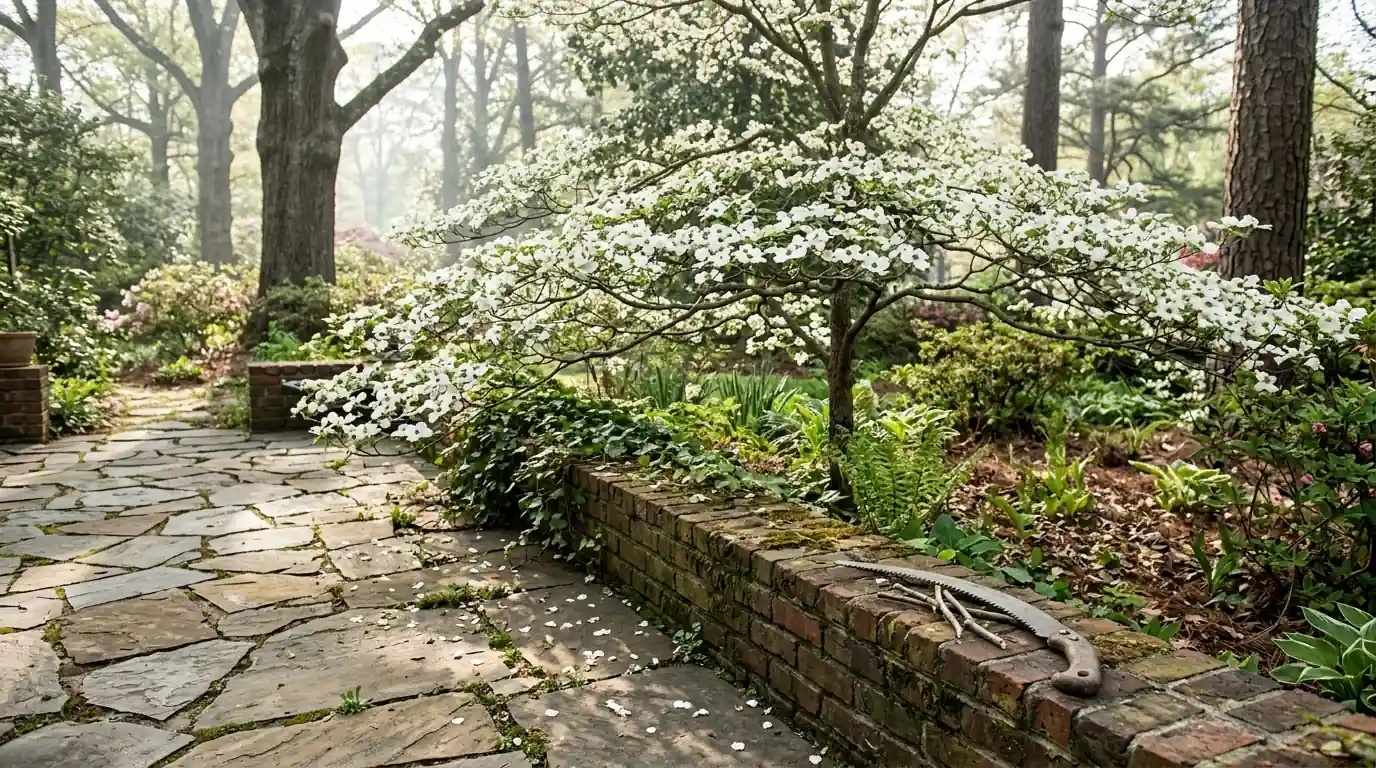
Dogwood anthracnose is a fungal disease that causes tan spots with purple borders on the leaves, twig dieback and, in serious cases, cankers on the trunk. It tends to hit dogwoods in shady, damp spots hardest. Pruning out infected twigs, thinning the crown for better airflow and keeping tools clean all help slow it down. Severe cases may need disease treatment.
We also watch for scale on maples and magnolias, borers in stressed cherries and dogwoods, and cankers on any tree with oozing or sunken bark. Many of these problems start when a tree is under stress from drought, compacted soil or root damage. Catching them early during a pruning visit gives you a chance to act before the tree declines.
Protecting thin bark from sun scald
Japanese maples, dogwoods, cherries and young redbuds all have thin bark that's vulnerable to sun scald. When a heavy cut removes shading branches, bark that was always in shade suddenly takes full afternoon sun. On a hot Atlanta summer day, that bark can overheat, crack and split, leaving a wound that invites borers and decay.
We avoid this by keeping cuts small and spread out, and by leaving enough foliage to shade the trunk and main limbs. On trees that need more work, we spread it over several seasons. If a tree has already been badly opened up, we may suggest temporary trunk protection until new growth fills in.
Ornamental trees we prune most in Atlanta gardens
Each of these has its own habits, and pruning works with them rather than against them.
Japanese maple
Upright and laceleaf forms both benefit from removing crossing and inward twigs to show off their structure. Heavy cuts are avoided.
Flowering dogwood
We keep the layered, horizontal branching and remove dead or diseased twigs, especially where anthracnose has been active.
Eastern redbud
Redbuds tend to grow tight, weak forks. Light structural pruning when young prevents splits later in the tree's life.
Flowering cherry
Cherries are pruned lightly after bloom, with attention to crossing branches and any cankers or oozing on the bark.
Southern and saucer magnolia
Magnolias respond to heavy cuts with a flush of shoots, so we prune them sparingly, thinning rather than shortening.
Fringe tree and other natives
Smaller natives like fringe tree and serviceberry need little more than deadwood removal and occasional thinning.
Timing and care tips for ornamental tree pruning
A few rules keep these small trees healthy between visits.
- Spring bloomers like dogwood, redbud and cherry are pruned soon after flowering so next year's buds aren't lost.
- Japanese maples are pruned while dormant for structure, with only light tidying in midsummer.
- Avoid heavy cuts on thin-barked trees, which can expose bark to sun scald on the south and west sides.
- Leave enough foliage to shade the trunk and main branches, especially on maples and dogwoods.
- Keep tools sharp and clean, and disinfect between cuts on diseased trees.
- Mulch the root zone and water during droughts, since stressed ornamentals are more prone to disease.
- Plan on light pruning every year or two rather than heavy pruning every five.
How we prune an ornamental tree, cut by cut
Ornamental work is slow and deliberate, with lots of stepping back to look.
- 1
Study the tree's natural shape
We look at the tree from the house, the street and the patio to understand its shape before making any cuts.
- 2
Remove dead and diseased wood
Dead twigs and branches showing disease, such as anthracnose cankers on dogwood, come out first, and tools are cleaned between cuts.
- 3
Take out crossing and inward branches
Branches rubbing each other or growing back toward the center are removed to open the structure.
- 4
Thin, don't shear
We remove whole branches back to their origin rather than clipping tips, which keeps the natural branching pattern intact.
- 5
Step back often
After every few cuts, we step back and look from a distance, since it's easy to overdo it up close.
- 6
Clean up carefully
Clippings are collected by hand from beds, gravel and patios, and nothing is left in the mulch or on the stones.
Ornamental trees in Atlanta front gardens and courtyards
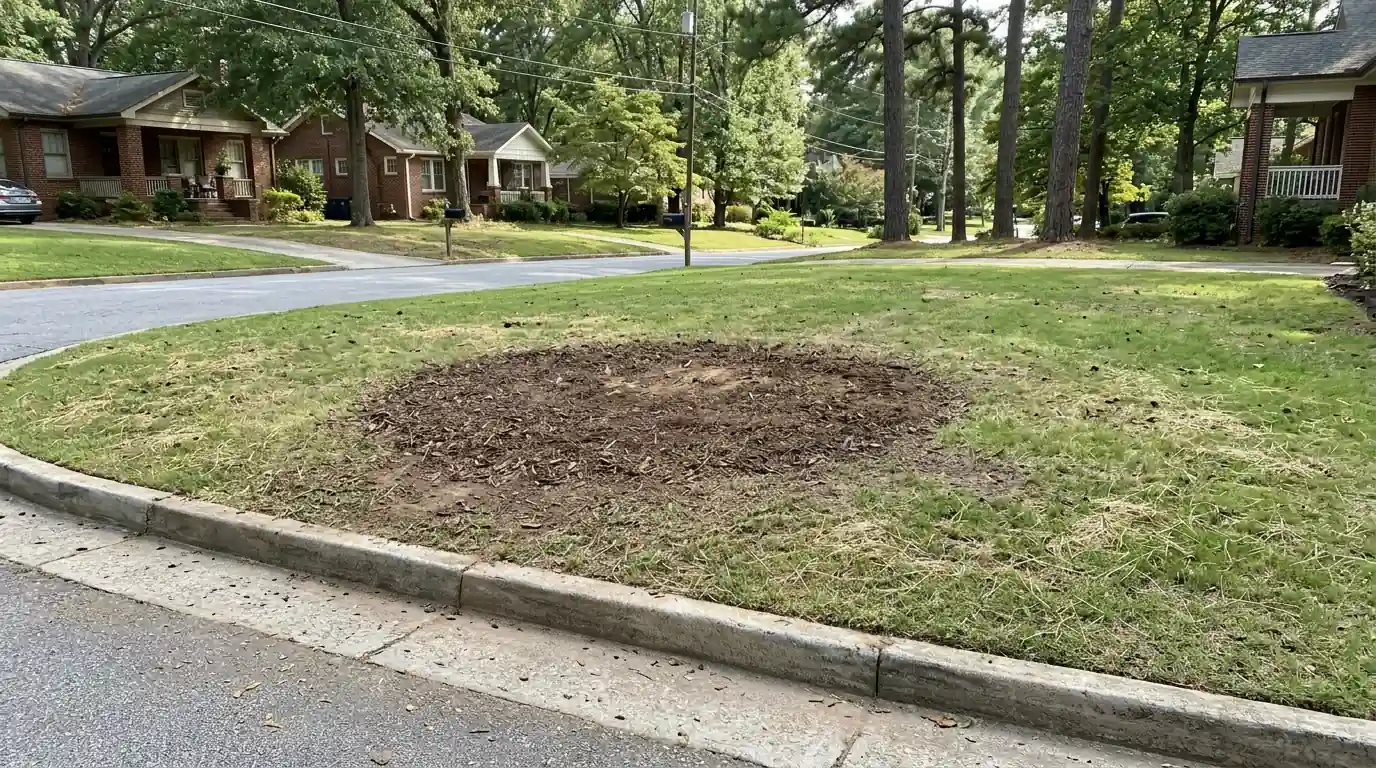
Atlanta's older neighborhoods are full of mature ornamental trees. In Druid Hills, dogwoods and Japanese maples planted decades ago grow beneath the big oaks, often in the deep shade where anthracnose thrives. Light thinning for airflow and careful removal of infected twigs keeps many of them going. Inside Atlanta, a dogwood or maple on private land can be pruned with no permit, though the ordinance's pruning standards still apply to the work.
In the suburbs, ornamentals tend to be younger and planted as focal points near front doors and patios. In Alpharetta and Johns Creek, we see a lot of Japanese maples, redbuds and cherries that need early structural work before tight forks and crossing branches become permanent. Starting light pruning in the first few years sets them up for decades.
What ornamental tree pruning costs
| Job | Typical range | Priced |
|---|---|---|
| Japanese maple, dogwood or redbud | $135 to $485 | per tree |
Ornamental pruning is priced per tree, based on size, how much work it needs and how complex the structure is. A young redbud may take a short visit, while a mature laceleaf Japanese maple with years of tangled growth takes careful, time-consuming hand work. Trees tucked into tight beds or behind walls take longer too, because every clipping has to be carried out by hand.
Several ornamental trees on one property are priced together, and cleanup is always included. Many people pair this work with a crape myrtle or hedge visit so one trip covers the whole front garden. Disease or insect treatment is quoted separately if needed. Our cost guide shows the typical per-tree range.
Where we do ornamental tree pruning around Atlanta
Crews work from our Atlanta office near the 30340 ZIP and our Duluth office. These are the places we cover most, with their main ZIP codes. See all 56 areas.
- Buckhead 30305
- Virginia-Highland 30306
- Druid Hills 30307
- Morningside 30324
- Grant Park 30312
- Kirkwood 30317
- Cascade Heights 30311
- Sandy Springs 30328
- Dunwoody 30338
- Brookhaven 30319
- Decatur 30030
- Duluth 30096
- Lawrenceville 30046
- Marietta 30060
- Smyrna 30080
- Roswell 30075
- Alpharetta 30009
- Johns Creek 30097