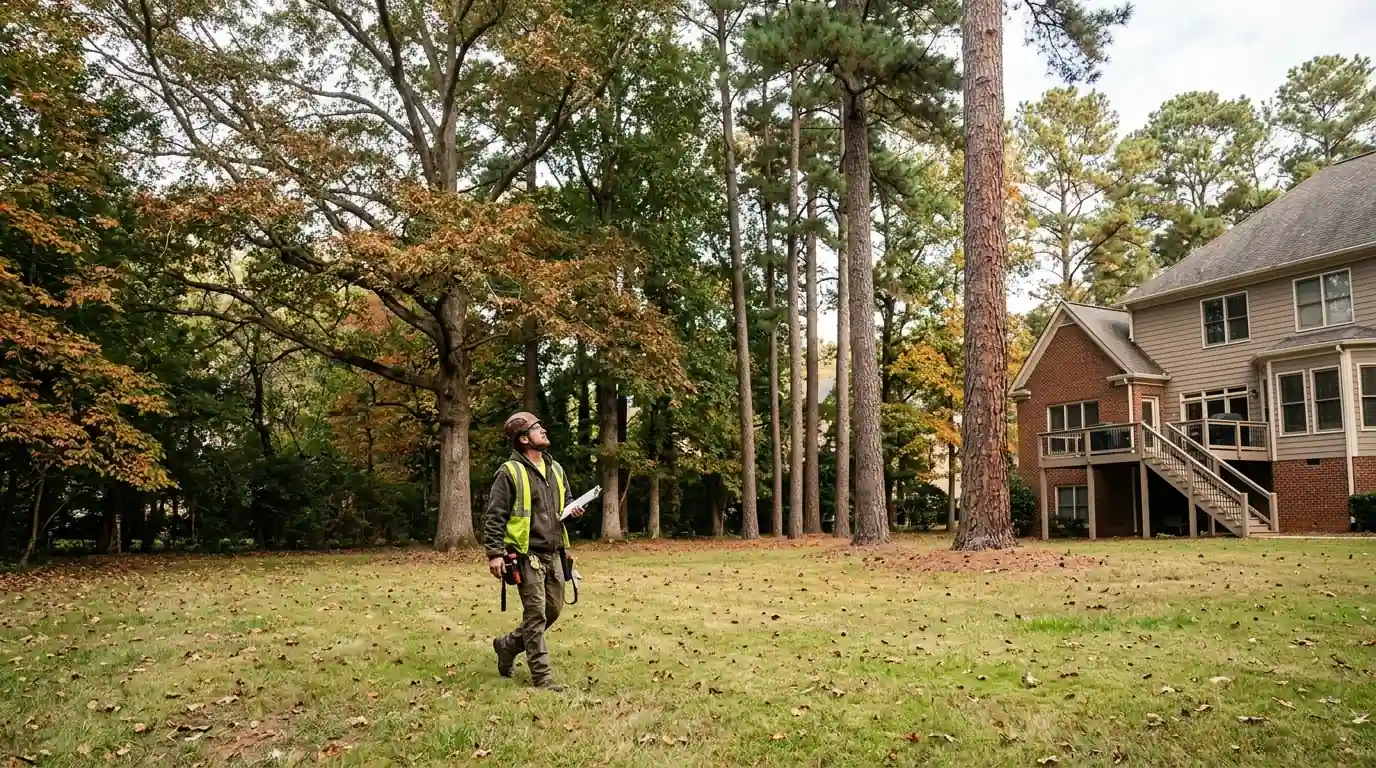
A tree care plan is a yearly schedule of tree work for your property: an inspection visit, pruning on a rotation so each tree gets attention every few years, deadwood checks after storm season, and treatments or fertilization only where needed. You get a short written note after each visit. Plans suit Atlanta homeowners with many mature trees, estates and anyone tired of storm surprises, and they keep costs predictable from year to year.
Why a yearly plan beats calling when something breaks
Most tree emergencies we see were visible months before they happened. A dead limb hung over the driveway all summer. A crack in an oak union had been there since spring. A pine had been fading at the top since last fall. Nobody was looking, because nobody had a reason to until the storm came through and settled it the hard way.
A tree care plan puts someone with trained eyes on your trees every year. We walk the whole property on a set schedule, note what's changed, and fix small problems while they're still small. Pruning gets done on a rotation, so no single year carries the cost of trimming every tree at once. Storm-season checks catch hangers and cracked limbs before the next front pushes them down.
It also keeps a record. Every visit ends with a short written note: what we looked at, what we did and what we're watching. Over a few years that note becomes a history of each tree, which helps when you're deciding whether to treat, cable or remove one. It also helps when you sell the house, since buyers can see the trees have been looked after.
Who gets the most out of a tree care plan
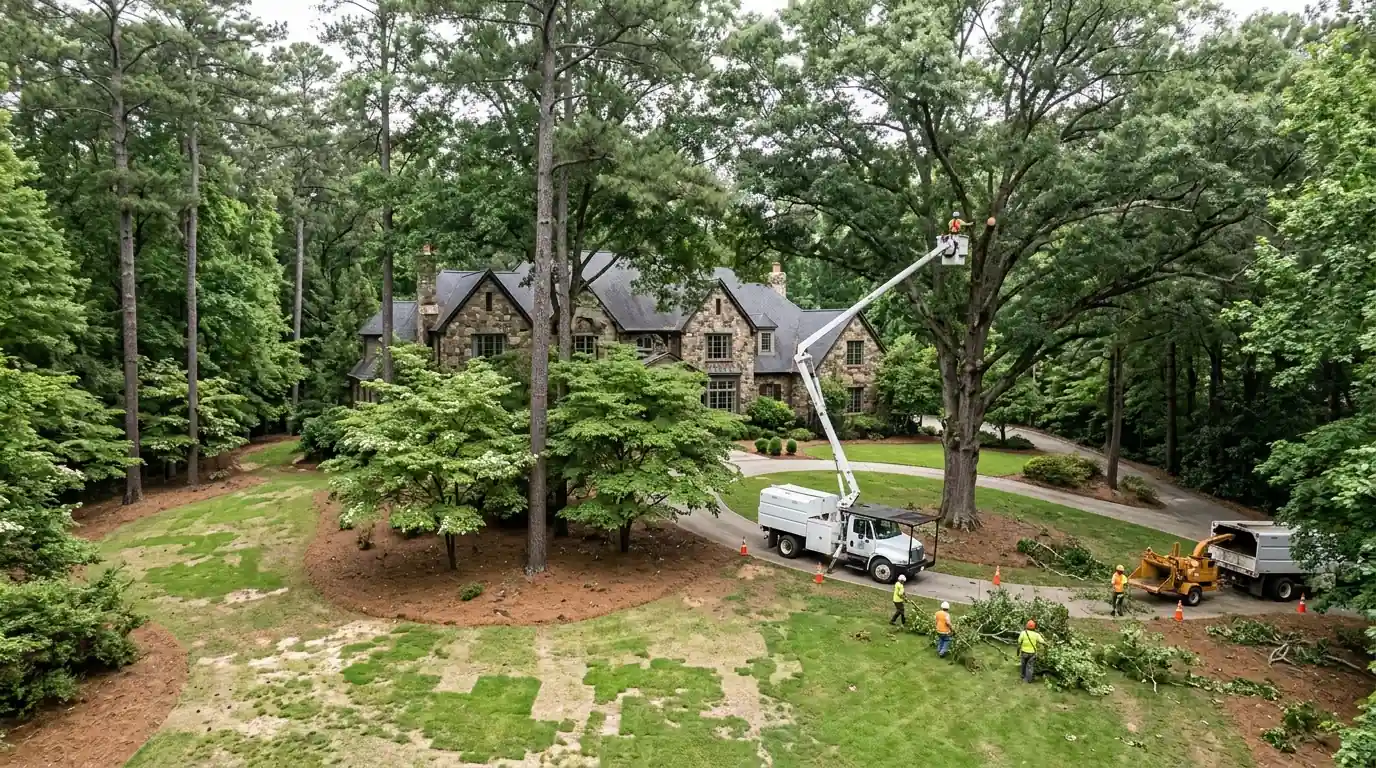
Plans make the most sense on properties with a lot of trees or a few very important ones. Homeowners on wooded lots with twenty or thirty mature oaks and pines get the most out of a rotation, because no one year carries the cost of pruning everything. Estates and properties with heritage trees, like a century-old white oak that shades the whole house, benefit from steady inspection and care.
They also suit people who simply don't want surprises. If the sound of wind at night sends you to the window to look at the big pine, a plan replaces worry with a schedule. And for homes with older trees that already have cables installed or known defects, regular inspection is the only way those trees stay safe.
What a tree care plan includes
Each plan is built around the trees on your lot, but most include these parts.
A yearly inspection
A walk of the whole property, tree by tree, checking roots, trunks, unions and crowns for new defects and changes since last year.
Pruning on a rotation
Each tree gets structural pruning or clearance trimming every few years, scheduled so the work is spread evenly across seasons.
Storm-season checks
A deadwood and hanger check after the summer thunderstorm and tropical storm season, when cracked limbs are easiest to spot.
Treatments where needed
Insect protection, disease treatment or deep root fertilization only for the trees that need it, timed to the right season.
A written note each visit
A short summary of what we found, what we did and what we'll be watching on the next visit.
First call after a storm
When a storm does damage, we already know your property and your trees, so we can sort out what's urgent fast.
A sample year on an Atlanta tree care plan
Every plan is different, but a typical year on a lot with mature oaks and pines looks something like this.
- Winter: the yearly inspection while leaves are down and the structure is easy to see, plus dormant pruning on oaks and other hardwoods.
- Late winter: protective treatments for young trees against ambrosia beetles, and planting or replacing small trees.
- Spring: fertilization and insect injections for trees that need them, and a look at new leaves for disease.
- Early summer: crape myrtle and ornamental tree work, and drought watering advice before the heat sets in.
- Late summer: a pine check for beetle activity after dry spells, and watching oaks for leaf scorch.
- Fall: a storm-season deadwood and hanger check, and a second round of fertilization where needed.
- Any time: a visit after a major storm to sort damage and decide what needs attention first.
How a tree care plan gets set up and runs
The first year takes the most work; after that the plan mostly runs itself.
- 1
Walk the whole property
We inventory every tree worth tracking, noting species, size, condition and what each one stands over.
- 2
Sort by priority
Trees with defects over the house or the driveway go first. Healthy trees in open spots go later in the rotation.
- 3
Lay out the calendar
We map the year: inspection timing, which trees get pruned in which season, and when any treatments are due.
- 4
Agree on the yearly cost
You see the planned work and the yearly price before anything starts, with the option to spread visits across the year.
- 5
Do the scheduled work
Visits happen on the calendar, and after each one you get a short note on what was done and what we saw.
- 6
Adjust each year
At the yearly inspection we update the plan: trees that need more attention move up, and finished work drops off.
Atlanta trees that benefit most from regular care
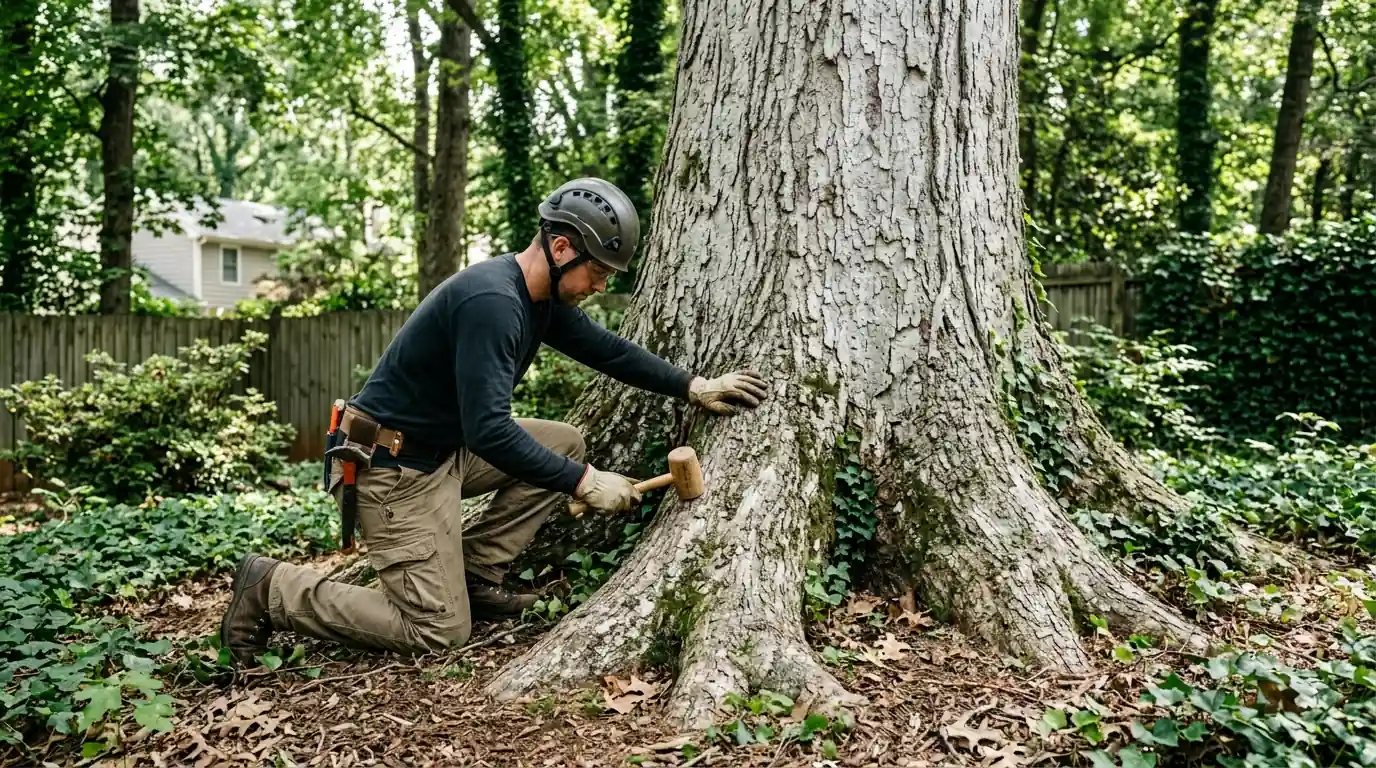
The biggest trees on most Atlanta lots are water oaks, willow oaks, southern red oaks and tall loblolly pines, many of them planted or left standing when neighborhoods were built in the 1950s and 1960s. Water oaks especially are reaching the age where heart rot and dead upper limbs show up, and catching those changes early is the difference between a planned removal and a tree on the roof. Pines in Alpharetta and Roswell subdivisions need a watch for beetles after dry summers.
Atlanta storms make regular checks worthwhile. Summer thunderstorms, tropical systems and the occasional ice storm all test the trees, and Tropical Storm Helene uprooted trees onto homes across the metro in September 2024. On large wooded lots in Chastain Park and Sandy Springs, a plan means someone has looked at every tree before storm season, not just the ones you can see from the kitchen window. Pruning on private property inside Atlanta needs no permit, and we prune to the city's standards.
How tree care plans keep costs predictable
| Job | Typical range | Priced |
|---|---|---|
| Yearly inspection, pruning and treatment plan | $385 to $1,650 | per year |
The number of trees, their size and how much pruning each one needs set the yearly price. A lot with five medium trees costs far less than an estate with fifty large oaks and pines. Because pruning is spread across a rotation, the cost each year stays steady instead of swinging between quiet years and expensive ones.
Removals, emergency storm work and large one-off jobs aren't part of the plan price, but we quote them up front when the inspection finds them. Many plan holders find the steady care means fewer of those big bills, and when one does come, it rarely comes as a surprise. Typical yearly plan ranges are on our price guide.
Where we do tree care plans around Atlanta
Crews work from our Atlanta office near the 30340 ZIP and our Duluth office. These are the places we cover most, with their main ZIP codes. See all 56 areas.
- Buckhead 30305
- Virginia-Highland 30306
- Druid Hills 30307
- Morningside 30324
- Grant Park 30312
- Kirkwood 30317
- Cascade Heights 30311
- Sandy Springs 30328
- Dunwoody 30338
- Brookhaven 30319
- Decatur 30030
- Duluth 30096
- Lawrenceville 30046
- Marietta 30060
- Smyrna 30080
- Roswell 30075
- Alpharetta 30009
- Johns Creek 30097