Around the Olmsted Linear Park, Emory University and Fernbank, our climbers prune, cable and remove massive oaks and southern magnolias, often older than the historic homes beneath them. Part of Druid Hills is inside Atlanta, where trees 6 inches or more at 4.5 feet need a city permit. The rest is unincorporated DeKalb, which allows five healthy non-specimen trees a year without notice. Call the 24/7 line and we'll check which rule covers your address.
Massive oaks and magnolias around the Olmsted parks
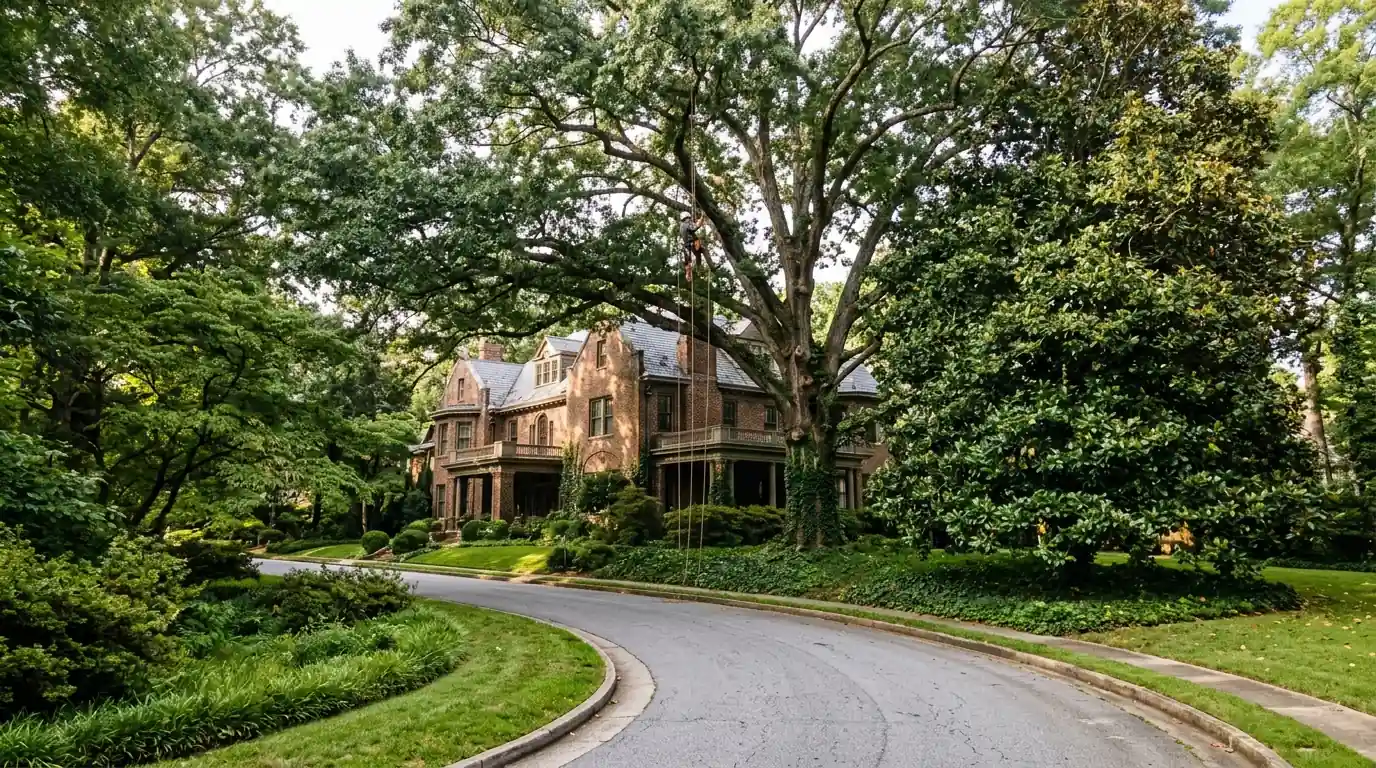
The linear parks along Ponce de Leon Avenue set the tone for the whole neighborhood: open lawns, big shade trees and winding roads that follow the land. Behind them, historic homes sit on large lots with white oaks, willow oaks and southern magnolias that have grown for generations. Fernbank Forest and the wooded edges of Emory University carry the canopy well beyond the yards.
Southern magnolias bring their own kind of work. They hold leaves all year, drop them steadily, and grow dense low limbs that sweep the ground and swallow walkways. We lift and thin them gently, because hard cuts on a magnolia send up thickets of sprouts. Oaks need a different touch: deadwood removal, weight reduction on long limbs, and attention to root zones where driveways and additions went in over the decades.
City side or DeKalb side: which tree rules apply
Druid Hills straddles a line. Part of the neighborhood sits inside Atlanta city limits and part is unincorporated DeKalb County, and an Atlanta mailing address won't tell you which. We check the parcel before quoting, because the rules differ sharply on each side. Our permit rules guide lays out both. On the city side, removing a private tree 6 inches or more at 4.5 feet needs an Arborist Division permit, pines start at 12 inches, and dead or hazardous trees qualify with no fee and no recompense.
On the unincorporated DeKalb side, a homeowner may remove up to five healthy, non-specimen trees per lot each calendar year with no notice. More than five, or any specimen tree, needs a Notice of Tree Removal reviewed by the County Arborist, which can take up to five working days. Oaks, poplars and pines count as specimens at 30 inches DBH or more, dogwoods and redbuds at 10 inches, and plenty of trees here clear those marks. Dead, diseased or hazardous trees can come down at any time once a certified professional documents the risk, and stream buffers run 75 feet.
Big trees, historic homes and how we work around them
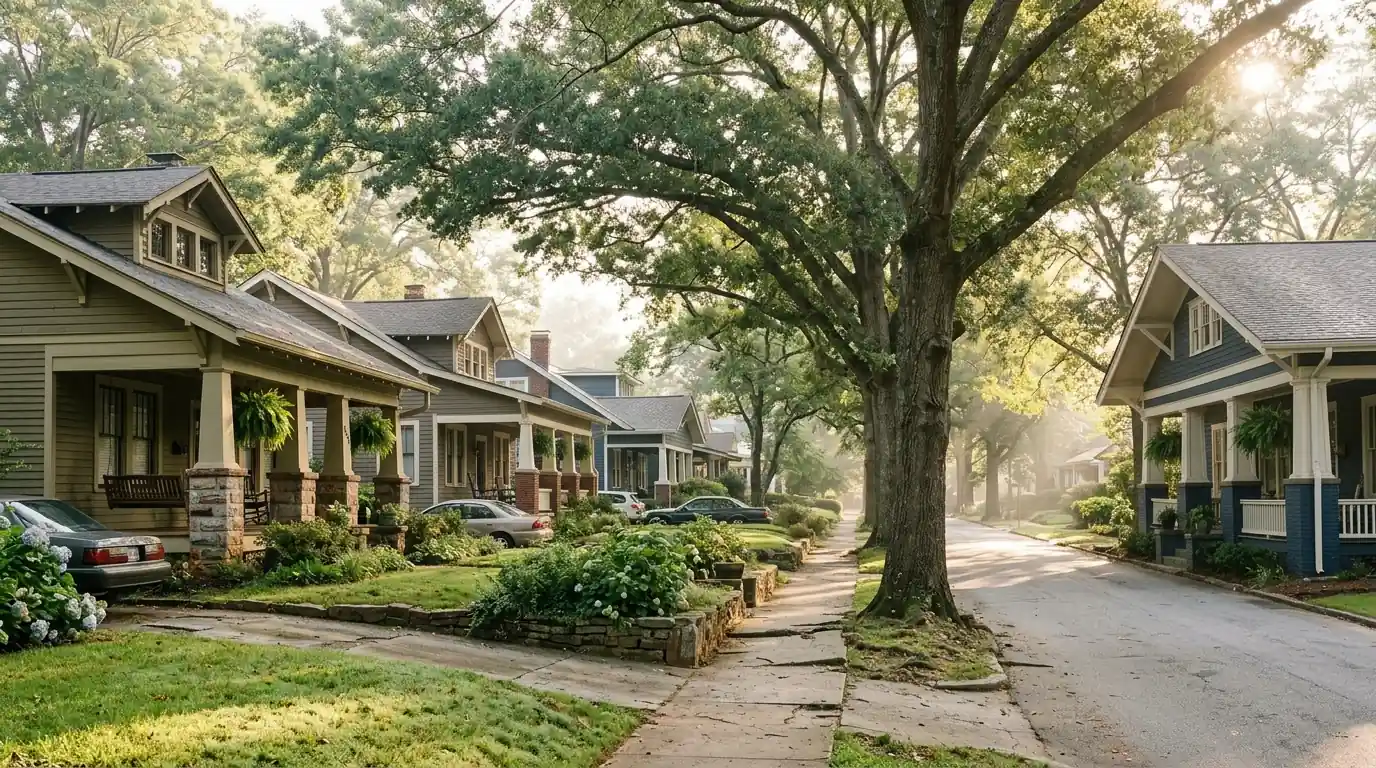
Removals on these lots are usually about size more than tight access. A 100 foot oak with decay at the base, standing over a slate or tile roof, often calls for a crane parked on the driveway so the lawn never carries the weight. Where a climber can do it safely, each section is lowered on rope and the grounds are matted wherever wood is carried out.
Many of the specimen oaks are worth keeping. Splitting forks can be cabled and braced, and oaks stressed by compacted clay or old construction can benefit from soil care. Emerald ash borer was first found in Georgia in July 2013, in DeKalb and Fulton counties, so any ash on a Druid Hills lot deserves a look too. Neighbors in Decatur and Candler Park live with many of the same old trees.