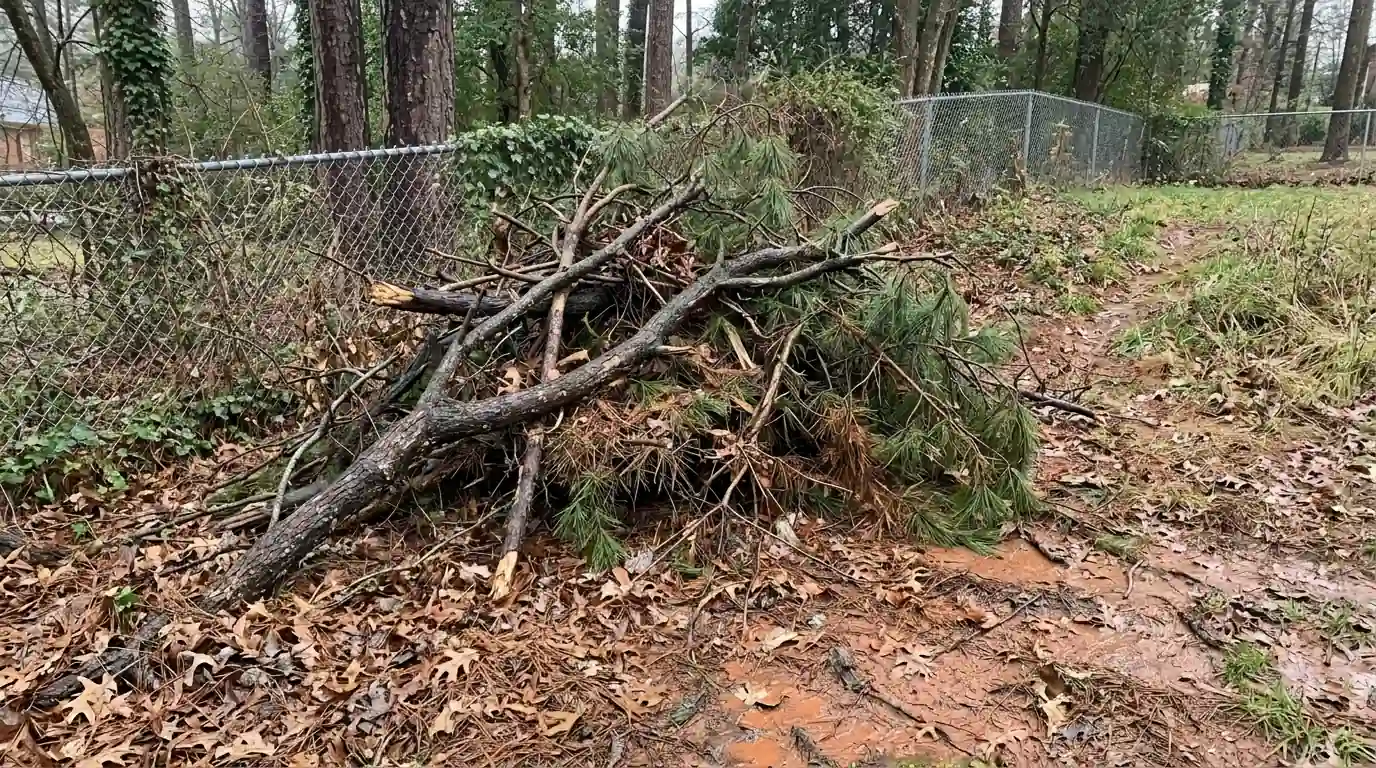
Brush removal means clearing piles of cut limbs, branches, storm debris, vines and old wood from your property, either by feeding it through a chipper on site or by loading it whole and hauling it away. You need it when a pile is too big for the curb, too heavy to drag or has sat long enough to draw pests. Around Atlanta, storms and DIY trimming create most of these piles.
What brush removal covers
Brush is anything woody that's already on the ground or cut and waiting: limbs and branches, small trees, shrub trimmings, vines pulled off a fence and logs too small or too rotten to be worth splitting. A lot of our brush calls come after a homeowner spent a weekend trimming and ended up with a pile far bigger than expected.
We don't climb or cut standing trees on a brush job, though we can price that alongside if a few limbs still need to come down. The work is loading, chipping and hauling, plus raking the spot so the grass underneath can recover. If the pile came from a storm, our storm damage cleanup crew can also handle hung limbs and broken tops still in the trees.
Most piles are cleared in a single visit. Large lots or yards with several piles in different corners take longer, mainly because of the walk from each pile back to the chipper. If the pile is part of a bigger cleanup, such as reclaiming a back acre from privet and saplings, our lot clearing work picks up where brush removal stops.
Keeping the chips as mulch
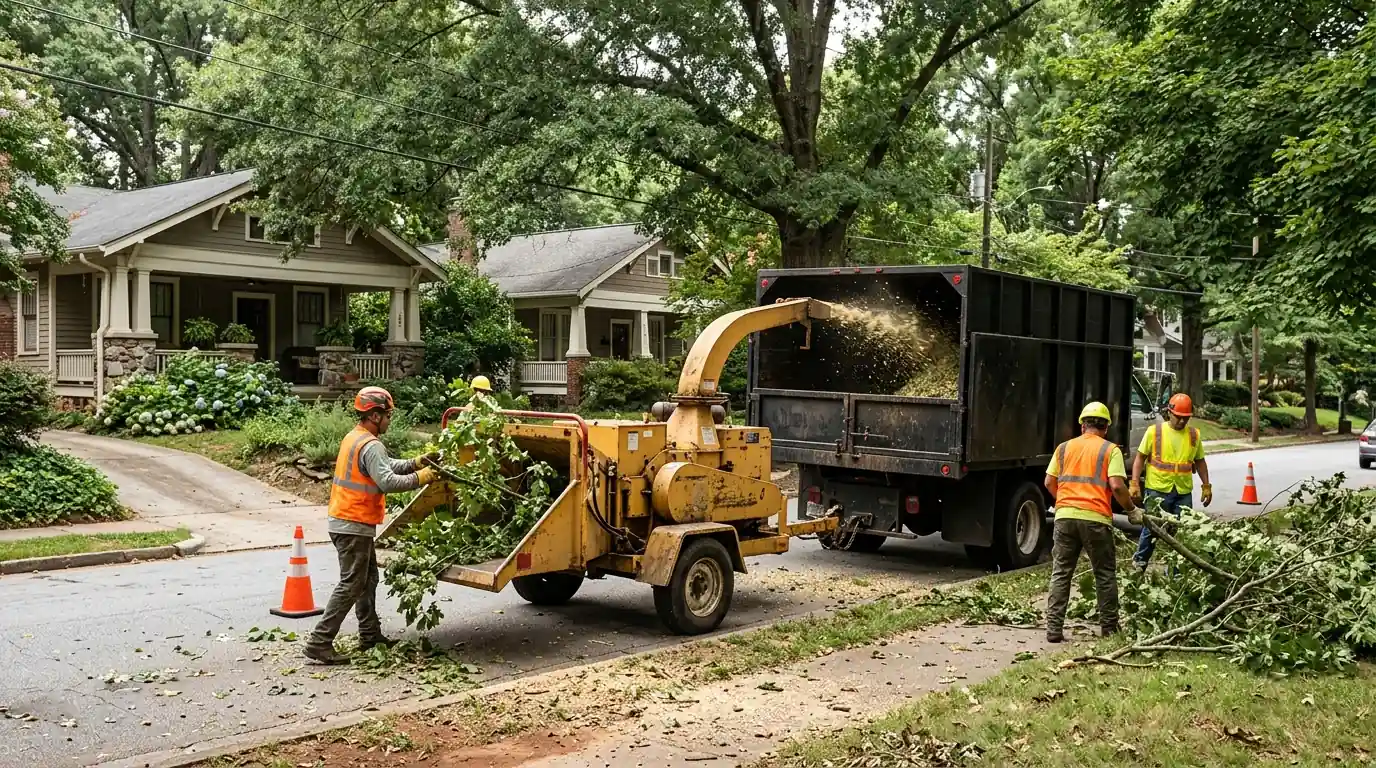
Fresh chips from a mixed pile make good mulch for beds, paths and the ground under trees, though they're coarser and woodier than bagged mulch. If you'd like them, we can dump them in a spot you pick or spread them across beds before we leave. Many people put them along a back fence line or under a play set.
Keep fresh chips a few inches back from the house and away from wood siding, and don't pile them against tree trunks. A couple of inches is plenty under trees. Pine needles and leaves in the pile break down quickly, so the mulch will settle and darken over the first season.
If you don't want chips at all, say so before the visit and everything leaves on the truck. Some people split the difference: chips from clean oak and maple limbs stay behind for the beds, while pine-heavy loads, thorny vines and anything tangled with poison ivy go away with the rest of the debris.
Piles we clear most often
Brush comes from a handful of sources, and each one comes with its own surprises.
Storm debris
Branches, broken tops and split limbs scattered across the lawn and driveway after a wind or ice event, often tangled with gutter pieces and fence boards.
DIY trimming piles
A weekend of cutting back overgrowth makes a pile that's too big for the curb and too springy to stack neatly.
Old firewood stacks
Firewood left for a few seasons goes soft and draws termites and carpenter ants close to the house. We haul it before it causes trouble.
Overgrown fence lines
Privet, saplings, vines and fallen limbs that build up along a back fence until it can't be seen, much less repaired.
Leftovers from other trades
Brush left behind by a fence crew, a landscaper or a builder who cleared a spot and moved on.
Back-of-lot dump piles
Years of limbs, leaves and clippings thrown in one corner, sometimes over a creek bank or into a ravine.
How a brush removal visit works
Brush work is mostly loading, and a little planning keeps it fast.
- 1
Look at the piles
We check size, what's in them, how far they sit from the street and whether anything is buried or hidden underneath.
- 2
Set up the chipper
The chipper parks at the curb or in the driveway, as close as it safely can to keep carrying distance short.
- 3
Sort as we go
Clean wood goes to the chipper, while rocks, metal, rotten logs and trash are set aside for hauling.
- 4
Chip and load
Brush is fed through the chipper and blown into the truck bed, or onto a tarp if you're keeping the chips.
- 5
Haul the rest
Logs and debris that can't be chipped are loaded and hauled whole.
- 6
Rake the ground
We rake and blow the spot where the piles stood, so you're not left with a patch of twigs and bark.
What to check before the brush pile goes
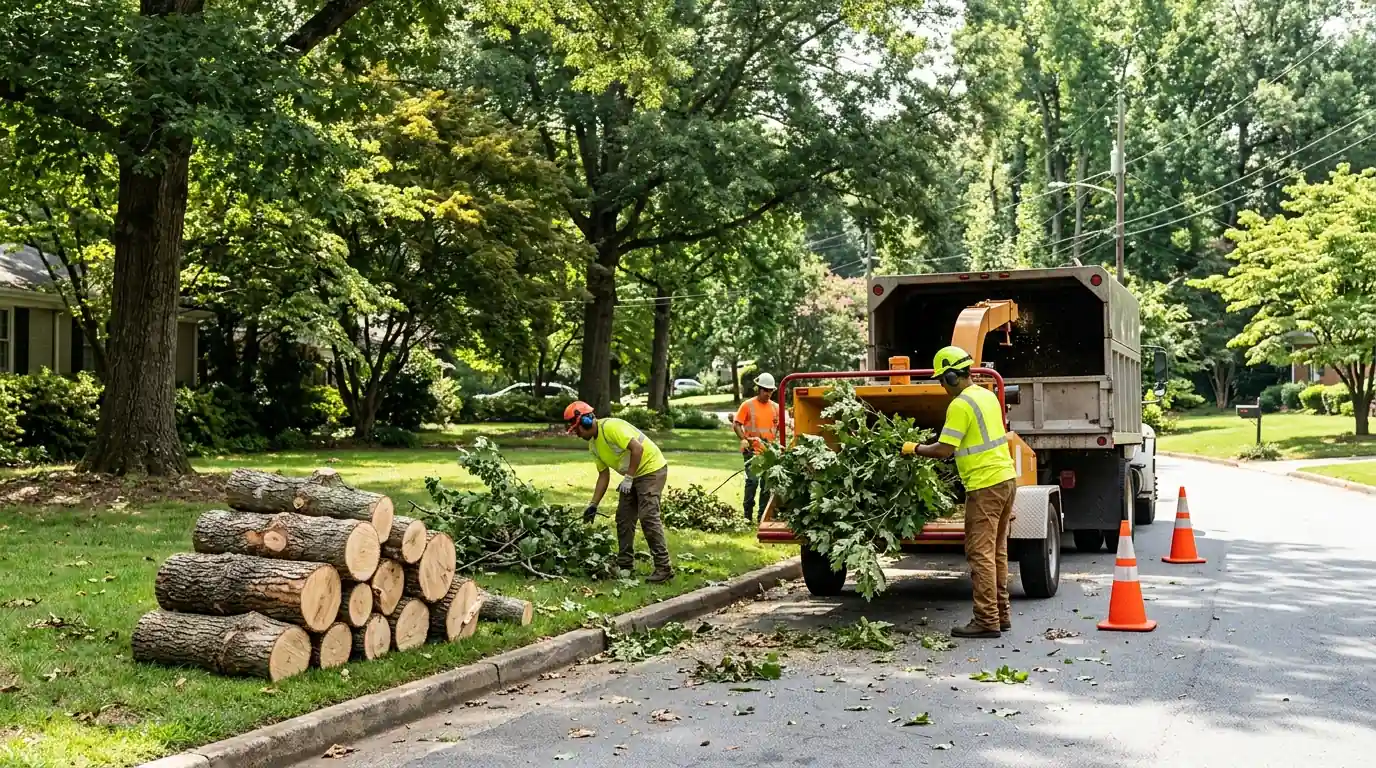
A quick look at the pile before we arrive helps us bring the right truck and keeps surprises to a minimum.
- Look for wasp nests, yellow jacket holes or snakes at the base of an old pile, and tell us if you see any.
- Pull out anything you want to keep, like garden tools, hoses or decorative edging buried in the brush.
- Point out poison ivy mixed into the pile, since it is handled differently from clean limbs.
- Note any trash, metal, treated lumber or old fence boards, which are hauled separately from wood.
- Leave a gate open and make room in the driveway or at the curb for the chipper and truck.
- Decide where you'd like chips dumped if you're keeping them.
- Tell us if a pile sits on a creek bank or slope, so we plan the safest way to reach it.
What moves the price of brush removal
| Job | Typical range | Priced |
|---|---|---|
| Brush pile chipped or hauled | $245 to $980 | per job |
The size of the pile matters, but so does what's in it. Clean, freshly cut limbs chip quickly. Logs, rotten wood, thorny vines, root clumps and debris mixed with soil or trash take longer and often have to be hauled whole. Distance from the pile to the truck adds labor, as do slopes, steps and narrow gates.
Price covers loading, chipping, hauling and raking. If you keep the chips, there is less to haul and the price often drops a little. Cutting standing trees or hanging limbs is priced separately, and so is grinding any stumps left from earlier removals. Our cost overview has typical ranges for brush and for related services.
Chipping on site or hauling the brush whole
The choice usually comes down to access, the type of debris and whether you want the chips.
| Chip on site | Load and haul whole | |
|---|---|---|
| Works for | Limbs, branches and small trees | Logs, rotten wood, mixed debris, root clumps |
| Access needed | Chipper within reach of the pile | Truck or trailer path, or carrying to the curb |
| What you keep | Chips as mulch, if you want them | Nothing, the yard is cleared |
| Trips | Fewer, since chips pack tightly | More for bulky, airy piles |
| Good fit | Clean brush from trimming or storms | Old piles with dirt, rocks or trash mixed in |
Atlanta storm debris and curbside limits
Metro Atlanta's storms leave brush in bursts. After Tropical Storm Helene soaked the ground on September 27, 2024, many yards ended up with broken limbs, uprooted trees and piles far larger than a curbside pickup takes. Georgia Power handles its own lines, but storm debris on private property remains the owner's job, and that is usually when people call us.
Curbside yard waste rules differ by city and county, and the size, bundle and pickup limits change from place to place. When a pile is more than your local pickup will take, we haul it. In Norcross and Peachtree Corners it is often a storm pile. In Cascade Heights, with its big lots and old oaks, it is more often years of fallen limbs along a back fence or creek bank.
Where we do brush and debris removal around Atlanta
Crews work from our Atlanta office near the 30340 ZIP and our Duluth office. These are the places we cover most, with their main ZIP codes. See all 56 areas.
- Buckhead 30305
- Virginia-Highland 30306
- Druid Hills 30307
- Morningside 30324
- Grant Park 30312
- Kirkwood 30317
- Cascade Heights 30311
- Sandy Springs 30328
- Dunwoody 30338
- Brookhaven 30319
- Decatur 30030
- Duluth 30096
- Lawrenceville 30046
- Marietta 30060
- Smyrna 30080
- Roswell 30075
- Alpharetta 30009
- Johns Creek 30097