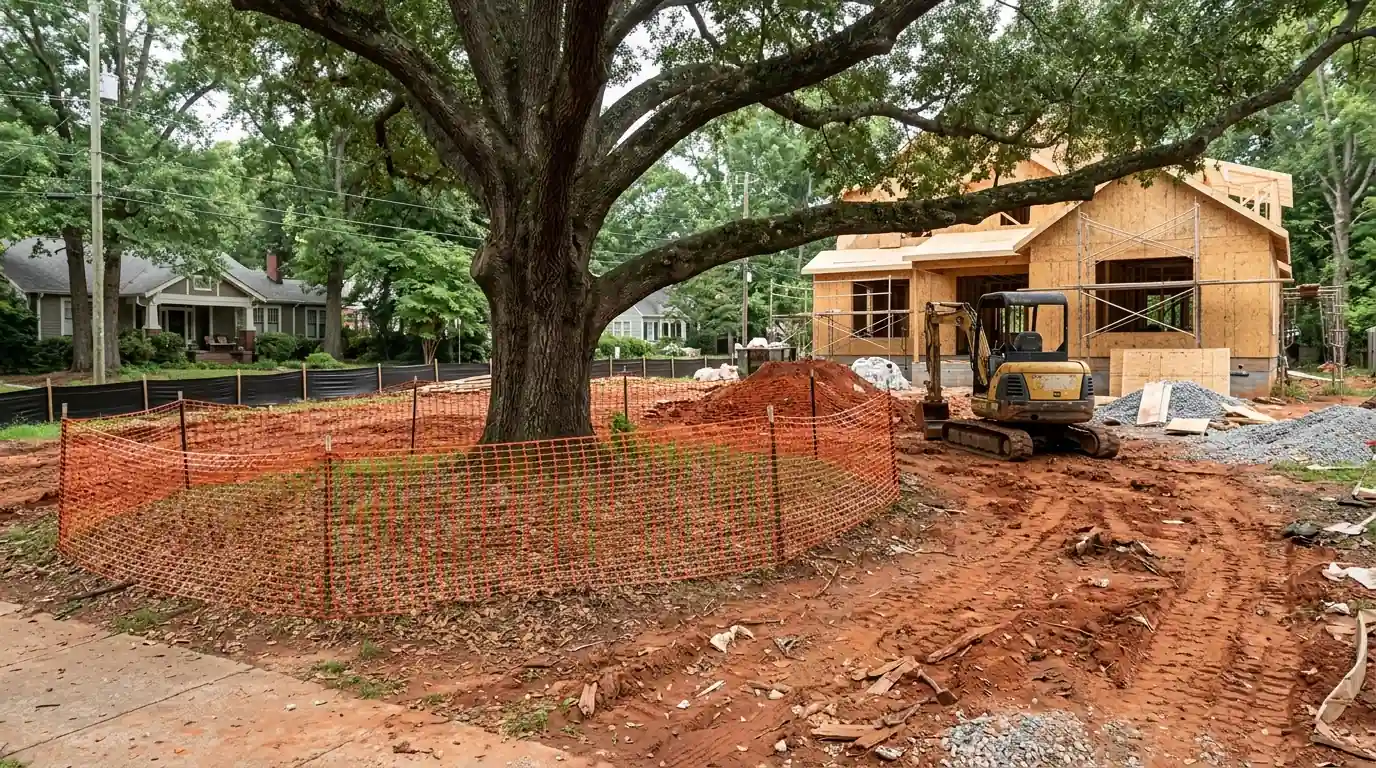
Construction tree protection means fencing off the root zone before work starts, cleanly pruning roots ahead of excavation, laying mulch and plywood over paths that equipment has to cross, and pruning limbs that would be torn by machines. Around Atlanta it's common on additions, pools, driveways, sewer replacements and teardown rebuilds. City rules generally expect root zones of trees marked to stay to be protected, so the plan needs to be in place before the first machine arrives.
Why construction kills trees that look fine at the end of the job
A tree's roots spread far past the edge of its crown, and most of them sit in the top foot or so of soil. A trench for a sewer line, a footing for an addition or the cut for a new driveway can sever a large share of them in an afternoon. Equipment driving over the root zone packs Georgia red clay so tight that water and air can't move through it, and the fine feeder roots suffocate.
The tree doesn't fall over the next week. It leafs out the following spring on stored energy, then the crown thins, the top dies back, and insects and canker move into the stressed wood. By the time anyone notices, the builder is long gone and the tree is too far gone to save. Some trees with severe root loss also become unstable and are more likely to tip in the next storm.
The fix is cheap compared to the loss. Protecting a tree before work begins costs a small part of what it costs to remove a dead oak later, and far less than replacing the shade, privacy and value it gave the lot. It also keeps the trees shown as saved on an approved site plan in the shape the plan promised, long after the inspector signs off.
Root pruning and why a clean cut matters
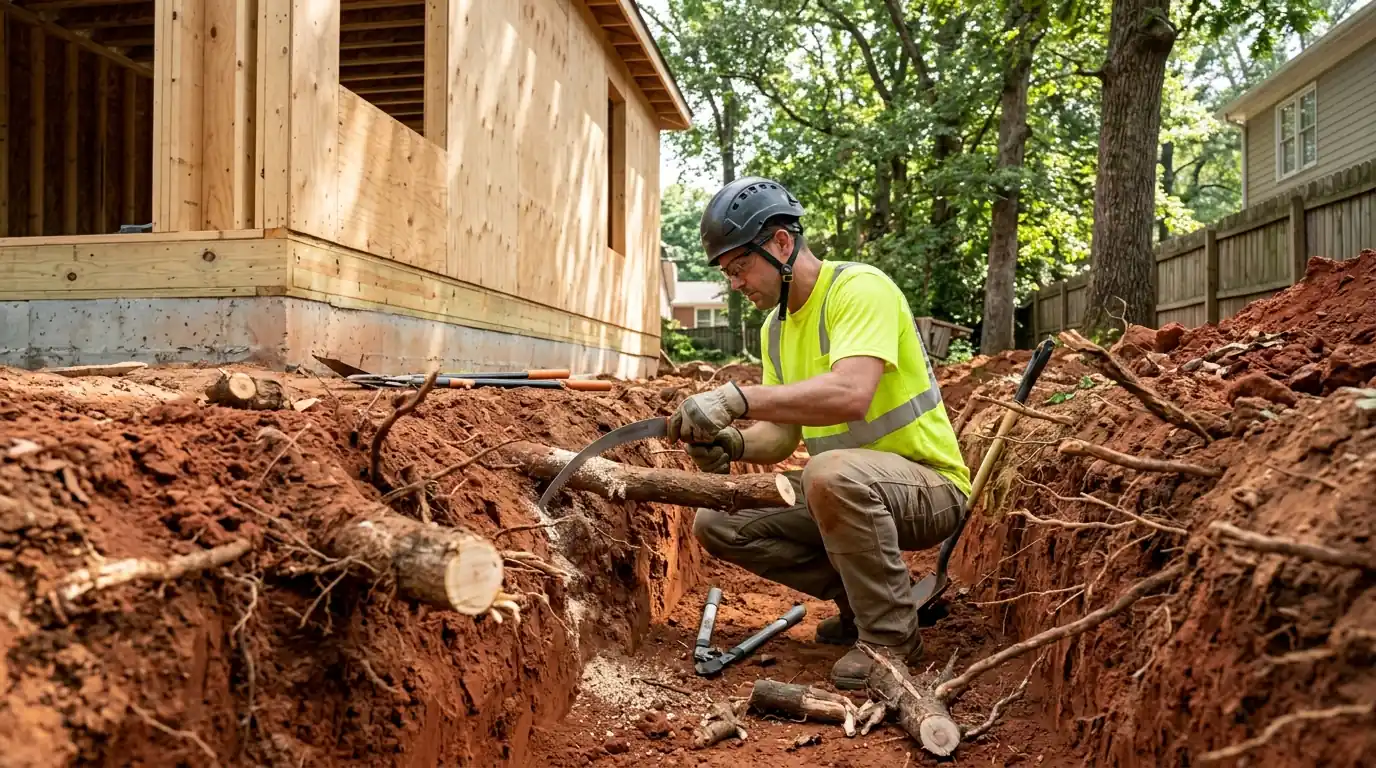
When roots have to be cut, how they're cut decides how the tree responds. An excavator bucket rips and shatters roots, splitting them back toward the trunk and leaving ragged ends that decay. A clean cut made with a saw or a root pruning tool at the edge of the dig leaves a smooth end that can seal over and push out new roots behind it.
We expose roots along the planned trench or footing line with hand tools or compressed air, which moves soil without damaging bark, and cut each one cleanly just inside the line. Large structural roots near the trunk get special attention: if one has to go, we tell you how much stability the tree is losing. Sometimes a small change in the dig, like tunneling a sewer line under a big root instead of trenching through it, makes all the difference.
Projects where trees most often get hurt
These are the jobs where we're most often called, ideally before work begins and sometimes after the damage is done.
Additions and decks
Footings and foundation trenches next to the house cut through the roots of trees planted close to it years ago.
Pools
The excavation, the equipment path to the back yard and the soil piled up nearby can affect several trees at once.
Driveways and patios
Grading, compaction and the base gravel all sit right where the shallow roots of nearby trees run.
Sewer and water line replacement
A trench across the front yard can cut the roots of every tree along the line, often on one side only.
Teardown rebuilds
Demolition, new footprints, staging areas and heavy deliveries can damage every tree on a small lot.
Grade changes and fill
Even a few inches of fill dirt spread over the root zone can smother roots that were thriving at the old grade.
What to ask your builder before the project starts
A few questions up front prevent most of the damage we see.
- Which trees on the site plan are marked to stay, and which are coming out?
- Where will equipment enter the yard and where will it park overnight?
- Where will soil, gravel, lumber and the dumpster be staged?
- Can concrete trucks wash out well away from any tree?
- Can trenches for utilities be routed or tunneled around big roots?
- Will the grade change near any tree, and by how much?
- Who on the crew is responsible for keeping the protection fencing up?
How we protect trees through a building project
The work starts before the builder's first day and keeps going until the last truck leaves.
- 1
Walk the plan with you
We look at the site plan, the trees marked to stay and the routes equipment will take, and point out conflicts before they happen.
- 2
Fence the root zone
Sturdy tree protection fencing goes up around each tree at its critical root zone, with signs telling crews to keep out.
- 3
Prune roots ahead of digging
Where a trench or footing has to come close, we cut the roots cleanly along the line first, by hand or with an air tool, before the excavator tears them.
- 4
Cover the paths
Where equipment must cross a root zone, we lay thick wood chip mulch topped with plywood or mats to spread the weight.
- 5
Prune for clearance
Low limbs that would be snagged by excavators, concrete trucks or a crane are removed cleanly before work starts.
- 6
Check in during the job
We visit at key stages to make sure fences are still up, water the trees in dry spells and catch problems early.
- 7
Help them recover
After the build, we pull the fencing, loosen compacted soil where we can, mulch, and plan watering and follow-up care.
Teardown rebuilds and tree rules around Atlanta
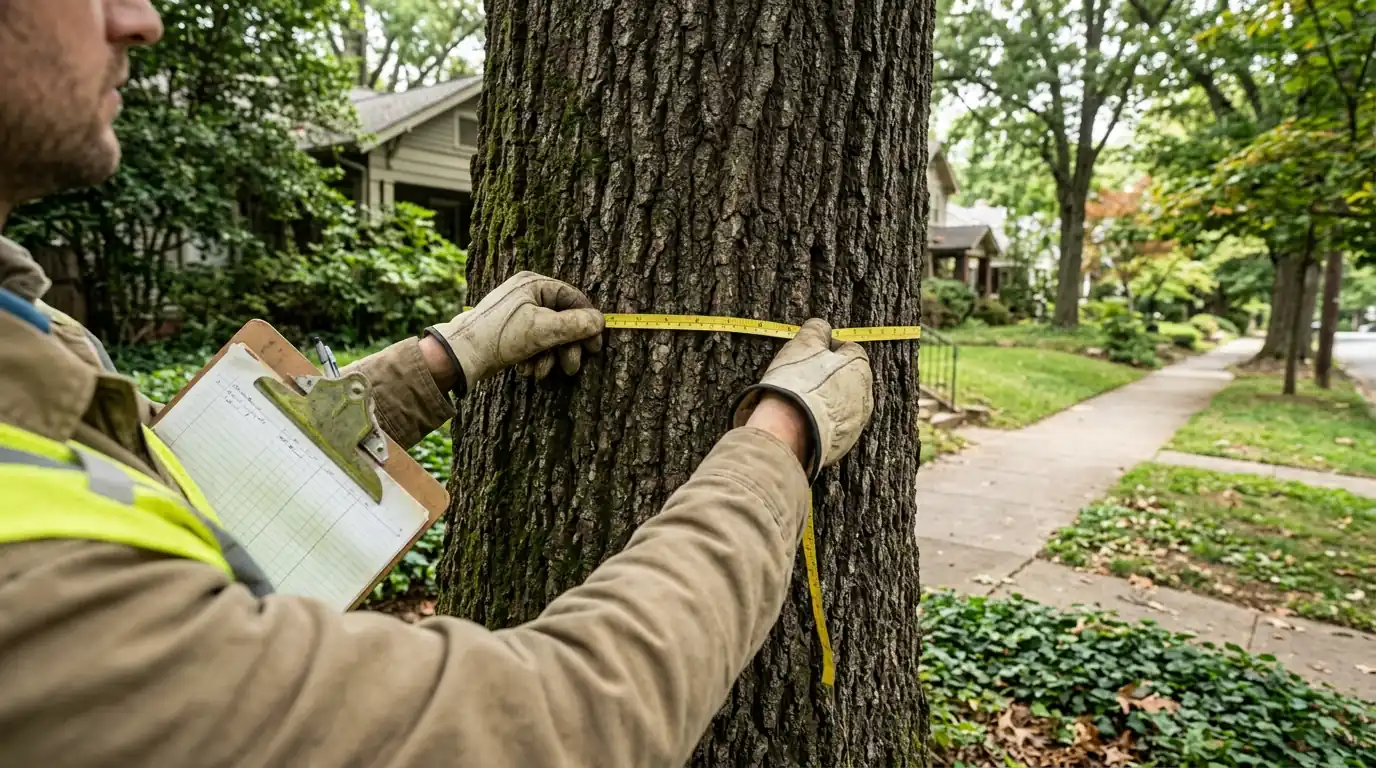
Teardown rebuilds are everywhere in close-in neighborhoods. In Buckhead, Brookhaven, Smyrna and Decatur, a ranch house from the 1950s often comes down to make room for a much larger home on the same lot, and the big oaks and tulip poplars that made the street attractive end up a few feet from the new foundation. Additions, pools and sewer replacements in older intown homes put the same pressure on mature trees.
Cities around Atlanta take this seriously. The City of Atlanta's tree rules generally expect enough of a kept tree's root zone to be protected for the tree to count as saved, and healthy trees removed under construction permits owe recompense. Decatur tightened its rules on removing healthy trees in 2022, and Brookhaven requires a permit for trees 4 inches and larger. Setting up protection before work begins keeps the trees you want, and keeps your project out of trouble with the city.
What moves the price of construction tree protection
| Job | Typical range | Priced |
|---|---|---|
| Root zone fencing, root pruning and mulch | $485 to $2,750 | per project |
The number of trees, the length of fencing and how much root pruning the plan needs drive most of the cost. A single oak beside a new deck takes a short visit for fencing and a small root cut. A teardown rebuild with six large trees, a long equipment route and a sewer line running past them takes several visits across the project. Check-in visits during the build are priced with the plan so you see the full cost up front.
Pre-construction pruning for clearance and any removal of trees not being kept are quoted as separate line items, so you and the builder can see what belongs to which part of the job. Recovery care after the build, like mulching and soil work, is priced when we see how the trees came through. Typical ranges for protection work are on our price guide.
Where we do tree protection during construction around Atlanta
Crews work from our Atlanta office near the 30340 ZIP and our Duluth office. These are the places we cover most, with their main ZIP codes. See all 56 areas.
- Buckhead 30305
- Virginia-Highland 30306
- Druid Hills 30307
- Morningside 30324
- Grant Park 30312
- Kirkwood 30317
- Cascade Heights 30311
- Sandy Springs 30328
- Dunwoody 30338
- Brookhaven 30319
- Decatur 30030
- Duluth 30096
- Lawrenceville 30046
- Marietta 30060
- Smyrna 30080
- Roswell 30075
- Alpharetta 30009
- Johns Creek 30097