Ansley Park work leans toward pruning: shaping and reducing century-old oaks so they keep their outline over historic houses, with removals planned around permits when a tree is past saving. The neighborhood borders Piedmont Park and the Atlanta Botanical Garden, and its streets wind around small parks. Inside Atlanta city limits, removing a tree 6 inches or more at 4.5 feet (pines 12) needs an Arborist Division permit. Call the 24/7 line to arrange a walk.
Century-old oaks along curving streets and pocket parks
Streets like The Prado and Peachtree Circle bend around the hills instead of running in a grid, and small triangles and strips of park sit where they meet. Big oaks stand in those parks, along the curbs and in the deep front lawns, so the canopy reads as one continuous roof over the neighborhood. Losing a single large tree changes how a whole block looks.
Many of these oaks are past a hundred years old. White oaks age gracefully if left alone, but southern red oaks and the occasional water oak start to show their years through dead limbs, cavities and fungal growth near the base. Armillaria root rot turns up on weakened hardwoods here, often as clusters of honey-colored mushrooms around the root flare in the fall.
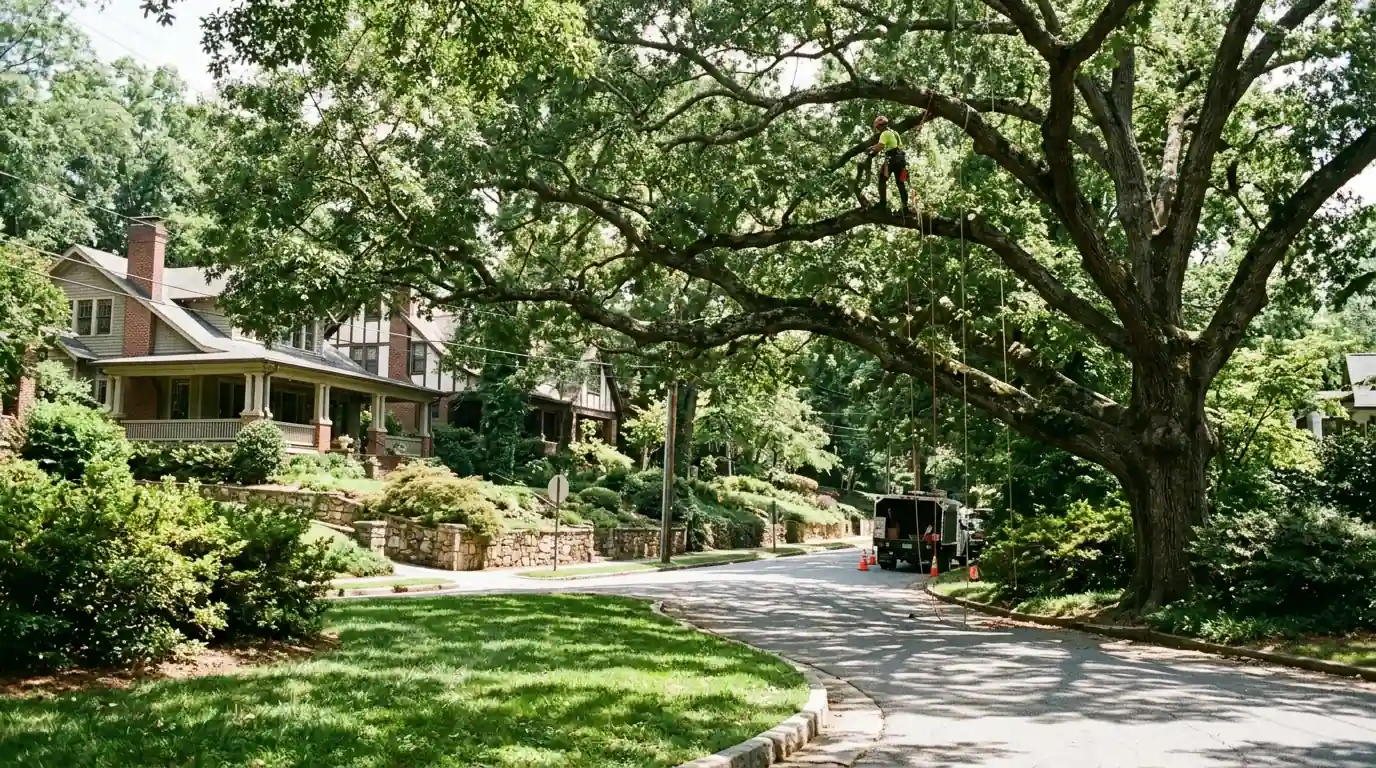
Pruning that keeps the shape of an old tree
An old oak in a historic setting should look the same after we leave, only lighter and safer. That means small, selective cuts: removing deadwood, shortening the few limbs that overreach a roof or the street, and thinning crowded growth so wind passes through. Our climbers work on rope inside the crown, and structural pruning like this rarely takes more than a modest share of the leaves in one visit.
Atlanta requires no permit for pruning private trees, but the city's pruning standards still apply. Topping, flush cuts and stripping out the inner crown are off the table, and they hurt the tree anyway. For an oak pulled out of balance by an old storm break, crown reduction or a cable between stems can buy it many more years.
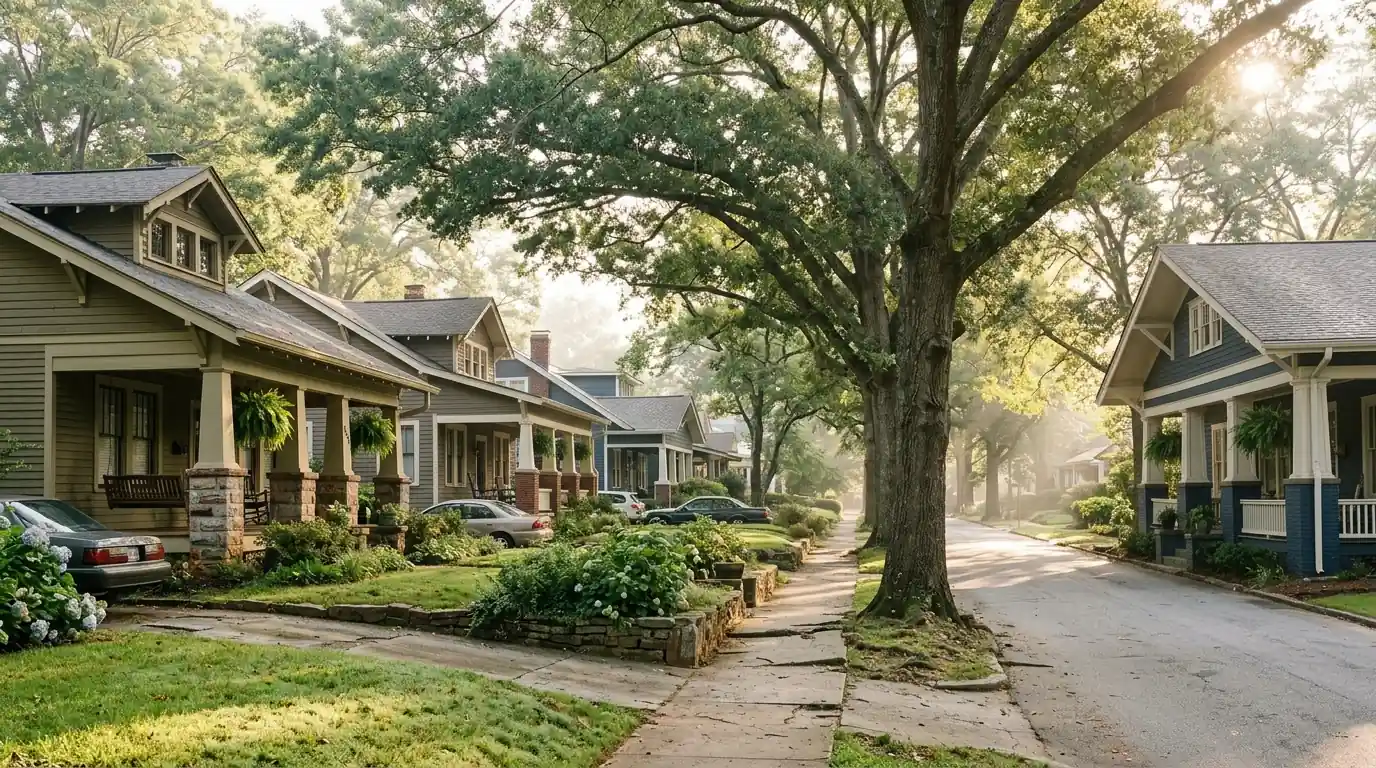
When an Ansley Park tree has to come down
Some trees can't be saved. A trunk hollowed by heart rot, a root plate lifting after a long rain, or a crown more than half dead all point to removal. With houses, garden walls and the street close by, the tree comes apart in sections lowered on rope. Red clay on these slopes holds water after wet weeks, and that's when a lifting root plate tends to show itself.
The Arborist Division permit applies to any private tree 6 inches or more at 4.5 feet, and pines start at 12 inches. Dead, dying and hazardous trees still need one, without an application fee or recompense once the city confirms the condition. Healthy trees taken for a renovation or addition do owe recompense, under higher fees in effect since January 2026. Our permit help covers the application, and neighboring Midtown works the same way.
Replanting matters here as much as anywhere. Atlanta's canopy fell from 46.5 percent in 2018 to 45.7 percent in 2023, and about 72 percent of the remaining trees stand on land zoned for single-family homes. When an old oak comes down on a lot like this, we talk through planting a replacement in a spot clear of the house and the wires.