In Inman Park we prune and remove large oaks on tight historic lots, often with a crane lifting wood over the house to the street. Willow oaks, white oaks and southern red oaks shade most blocks, and lots leave little side room. Because it's a Fulton County neighborhood within Atlanta city limits, a removal there needs the city's permit once a trunk reaches 6 inches at 4.5 feet (12 for pines). Call our line at any hour.
Big oaks on lots drawn before cars and cranes existed
The streets here were laid out long before cars, and the lots reflect it: deep, narrow and set close together, with houses that fill most of the width. A white oak that was a sapling when the porch went up may now spread across three roofs. Removing it means accounting for decorative trim, stained glass, iron fencing and a slate or metal roof that costs far more to repair than the tree work itself.
Before any cut, we stand in the street and the back yard and map every target: gables, chimneys, the carriage house, overhead service drops and the neighbor's garden. That walk tells us whether a climber can lower the tree in rope-sized pieces or whether the wood is too heavy, too decayed or too far over the house to rig safely from inside the crown.
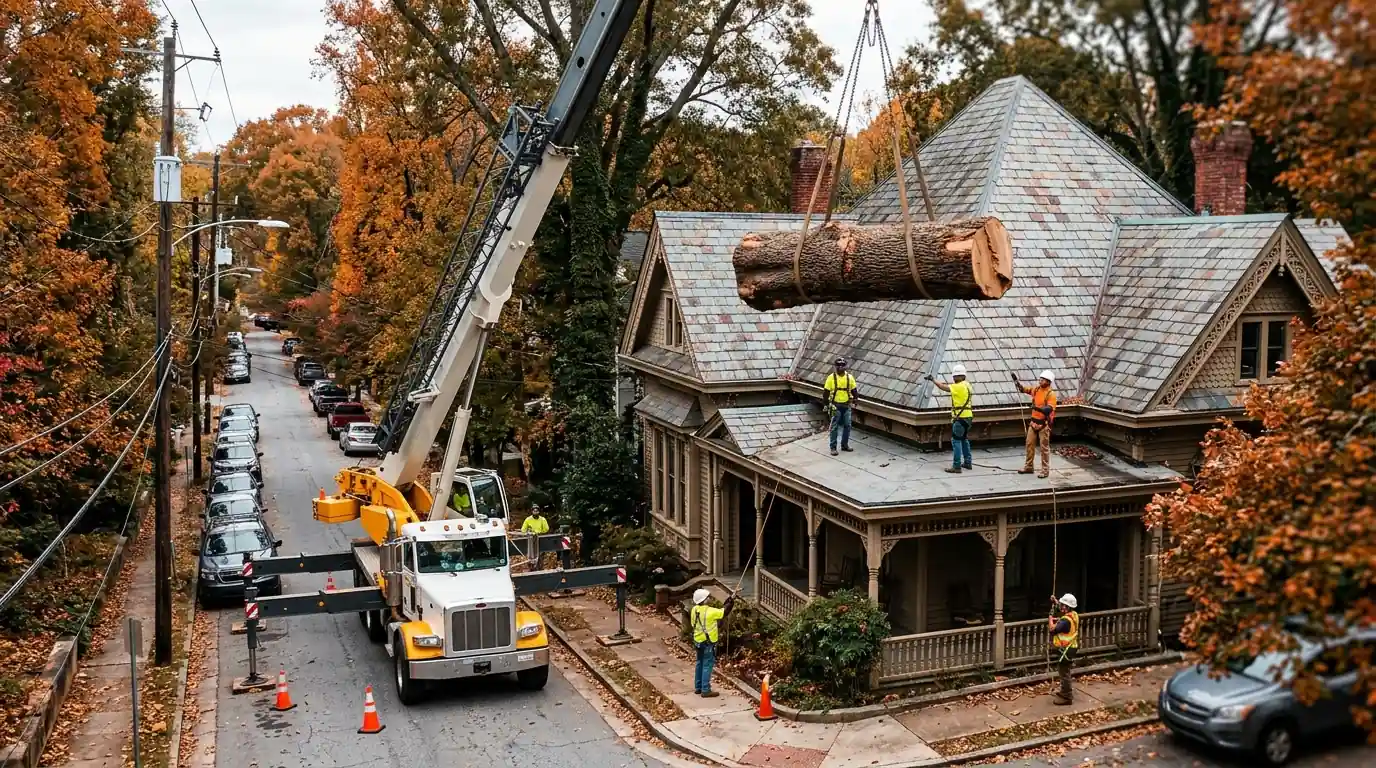
When a crane is the safer way out
On a lot with no back alley and a house filling the frontage, a crane often turns a three-day climb into one controlled day. The crane sets up on the street, the climber rigs each section to the hook, cuts it free, and the operator swings it over the roof to the ground crew at the curb. Nothing drags across the lawn, and nothing swings toward the porch.
Crane days take coordination on these streets. We check overhead wires, measure the setup spot, plan around parked cars and lay mats so outriggers don't crack the curb or sidewalk. Our crane removal service covers the details, and the same method serves the larger oaks a few blocks north in Druid Hills. Hollow water oaks, which turn up here among the older willow oaks, are prime crane candidates because a climber can't trust the wood.
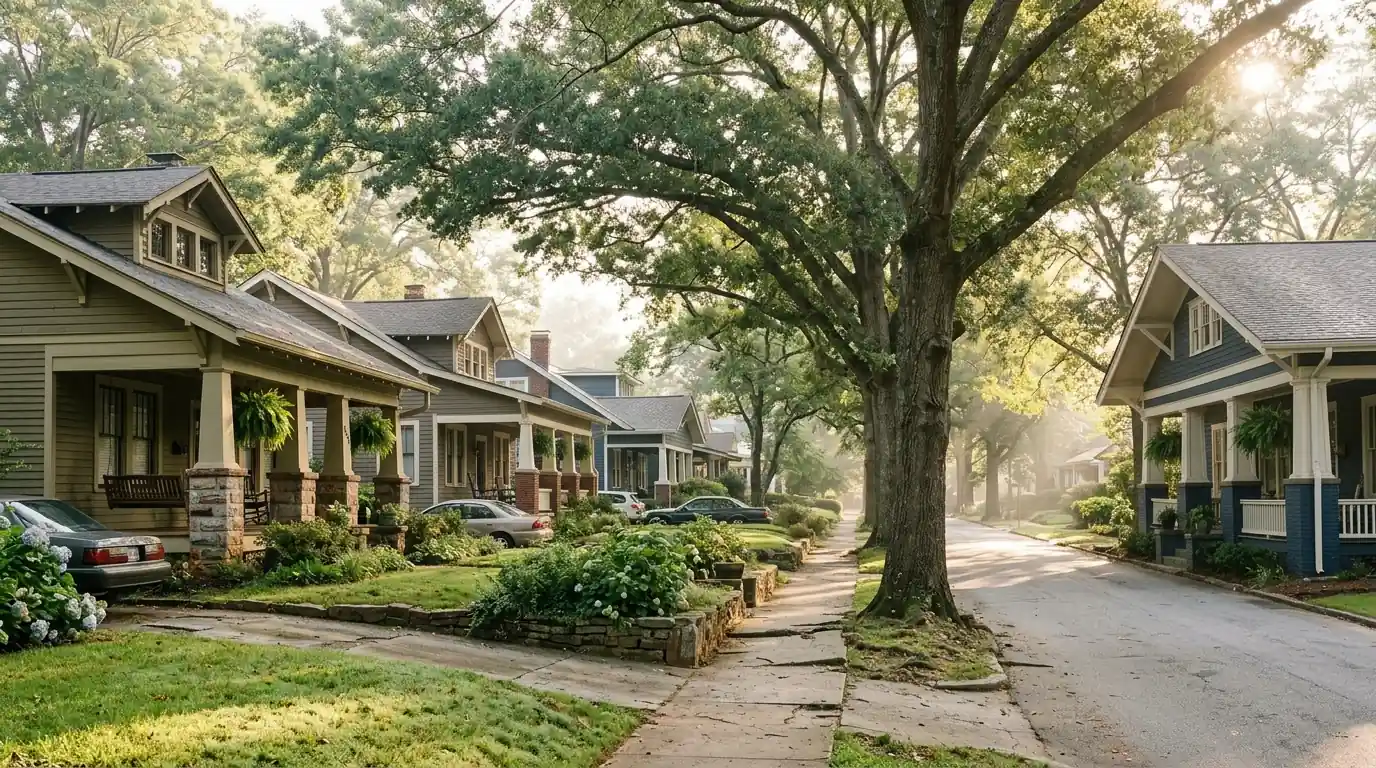
Pruning the old canopy instead of losing it
Most calls here, like those next door in Candler Park, end with pruning, not removal. Old oaks over Victorian roofs tend to carry heavy limbs that reach farther each decade, deadwood high in the crown and branches resting on gutters. Careful crown reduction shortens the longest leads back to healthy laterals, which takes weight off the far end without the topping cuts that invite decay. We also clear limbs off the roof and give chimney flues room.
Trees along Springvale Park and the edge of Freedom Park show the payoff: broad, balanced crowns that have been pruned lightly and often. Pruning on private property needs no city permit, though the ordinance pruning standards still apply. Owners walking the BeltLine Eastside Trail can usually spot which backyard trees were thinned and which were left to grow lopsided toward the light over the path.
Permits, inspections and historic-district patience
Historic district or not, the tree rules here are the city's. Atlanta asks for a permit before anyone removes a private tree measuring 6 inches at 4.5 feet, and pines are exempt until 12 inches. Owners planning an addition should budget for recompense on any healthy tree in the way; the charges went up under rules council adopted in 2025 and enforced since January 2026.
Failing trees follow a gentler track. A dead, dying or hazardous oak still goes to the Arborist Division for a permit, yet the application costs nothing and no recompense is owed after the inspector confirms what we found. We photograph the tree, gather the measurements and handle the permit filing, and our article on failing water oaks explains the decay signs inspectors look for.