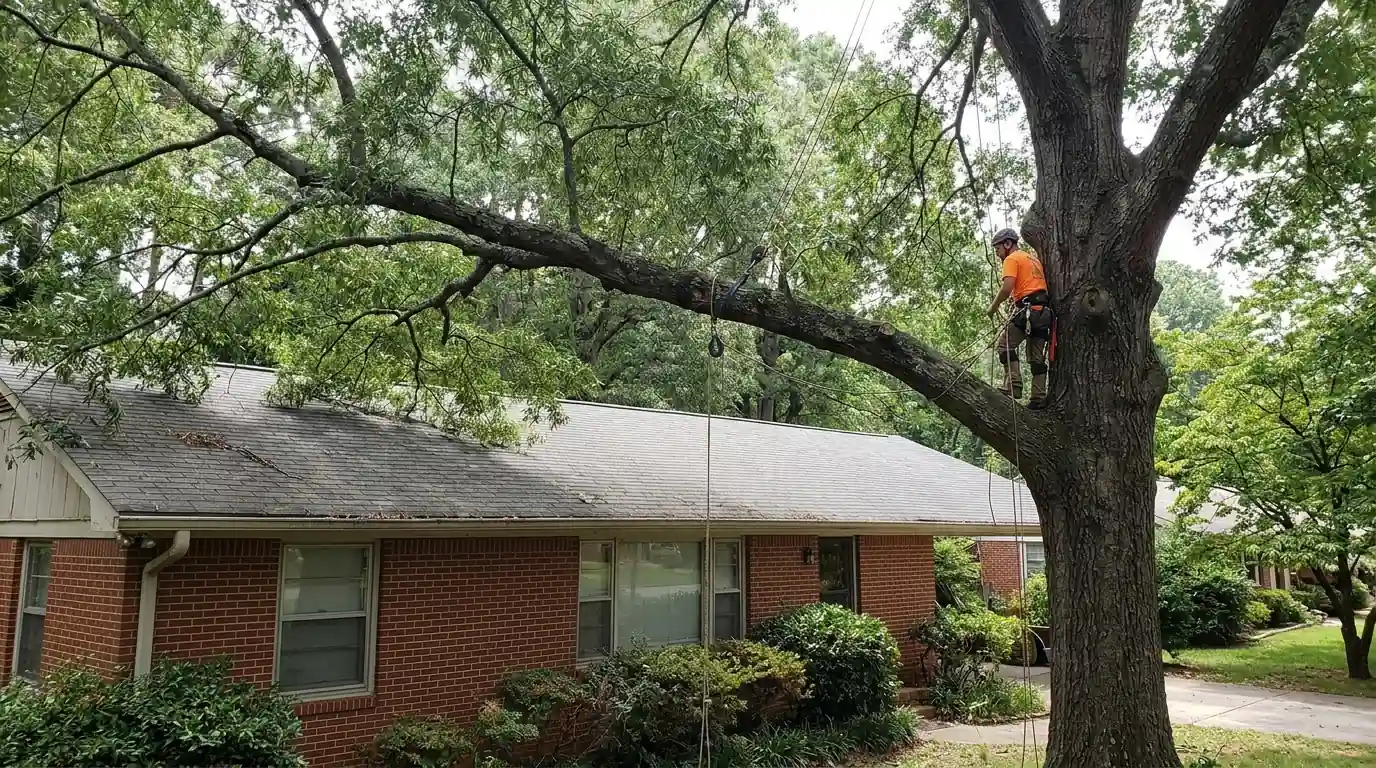
Overhanging limb removal is the targeted job of cutting one or a few heavy limbs that reach over a roof, pool, deck, carport or across a property line. Each limb is cut in sections and lowered on a rope rather than dropped. It's the right call when the tree is healthy but a single limb is a risk or a nuisance. In Atlanta, big oaks reaching over roofs and fences are the usual case, and talking with the neighbor first saves trouble.
When one limb is the whole problem
A tree can be healthy, well shaped and worth keeping while one limb on it causes all the trouble. That limb might be resting on the roof over a bedroom, reaching across a pool so leaves and acorns land in the water, or hanging over the carport where every storm drops twigs on the car. Taking off that one limb fixes the problem without touching the rest of the tree.
These jobs often look simpler than they are. A heavy limb over a roof can't just be cut at the trunk and allowed to fall. It has to come off in sections, each one tied to a lowering rope and controlled down past the gutters, the skylights or the pool edge. The climber works out along the limb, cutting the end first and working back toward the trunk.
If several limbs are crowding the house from different directions, a broader approach like reducing the whole crown may make more sense. But when it's one or two limbs, targeted removal is usually the cleanest and least expensive fix, and the tree keeps its shape, its shade and most of its leaves for the rest of the season.
Talking with your neighbor before limbs come off
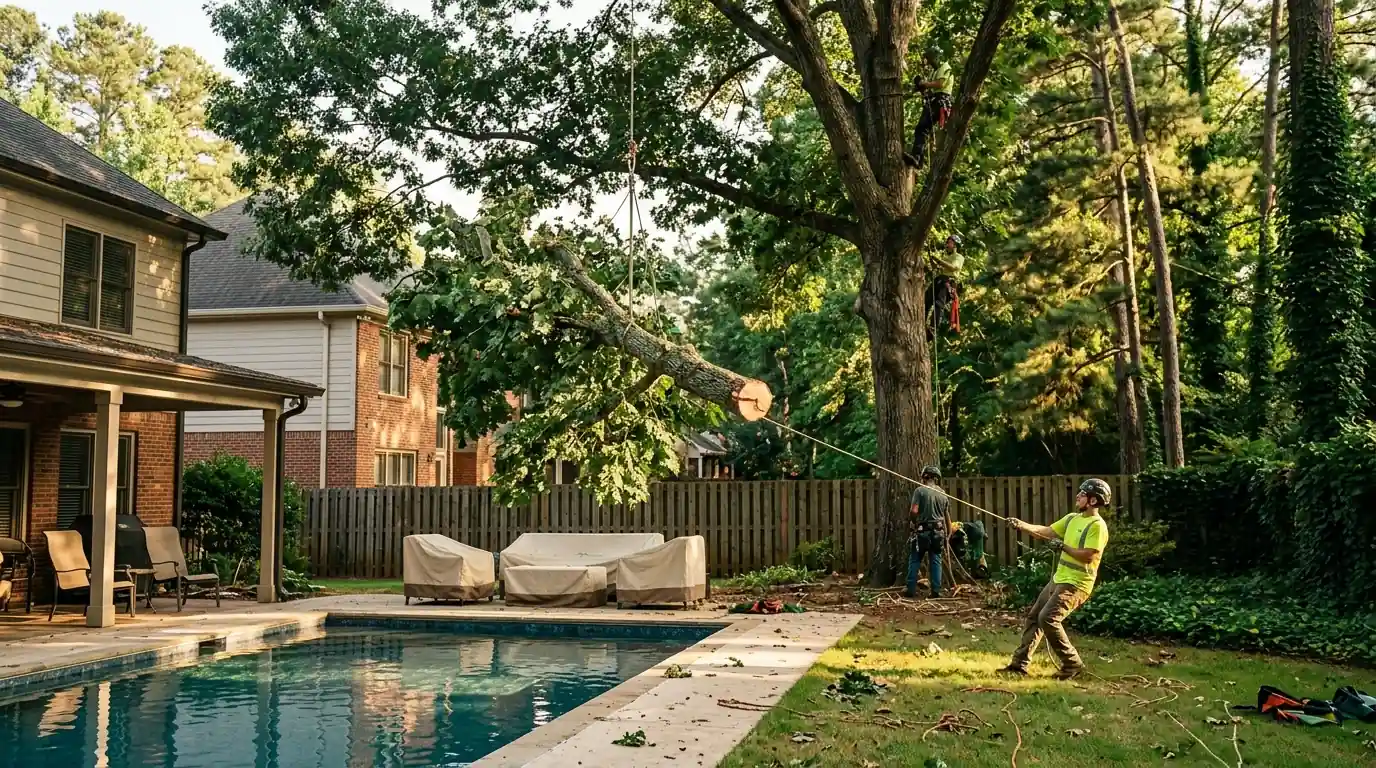
When a limb crosses the property line, the job involves two households, not one. It may be your tree reaching over their roof, or their tree dropping acorns into your gutters. Either way, a large limb coming off changes how the tree looks from both yards, and it can affect a tree your neighbor cares about. A short conversation before the work saves a lot of friction afterward.
We suggest you let your neighbor know what's being removed, when we'll be there and whether we'll need access to their yard to guide a rope or clean up. If the tree stands on their property, cutting so much that the tree is badly damaged can start a dispute, so we keep the cuts to what's reasonable for the tree's health. If there's any doubt about who owns the tree or what can be cut, settle that before we schedule. When both neighbors agree, the job goes faster and the cleanup is easier.
Overhanging limbs we remove most often
These are the situations where a single limb is worth the trip.
Over the roof
A limb resting on or hanging just above shingles wears the surface, drops debris into gutters and gives squirrels a path to the attic.
Over the pool
Leaves, acorns, catkins and twigs dropping into a pool clog the skimmer and stain the finish, and a falling limb can crack the coping.
Over the deck or patio
Sap, pollen and debris coat the deck and furniture, and a heavy limb over a gathering space is a real hazard in storms.
Over the carport or driveway
Dropped twigs and nuts scratch paint and dent hoods, and a broken limb can crush a car in its usual spot.
Across the property line
A limb hanging over the fence into the neighbor's yard or onto their roof is one of the most common reasons we're called.
Over a shed or outbuilding
Light roofs on sheds, workshops and garages are easily punctured by a falling limb.
How an overhanging limb comes down in sections
Each piece is controlled from the cut to the ground, so nothing below takes a hit.
- 1
Assess the limb and the target
We check the limb's size, weight and attachment, and note exactly what's underneath and how much room there is to work.
- 2
Talk about the neighbor
If the limb crosses the property line, we suggest you talk with your neighbor before the work so no one is surprised.
- 3
Rig the lowering system
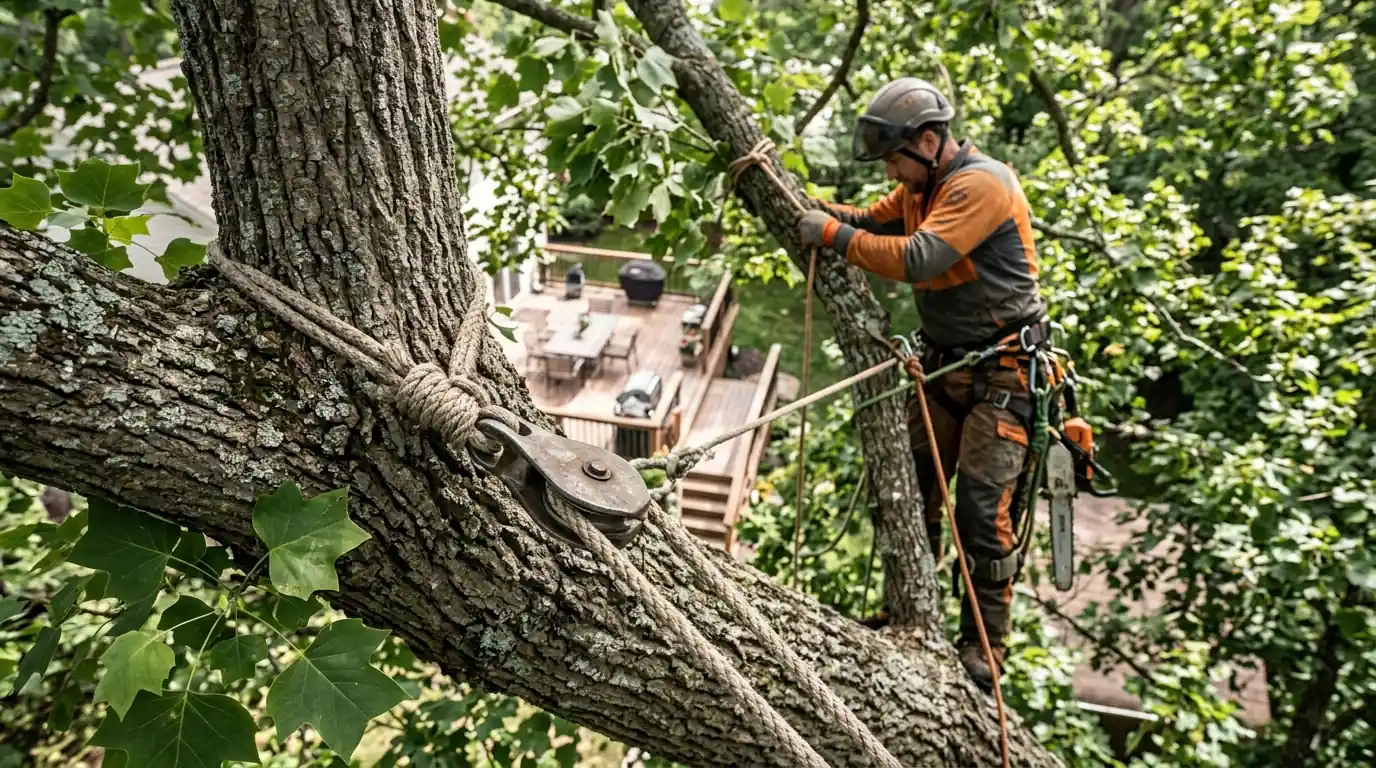
The climber sets a rigging point above the limb, often higher in the tree, so each section can be lowered under control.
- 4
Cut from the tip back
The climber removes the outer end first, then works toward the trunk in sections sized for the rope to handle.
- 5
Lower and guide each piece
The ground crew controls the rope and guides each section away from the roof edge, pool or fence as it comes down.
- 6
Final cut at the collar
The last cut sits just outside the collar, where the limb meets the trunk, so the wound closes properly, and then all the wood and debris are cleaned up.
How much of a limb can be removed without hurting the tree
Taking off one limb is usually fine, but a few limits keep the tree healthy.
- Cut back to the collar or to a side branch large enough to take over, never to a stub.
- Avoid removing a limb that makes up a large share of the tree's total crown in one visit.
- On a big limb, consider shortening it to a side branch rather than removing it at the trunk, which leaves a smaller wound.
- Spread heavy cuts on one tree over more than one visit when several big limbs need to go.
- Avoid stripping all the limbs from one side, which can leave the tree lopsided and unbalanced.
- Leave healthy foliage along the remaining limbs so the tree can keep feeding itself.
- Remember that some species, like older water oaks, are more prone to decay at large cuts.
What affects the cost of removing an overhanging limb
| Job | Typical range | Priced |
|---|---|---|
| Limb over a roof or pool, lowered on rope | $165 to $890 | per limb |
Overhanging limbs are priced by the limb, and what's underneath it matters most. A limb hanging over an open lawn can often be cut and dropped in a few pieces. The same limb over a roof, a pool or a glass sunroom has to come off in many small sections, each lowered on a rope, which takes more time and more people on the ground.
Limb size, how far it reaches and how easy it is to rig a lowering point all affect the price. Cleanup and hauling are included. If more than one limb needs to come off the same tree, we price them together. Our price guide has the typical per-limb range.
Overhanging oaks, gutters and close lots around Atlanta
On many intown lots, houses sit just a few feet from the property line and mature oaks straddle the fence. In Morningside and Decatur, it's common to find a neighbor's water or willow oak reaching across a narrow side yard onto a roof. Those oaks drop leaves in fall and acorns by the bucketful, and the gutters fill fast. Inside Atlanta, removing a single limb from a tree on private land is pruning, so there's no permit to file, and the cut still has to meet the city's pruning standards.
In the suburbs, pools and decks are the more common targets. Out in Peachtree Corners and Norcross, backyards with pools often sit under pines and sweetgums dropping needles and gumballs all summer. Taking off the limb that hangs directly over the water makes a big difference. For limbs touching a service line, see our page on work near power lines first.
Where we do overhanging limb removal around Atlanta
Crews work from our Atlanta office near the 30340 ZIP and our Duluth office. These are the places we cover most, with their main ZIP codes. See all 56 areas.
- Buckhead 30305
- Virginia-Highland 30306
- Druid Hills 30307
- Morningside 30324
- Grant Park 30312
- Kirkwood 30317
- Cascade Heights 30311
- Sandy Springs 30328
- Dunwoody 30338
- Brookhaven 30319
- Decatur 30030
- Duluth 30096
- Lawrenceville 30046
- Marietta 30060
- Smyrna 30080
- Roswell 30075
- Alpharetta 30009
- Johns Creek 30097