Large oaks, tulip poplars and hickories on steep wooded lots make up most of our Sandy Springs work, with many lots backing onto ravines that run toward the Chattahoochee River National Recreation Area. Big trees over roofs often come out by crane because there is no safe drop zone on a bluff. Sandy Springs sets its own tree rules, and we check them for your address before we quote. Call any hour to set up a visit.
Steep lots above the river change how a tree comes down
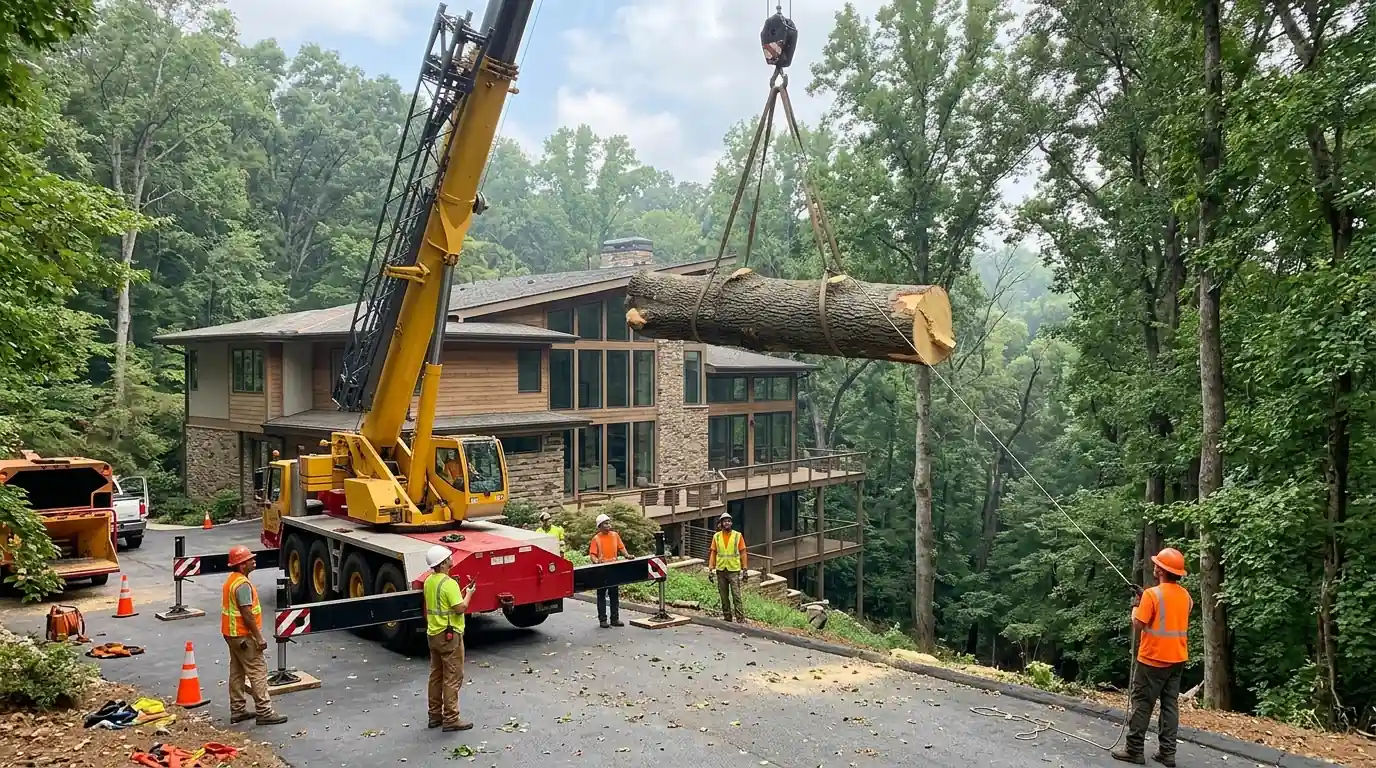
On the river side of Roswell Road, plenty of back yards end at a drop rather than a fence. The houses sit on ridges, decks hang over the slope, and the trees below can be 80 or 90 feet tall with their bases far lower than the patio. A climber can still work them, but every piece has to be lowered against gravity pulling it downhill.
When the trunk leans over the house and the ground falls away under it, felling is not an option and rigging alone gets slow. That is where a crane removal earns its cost. The crane parks on the street or driveway, the climber cuts each section free once it's hooked, and the wood swings over the roof to a landing spot the truck can reach.
Old hardwoods on the bluffs and what fails first
The big white oaks and southern red oaks in Sandy Springs are among the oldest trees on our routes, and the tulip poplars beside them are often the tallest. Poplars drop brittle limbs in summer storms and shed leaves early in a drought. The oaks fail more slowly: a dead upper limb one year, a fungal conk at the base a few years later, then a split.
Hypoxylon canker and armillaria root rot show up on hardwoods stressed by construction or a dry stretch, and bacterial leaf scorch browns oak leaves from the edges in late summer. A risk assessment on a big oak over a bedroom is often the first visit, before anyone decides whether to prune it, brace it or take it down.
Checking the Sandy Springs rules before a cut
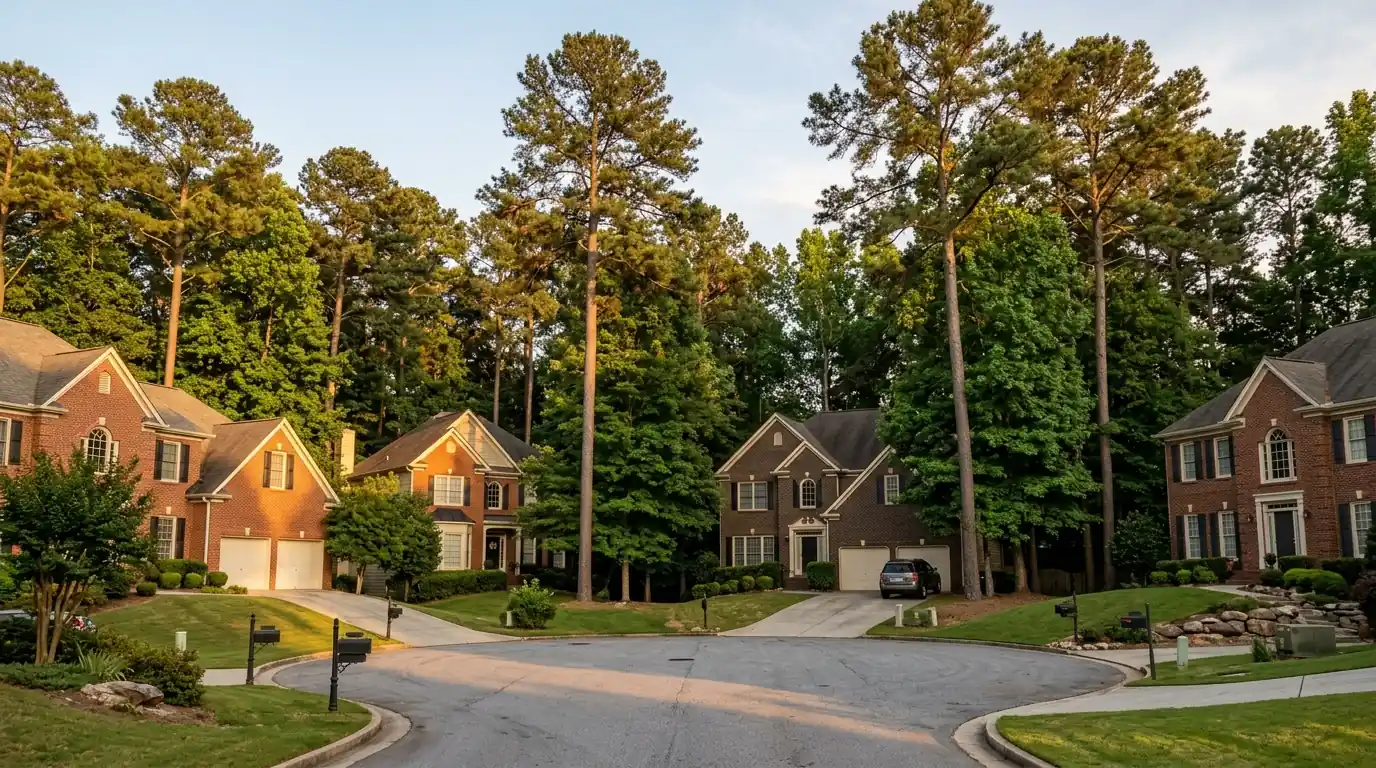
Sandy Springs is its own city with its own tree rules, separate from the City of Atlanta's ordinance next door. We don't guess at the thresholds. Before we price a removal here, we look up what the city requires for that tree on that lot and tell you what the paperwork involves.
Lots that back onto creeks or sit near the Chattahoochee can carry extra limits, since land within 2,000 feet of the river falls inside the Chattahoochee River Corridor under the Metropolitan River Protection Act. Our permit rules guide gives the wider picture across the metro, and we sort out the specifics for your street during the visit.
Saving the big trees that can still be saved
Not every old hardwood on a Sandy Springs lot has to go. A white oak with two big leaders and a tight fork can often be held together with cables and braces for years, and a crown reduction takes weight off a limb reaching over the roof. Those calls depend on sound wood at the union, which we check with a mallet and a close look before recommending anything.
Access is the other half of the plan. Long wooded driveways off Roswell Road and the side streets near the river are often narrow and lined with trees of their own, so we scout where a chipper and a crane can actually park. Jobs farther up the river in Roswell get the same scouting visit, while the flatter subdivision lots of Dunwoody rarely need one.