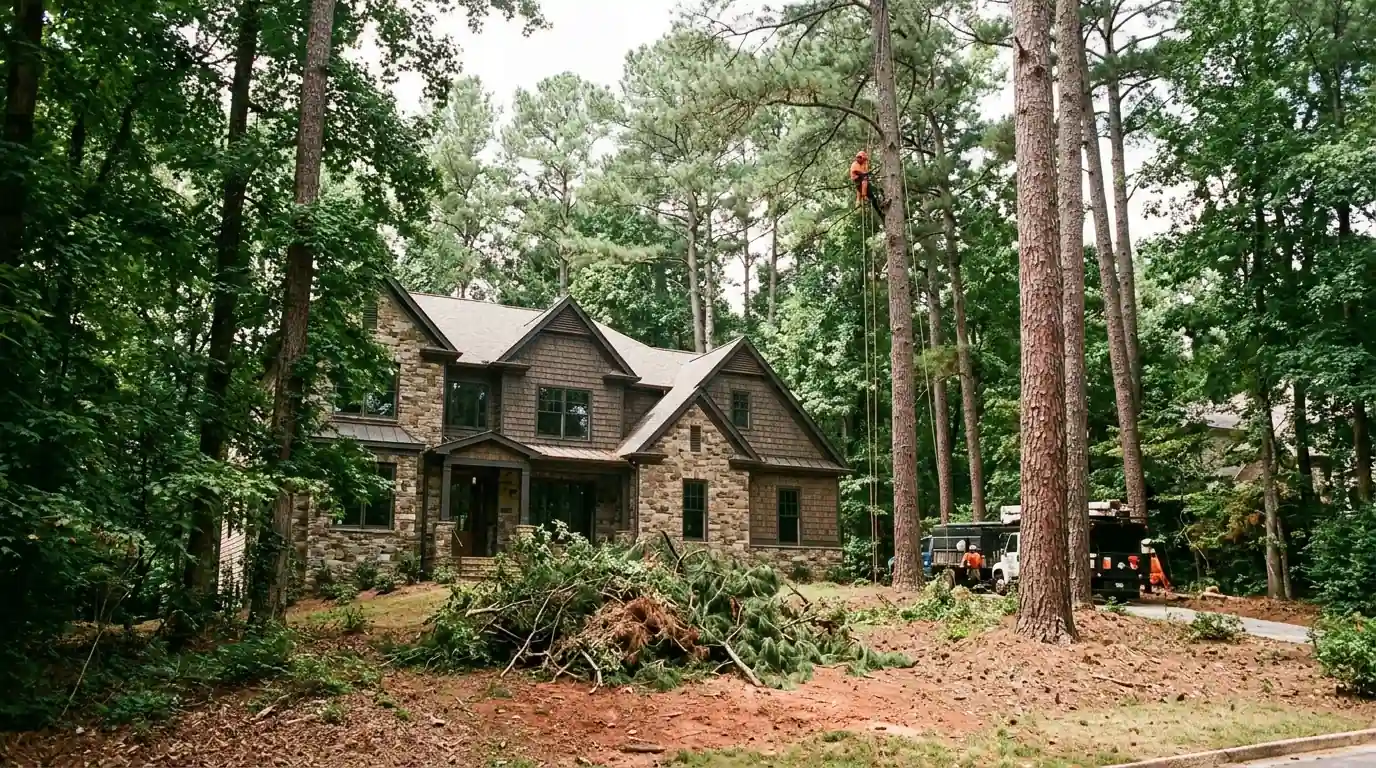
On the wooded lots off Powers Ferry Road and West Wieuca Road, near the golf course, amphitheater and horse park, our climbers take down, prune and assess tall loblolly pines, southern red oaks and white oaks. Many lots slope into creek valleys, which changes how wood comes out. The area is inside Atlanta city limits, so trees 6 inches or more at 4.5 feet, and pines from 12 inches, need a city permit. One call to the 24/7 line starts it.
Forest-grown pines and oaks on big wooded lots
Turn onto almost any side street off Powers Ferry Road and the canopy changes from front-yard shade trees to standing forest. Loblolly and shortleaf pines rise 80 feet or more behind the houses, mixed with southern red oaks and white oaks that grew tall and narrow competing for light. The look is close to what you'll find across the line in Sandy Springs.
Trees that grew up in a stand behave differently from yard trees. Their crowns sit high on long, bare trunks, and their roots spread shallow through red clay. When a neighboring lot is cleared, the trees left on the edge suddenly catch wind they never had to stand up to, and that is usually when we start getting calls about a new lean.
Big lots sometimes give us room to fell a pine whole into an open lane, which is faster and cheaper than climbing it down. Just as often, the new house, a pool or a neighbor's fence closes that lane, and the tree comes down in pieces. We make that call on the walk, and our guide to tall pines near the house explains what we look at.
Beetles, drought and storms in a pine-heavy canopy
Pines are the trees we watch closest here. After a dry summer, Ips engraver beetles move into stressed loblollies, and southern pine beetle can spread from tree to tree across a wooded lot. Pitch tubes on the bark, fine reddish dust in the bark cracks and a crown fading to rust are the signs. A pine removal done early keeps the problem from moving to the next tree.
On September 27, 2024, Tropical Storm Helene soaked the ground across metro Atlanta and uprooted trees onto homes. Tall, shallow-rooted trees on wet clay are exactly the kind that go over in a storm like that, often at the root plate while the trunk is still sound. If one ends up against your house, our emergency tree crew answers around the clock.
Rebuilds, creek slopes and the permit that comes with them
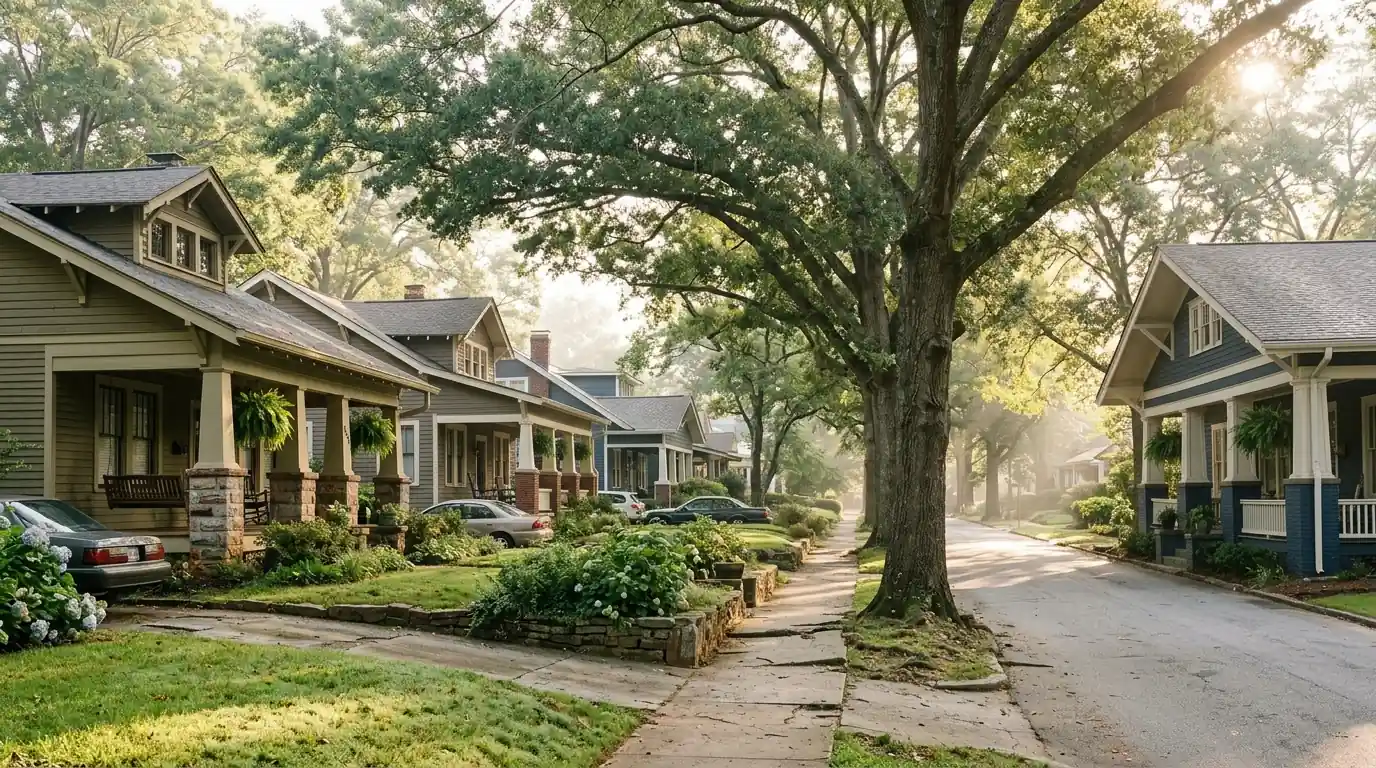
Ranch houses from the middle of the last century are giving way to bigger homes all over this part of the city, and the new footprints reach much closer to the old trees. Healthy trees removed under a construction or landscape permit owe recompense to the city, and the fees went up under rules in effect from January 2026. Builders who plan tree protection into the site plan keep more of the canopy.
New owners often plant Leyland cypress along the lot lines for privacy. They grow fast, but when canker gets into a row, trees can brown out and collapse with little warning. Lots that drop into a creek valley add another layer: trucks stay on the high side, wood gets carried or winched uphill, and heavy pieces stay off the bank so the slope doesn't slump.
Inside city limits, any private tree 6 inches or more at 4.5 feet needs an Arborist Division permit, and pines start at 12 inches. Dead or beetle-killed pines still need one, but there's no application fee and no recompense once the city confirms the condition. Our permit service gets that paperwork moving before the saw comes out.