We clear lots, take down pines and look after hardwoods across Forsyth County, mostly in south Forsyth subdivisions near Johns Creek and Suwanee and on parcels around Cumming. Loblolly pines left at the edge of new construction are the most common removal. Forsyth County sets the tree rules on unincorporated land and the City of Cumming sets its own, so we check the address before quoting. Our line is open 24/7 for a walk-through booking.
Pines left standing at the edge of new construction
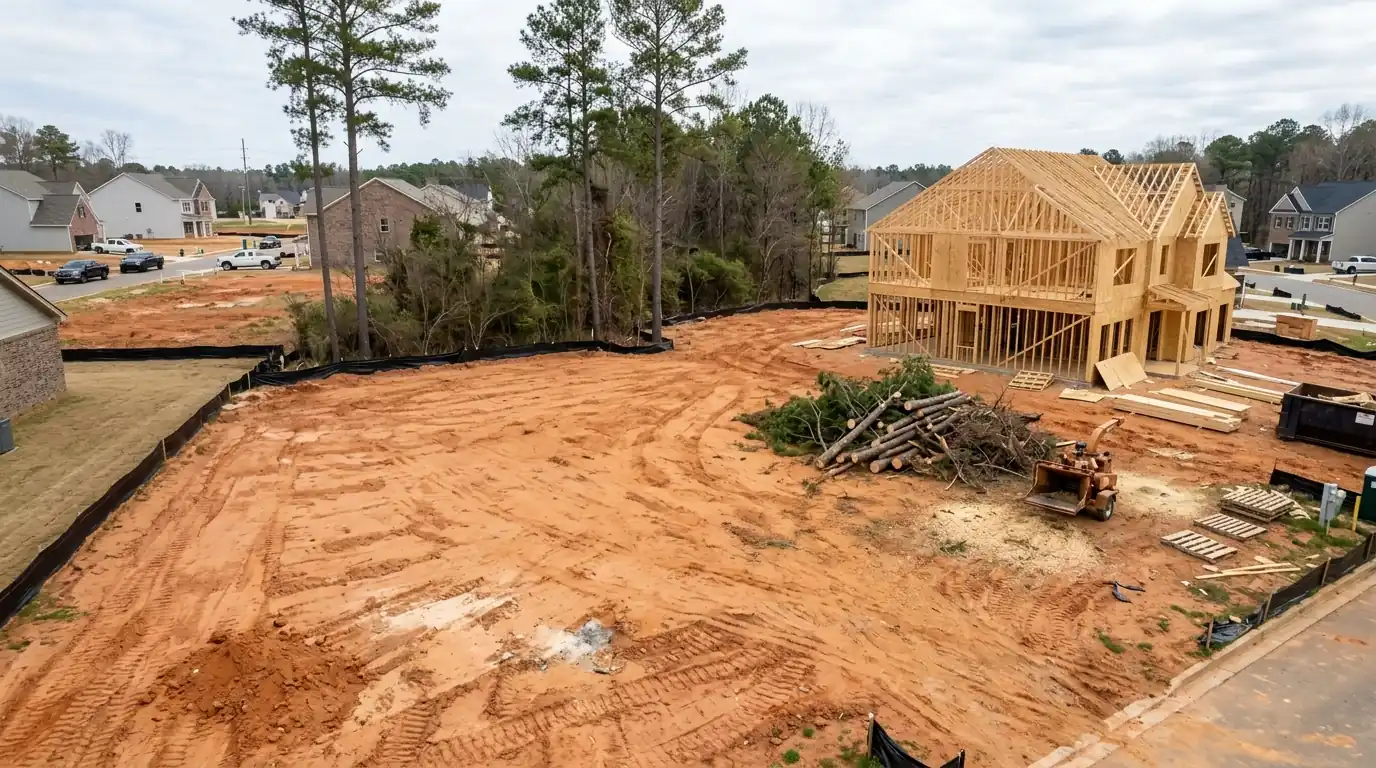
When a subdivision goes in, the lots are graded and the pines along the edges are often kept for privacy and shade. Those edge trees grew up in a forest, sheltered by the trees around them, with roots spread through ground that has since been cut, filled and compacted. Many look fine for a few years, then start to lean, thin out or drop their tops once the root damage catches up with them.
We see that pattern across south Forsyth, in neighborhoods that run up from Johns Creek and Suwanee. A tall loblolly beside a new house, with a fresh lean toward the roof or a crown fading from green to rust, is a tree to deal with soon. Our pine removal work takes these down in sections when they stand close to the house, or fells them whole when there is a clear lane and the wood is sound.
Clearing ground for a house, a pool or a usable yard
Plenty of Forsyth owners bought lots with more woods than they wanted. Common jobs are clearing the back of a lot for a pool or a fenced yard, opening a building site on a larger parcel, and taking out the privet, sweetgum saplings and young pines that fill any open ground within a few seasons. On acreage farther north, it can mean clearing a lane for a driveway or a pad for a barn.
Lot clearing runs in order: understory first, so the keepers can be picked out, then the trees marked to go, then stumps. Where a slab, pool or driveway will sit, full stump removal beats grinding, and we file a Georgia 811 locate before any digging. Clearing tied to development usually runs through site plans and land disturbance approvals, which the owner or the engineer files with the county or the city.
Ash trees, hardwoods and the local rules
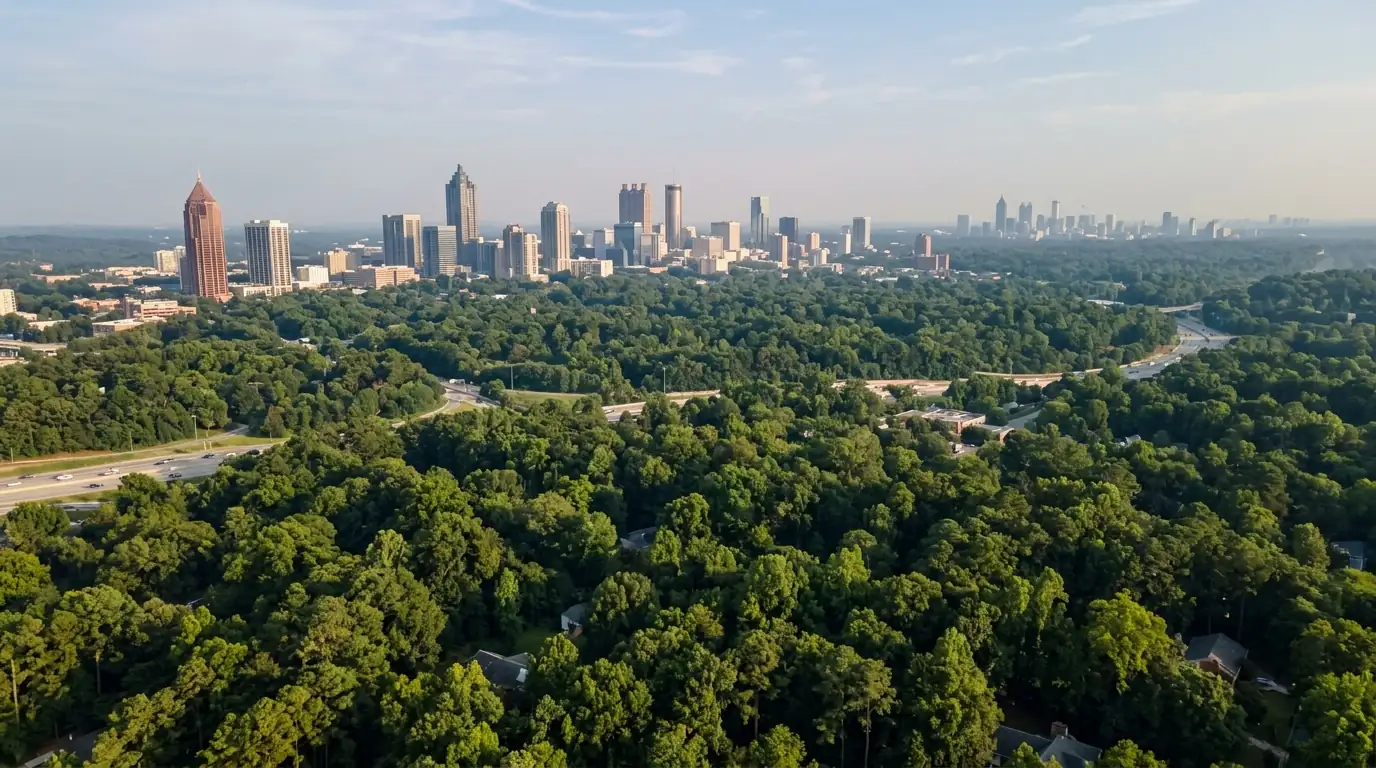
Emerald ash borer was first found in Georgia in July 2013, in DeKalb and Fulton counties, and by 2023 it had been confirmed in Forsyth as well. Ash isn't the most common yard tree here, but it grows along creek bottoms and in older woodlots. Signs include a crown thinning from the top, woodpecker damage on the bark and small D-shaped exit holes. A valuable ash caught early may respond to insect treatment, while a badly infested one turns brittle and should come down.
Forsyth County sets the tree rules on unincorporated land, and the City of Cumming sets its own inside city limits. Rules for clearing tied to building work are often stricter than those for removing a tree on an existing lot, and many subdivisions have HOA approval steps too. We check the current requirements for the address before we quote. South of the county line, our Alpharetta page covers the north Fulton side.