We take down pines and hardwoods in Lawrenceville and grind the stumps they leave, on old town lots near the square and in the subdivisions built around them since. Loblolly and shortleaf pines, sweetgums and Bradford pears make up most of the calls. Inside city limits, Lawrenceville sets its own tree rules; outside them, unincorporated Gwinnett rules apply. We check which covers your address, file a Georgia 811 locate before grinding, and answer the phone around the clock.
Old town streets and the subdivisions that grew around them
Near the square, the trees came first. Big water oaks, pecans and southern red oaks shade older homes on lots laid out long before the subdivisions, and their roots run under sidewalks, driveways and foundations that were poured around them. These are pruning and careful removal jobs, worked from the street with a climber and a lowering line, and the wood usually leaves through the front yard because there's no other way out.
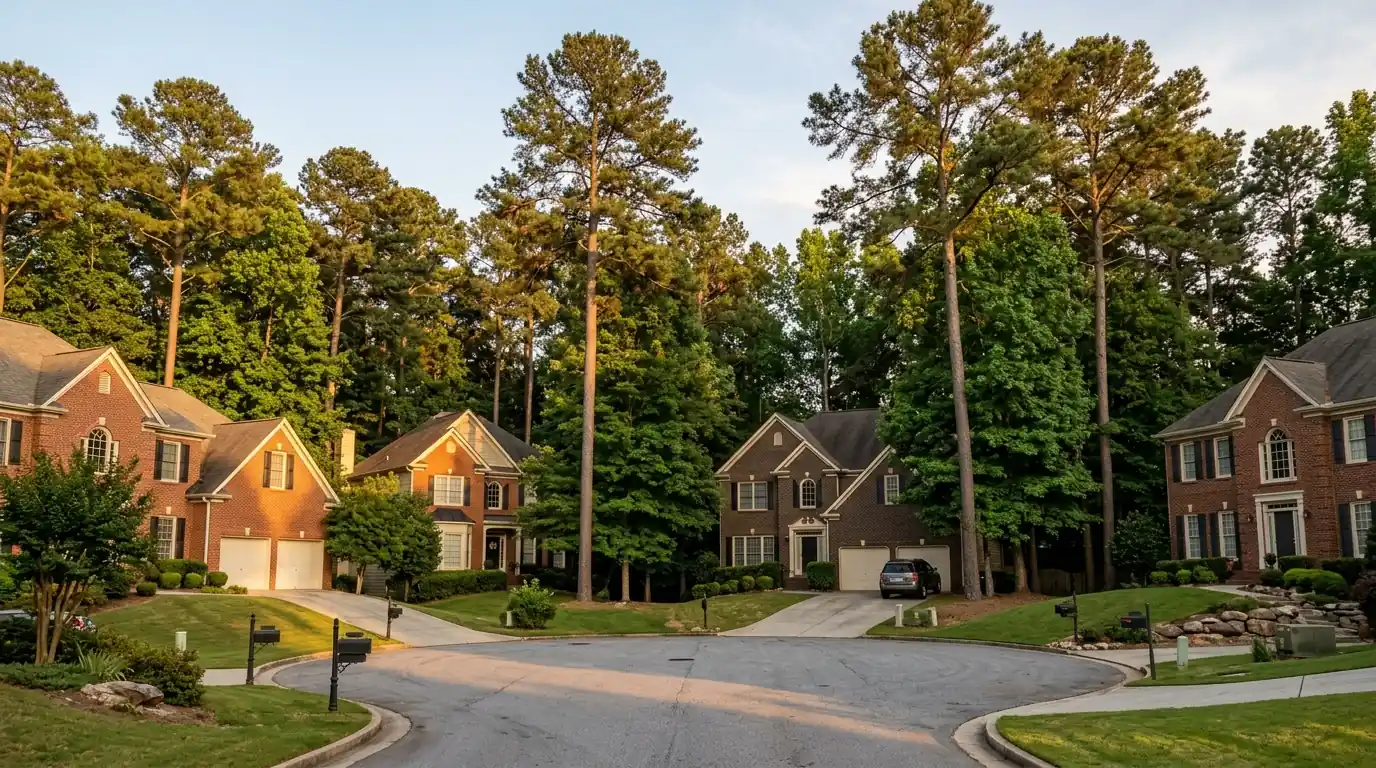
Drive a few minutes in any direction and the picture changes. Subdivisions from the 1990s onward replaced pastures and pine stands, and builders kept a fringe of loblollies along the back of each lot. Those pines are now tall, thin and close to fences and play sets, and when one comes down, the owner usually wants the stump gone so the yard can be leveled and seeded. Front yards on the same streets often hold a Bradford pear that split at the fork after a spring storm.
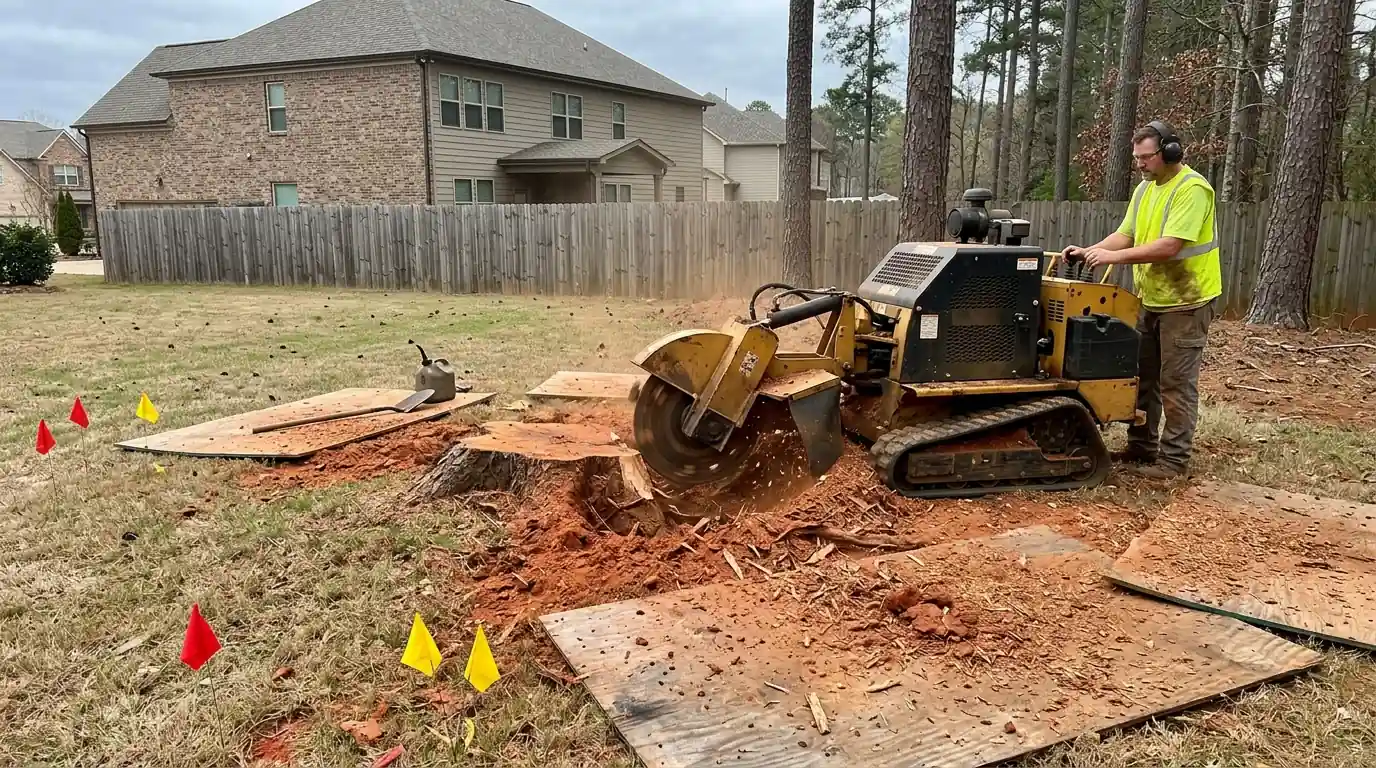
Why stump work fills so much of the schedule here
A pine stump left in the ground goes soft within a few years and rarely sends up anything new. Sweetgum is another story: cut one down and leave the stump, and sprouts can come up from the roots across the lawn. Owners also want stumps out because they sit right where a fence post, a patio or a new tree needs to go. Our page on grinding versus full stump removal explains when each makes sense.
Before the grinder starts, we file a Georgia 811 locate, which marks public lines, and we ask you to flag private ones such as irrigation and dog fence wire. Grinding takes most stumps 6 to 12 inches below grade, deeper where a fence post or a paver base is planned. When roots have heaved a walkway or crowd a foundation, root removal goes along with it. The chips can stay as mulch or be hauled away.
City limits, county rules and checking before we cut
Lawrenceville's city limits cover the area around the square and the streets near it, but many homes with a Lawrenceville address sit in unincorporated Gwinnett. Inside the city, Lawrenceville sets its own tree rules, and we check them for the address before quoting. Outside, a homeowner on a developed lot generally needs no permit, with exceptions for zoning and stream buffers, Tree Save Areas and street trees, and at least two live trees must stay on the lot.
Subdivision HOAs here also tend to have a say, especially over trees in common areas and along entrance roads. If a pine on your lot is dead or beetle-struck, timing matters as much as the paperwork, because a pine left standing for months after it dies gets harder and riskier to climb. Our Gwinnett County overview sets out how the county exemption works, and the same pine and stump pattern shows up next door in Snellville and Suwanee.