We handle storm cleanup, hazard removals and pruning on the Victorian and craftsman lots that ring Grant Park. Old water oaks, tulip poplars and pecans dominate, often planted close to houses on narrow parcels. Atlanta's tree ordinance governs every lot here: 6 inches at 4.5 feet triggers a permit, 12 for pines, though a fallen tree that's resting on a house can be cleared first. Call any hour.
What a summer storm leaves behind on these blocks
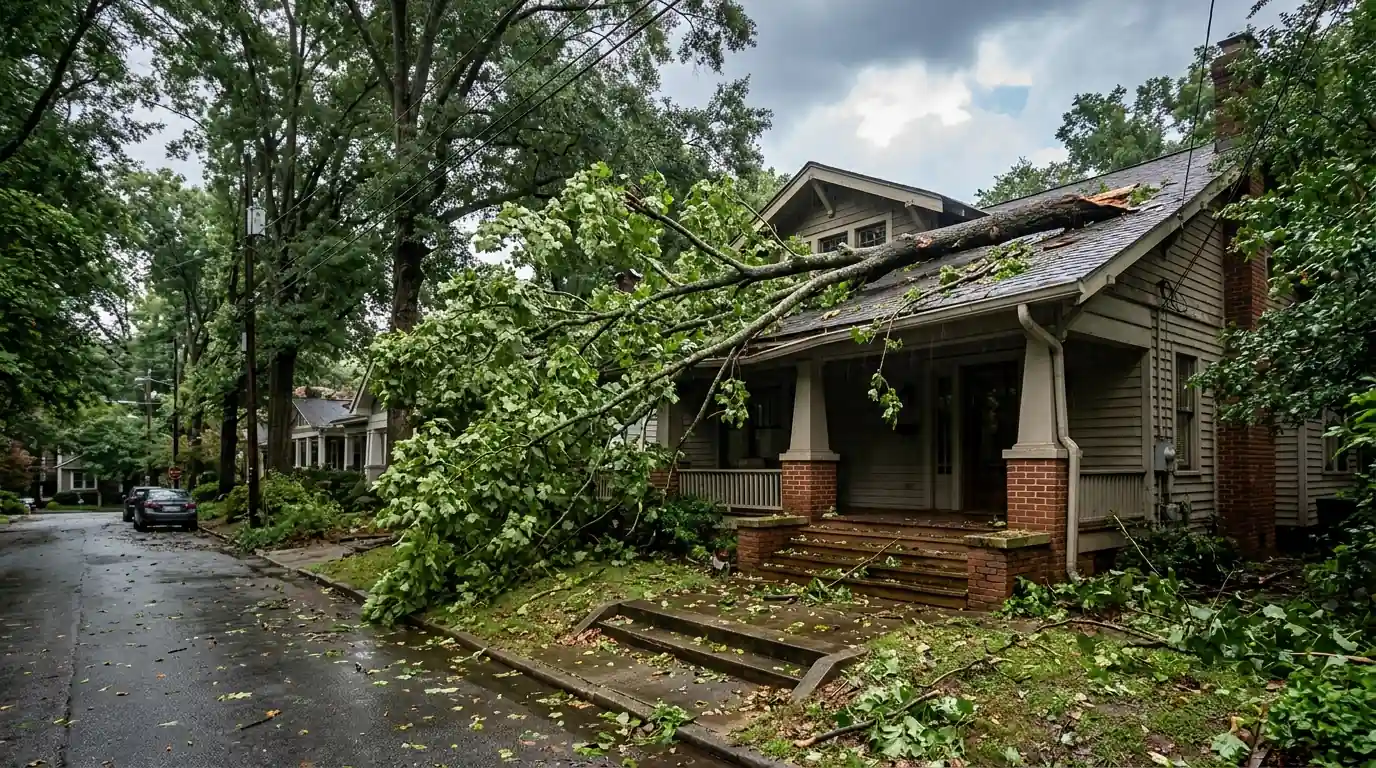
The calls usually come in the hour after a July or August thunderstorm. A gust front pushes through, and the trees that fail are rarely the youngest. They're the water oaks and tulip poplars that have stood beside these houses for decades, carrying long limbs with hidden decay at the union. One snaps and lands on a porch roof, a parked car or the power drop running to the house.
Our first step is to make the scene safe. If a line is tangled in the wreck, everyone stays back. Georgia Power has to clear it first, and any downed wire is treated as live until they say otherwise. Then we relieve the roof in small pieces, starting with whatever is pressing hardest, and tarp any opening. Our guide to the first hour after a tree falls covers what owners can do before we arrive.
Old hardwoods, narrow lots and very little room to work
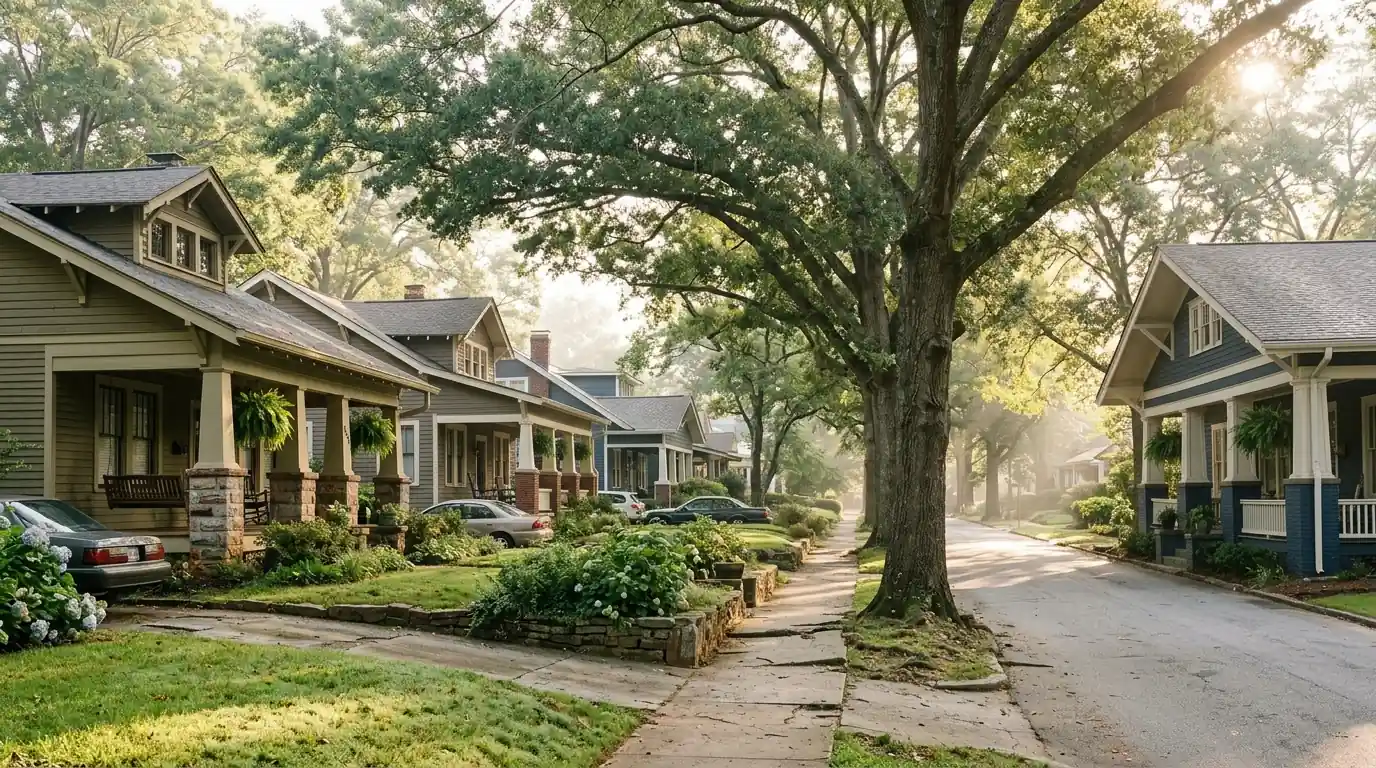
Grant Park grew up in the late 1800s and early 1900s, so most homes are Victorians and craftsman bungalows on lots barely wider than the house. Some blocks have rear alleys, which helps; many don't. With cars lining both curbs, our trucks often stage at the corner while the ground crew carries brush out through a side yard a few feet wide.
That squeeze shapes every removal. Pecans and big oaks planted between houses are climbed and lowered on ropes, with each piece cut light enough to stop short of the neighbor's siding. When the wood is too rotten to climb, we bring a crane to the street. The narrow front yards also mean roots run under walks and foundations, so we look at the root flare and the soil around it before we call a leaning tree safe.
Permits after a storm and before one
Atlanta's ordinance covers every lot here. A tree that has already fallen and is held up by the ground, another tree or a structure needs no permit to clear; photograph it and notify the city Arborist Division. A standing tree that cracked or started leaning is different. It still needs a permit as a hazardous tree, but the filing is free, a city inspector confirms the damage and no recompense is owed once it qualifies.
Healthy trees are where owners get caught. A private tree 6 inches across at 4.5 feet needs a permit for removal, pines from 12 inches, and the penalties went up when City Council's 2025 changes took effect in January 2026. We handle the filing and keep the photos, and our permit service page lists what the city asks to see.
The park, the zoo and the trees that border them
Grant Park itself is one of Atlanta's oldest parks, home to Zoo Atlanta, and its mature canopy spills into the yards along its edges. Owners on those streets see the same storm patterns as the park: brittle poplar limbs, hollow water oaks and hackberries that seed into every fence line. Oakland Cemetery, to the north, shows how big these hardwoods get when left alone for a century.
We spend much of our time here on preventive work. Clearing deadwood and thinning heavy ends before storm season takes the most likely failures out of the crown. The same approach pays off south in Ormewood Park and east in Kirkwood, where lots are just as tight.