How to look at a tree you are worried about
Start from a distance, then move in. From across the yard or the street, look at the whole shape of the tree: the crown, the lean and how it sits in the ground. Then walk all the way around it, close enough to see the bark and the base. Look up through the crown with binoculars if you have them. Finally, crouch down and look at the root flare, the spot where the trunk widens as it meets the soil.
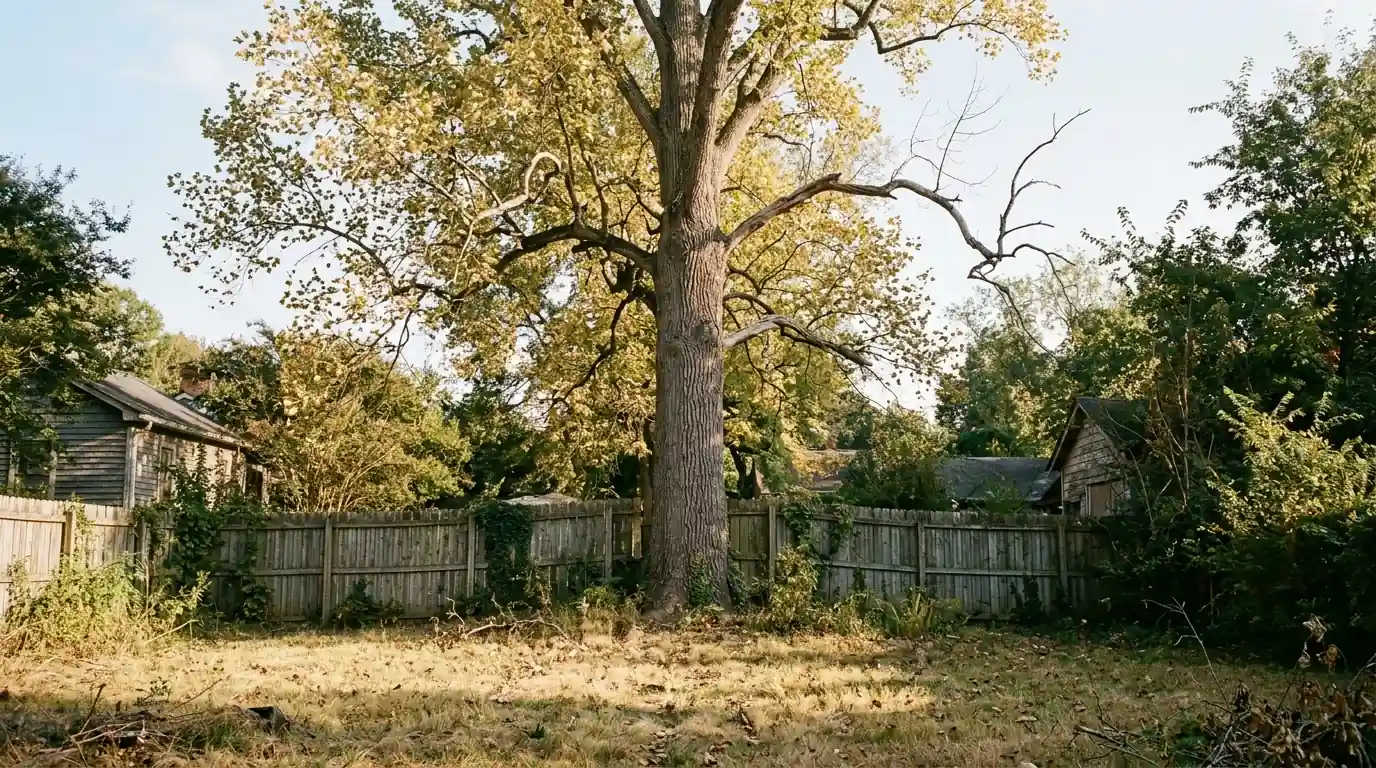
Compare what you see with the same tree last year if you can. Old photos help. A tree that has always looked a certain way may be fine; a tree that has changed is the one to pay attention to. Keep in mind the season, too. In a late summer drought, tulip poplars and some other species drop yellow leaves early without being in real trouble.
The seven signs
These are listed roughly from the most common to the most serious, though any one of them can be urgent on the wrong tree.
1. A bare or thinning crown
A healthy crown is dense enough that you can't see much sky through it in summer. A thinning crown, with small leaves, sparse foliage or patches that don't leaf out at all, means the tree isn't moving enough water and food. On oaks, crown dieback often starts at the top and works down. On pines, watch for needles fading from green to yellow to rust, which can mean beetles.
2. Dead branches
A few dead twigs inside the crown are normal. Large dead limbs, especially in the upper crown or over a roof, a driveway or a patio, are not. Dead wood is brittle and falls without warning, often on calm days. Bark peeling off a limb to show a crusty tan or black layer can point to hypoxylon canker on stressed oaks.
3. Fungi at the base
Mushrooms, shelf fungi or conks growing at the base of the trunk or on the roots are a sign of decay inside. Honey-colored mushrooms in clusters at the root flare in fall, or white fungal sheets under loose bark, can point to armillaria root rot. The fungus you see is only the fruiting body; most of the decay is out of sight.
4. Cracks and cavities
Vertical cracks in the trunk, open seams below a fork, or hollow cavities where a limb used to be all weaken the wood carrying the crown. A crack running down from a V-shaped fork is a split in progress. Tap the trunk with a rubber mallet: a hollow or dull sound can mean the center is gone.
5. Bark falling off
Large sections of bark loosening or falling away from the trunk mean the living tissue underneath has died. Look for bare wood, cracked bark with nothing behind it, and holes or tunnels left by boring insects. On ash trees in metro Atlanta, small D-shaped exit holes and woodpecker damage can mean emerald ash borer.
6. A lean that changed
Many trees grow with a lean, and a lean by itself isn't a problem. A lean that wasn't there before, or one that got worse after a storm, is different. It often means the roots on one side have failed or lost their grip in soaked clay. One quick check: line the trunk up with a corner of the house, a fence post or a utility pole from a fixed spot, take a photo, and compare it after the next heavy rain.
7. Roots heaving or rotting
Look at the soil around the base. Cracks, mounding or a raised edge on the side opposite the lean mean the root plate is lifting. Soft, crumbly or missing roots, or a trunk that looks like it's sitting on the ground instead of flaring into it, can point to root rot. Root problems are the hardest to see and among the most dangerous.
Which signs are urgent
Some signs mean a tree could fail at any time. If you see any of these on a tree within reach of your house, a car, a play area or a neighbor's yard, call right away and keep people out from under it.
- A lean that is new or got worse, especially after rain or wind.
- Soil cracking, heaving or lifting on one side of the trunk.
- A fresh crack or split in the trunk or at a major fork.
- A large dead or broken limb hanging in the crown over a target.
- A pine with pitch tubes, fine reddish dust and a fading crown.
Which signs just need a look
Other signs are serious but rarely an emergency. They call for an inspection in the next few weeks, not tonight. A crown that has thinned over a couple of years, a few dead branches away from targets, fungi on the root flare with no lean, or bark loss on one part of the trunk all fit here.
Many of these trees can be helped. Pruning out dead wood, improving the soil around the roots, or treating a disease or insect problem can add years. Sometimes a tree is past saving, and an honest inspection will tell you that too. Our risk assessment covers the trunk, roots and crown, and gives you a plain answer on whether the tree can stay.
While you wait for that look, a few simple steps help a stressed tree. None of them fixes decay, but they keep a borderline tree from getting worse.
- Water deeply once a week during dry spells, out at the edge of the crown rather than at the trunk.
- Spread 2 to 3 inches of mulch over the root zone, kept a hand's width away from the bark.
- Keep cars, mowers and piles of soil or lumber off the roots.
- Hold off on fertilizer until someone has figured out what is actually wrong.
Why Atlanta trees decline the way they do
Many of the declining trees we see in metro Atlanta share the same background. Compacted Georgia red clay keeps roots shallow and starved for oxygen, and it holds water after long rains, which favors root rot. Older water oaks are reaching the end of their natural life, which we cover in our post on why water oaks are failing. Pines are stressed by summer droughts and then hit by beetles. Construction damage from a new driveway, sewer line or addition often shows up as a dying crown several years later.
In older neighborhoods like Druid Hills and Grant Park, the trees are big, the lots are small, and almost every large tree stands near something it could hit. Out in Peachtree Corners, tall pines left between houses face more wind than they grew up with.
What happens next
If a tree is dead or dying, removing it while the wood is still sound is safer and simpler than waiting until it starts breaking apart. Our dead tree removal is planned around that. If the tree is still alive but sick, disease treatment or deadwood pruning may be the right step. Inside Atlanta city limits, a dead, dying or hazardous tree still needs a permit, with no application fee, and the city inspects to verify its condition first.
Key takeaways
- Look at the whole tree from a distance, then walk around it and check the base.
- The seven signs are a thinning crown, dead branches, fungi, cracks, bark loss, a changed lean and heaving or rotting roots.
- A new lean, heaving soil, fresh cracks, big hanging limbs and beetle-hit pines are urgent.
- Slow crown thinning and fungi without a lean usually just need an inspection soon.
- Removing a dying tree while the wood is still sound is safer than waiting.